Write a comment
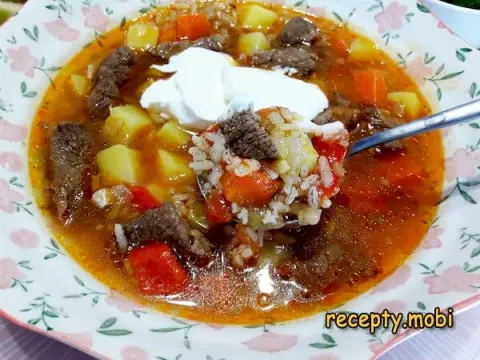
Pork stew with vegetables, celery, and ginger

Pork Stew with Vegetables, Celery, and Ginger – Easy Recipe

This pork stew is a hearty everyday one-pan dinner: tender pork pieces, a generous mix of vegetables, the bright lift of fresh ginger, and the herby aromatic note that celery brings to a stew. The whole thing comes together in one deep pan in about an hour, with no special equipment needed.

The technique here is straightforward: build flavour layer by layer in the same pan, adding ingredients in the order that respects each one's cooking time. Pork browns first, vegetables get added in stages so each retains its character, and the gentle simmer ties everything together without turning the vegetables to mush.

Time60 min | Servings: 6 | Calories: 97 kcal per 100 g

Ingredients

ingredients for pork stew

Show ingredients
  • celery – 300 g;
  • potatoes – 550 g;
  • pork (neck/shoulder) – 300 g;
  • carrot – 130 g;
  • bell pepper (can be frozen) – 130 g;
  • tomatoes (cherry or regular) – 100 g;
  • onion – 100 g;
  • dried garlic – 0.5 tsp;
  • fresh ginger – 20 g;
  • salt, black pepper – to taste (guideline: 1-1.5 tsp salt);
  • parsley – 10 g;
  • vegetable oil – 2 tbsp;
  • hot water – 350 ml.

Equipment: deep frying pan or wok with lid, knife, cutting board, grater, spatula, measuring cup.

Preparation

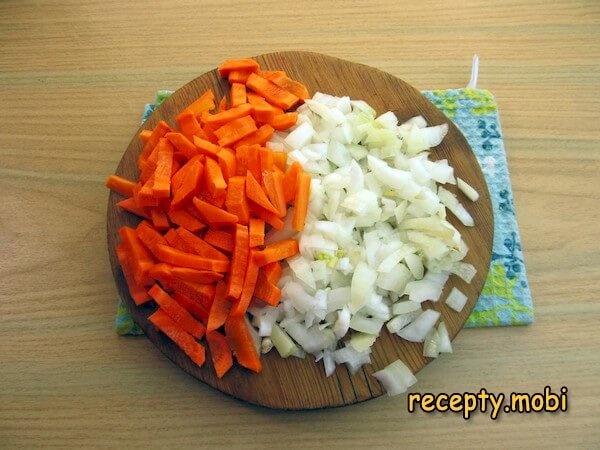
  1. I peel the onion and dice it finely (5-7 mm cubes). The carrot goes into thin strips 3-4 cm long — julienne style. Uniform cuts mean uniform browning and an even visual finish in the bowl.
    cooking pork stew - photo step 1
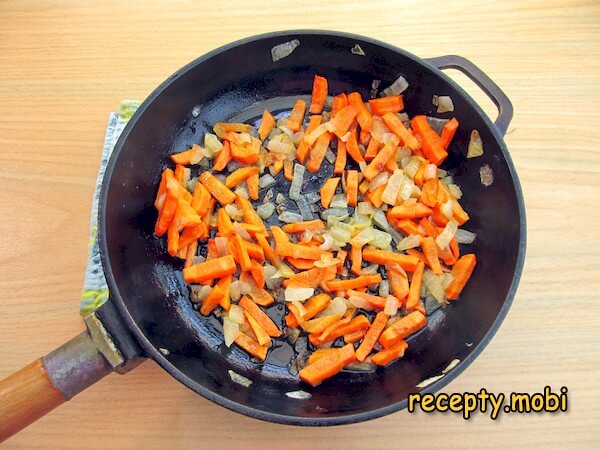
  2. I heat the oil over medium heat, then add the onion and carrot together. Cook for 5-7 minutes, stirring occasionally, until the vegetables soften and develop golden edges. This is the aromatic base — don't rush the onion's transition from raw to translucent.
    cooking pork stew - photo step 2
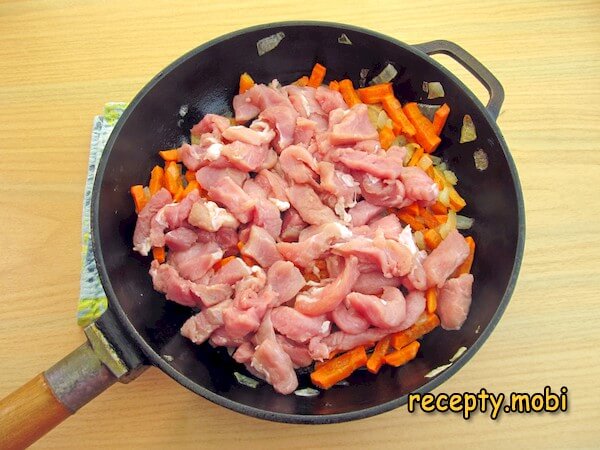
  3. I cut the pork into strips 1.5-2 cm wide and pat them dry with paper towel before adding to the pan. Dry meat browns; wet meat steams. This single habit makes a noticeable flavour difference.
    cooking pork stew - photo step 3
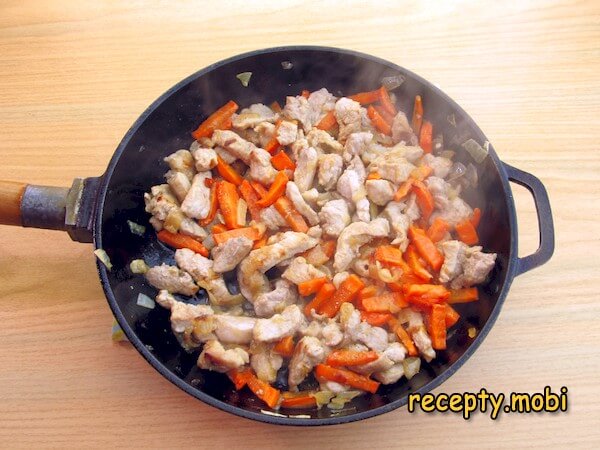
  4. I stir and fry the meat for 5-6 minutes, until it's coloured on all sides. The Maillard browning here is what gives the stew its meaty depth — pale pork = pale stew.
    cooking pork stew - photo step 4
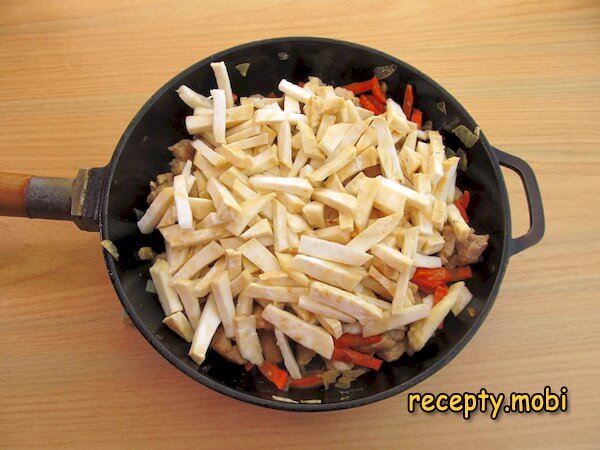
  5. I peel the celery (a vegetable peeler removes the tough strings), cut it into strips 1-1.5 cm long, add to the pan, and stir to combine with the pork and vegetables.

    cooking pork stew - photo step 5
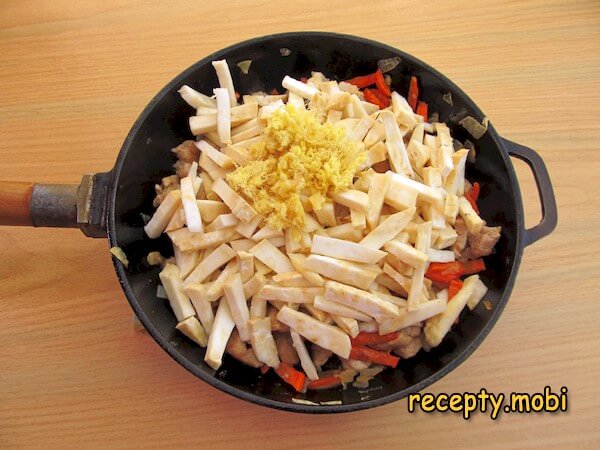
  6. I peel the fresh ginger (a teaspoon edge scrapes the skin off cleanly), grate it on a medium grater, and add to the pan. Fresh ginger here is what distinguishes this stew — dry powder doesn't deliver the same brightness.
    cooking pork stew - photo step 6
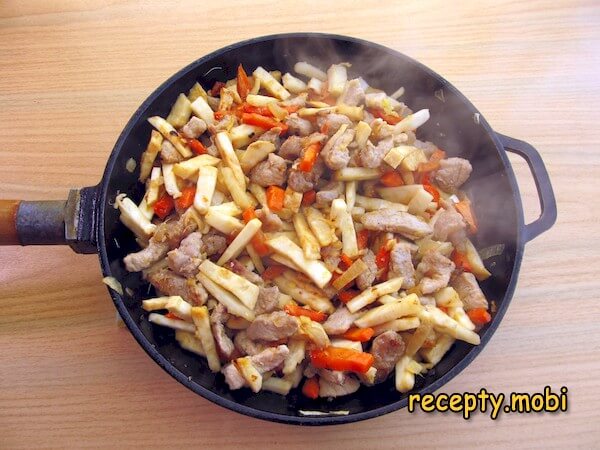
  7. I cook another 2-3 minutes for the ginger to release its aroma. The kitchen will smell distinctly of ginger when this stage is done.
    cooking pork stew - photo step 7
  8. I add the bell pepper, cut into small cubes. Frozen pepper goes in straight from the freezer — no thawing needed; the moisture it releases will be absorbed during the simmer.
    cooking pork stew - photo step 8
  9. Cook for 2-3 minutes, just enough to soften the pepper edges while keeping its shape and snap. Over-cooked pepper turns limp and grey.
    cooking pork stew - photo step 9
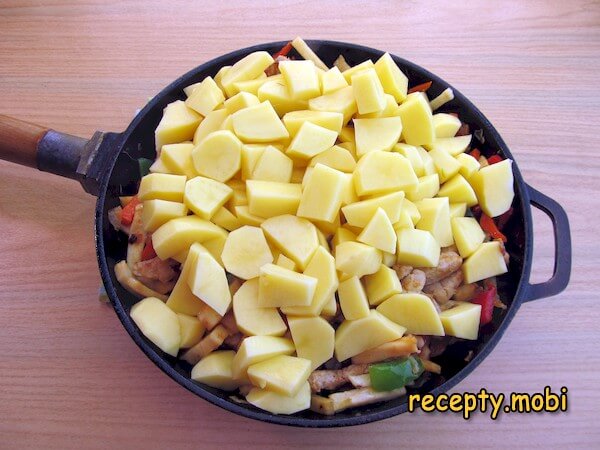
  10. I add the potatoes, cut into medium 2-3 cm pieces. Larger pieces hold their shape through the simmer; smaller ones break down and thicken the broth — both work but give different stew styles.
    cooking pork stew - photo step 10
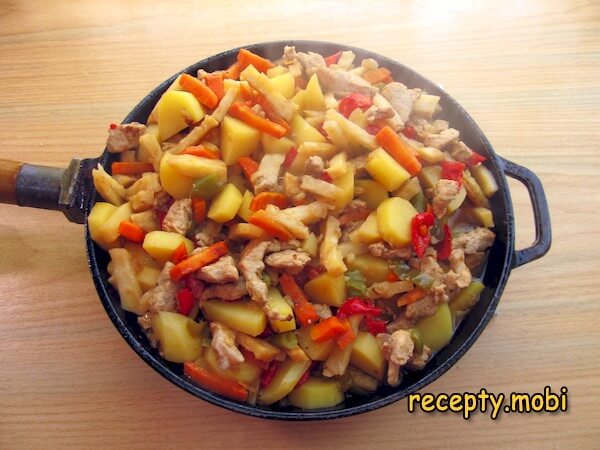
  11. I pour in the 350 ml of hot water — using boiling water keeps the cooking momentum going. The liquid should nearly cover the contents but not fully submerge them. I bring everything to a gentle boil.
    cooking pork stew - photo step 11
  12. I cover with a lid and reduce to low heat for 15-20 minutes, until the potatoes are fork-tender and the pork is cooked through. A fork should slide into a potato chunk with no resistance.

    cooking pork stew - photo step 12
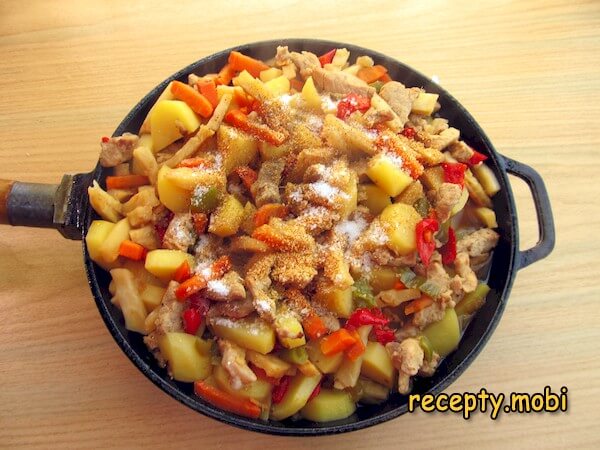
  13. I season the stew now: salt, dried garlic, and ground black pepper. Late salting lets me adjust to the actual liquid volume after reduction — the broth concentrates as it simmers, so early salt over-seasons. Stir gently.
    cooking pork stew - photo step 13
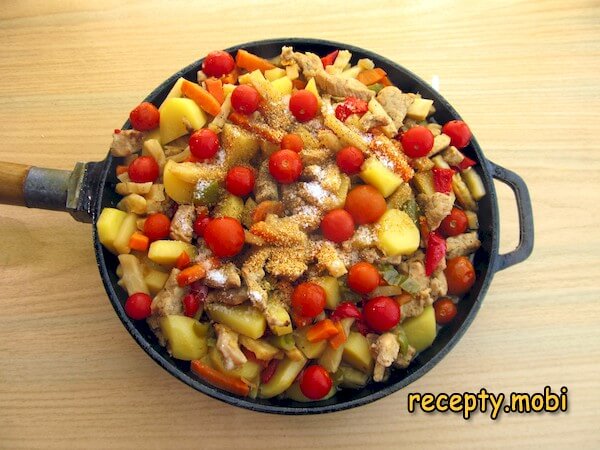
  14. I add the tomatoes — whole if cherry, halved or quartered if larger. Adding tomatoes late preserves their shape and the contrast of cool, fresh acidity against the warm stew.
    cooking pork stew - photo step 14
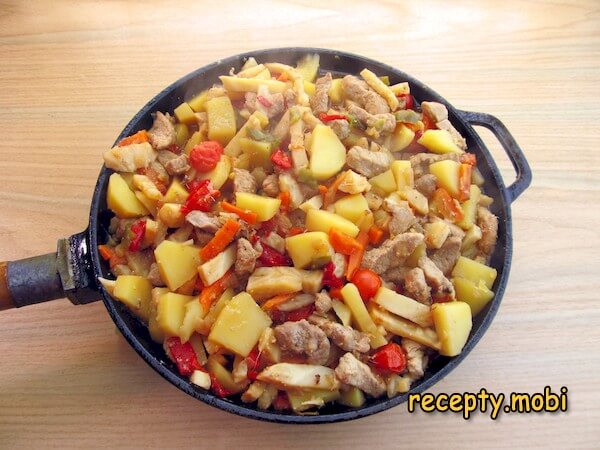
  15. A careful stir to distribute the tomatoes without crushing them, another 5 minutes on low heat to warm them through, then I take the pan off the heat. The stew rests for 5 minutes before serving — this lets flavours settle and the broth to slightly thicken.

    To serve, I ladle the stew into deep bowls and shower the top with freshly chopped parsley. A slice of crusty bread or a light green salad on the side completes the meal.

    cooking pork stew - photo step 15
    Pork stew with vegetables, celery, and ginger

Tips and Tricks

Tip 1. DRY THE MEAT BEFORE BROWNING. Pat the pork strips dry with paper towel before they hit the hot oil. Surface moisture turns the pan into a steamer instead of a sear pan, and you lose the Maillard browning that gives stew its depth. Even 30 seconds of drying makes a visible difference in colour.

Tip 2. SUBSTITUTE PORK FOR TURKEY OR CHICKEN. The recipe works almost identically with skinless turkey or chicken thigh — both give a leaner result and cut 5-7 minutes off the simmering time since they cook faster. Use broth (vegetable, chicken, or beef) instead of water for a deeper base flavour. For another braised pork option to compare, try Pork Stew in a Multicooker at Home, which uses the same protein in a hands-off slow-cook format.

Tip 3. CELERY ROOT VS CELERY STALK — BOTH WORK. Stalk celery (used in this recipe) gives the bright herby crunch and freshness. Celeriac (root celery), peeled and diced into 1.5 cm cubes, gives a deeper, earthier flavour and a denser bite. For a richer stew, swap in celeriac; for a brighter weekday stew, stick with stalks. A 50/50 mix gives the best of both.

Tip 4. ADD HEAT WITH GINGER, NOT JUST CHILI. The fresh ginger is already adding gentle warmth, but for a spicier finish add a pinch of dried chili flakes at the same stage as the ginger (step 6). The two warm-spice notes complement each other — ginger gives clean brightness, chili adds back-of-throat heat. For a similar style of meat dish that lets you experiment with another protein-and-spice combination, see Oven Pork Shashlik on Skewers.

Frequently Asked Questions

How do I keep the pork tender in this stew?

Two habits make the biggest difference. First, dry the pork strips before browning so they sear rather than steam — this seals in moisture. Second, simmer on genuine low heat under a lid for the full 15-20 minutes; a strong boil toughens the meat fibres and makes them stringy. Pork neck or shoulder is the ideal cut here because it has enough connective tissue to stay juicy through the simmer; lean cuts like loin will dry out at this cook time.

Can I make this stew without ginger?

Yes, the stew still works well without it — just omit the ginger entirely or substitute with a teaspoon of fresh lemon zest added in step 13 (with the seasoning) for a different but equally bright accent. Two extra crushed garlic cloves at the same stage are another good substitute. The stew will lose its slightly Asian-leaning character but become a more European-style braise — both directions are valid.

What can replace celery in this recipe?

Parsnip and parsley root are the closest substitutes — both bring that earthy aromatic note that distinguishes celery from blander root vegetables. Use the same weight (300 g) cut into similar 1-1.5 cm strips. Fennel bulb is another option for a sweeter, anise-leaning flavour. Avoid using plain extra carrot or potato as a substitute — neither carries the herbal depth that celery provides, and the stew will taste flatter.

Can I cook this stew in a slow cooker?

Yes, with one adjustment to technique. Do steps 1-9 (everything up to adding the bell pepper) in a frying pan to build the browning and aromatic base — this can't be replicated in a slow cooker. Then transfer everything to the slow cooker, add the potatoes, hot water, and bell pepper, and cook on Low for 4 hours or High for 2 hours. Add tomatoes and seasoning in the final 15 minutes so they don't break down completely.

Write comments...
symbols left.
or post as a guest
Loading comment... The comment will be refreshed after 00:00.

Be the first to comment.