avg —
Tartiflette – a French dish that everyone will love

Instructions
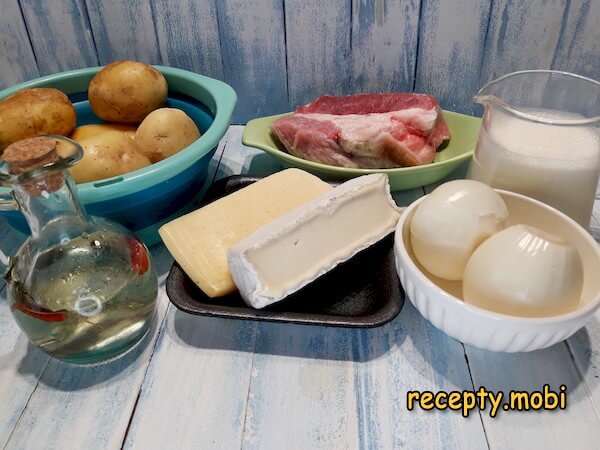
I prepare the ingredients. The meat must have fat on it; both a smoked version and an ordinary one will do. Reblochon cheese is not often found in local shops, and it is also quite expensive. You can replace it with camembert or another soft mould cheese. It is also fine to use two kinds of cheese. Cream of 22% or 33% fat will work.
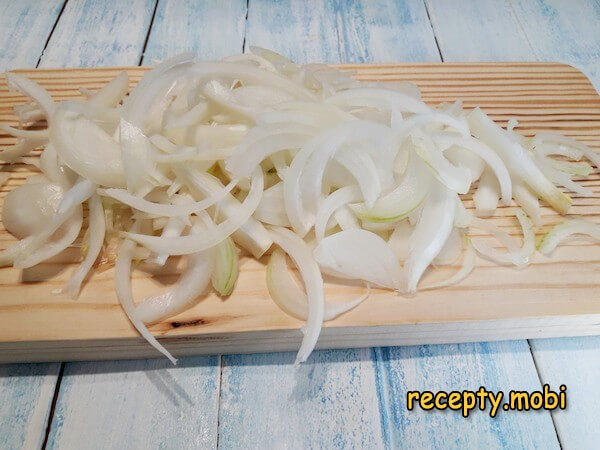
I slice the onion into thin feathers. I loosen them, separating them from one another – this keeps the onion from sticking together while it fries.
I cut the pork belly into elongated pieces about 2 centimetres thick. There is no need to chop it finely – after frying, the pieces should be substantial and noticeable within the dish. This is the secret behind tartiflette's characteristic texture.
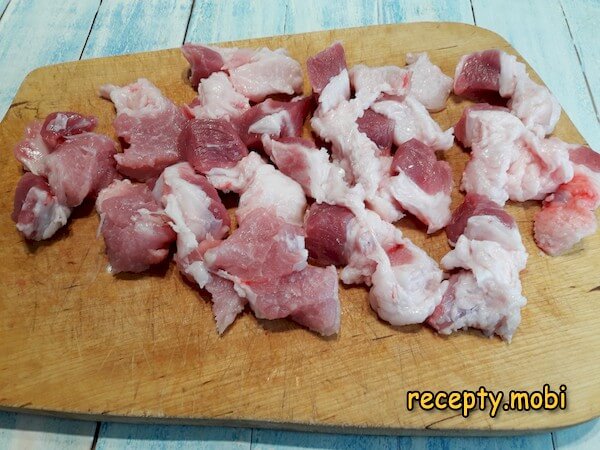
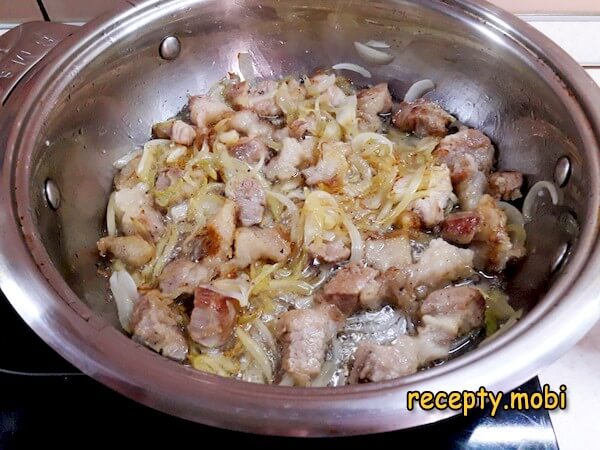
I pour the oil into a skillet and add the pieces of meat. I set the hob to a medium heat – without overheating, so the bacon doesn't "burn".
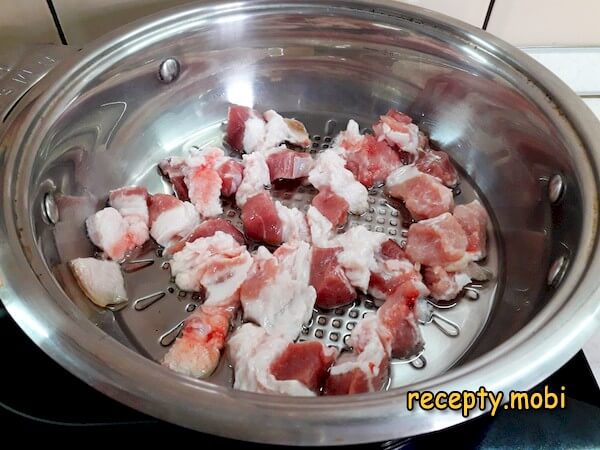
I don't fry the bacon hard or turn it into crispy scratchings. I just need to render the fat a little – this will be the "aromatic fat" for the next stage.
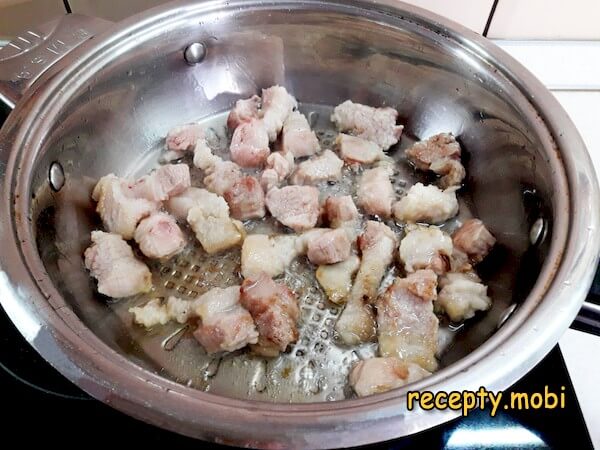
Now I can add the onion – it will cook in the bacon fat.
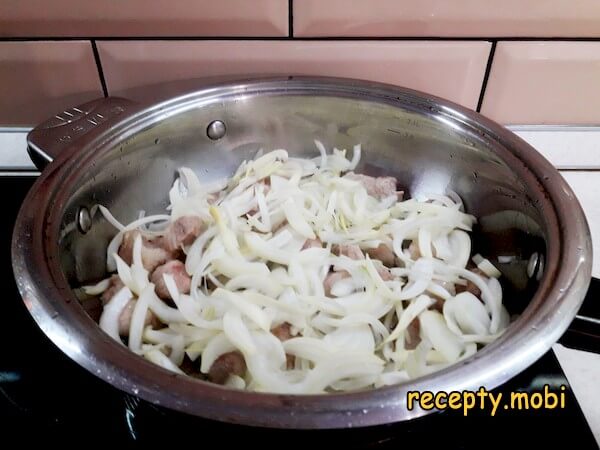
I fry it until soft and only very slightly changed in colour. I add salt and pepper to taste (other spices are not needed here, otherwise they would overpower the bright flavour of the cheese). For now I set the skillet aside.
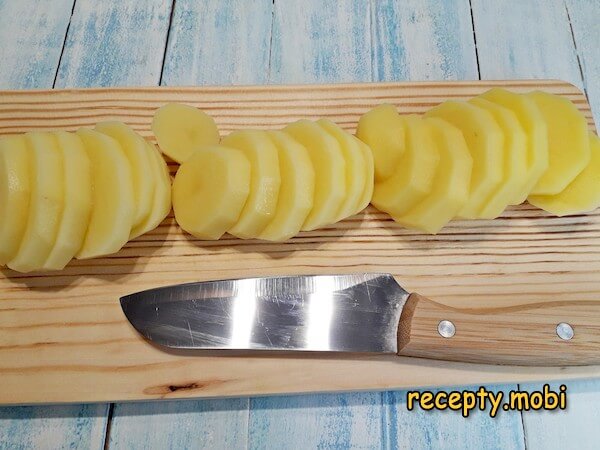
I slice the potatoes into rounds 5–7 millimetres thick – this is exactly the optimal thickness: any thinner and they will fall apart, any thicker and they won't bake through.
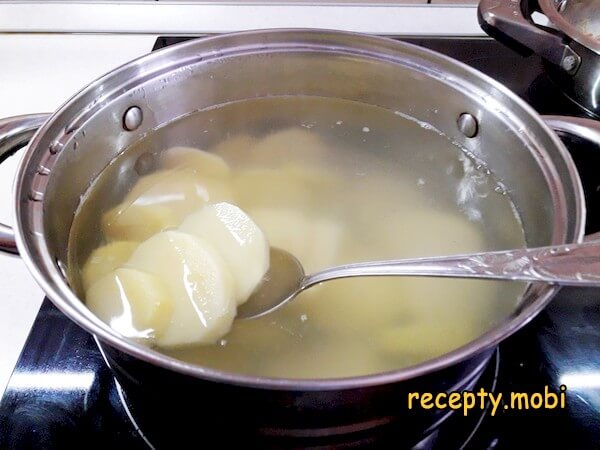
I drop them into boiling water and blanch them just up to the moment it returns to the boil – this is done to cut down the later baking time in the oven. To keep the pieces from boiling soft in the water, I add a tablespoon of vinegar – the secret against soggy edges.
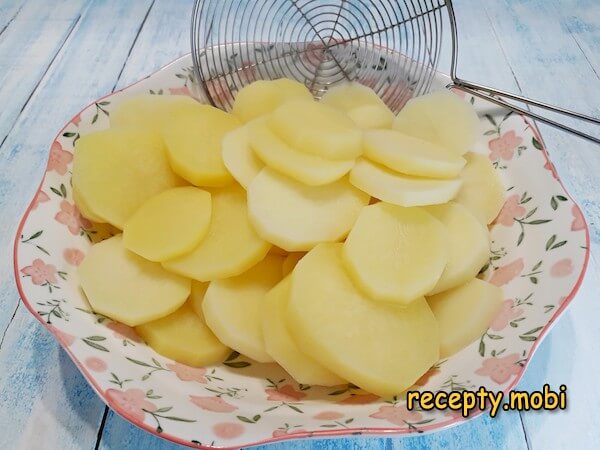
I scoop the potatoes out with a slotted spoon and transfer them to a plate – they need to "rest" before baking.
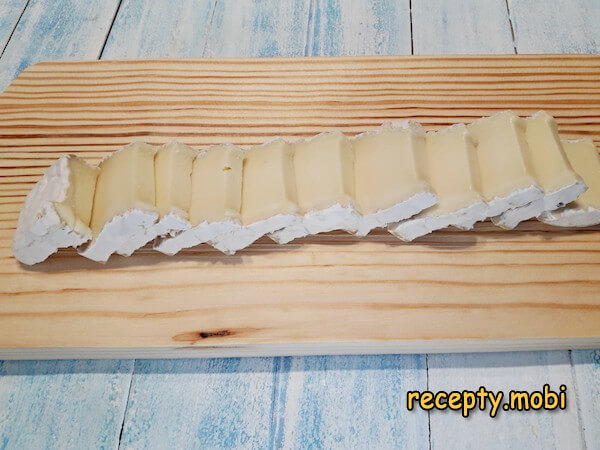
I cut the reblochon or camembert into slices (about 5–7 millimetres thick) – thin pieces melt beautifully.
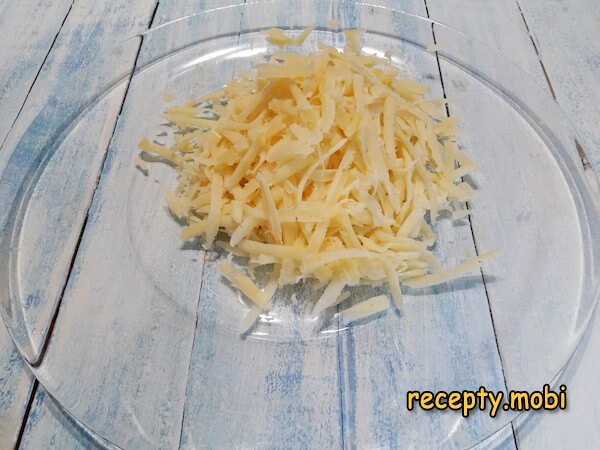
I coarsely grate the second kind of cheese – for the "cheesy" middle layer.
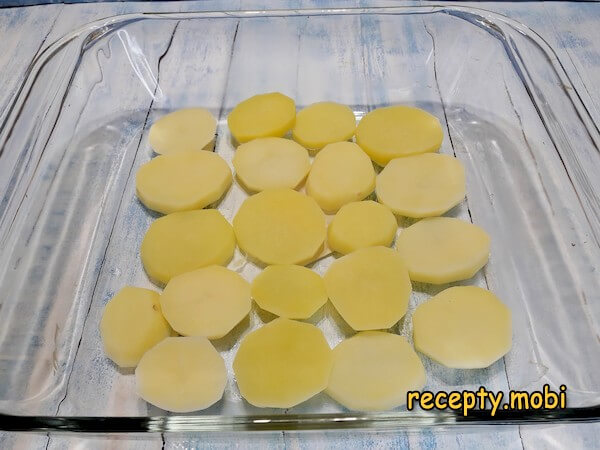
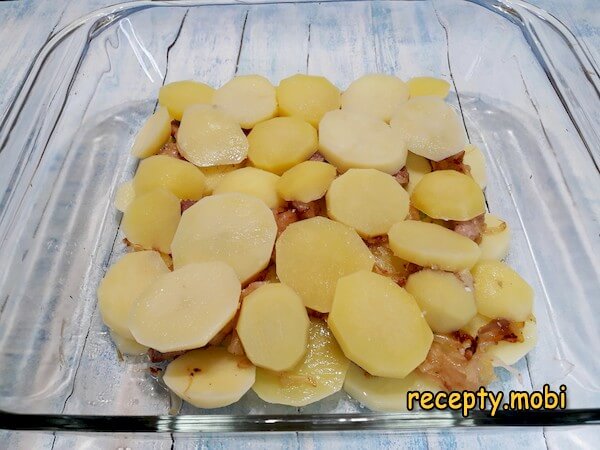
I turn the oven on to 180 degrees. On the bottom of an ovenproof dish I lay the potatoes in a single layer. I sprinkle with salt.
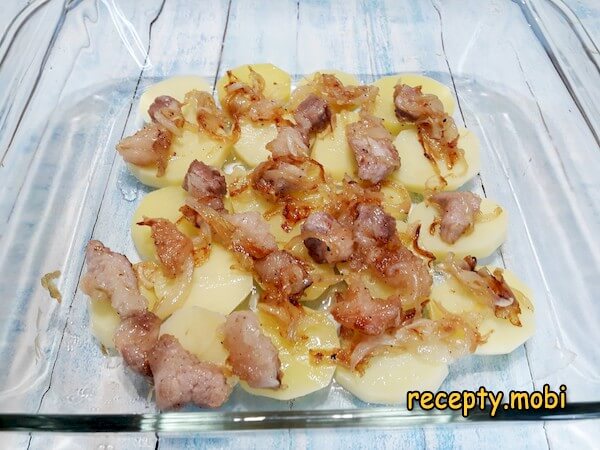
I divide the meat mixture in half and lay one part on top – the "second layer" of our layered casserole.
Next I cover everything with another layer of potato, which I don't forget to salt – this is the "third layer" of the tartiflette.
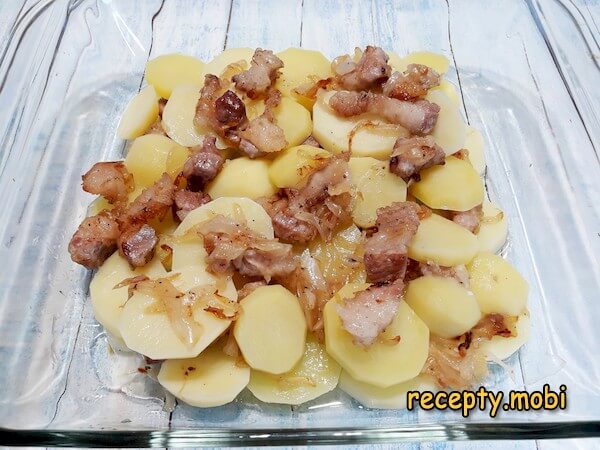
I spread out the remaining meat with the onion. I also pour in the fat that has gathered in the skillet – it is this aromatic fat that soaks into the potatoes.
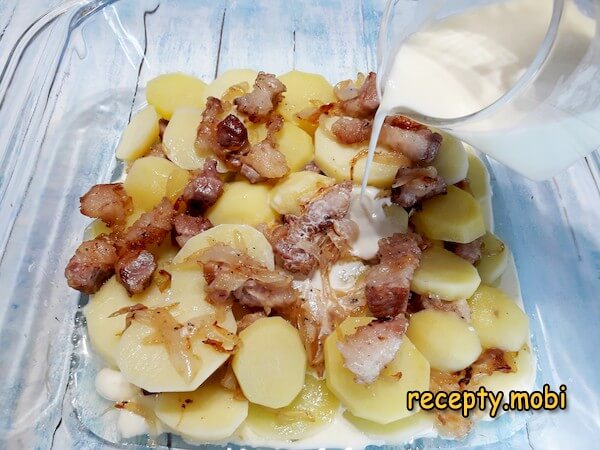
I season everything with the cream – the cream is the "French" component of tartiflette.
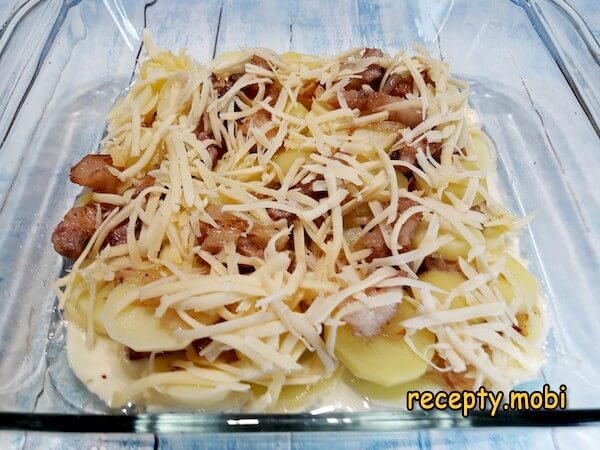
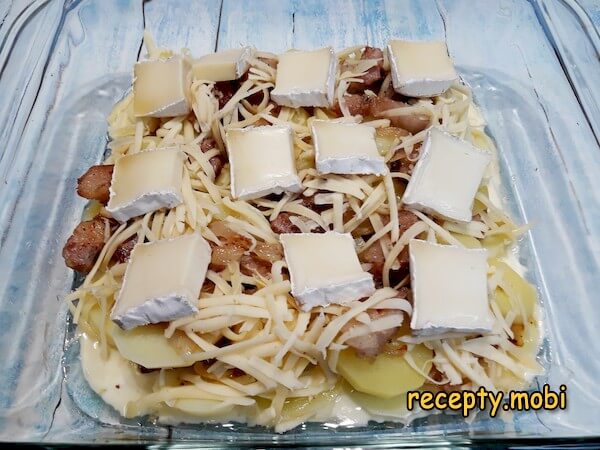
I spread the grated cheese in a thin layer – the intermediate cheese layer.
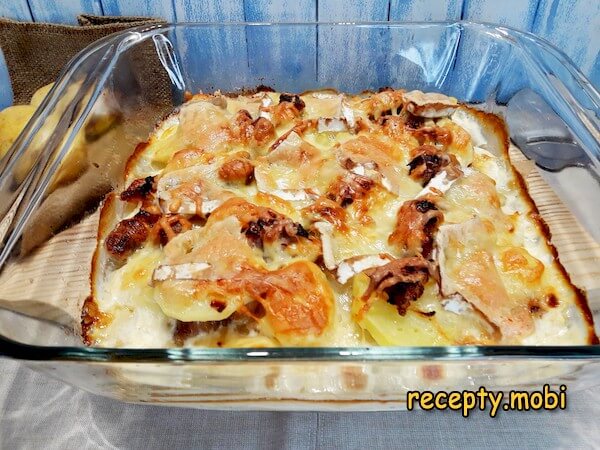
On top I lay the slices of reblochon or camembert. I put the dish with all its contents onto the middle rack of the oven and bake for half an hour – a golden cheese crust should form.
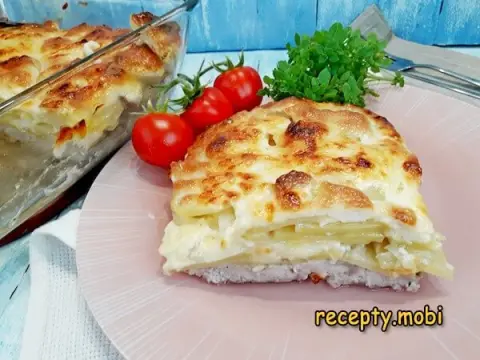
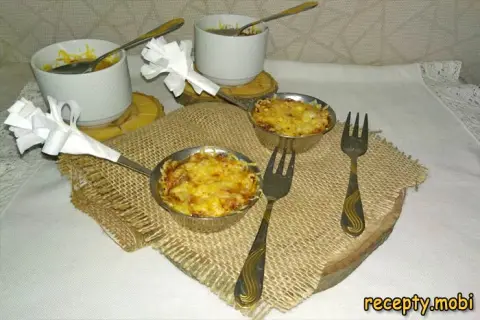
The famous French tartiflette can be served straight from the oven. A wonderful accompaniment to this dish is a glass of dry white wine. Tender potato soaked in cream, pieces of juicy bacon and, of course, the distinctive flavour of soft mould cheese – all of this creates the magical aura of a magnificent dish.


Tips
- 1
THE RIGHT CHEESE is the secret of an authentic tartiflette. Reblochon is the key ingredient that gives the dish its character. It is an AOP cheese (protected designation) from the Savoie region, made from raw cow's milk and aged for 6–8 weeks. It has a pronounced "cheesy, mouldy" flavour, nutty notes and a soft texture. It is hard to find in Russia, where it costs 4000–6000 roubles per kg. Alternatives: camembert (a similar profile, more affordable), brie (milder, more delicate), Taleggio (an Italian relative, richer), Époisses (French, stronger in smell). Completely unsuitable: hard cheeses, processed cheeses, suluguni.
- 2
BLANCHING THE POTATOES is the secret of the right texture. Without blanching, the potatoes won't have time to bake through fully in 30 minutes in the oven – they will be hard inside while the cheese is already burning. With blanching (up to the moment it returns to the boil) the potatoes are "half-cooked" on the outside and reach an ideal creamy texture inside in the oven without overcooking. Vinegar in the water (1 tablespoon per 2 litres) keeps the slices in shape – without it they "fall apart". An alternative "modern" method is the microwave for 5 minutes on maximum, but the classic way is water with vinegar.
- 3
THE "LAYERED" ASSEMBLY is the secret of even cooking. Tartiflette is not "everything in one heap". The correct assembly: 1) potatoes on the bottom in a single layer (salt), 2) half the meat with onion, 3) potatoes again, 4) the second half of the meat with onion + the fat from the skillet, 5) cream on top, 6) grated cheese as an intermediate layer, 7) slices of reblochon/camembert on top – the "crust". As it bakes, each layer becomes soaked with cream and fat, building a multi-layered flavour. A similar principle of a "layered casserole with cheese" works in potato gratin with mushrooms in the oven.
- 4
RICH CREAM AT 22–33% is the secret of creamy tenderness. A low fat content of 10–15% will give a "watery" sauce that won't soak into the potatoes properly. 22–33% is the ideal range for baking: the sauce becomes thick and creamy and coats the potatoes. 38–40% (whipping cream) also works, but it comes out too rich. Alternatives: a 50/50 mix of 20% cream + 20% sour cream (for a "Russian" version), or milk + butter (if you have no cream). Completely unsuitable: dairy-free alternatives (soy or coconut cream) – they ruin the traditional flavour. The principle of a "creamy pour" is also used in julienne with chicken and mushrooms in the oven.
FAQ
Where does tartiflette come from and how long has it existed? +
The origin of the dish is curious. Despite the "ancient" sound of its name, tartiflette is a modern dish, invented in the 1980s! The makers of reblochon created this recipe as a marketing campaign to popularise the cheese. However, they were "inspired" by a traditional Savoyard dish called "pela" – a potato casserole from the 19th century. So technically the dish is "new" (40 years old), but its roots reach back into mountain traditions. Today tartiflette is the "face" of Savoyard cuisine, served in every restaurant in the French Alps in winter.
What can replace pork belly or bacon? +
Fatty smoked meat is the "aromatic base". The best alternatives: Italian pancetta (the classic bacon substitute), dry-cured sausage with fat (an approximate flavour), smoked ham (more "delicate"), boiled pork carbonade (for a "lighter" version). Among the "non-standard" options: smoked turkey (a diet option), smoked chicken (lighter), cured chicken thighs. For a meat-free version – smoked shiitake mushrooms or dried tomatoes with thyme (which will give a "smoky" flavour). The main thing is that fat is essential for soaking the potatoes.
Can tartiflette be made in a multicooker? +
Yes, it's a convenient "modern" method. The steps: the "Fry" mode – fry the bacon and onion for 10 minutes. At the same time, blanch the potatoes in a saucepan or the microwave. In the multicooker bowl, layer potatoes + meat, repeat, pour over the cream and sprinkle with cheese. The "Bake" mode for 30 minutes. The downside is that you won't get a "golden crust" on top, and the top will stay "pale". The fix: after cooking in the multicooker, transfer it to the oven under the grill for 2–3 minutes to brown. Or serve it "as is" – the flavour won't suffer, only the look will.
What to serve tartiflette with? +
The classic Savoyard way. For drinks: dry white wine (Apremont, Roussette de Savoie – the local Savoyard wines, or Chablis, Sauvignon Blanc), or a chilled white from Alsace (Riesling, Gewürztraminer). For salads: a "Niçoise" with green salad, a Lyonnaise salad with warm egg dressing, or a simple mixed salad with vinaigrette. To the table: fresh baguette (for dipping into the creamy pour), pickled gherkins, olives. For a buffet – mini portions in ceramic ramekins. It is ideal as a "winter dish" – heavy, filling and warming. No side dish is needed – tartiflette is "a meal in itself".
- Comment
or post as a guest
Be the first to comment.