avg —
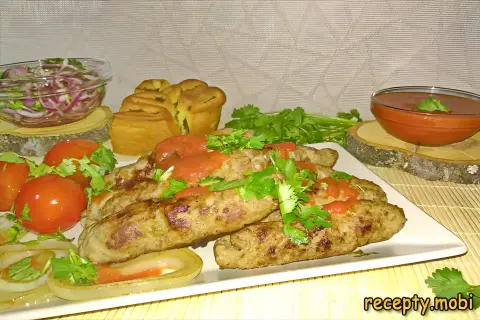
Veal Steaks on a Grill Pan

Instructions
I prepare a good piece of veal (500 g) – tenderloin, ribeye or thick rib all work. I choose meat with fine "marbled" streaks of fat, as they keep the steaks juicy during the quick fry. With a sharp, thin knife I cut the meat across the grain into steaks 1.5–2 cm thick. Cutting across the grain is critical: cut along the grain and the meat will be tough even with tender veal. I place the steaks in a ceramic bowl in layers, sprinkling each layer with sea salt, khmeli-suneli and the pepper mix.
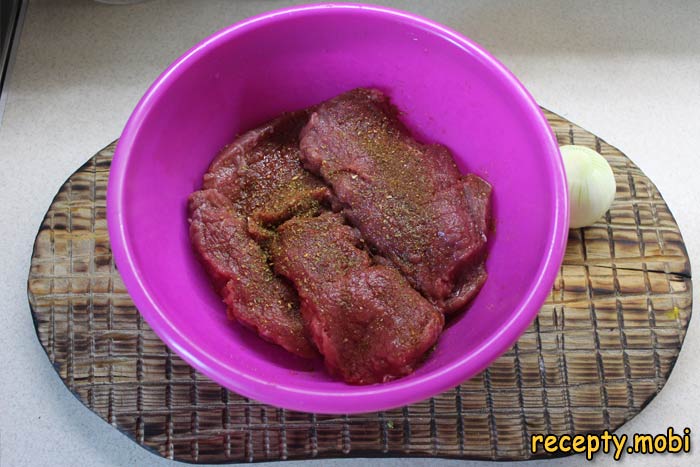
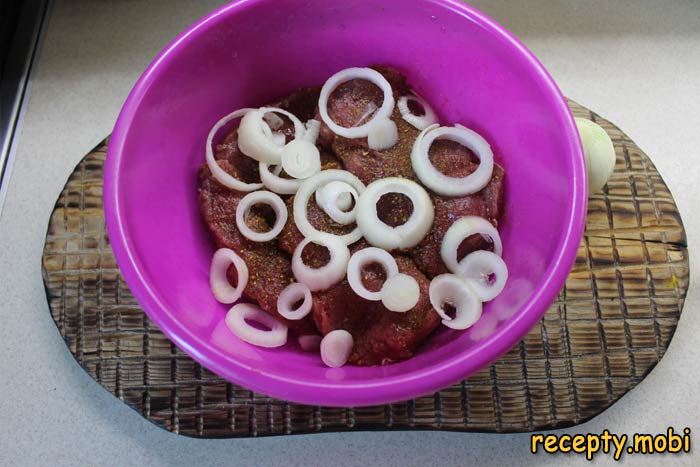
I peel the onion (1 pc.) and slice it into thin rings, 3–5 mm. I lay the onion rings over the meat, on top of the spices – the onion adds juiciness and a sweet note to the marinade. Do not use vinegar-based marinades for good veal – vinegar "eats away" the tenderness of the meat. Onion works more gently, giving aroma without aggressive acidity.
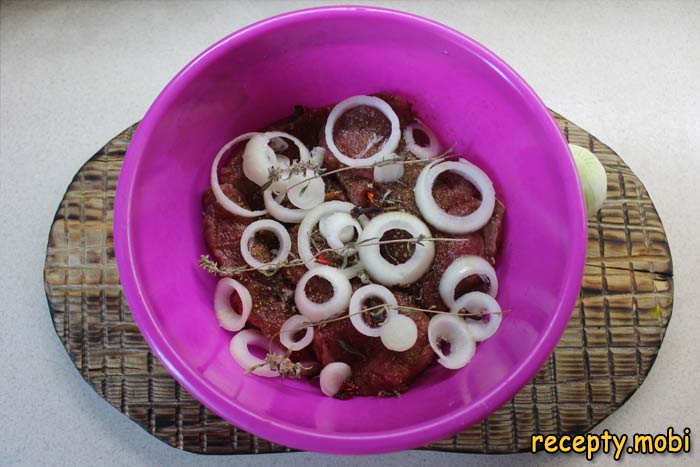
I sprinkle the steaks with a pinch of chili pepper for a light kick (you can skip it if you do not like heat), add the sprigs of fresh thyme (4 pcs.) for a "Georgian" aroma, and drizzle with olive oil (2 tbsp) so it soaks in. I cover the bowl with cling film and put it in the fridge overnight (8–10 hours) – at least 2 hours for the spices to penetrate.
I take the steaks out of the fridge 30–60 minutes before frying – the meat should be at room temperature (18–22 °C) for an even cook. Cold meat cooks on the "outside" while staying raw inside. I heat the cast-iron grill pan over maximum heat for 5–7 minutes until it smokes white – it is exactly at this temperature that you get the lovely grill stripes. I shake the excess marinade, the onion and the thyme sprigs off the meat – only the meat itself should go onto the pan.
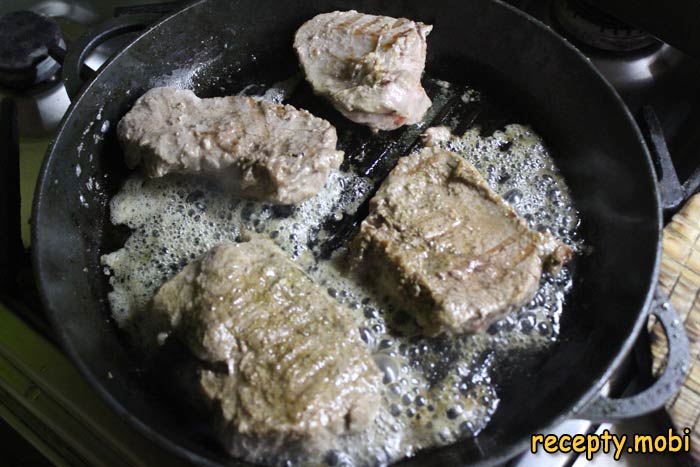
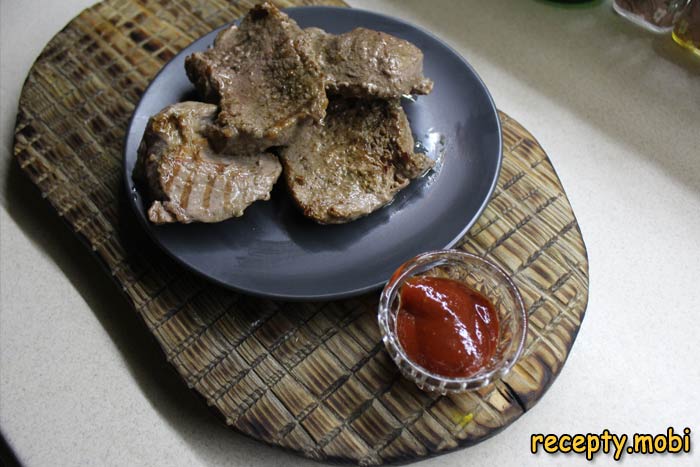
I lay the steaks on the hot pan and fry them for 4–5 minutes on one side without moving them – it is important not to shift the meat so the handsome stripes form. I flip them and fry for another 4–5 minutes on the other side. I take the steaks off and let them "rest" under foil for 5 minutes – the juices redistribute evenly through the meat and it becomes juicier. I serve them with my favourite sauce (tkemali, barbecue, garlic yoghurt). The veal steaks on a grill pan are ready!


Tips
- 1
The thinner the steaks are cut, the faster they fry – the optimal thickness is 1.5–2 cm for medium doneness in 8–10 minutes.
- 2
Heat the grill pan as hot as possible, until it smokes white – only then do you get those handsome dark grill stripes on the meat.
- 3
Marinate the meat for anything from 2 hours to overnight in the fridge – the longer, the more tender and aromatic the steaks. I use a similar principle for my beef steaks.
- 4
You can also cook them on a barbecue or on a grill grate over charcoal – the authentic "open flame" gives an even more pronounced grilled flavour.
FAQ
How long should I fry veal steaks? +
On average, 8–10 minutes of frying in total (4–5 minutes on each side) for medium doneness (pink juices) with a steak 1.5–2 cm thick. For well done (fully cooked, no pink) – 12–15 minutes. For rare (bloody) – 6 minutes (3 on each side). The thickness of the meat is critical: fry thin 1 cm pieces for 4–5 minutes, thick 3 cm ones for 15–20 minutes. Check doneness with a kitchen thermometer: 50 °C (rare), 60 °C (medium), 70 °C (well done) internal temperature. Do not overcook – veal dries out quickly because it is so tender.
What other meat works for this recipe? +
The marinade is universal – it suits any red meat: beef (ribeye, thick rib), pork (loin, neck), lamb (boned-out leg). For poultry – chicken breast or thigh (a more dietary option), turkey. The main thing is to choose flesh without sinews and membranes. For grilling, the steak should be thick enough (at least 1.5 cm), otherwise it will dry out. For pork and lamb you can strengthen the marinade – add garlic (3 cloves). For chicken – reduce the marinating time to 1 hour so it does not "eat away" the tenderness.
Can I cook it without a grill pan? +
Yes, it will be just as tasty on an ordinary cast-iron or heavy-bottomed pan, only without the characteristic grill stripes. The principles are the same: maximum heat, a thin layer of oil on the bottom (for a non-stick effect), do not move the meat while it fries. Alternatives are roasting in the oven at 220 °C for 15–20 minutes (the steak on a rack so the fat drips off), grilling over charcoal (the authentic option), or a wok pan over maximum heat (the Asian approach). A grill pan gives the visual "restaurant" effect of stripes, but the flavour and texture of the meat do not change much depending on the cooking method.
What should I serve the steaks with? +
Ideal side dishes: mashed potatoes or chips (the classic with steaks), basmati rice with vegetables, grilled vegetables (courgettes, aubergines, sweet peppers, tomatoes), baked jacket potatoes. Fresh salads: Caesar, Greek, a simple vegetable one with vinaigrette dressing. Sauces: tkemali (Georgian), barbecue, garlic yoghurt, chimichurri (Argentinian). For drinks – dry red wine (Malbec, Shiraz, Cabernet Sauvignon), dark porter or stout beer, single-malt whisky. For a festive table – with a glass of red wine and candles for a romantic dinner.
- Comment
or post as a guest
Be the first to comment.