Write a comment

Pasta with Shrimp in Cream Sauce – Easy Recipe

Pasta with shrimp in cream sauce is the go-to weeknight Italian dish when you want restaurant-style results in 30 minutes flat. Plump shrimp sautéed in garlic-infused olive oil get folded into a parmesan-thickened cream sauce, then finished with al dente pasta that picks up every drop of the sauce.

The key to nailing this dish is timing — the sauce comes together fast and shrimp overcook in seconds, so having everything prepped before the pan goes on the heat makes the difference between silky and rubbery. This recipe makes 2 generous servings at 243 kcal per 100 g.

Time30 min | Servings: 2 | Calories: 243 kcal per 100 g | Cuisine: Italian

Ingredients

Show ingredients
  • pasta (spaghetti, fettuccine, or penne) – 300 g;
  • shrimp (cooked-frozen) – 500 g;
  • cream (10% fat) – 200 ml;
  • parmesan – 100 g;
  • olive oil – 75 ml;
  • garlic – 3 cloves;
  • nutmeg (ground) – 8 g;
  • salt – 6 g.

Preparation

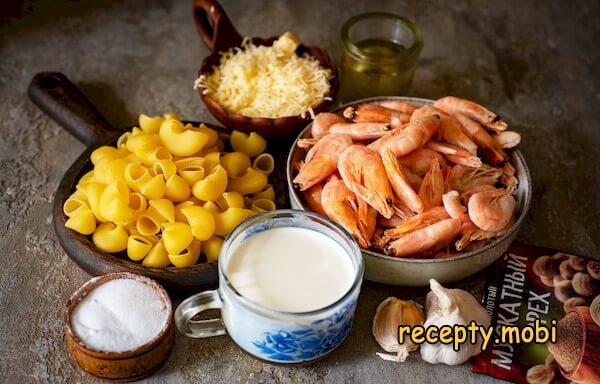
  1. I lay all the ingredients on the work surface — mise en place is essential here because once the sauce starts the timing windows are tight.
    Ingredients for shrimp pasta in creamy sauce
  2. I bring a saucepan of water to a boil and cook the shrimp (500 g) for 3 minutes. Cooked-frozen shrimp only need a brief reheat — over-boiling toughens them dramatically.
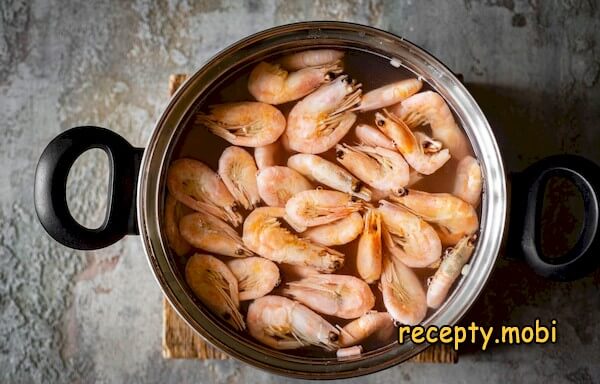
    Boiled shrimp
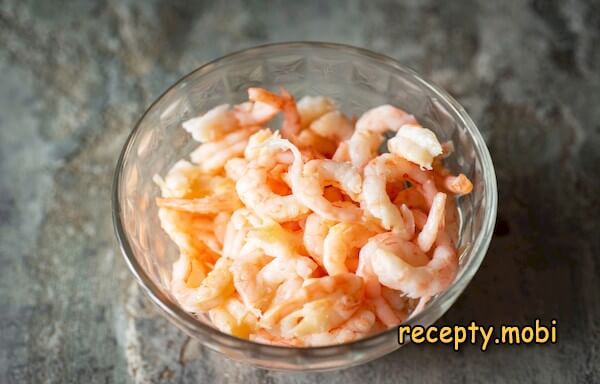
  3. I drain the water and peel the shrimp from their shells. Keeping the tail on a few of them gives a nicer presentation; for ease of eating, take all shells off completely.
    Peeled shrimp
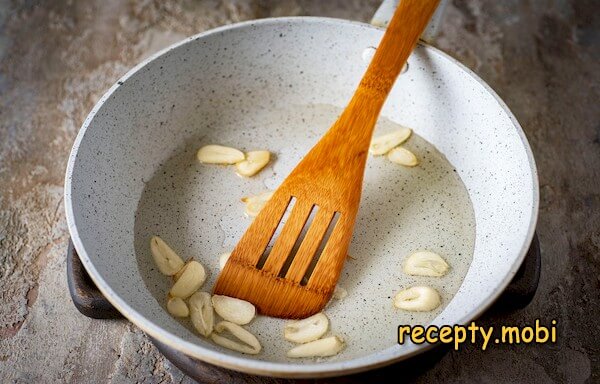
  4. I peel and thinly slice the 3 garlic cloves. In a wide pan over medium heat I warm the 75 ml of olive oil, add the garlic slices, and sauté until they're golden brown and crisp at the edges. I lift the garlic out of the oil with a slotted spoon — the garlic-infused oil stays in the pan, the crisp garlic is reserved for garnish at the end. This technique (aglio e olio style) extracts garlic flavour into the oil without leaving bitter burnt pieces in the sauce.
    Fried garlic in a pan
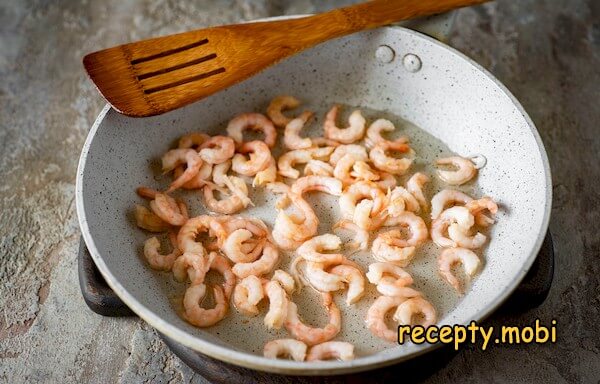
  5. I add the peeled shrimp to the still-hot garlic oil and sauté for 2-3 minutes over medium heat. Just enough to warm them through and pick up the garlic flavour — they're already cooked, this is the gentle reheating stage.
    Shrimp in the pan
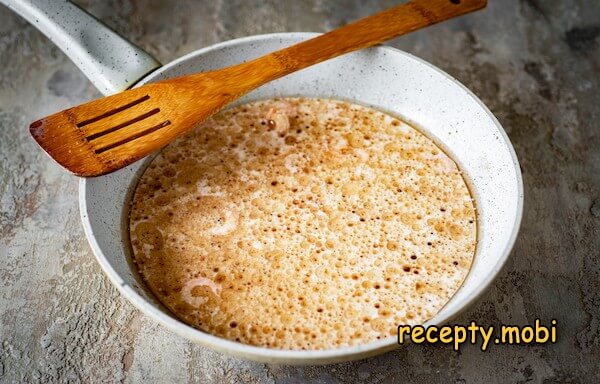
  6. I lower the heat to medium-low and pour in the 200 ml of cream, then add the ground nutmeg (8 g) and salt (6 g). I stir gently with a spatula and let the mixture come almost — but not all the way — to a boil. Cream that fully boils tends to split; keeping it at a heavy simmer is the correct stage.
    Preparing creamy sauce with shrimp
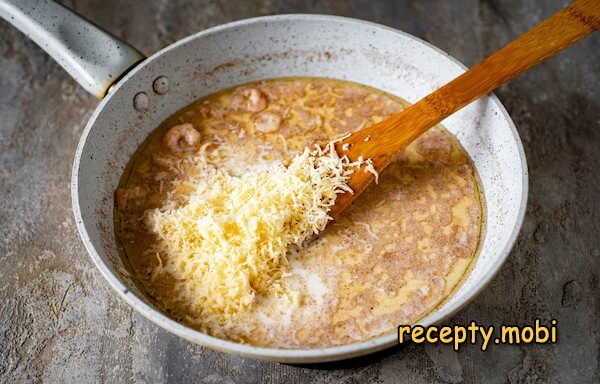
  7. I add the grated parmesan (100 g) and stir continuously until the cheese melts smoothly into the sauce. Adding cheese gradually in two batches helps avoid clumping if your parmesan is finely grated rather than coarsely shredded.
    Preparing creamy sauce with shrimp
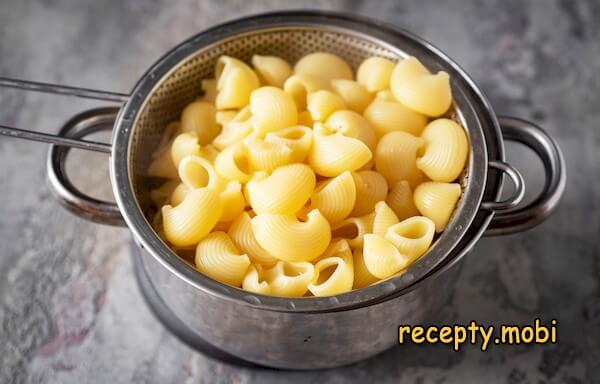
  8. Meanwhile, I cook the pasta (300 g) in well-salted boiling water — about 1 tbsp salt per litre — until al dente, following the package timing. I drain through a sieve, reserving a small cup of pasta water for sauce-loosening if needed.
    Boiled pasta
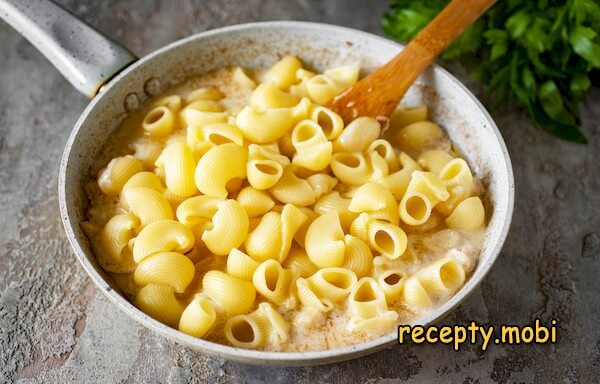
  9. I add the cooked pasta directly into the sauce pan and gently toss to coat every strand. Cover with a lid and let everything mingle on low heat for 4 minutes — the pasta absorbs sauce and the flavours integrate. If the sauce looks too thick, a splash of reserved pasta water loosens it back to silky.
    Making shrimp pasta in creamy sauce
  10. I serve the pasta hot, scattered with the reserved crisp garlic chips and freshly ground black pepper. Optional: extra parmesan and a sprig of parsley.
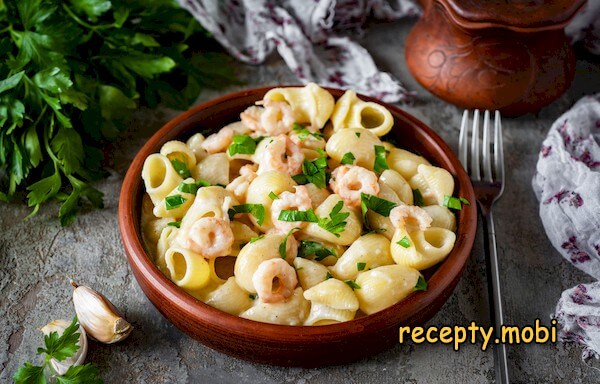
    Shrimp pasta in creamy sauce

Tips and Tricks

Tip 1. CHOOSE THE RIGHT CREAM. 10-20% fat cream is the sweet spot for this sauce — high enough to create a silky body, low enough to stay light. Single cream works; double or whipping cream gives a richer but heavier result. Avoid UHT cream if possible — fresh cream gives a noticeably cleaner flavour and emulsifies more smoothly with the cheese.

Tip 2. DON'T OVERCOOK THE SHRIMP. The single biggest mistake in shrimp pasta is leaving the shrimp on the heat too long. Even cooked-frozen shrimp need only 2-3 minutes of warming in the garlic oil, and once they hit the cream sauce another 1-2 minutes is enough. Over the 5-minute mark they turn rubbery and tough — this is irreversible. For a similar style with a different protein and a bacon-led sauce instead of shrimp, see Carbonara Pasta with Bacon and Cream.

Tip 3. RESERVE A LITTLE PASTA WATER. Always keep a small cup of the pasta cooking water before you drain. The starchy water is liquid gold for adjusting sauce consistency — a tablespoon at a time loosens an over-thickened sauce while helping it cling to the pasta. This is a fundamental Italian technique that elevates the result every time.

Tip 4. PARMESAN MATTERS — REAL OR DON'T BOTHER. Use real Parmigiano Reggiano (or the more affordable Grana Padano), not the powdered green-tin imitation. Real parmesan melts smoothly and brings the salty-umami depth this sauce needs; powdered substitutes tend to clump and taste flat. Pecorino Romano is a saltier, sharper alternative that also works beautifully — use about 80 g instead of 100 g since it's more pungent. For another cream-sauce protein dish to broaden your repertoire, try Chicken Hearts in Cream Sauce.

Frequently Asked Questions

Can I use raw frozen shrimp instead of cooked-frozen?

Yes, with one tweak to the timing. Thaw the raw shrimp completely in cold water (about 15 minutes) and pat dry with paper towel. Skip step 2 (the boiling) entirely. Add the raw shrimp directly to the garlic oil at step 5 and sauté for 4-5 minutes until they turn pink and opaque all the way through. Raw shrimp give a slightly fresher flavour and pick up more of the garlic-oil aromatics, but they're trickier to time correctly — the cooked-frozen version is more forgiving for weeknight cooking.

Which pasta shape works best for this dish?

Long flat shapes — spaghetti, fettuccine, or linguine — are the classic choice because they coat well with the cream sauce and look elegant on the plate. Penne and tagliatelle also work well; penne in particular catches the shrimp pieces in its tube. Avoid very small shapes like orzo or tiny shells — they get lost in the sauce and the textural interplay with the shrimp is lost. Whatever shape you pick, cook it strictly al dente; soft pasta in a cream sauce becomes claggy fast.

How can I make the sauce thicker without splitting it?

Three ways. First, use higher-fat cream (20% or whipping cream) — more fat = thicker sauce naturally. Second, add more grated parmesan in step 7 — increase to 130 g and stir until smooth. Third, the safest method: simmer the sauce uncovered for an extra 1-2 minutes after adding the cheese, letting some moisture evaporate. Avoid using flour or cornstarch as a thickener — neither integrates cleanly into a cream-and-cheese sauce and they leave a noticeable starchy texture.

Can I make this dish ahead of time?

Cream-and-cheese pasta is best served immediately — the sauce thickens and clings to the pasta as it sits, and reheating tends to split the cream and dry out the shrimp. If you need to make components ahead, prep the shrimp through step 3 and the garlic-oil through step 4 in advance (refrigerate up to 24 hours). When ready to eat, do steps 5-10 fresh — about 12 minutes total. Leftovers can be kept covered in the fridge for 1 day and gently rewarmed with a splash of milk or cream over very low heat.

Write comments...
symbols left.
or post as a guest
Loading comment... The comment will be refreshed after 00:00.

Be the first to comment.