avg —
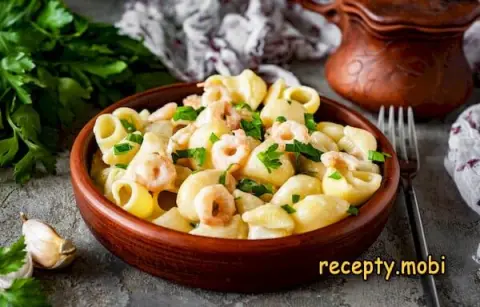
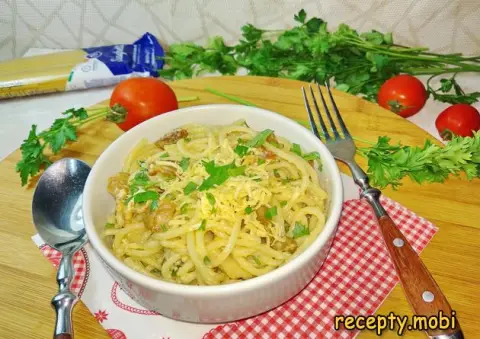
Tagliolini with Shrimp

Instructions
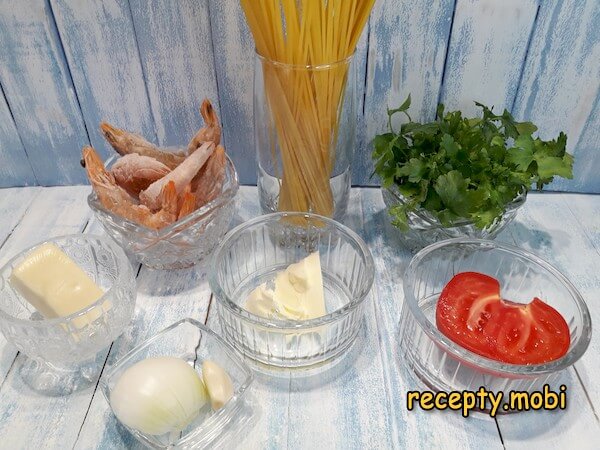
I prepare the ingredients for tagliolini with shrimp. Instead of red shrimp, which are boiled before freezing, you can use raw shrimp – for example tiger shrimp – and pre-boil them for 2-3 minutes without removing the shell. Raw shrimp cooked in their own juices give a deeper aroma.
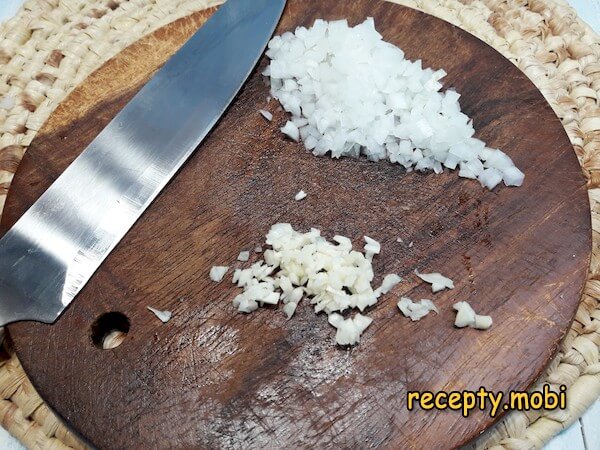
Before getting down to making the sauce and the tagliolini, all the components should be chopped. For this I chop the onion and garlic as finely as possible – a fine cut is needed for quick sautéing.
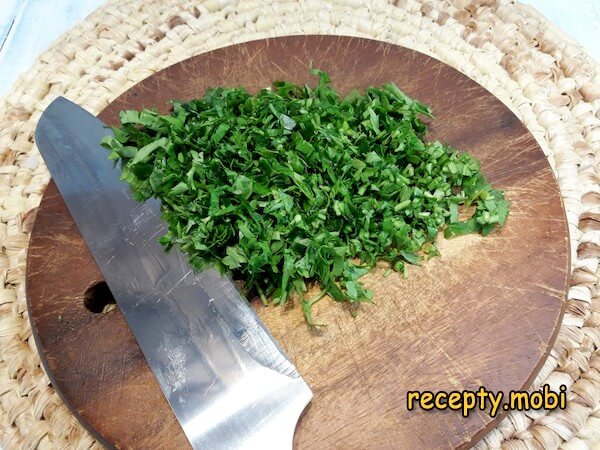
I finely chop the parsley so that it spreads evenly through the sauce and releases its aroma.
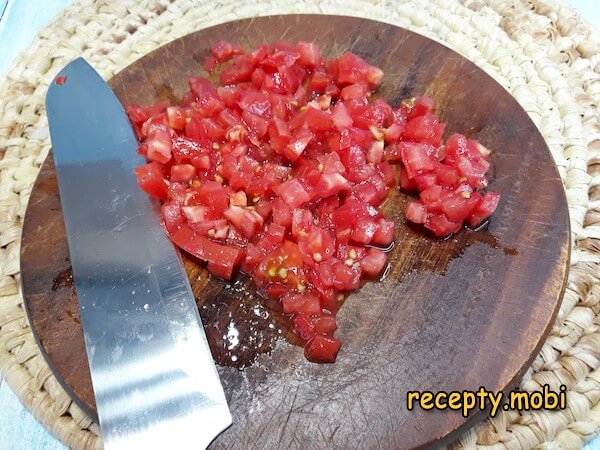
I chop the tomato just as finely (you don't have to remove the skin) – a fine cut helps the tomato break down quickly in the sauce.
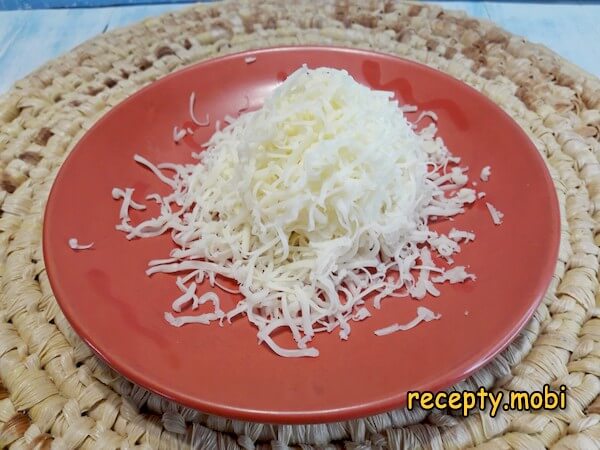
I grate the cheese using a fine grater – fine shavings cling better to the hot pasta.
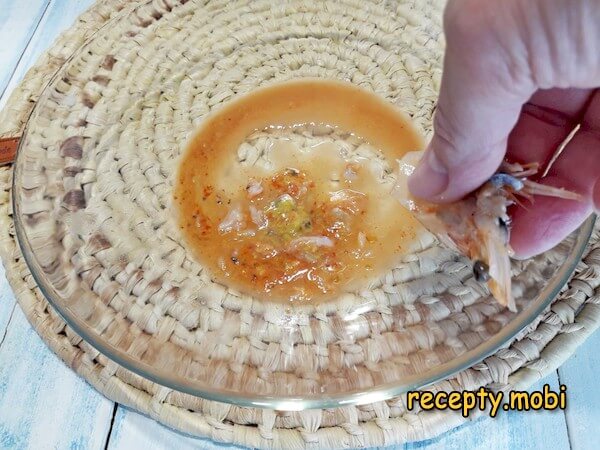
I pull the heads off the shrimp and squeeze out the juice and everything that comes out. I collect this pulp with its strong seafood smell in a separate small bowl – this "pulp" is the secret of an authentic Italian shrimp sauce.
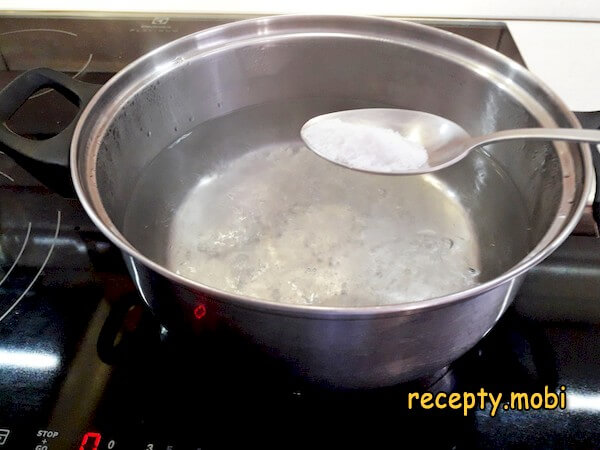
I put a pot of water on the heat. For the stated amount of pasta, 2 litres of water is enough. Once it boils, I add half a tablespoon (level) of coarse salt – the Italians say: "the water for pasta should be like the sea".
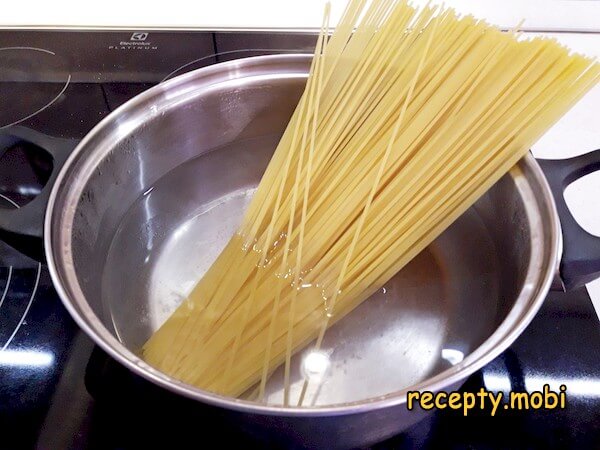
I drop the tagliolini into the boiling water – the long strands soften and sink to the bottom of the pot on their own. I cook them a couple of minutes less than stated on the package and stir occasionally – this is the secret of the "al dente" (firm to the bite) state.
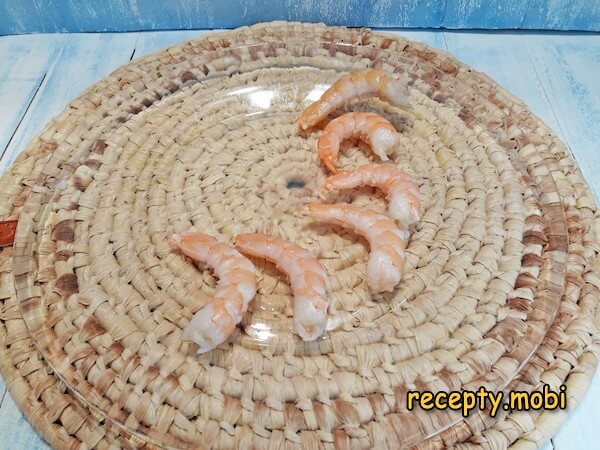
Meanwhile I peel the shrimp tails from their shells and, where possible, remove the intestinal vein – the thin black thread running along the back.
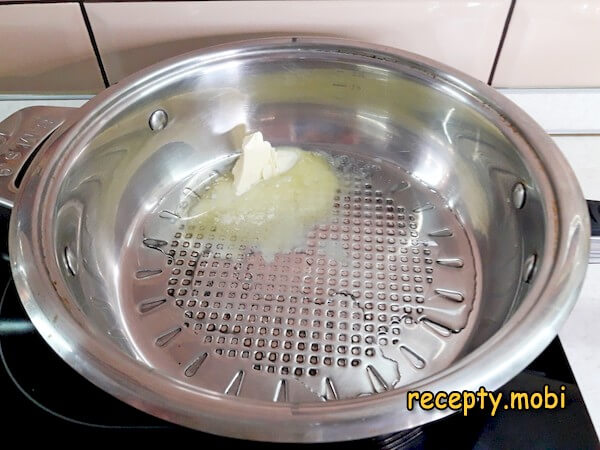
In a pan I heat the olive oil and butter – it is precisely the combination of the two fats that gives that "Italian" frying aroma.
I add the chopped onion, garlic and parsley to it – all at once, so they sauté together.
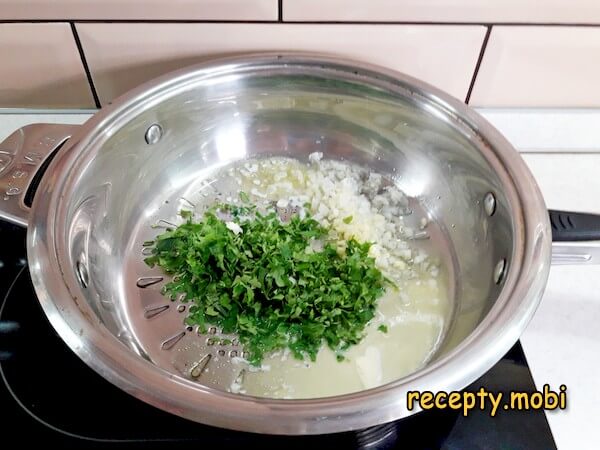
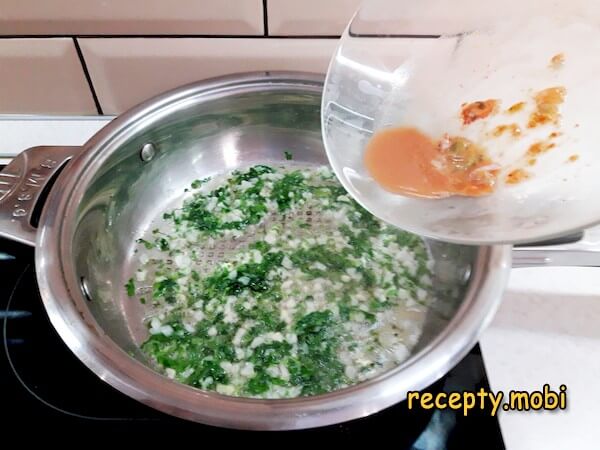
As soon as a light aroma of warm garlic appears (after about 2 minutes), I pour the pulp from the shrimp heads into the pan – it is a "concentrate of the taste of the sea".
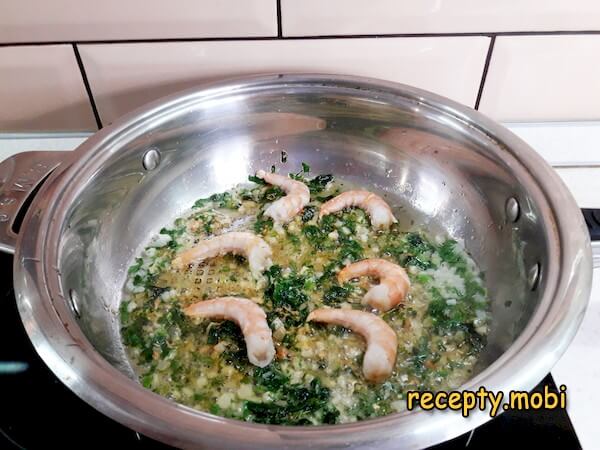
Next I add the shrimp themselves. I sauté them for a couple of minutes, no more – overcooked shrimp turn "rubbery".
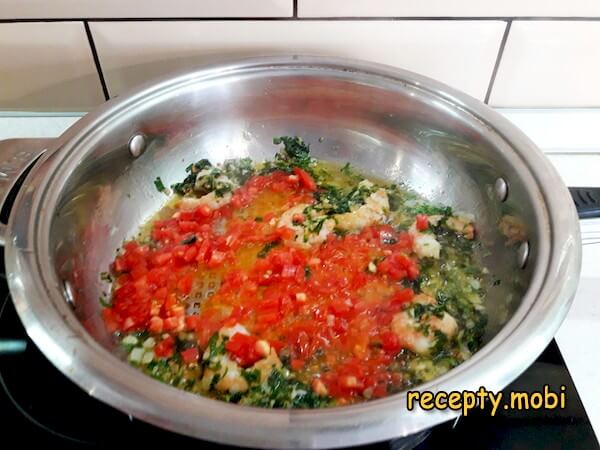
I add the tomatoes to the pan and let everything simmer for 2 minutes – the tomatoes should break down a little and release their juice into the sauce.
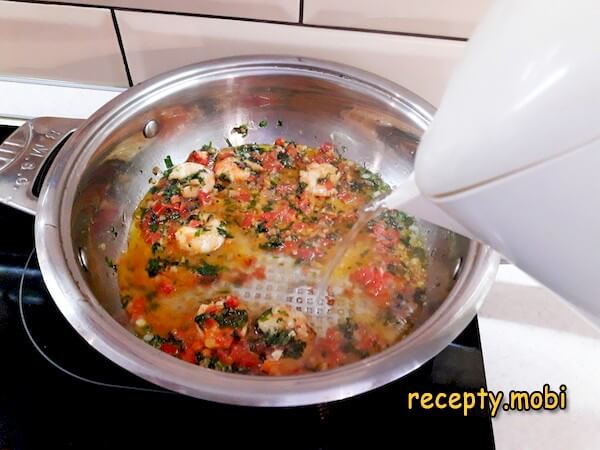
I add 80 millilitres of hot water – this is an "Italian" trick: a little water thins the sauce to the right consistency.
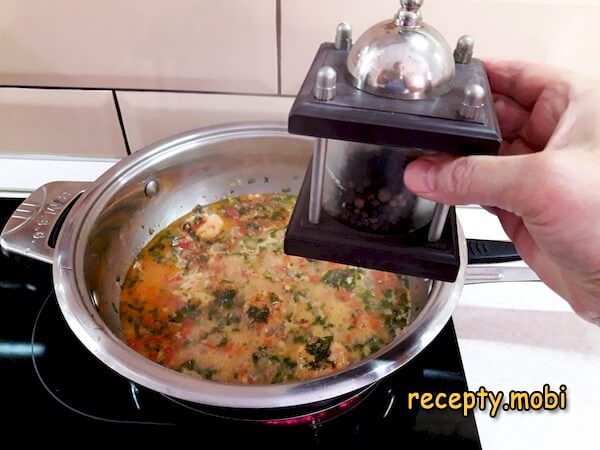
I salt and pepper the sauce – "to taste", but don't over-salt, since the cheese at the end will add its own saltiness.
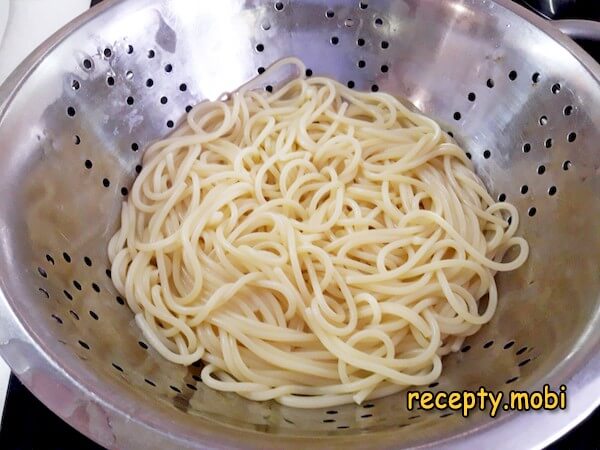
I drain the tagliolini in a colander – without rinsing it in cold water, otherwise the pasta loses its starchy "coating" ability.
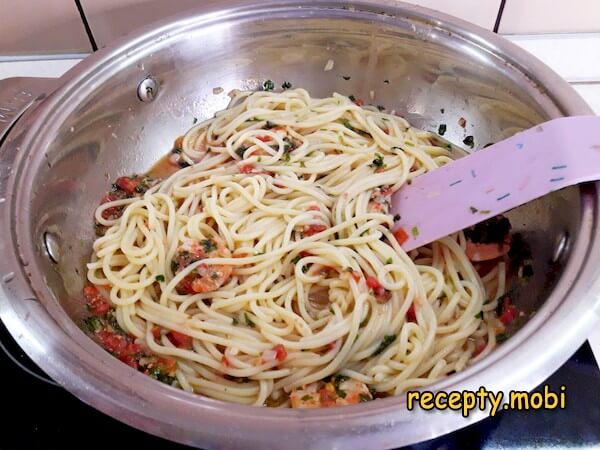
And straight away I transfer it to the pan – while the pasta is hot it will soak up the sauce.
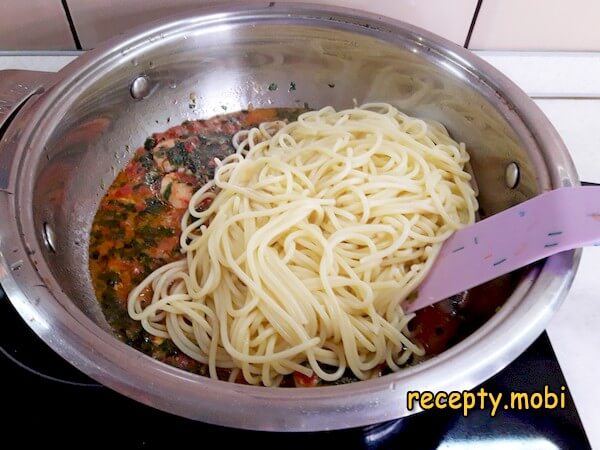
I stir and let everything simmer together for another couple of minutes, after which the dish can be taken off the heat. This "final flourish" in the pan is the secret of proper Italian pasta.


Tips
- 1
THE PULP FROM THE HEADS is the secret of an authentic sauce. Many people throw the shrimp heads away and lose the main flavour. The heads contain the "hepatopancreas" (liver) and roe – it is this orange-red mass that gives the sauce its characteristic "deep" shrimp taste. After squeezing the mass into a separate bowl, it is poured into the pan at the stage of sautéing the onion with garlic – it instantly tints the oil pink and the sauce takes on an "Italian" character. Without this technique you get an "ordinary" shrimp pasta, without that "depth". A similar principle of "using every part of the shrimp" works in pasta with shrimp in a cream sauce.
- 2
AL DENTE is the secret of Italian pasta. Tagliolini is cooked "al dente" (literally "to the tooth" in Italian) – that means 1-2 minutes LESS than stated on the package. The pasta should be slightly springy, with a little resistance when bitten, but without a raw "core". It finishes cooking in the pan with the sauce for 1-2 minutes – that is where the pasta soaks up the aroma of the sauce rather than falling apart in water. "Al dente" is the fundamental difference between Italian pasta and the kind cooked "until completely soft".
- 3
PASTA WITHOUT RINSING is the secret of proper bonding. Rinsing in cold water is the crudest mistake. The surface starch on the pasta acts as a "glue" that binds the sauce to the pasta. Without it the sauce "slides off", and pasta and sauce end up being eaten separately. Just tip the tagliolini into a colander (15-20 seconds is enough to drain the water), then straight into the pan with the sauce. You can keep a cup of "pasta water" (the cloudy water from boiling) – add it 1-2 tablespoons at a time if the sauce is too thick. The principle of "sauce and pasta gripping together" works in any Italian pasta.
- 4
2 MINUTES OF SAUTÉING THE SHRIMP is the secret of a tender texture. Shrimp are the most "temperamental" seafood. Raw tiger shrimp need 2-3 minutes; cooked-frozen ones even less, just 1-1.5 minutes in hot oil. When overcooked, the protein "shrivels", the shrimp becomes "rubbery" and loses flavour. Signs of doneness: a bright pink-orange colour and the shrimp curled slightly into a "crescent", but not into a "hook". If you've overdone it, drop them into cold water for 10 seconds to stop the residual heat from cooking them further.
FAQ
What can I use instead of tagliolini in this recipe? +
Tagliolini is a thin, long pasta, a relative of tagliatelle. The best alternatives: tagliatelle (wider, also suitable), fettuccine (a classic for seafood), linguine (flat, ribbon-like), spaghetti cooked al dente (a classic for shrimp pasta), and capellini "angel hair" (the thinnest). Bucatini (hollow) also works. Not the best choices: penne or rigatoni (short shapes don't grip the shrimp sauce), and farfalle (bow ties, which spoil the look). The main thing is a long pasta for seafood.
Which cheese suits Italian pasta with shrimp? +
In Italy there is a "rule": seafood and cheese hardly go together. But for shrimp pasta, Parmesan or Pecorino Romano in sensible amounts are acceptable. The best options: Parmigiano Reggiano (the classic, aged 24+ months), Grana Padano (milder than Parmesan), Pecorino Romano (a salty sheep's-milk note). Definitely not suitable: mozzarella (it melts into mush), soft blue cheeses (gorgonzola and the like), and processed cheeses. Grate it just before serving, not during cooking (the cheese should not "boil" in the sauce). An alternative is to leave out the cheese and sprinkle with parsley.
Why does the pasta stick together after cooking? +
Three typical reasons. First – too little water for boiling (the rule: 1 litre of water per 100 g of pasta); the pasta releases starch into the concentrated water and "sticks". The fix: 2 litres of water for 200 g of tagliolini. Second – not stirring in the first 2 minutes of boiling (the pasta settles on the bottom and clumps). The fix: stir right after dropping it in and every minute after. Third – rinsing in cold water and leaving it without sauce, so the pasta dries out. The fix: combine it with the sauce straight away and don't rinse. If it has already stuck together, try "loosening" it with warm sauce.
Can I make the pasta in advance, for example before guests arrive? +
The best strategy for a "guest" version: the sauce can be made 1 day ahead (without the shrimp) – it keeps in the fridge for 2 days. Peel the shrimp in advance and keep them in an airtight container in the fridge until needed. When the guests arrive, bring the water to the boil, add the tagliolini and cook for 5-7 minutes, reheat the sauce at the same time, sauté the shrimp for 2 minutes, and bring everything together in 3 minutes. Fully cooked pasta keeps poorly – 1-2 hours at most, after which it sticks together. It's better to have a "half-ready set" and do the final assembly before serving.
- Comment
or post as a guest
Be the first to comment.