avg —
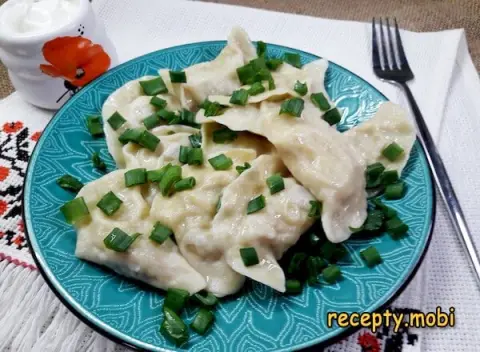
Dumplings with Frozen Cherries

Instructions
In a bowl suitable for mixing, combine the flour with the hot salted water.
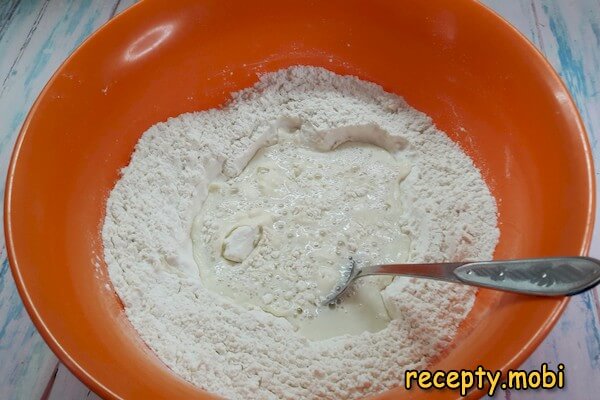
Once the flour has absorbed all the water, start kneading the dough by hand.
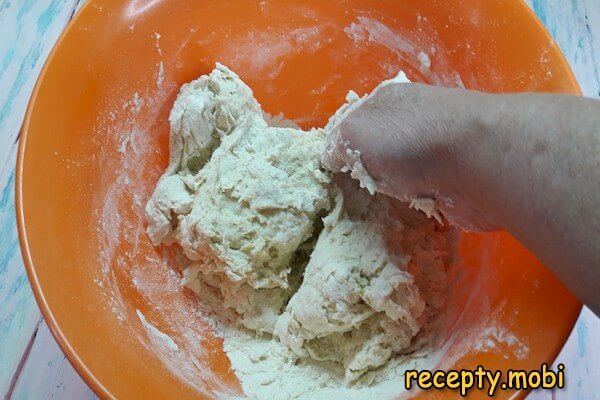
As soon as the lump becomes smooth, cover it with cling film and let it rest.
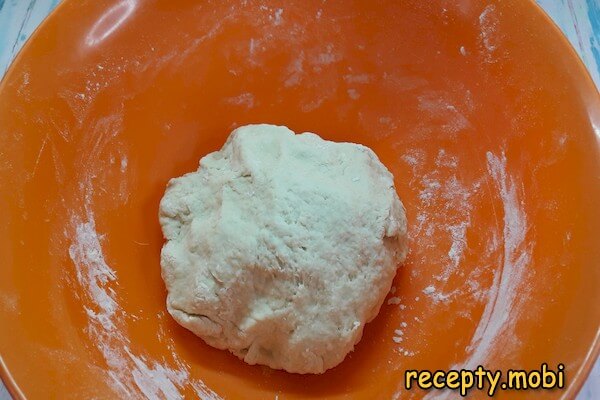
After 5 minutes, turn the whole batch out onto the table. It is now easier to knead it to a silky smoothness. You could roll out a large sheet and cut out circles with a glass. But the dough is fairly firm, and the scraps gathered up for re-rolling become tougher in the following batch. So for this dough it is better to prepare the dough pieces in a different way.
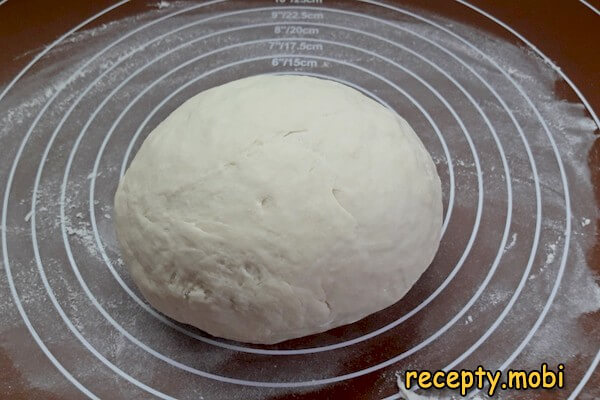
Leave a quarter of the total mass on the work surface and hide the rest in a bag. Roll the portion you left out into a rope and cut it into pieces.
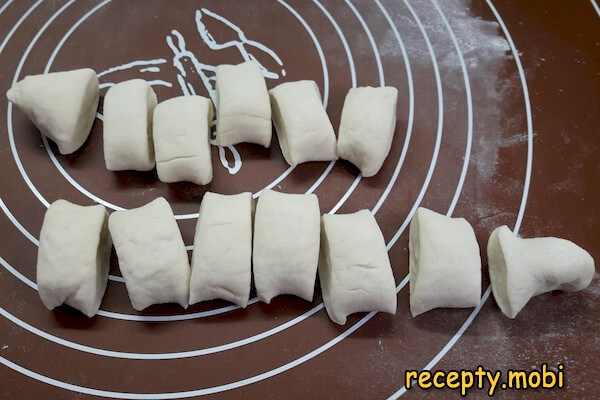
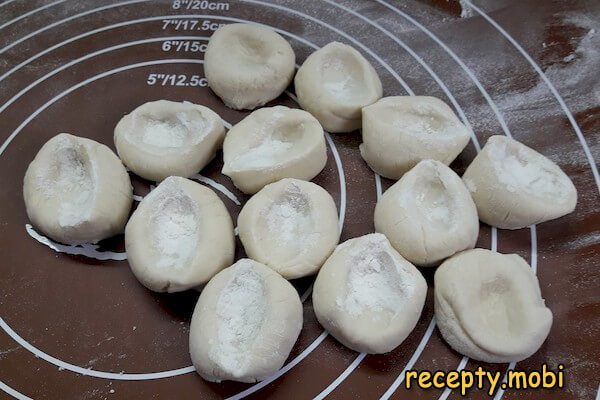
Dip both ends of each piece in flour and press it flat in the middle.
Roll out the circles to 2–3 mm thick.
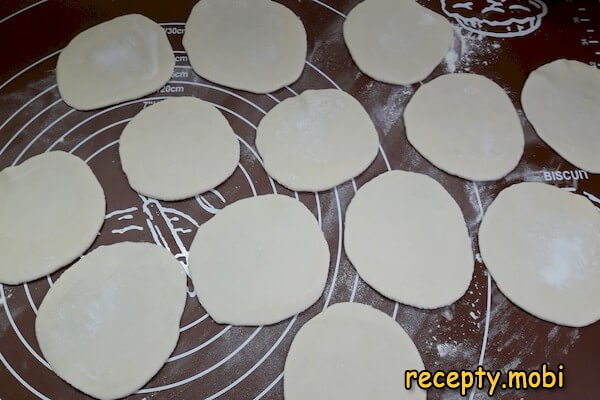
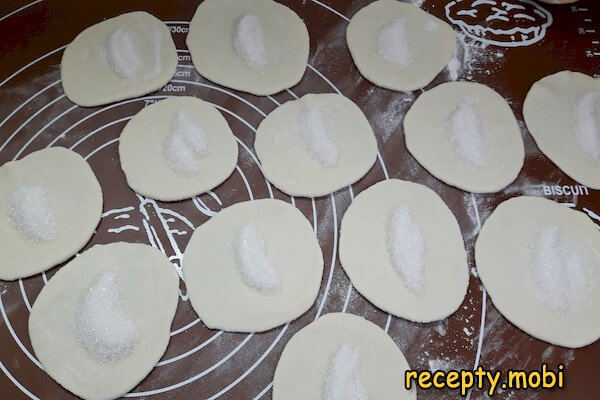
Put half a teaspoon of sugar, or a little more, on each one.
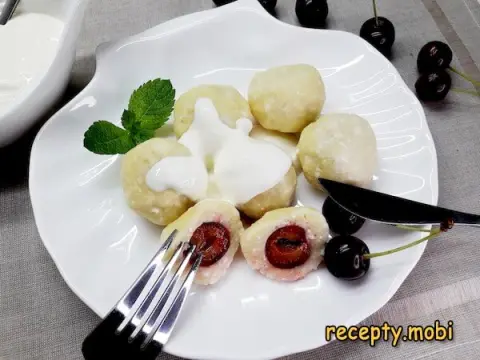
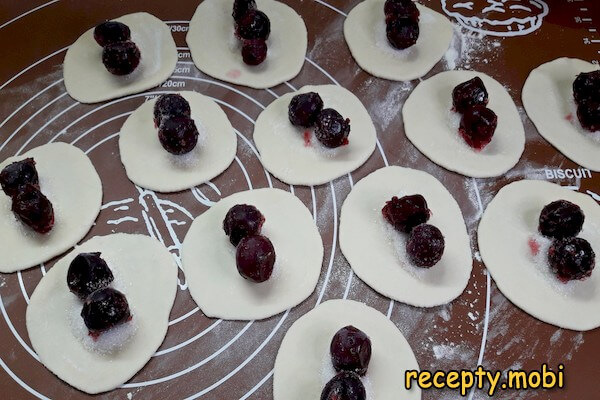
On top, add 2–3 cherries (depending on their size) straight from the freezer.
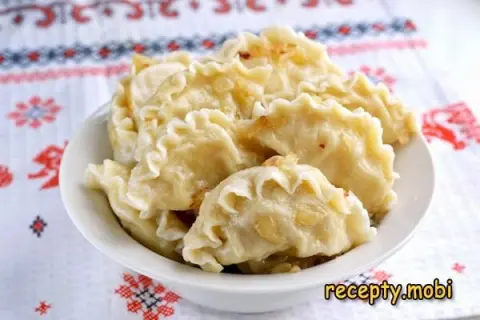
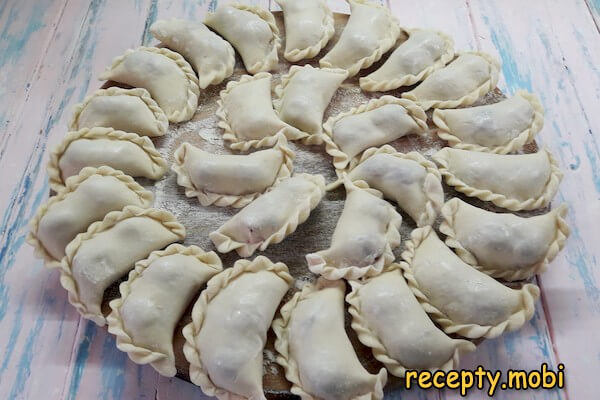
Pinch the edges together, and for strength go over the join a second time with a braided seam.
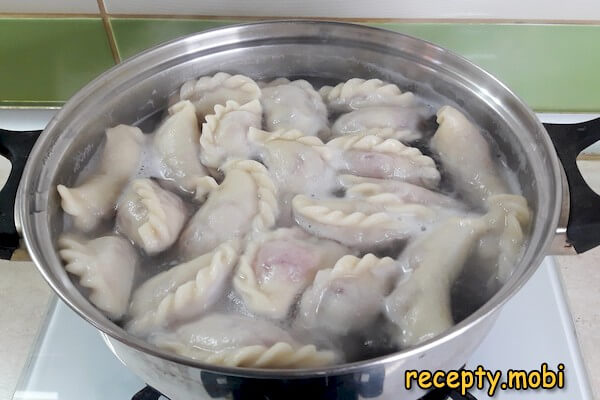
Drop the required number of dumplings into the boiling water.
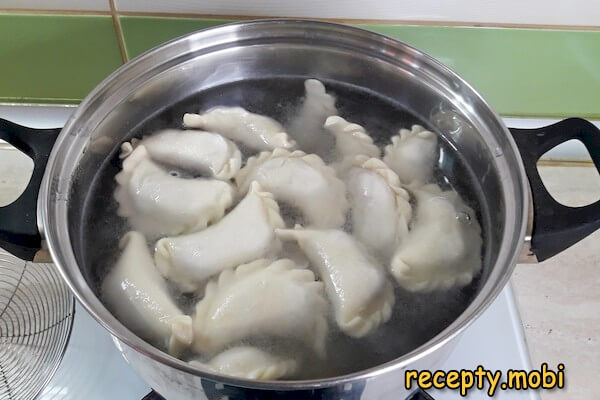
From the moment the water returns to the boil, cook them for 2–3 minutes. Lift them out with a slotted spoon. To stop the dumplings sticking together too much, sprinkle them with sugar or brush them with oil on the plate.
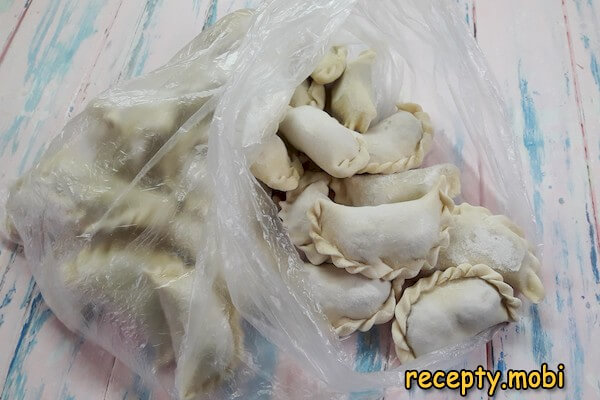
You can lay out some of the dumplings in an even layer and freeze them, then transfer them to a bag and keep them in the freezer. When you need them, just boil them in the usual way.


Tips
- 1
DON'T THAW THE CHERRIES – this is the key tip. Frozen, they keep the juice inside the dumpling; thawed, they "run" into the dough.
- 2
WATER AT 60°C – a custard dough. Cold water gives an ordinary unleavened dough, warm water gives a more tender and elastic one.
- 3
ROPE + CUTTING – more convenient than rolling out a sheet. Less waste, and the dough stays "fresh".
- 4
A BRAIDED SEAM – double protection against the juice leaking out. The same principle works for other kinds of dumplings with berry fillings.
FAQ
Which cherries should I choose? +
Frozen pitted cherries are ideal – easy to shape and to eat. The berries should be medium-sized (1.5–2 cm) and with no sugar in the ingredients, so you can control the sweetness yourself in the filling. Cherries you freeze yourself in summer are the premium option: wash the cherries, remove the pits, spread them out on a tray in a single layer and put them in the freezer, then transfer them to a bag. Fresh cherries in season also work, but the pits add bitterness during boiling. Technically, dumplings with frozen cherries are juicier than those with fresh ones.
What can I use instead of cherries? +
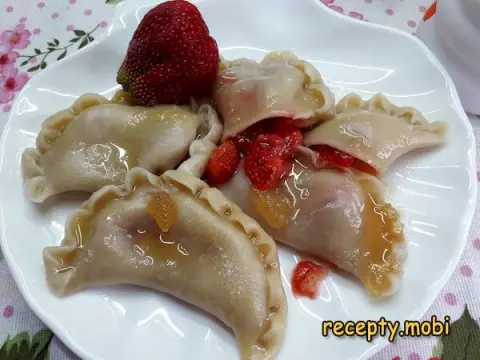
Alternatives include frozen strawberries, raspberries, blueberries, bilberries and blackberries. A mix of berries makes "forest" dumplings. From garden fruit: blackcurrants, gooseberries, strawberries. For a "winter" serving, use cranberries and sugar; for Easter, curd cheese and raisins; for "autumn" ones, apples and cinnamon. Frozen berries are better than fresh, because the juice won't soak into the dough while you shape them. The size of the berries matters: larger ones are easier to shape, while smaller ones should be added 4–5 at a time. For pit-free options, choose strawberries or raspberries (their seeds are tiny and don't get in the way). Add sugar to taste, as berries vary in sweetness.
How long do the dumplings keep? +
Raw in the freezer, they keep for up to 3 months. Freeze them on a board in a single layer first, then transfer them to a bag so they don't stick together. Boil them without thawing for 4–5 minutes from the moment the water boils. Cooked ones keep in the fridge for 1–2 days; reheat them by steaming or in the microwave. Don't freeze already-cooked ones, as the dough goes mushy after thawing. Freshly cooked dumplings are the best, so serve them straight away. If you've shaped a large batch, freeze some "in reserve" and boil them fresh each time. For the weekend, make 100–200 dumplings – that's a "month's worth of meals". A convenient "homemade ready meal". Boiling times for different fillings are in the table: how long to boil vareniki.
What do you serve dumplings with? +
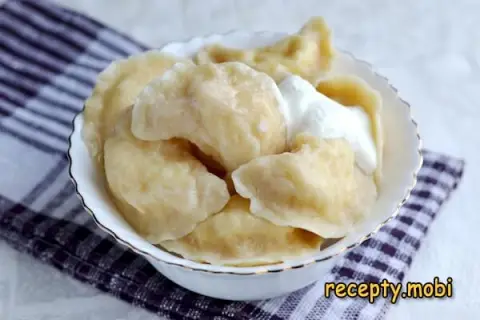
The Ukrainian classic: with sour cream (thick, 25–30% fat) – "home-style". With honey or cherry syrup for a dessert serving. With icing sugar for children. With ice cream for an unusual dessert. With whipped cream for a restaurant-style serving. With tea or cocoa for a winter tea-time. With a glass of milk as a version for children. For a "full meal", with cold compote or fruit drink. Garnish with fresh mint and a sprig of cherry for the look. You can drizzle them with the cherry juice left from boiling. For Easter, serve them with curd cheese and sour cream. With a shot of cherry liqueur for an "adult" serving.
- Comment
or post as a guest
Be the first to comment.