avg —
Eggplants in sour cream with garlic in a frying pan

Instructions
I prepare the ingredients for the eggplants in sour cream with garlic in a frying pan. The sour cream should be at least 20% fat. Choose well-ripened eggplants with firm pulp and glossy, dark-purple skin.
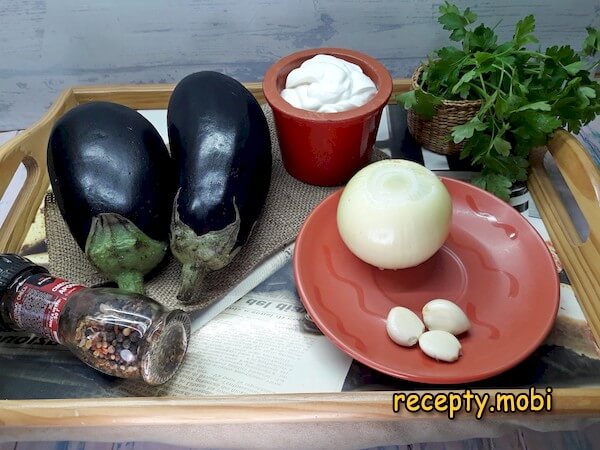
It is better to remove the skin from the eggplants. I cut the pieces fairly large, so they won't fall apart during frying. At the same time the appetiser turns out uniform in structure and more tender.
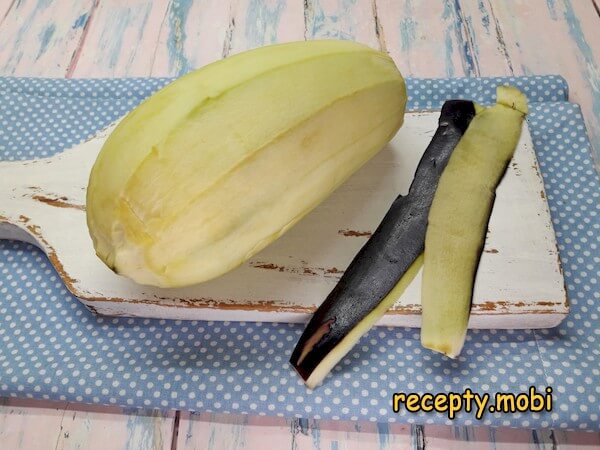
I first cut the thick eggplants into equal slabs (about 2 cm thick).
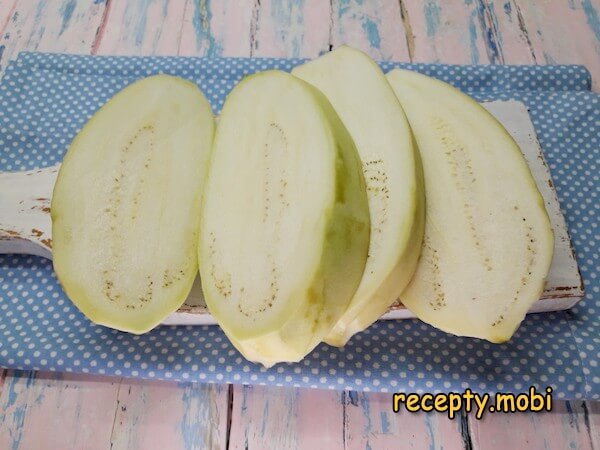
Then I cut them into cubes.
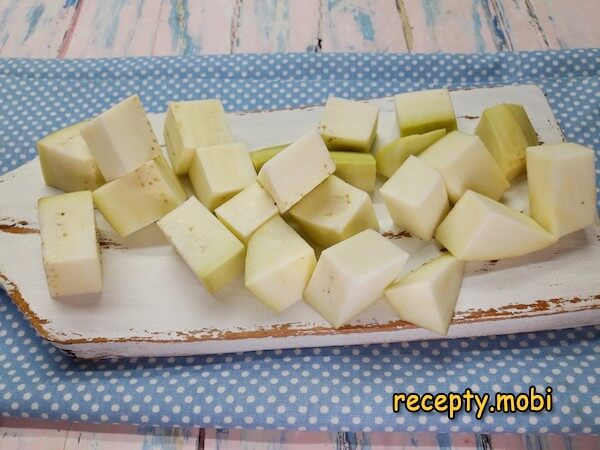
I place the cubes in a bowl, sprinkle them with half a tablespoon of salt, mix, and leave them for 10 minutes. I do this to remove any bitterness together with the liquid that is drawn out. Modern eggplant varieties usually aren't bitter, but the precaution does no harm. As a bonus, after this the cubes won't absorb too much vegetable oil during frying.
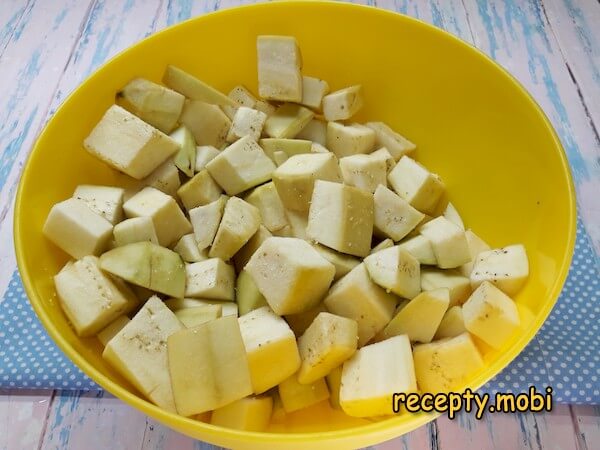
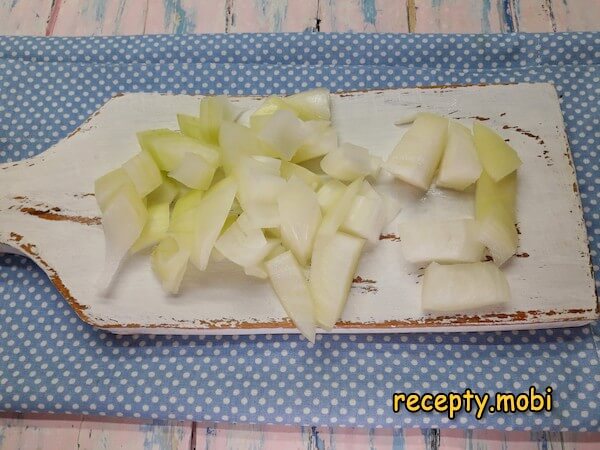
Meanwhile, I cut the onion into large cubes, the same as the eggplants.
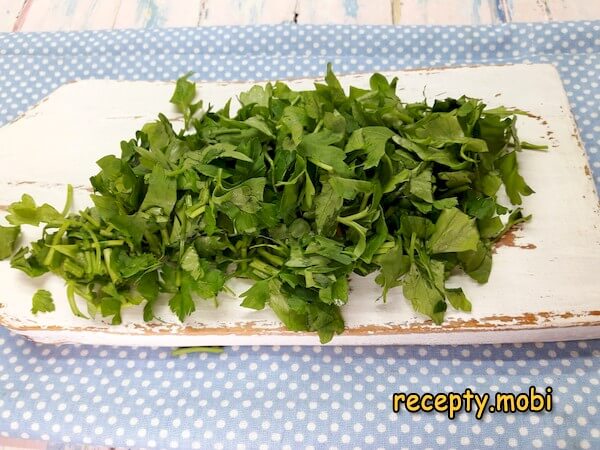
I chop the parsley (not too fine).
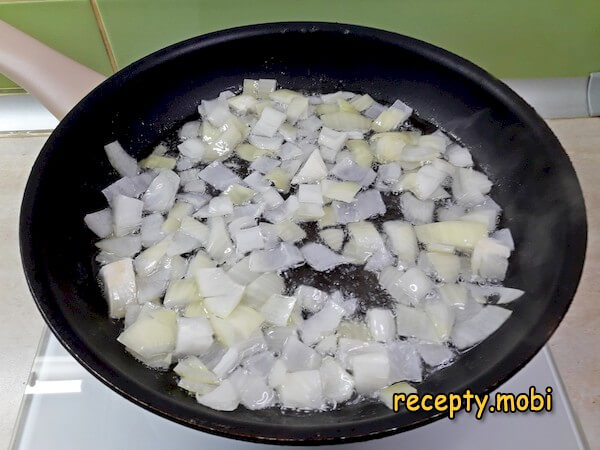
I heat the oil in a skillet and sauté the onion in it, but only until softened.
I take the eggplant cubes in my hands and squeeze them, then place them on top of the onion.
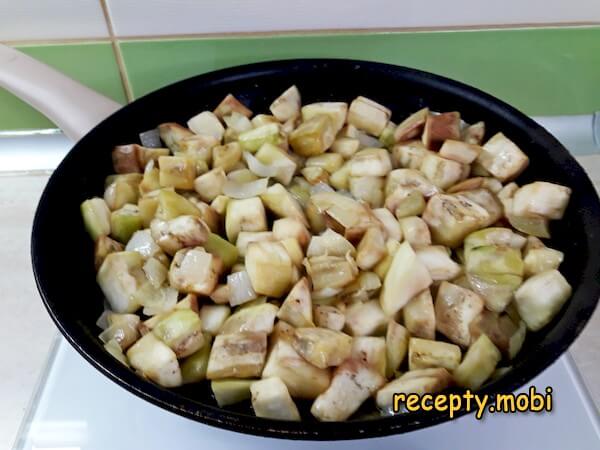
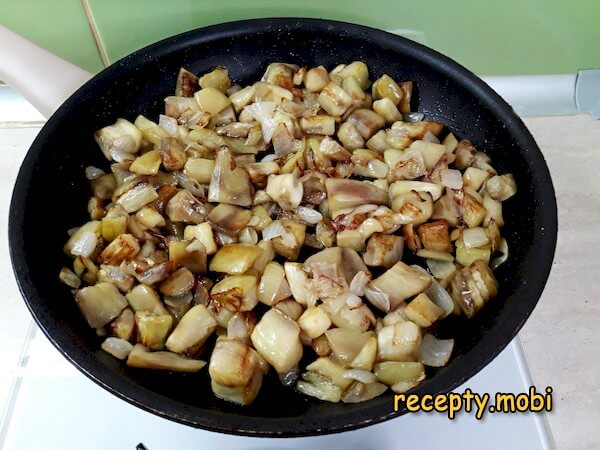
Over medium heat, stirring occasionally, I brown the eggplants until golden.
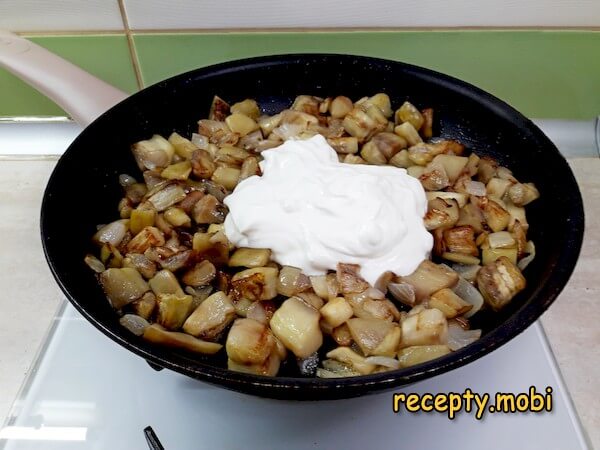
I add the sour cream and stir.
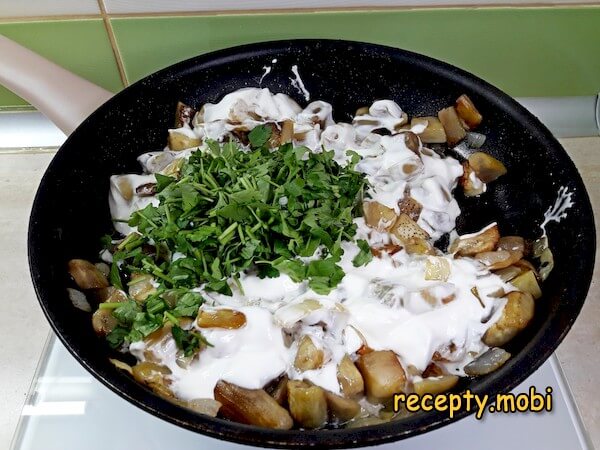
Right after it I add the herbs. I wait until the mixture starts to bubble, and from that moment I heat it for another 3–4 minutes. To keep the cubes whole and firm, long heat treatment isn't needed here – the eggplants were already done once they had browned.
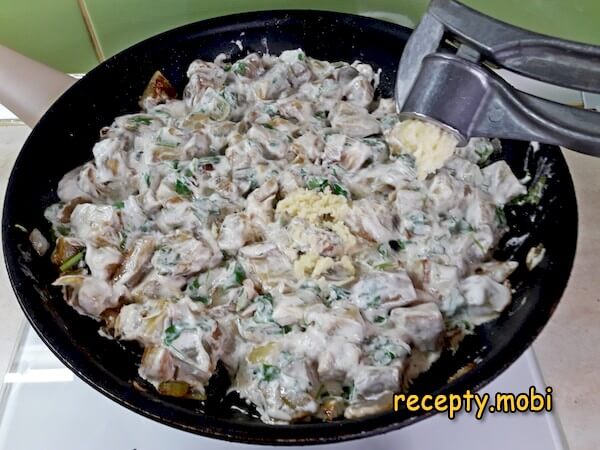
At the very end I squeeze in the garlic, stir everything, and after half a minute turn off the heat. At this moment a wonderful aroma of warm garlic appears, which immediately whets the appetite.
Some people like eggplants in sour cream with garlic while they are still hot – that's a matter of taste. But it is actually best to wait until the appetiser cools and serve it that way. The dish then becomes even more like a mushroom one. I serve it with country-style potatoes, as well as with any side dish, or even just a slice of bread. It is very tasty!



Tips
- 1
SALT AND SQUEEZE – the secret to keeping them from soaking up oil. Eggplants absorb oil like sponges. After a 10-minute salted "rest" the moisture is gone, and the cubes fry with a minimum of oil.
- 2
REMOVE THE SKIN – the secret to tenderness. The skin is tough and stringy when you chew it. Without it the texture is uniform, like that of mushrooms.
- 3
GARLIC RIGHT AT THE END – the secret to the aroma. If you fry it from the start, the garlic burns and turns bitter. Added at the end for 30 seconds, its warm aroma spreads through the kitchen.
- 4
COOL BEFORE SERVING – the secret to the "mushroom" effect. The hot appetiser is simply tasty. The cold one is even more like fried mushrooms in texture. The same principle works in other kinds of eggplant appetisers.
FAQ
Which eggplants should I choose? +
Ideally, ripe eggplants with glossy, dark-purple skin and firm pulp (600 g is about 2 medium fruits). Young, seedless eggplants also work well (they have no bitterness), as do white eggplants (more tender, not bitter), round Sicilian ones, and long, thin Japanese eggplants (which cook quickly). A mix of varieties is interesting too. Do not use eggplants that have dried out or have soft sides (not fresh), ones with a green tinge to the skin (bitter), or any with blemishes. For the classic result, they must be firm and ripe.
What can I use instead of sour cream? +
You can use natural Greek yogurt (lighter), a 50/50 mix of sour cream and 33% cream, 20% cream (more tender), soft cream cheese (thicker), coconut cream (for a vegan version), or a 50/50 mix of mayonnaise and milk (more piquant). For the classic result, use sour cream of 20% or 25% fat. Do not use thin 10% sour cream (the sauce will be runny) or a sour-cream product with vegetable fats (it will separate).
How long does the appetiser keep? +
In the fridge, in a tightly closed container, 2–3 days. Any longer and the eggplants soften and the garlic smell grows stronger. Before serving, let it stand for 10 minutes at room temperature; you can warm it slightly in the microwave for 30 seconds. I don't recommend freezing it – the eggplants lose their structure when thawed. The appetiser is at its best 30–60 minutes after it is made, once it has settled in the cold; on the second day the flavour is deeper and more garlicky. Do not leave it at room temperature for longer than 4 hours – sour cream with garlic spoils quickly.
What to serve eggplants in sour cream with? +
The classic pairing is with a side dish: boiled or fried potatoes, boiled rice or buckwheat, or pasta. It goes with a piece of fried or baked meat (pork, chicken, beef), with a slice of dark rye bread and a pickled cucumber, with boiled chicken breast, or with a tomato salad. For a Lenten table, replace the sour cream with a Lenten (egg-free) mayonnaise. It is a versatile appetiser for everyday meals and celebrations alike, warm or cold.
- Comment
or post as a guest
Be the first to comment.