avg —
Oven-Roasted Vegetables on a Baking Sheet

Instructions
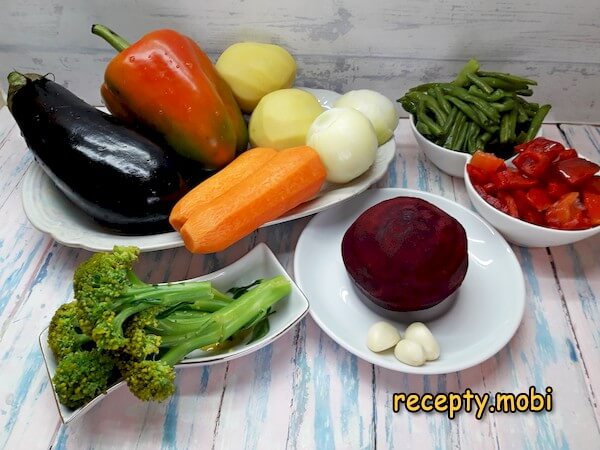
I prepare the ingredients for the oven-roasted vegetables on a baking sheet. There are no limits on their quantity or selection – you can leave something out and swap it for a more suitable product. The green beans and broccoli need to be boiled in advance for 1 minute without salt. I use the frozen vegetables (in this example, sweet red pepper) in a small amount, mainly to add variety to the colour palette, though they will not give much flavour.
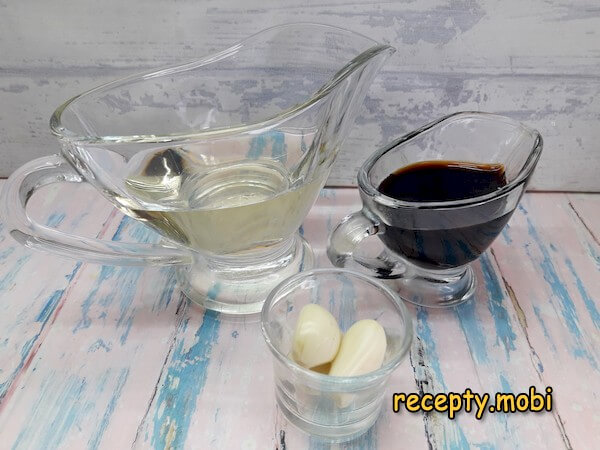
I prepare the ingredients for the dressing and immediately turn the oven on to 190 degrees.
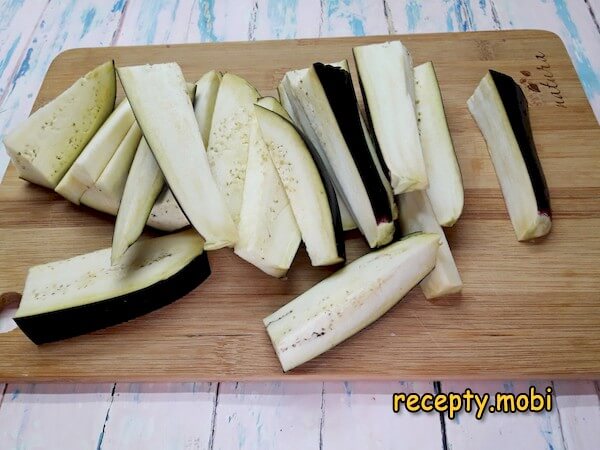
Since the ingredients include vegetables that need different cooking times, the pieces should be similar in shape but slightly different in thickness, so the vegetables roast at the same time. So I first cut the eggplant in half crosswise, then slice it into long sticks 1.5–2 cm thick.
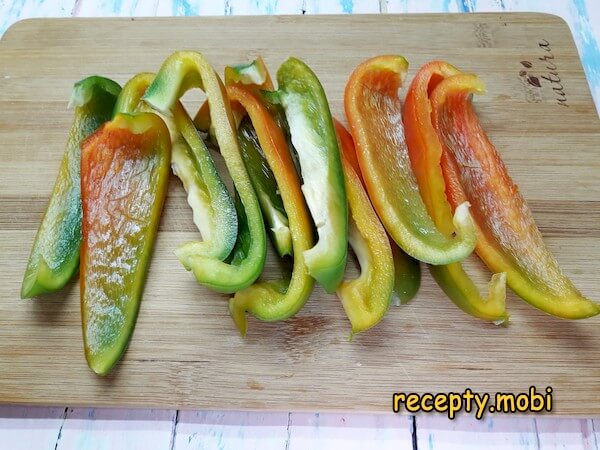
I remove the seeds from the bell pepper and cut it into long strips 2–2.5 cm wide.
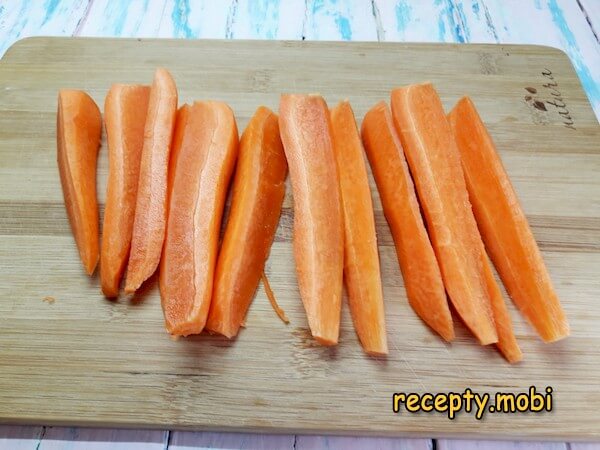
I cut the carrot into long sticks narrower than the previous vegetables.
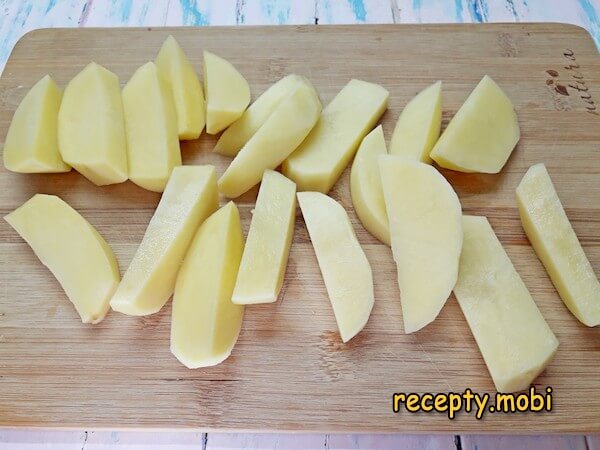
I cut the potatoes to a similar thickness.
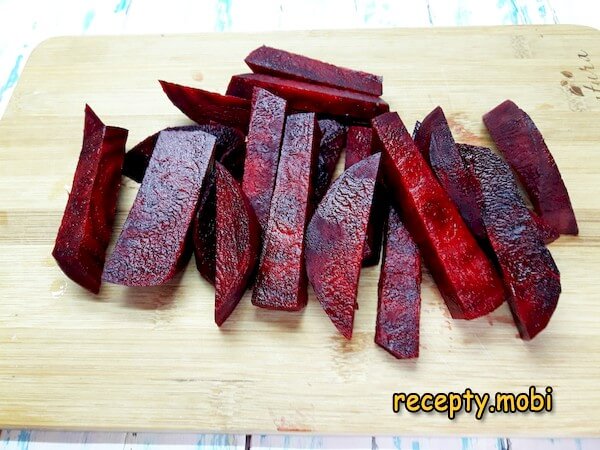
And the beetroot too.
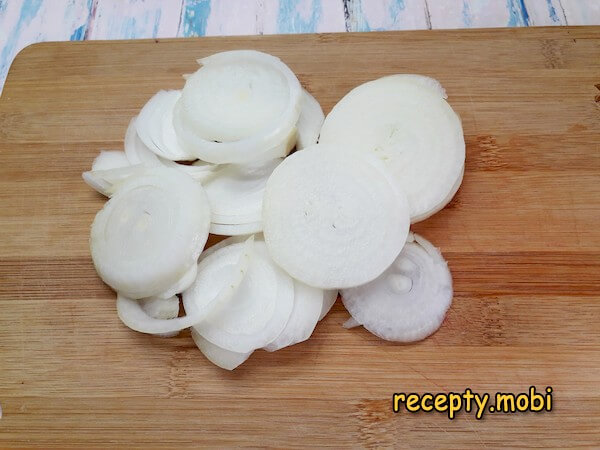
I slice the onion into rings of any thickness.
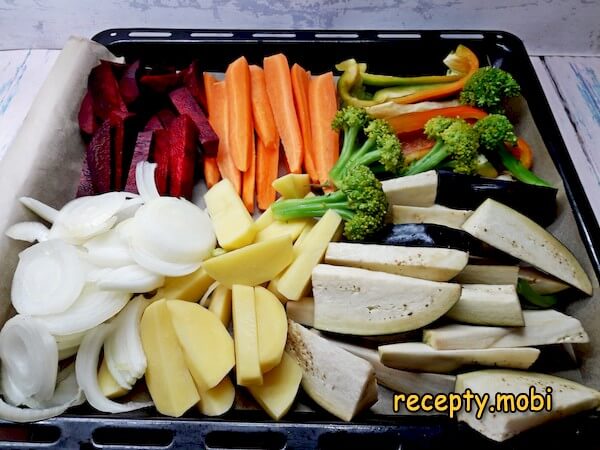
I line the baking sheet with good-quality parchment paper. If it is not silicone-coated, I brush it with vegetable oil. I lay out all the groups of vegetables, including the broccoli, without mixing them together, so as not to deform them and so the beetroot does not stain the neighbouring pieces with its juice.
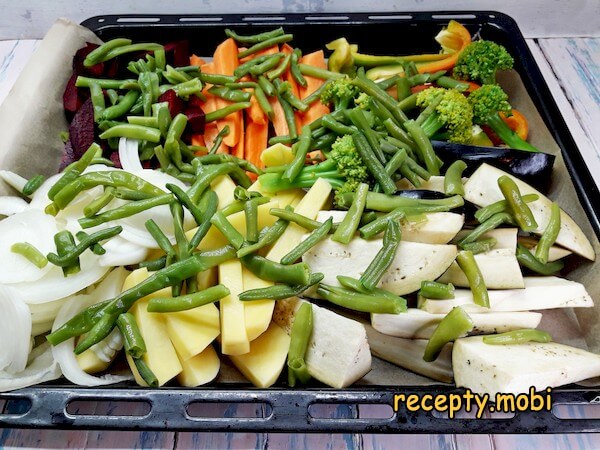
On top I scatter the green beans.
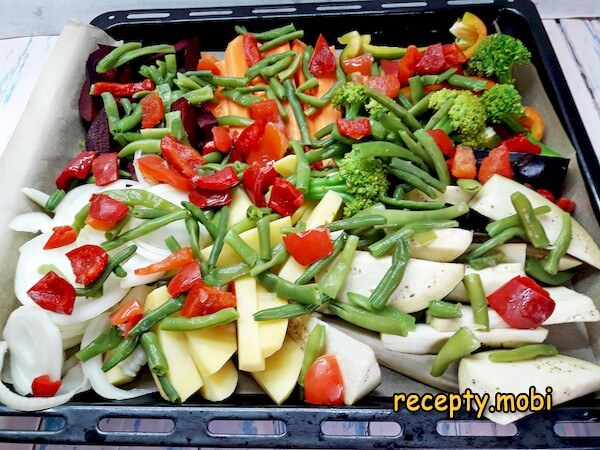
And the thawed red pepper. I put the baking sheet on the middle rack of the oven. There is no need to cover the vegetables – this way they take on a pleasant outer crust with a soft centre.
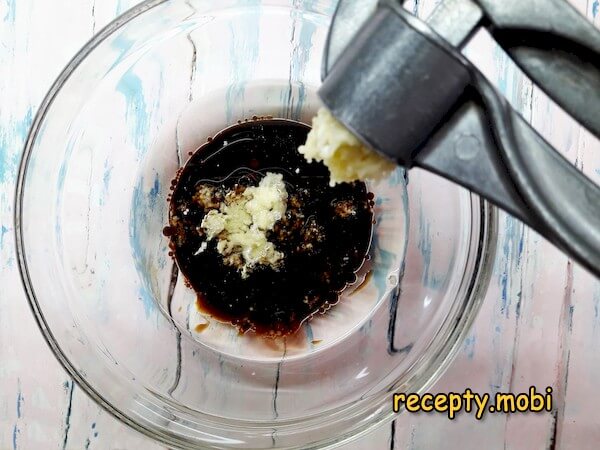
Meanwhile, I prepare the dressing, combining the oil with the soy sauce and squeezing the garlic into it.
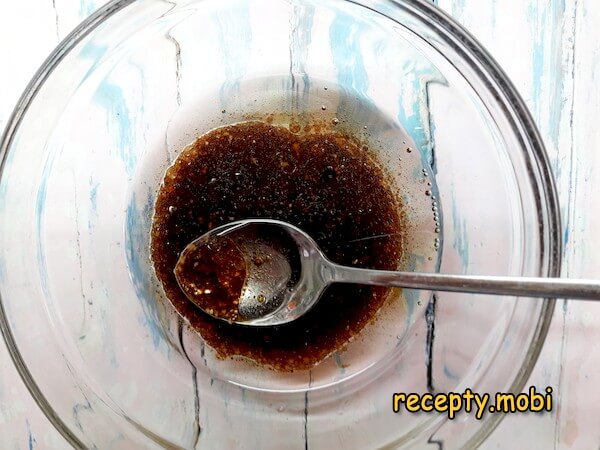
I mash the mixture with a spoon.
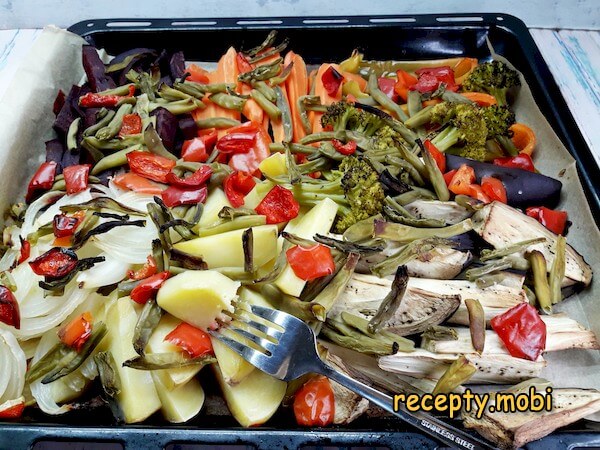
After 50 minutes all the vegetables will be ready – you can check this by piercing the firmest of them (the potatoes and beetroot) with a fork.
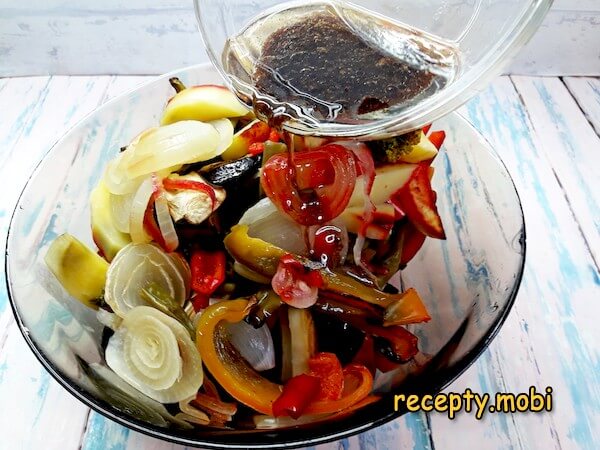
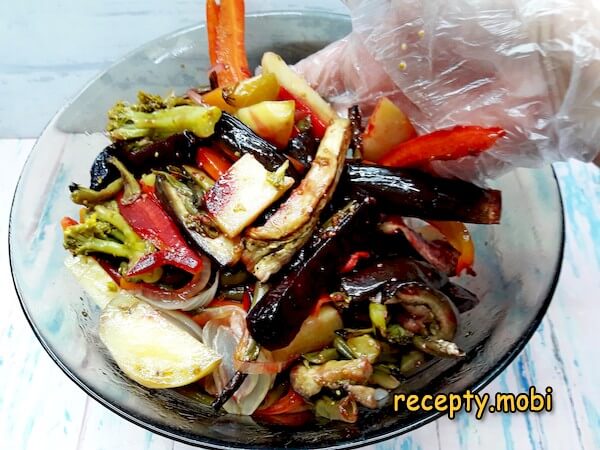
Now, without waiting for them to cool, transfer the whole set of vegetables to a deep salad bowl. I pour the dressing over everything – under the warmth, a pleasant aroma of garlic and soy sauce appears at once.
Now the vegetables need to be gently stirred so that each piece is coated in the oily mixture. This is best done by hand.
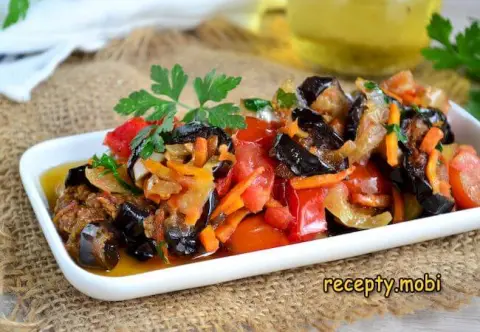
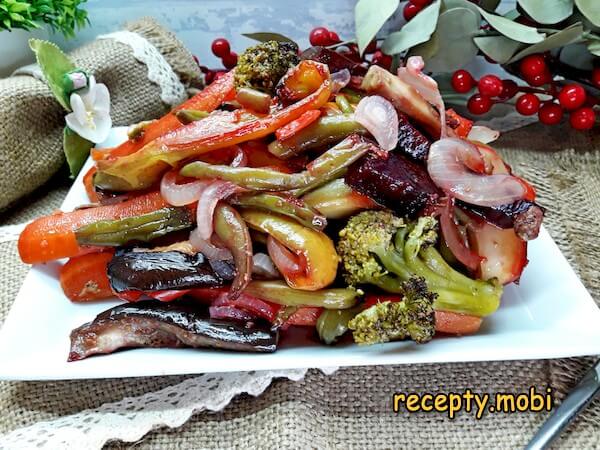
I transfer the oven-roasted vegetables to a flat dish. Every part has baked beautifully, staying whole rather than turning to mush. The dressing, which you could call the highlight of the dish, has made the vegetables resemble ones grilled over coals. They make a wonderful addition to any side, meat or fish. And with a slice of bread they are a real treat!


Tips
- 1
A baking sheet, not a dish – the secret of the grilled effect. In a high-sided dish the vegetables steam. On a flat baking sheet the moisture evaporates and a crust forms.
- 2
No salt before the oven – the secret of the texture. Salt draws out the juice, so the vegetables "weep". Dry, they roast properly, while the soy-sauce dressing salts them afterwards.
- 3
Same shape, different thickness – the secret of even cooking. Thick eggplant and thin carrot mean different cooking times, so I adjust by the thickness of the cut.
- 4
Dressing onto hot vegetables – the secret of the aroma. Cold vegetables take up the oil poorly. Hot ones soak up the garlic-soy dressing at once. The same principle works in other kinds of vegetable bakes.
FAQ
Which vegetables can I use? +
Ideally seasonal ones with a firm texture (potatoes, carrots, beetroot, bell pepper, eggplant, zucchini, onion). Alternatives include pumpkin (200 g), sweet potato (200 g), cauliflower (100 g, instead of broccoli), fennel (100 g), celeriac (100 g), garlic scapes (50 g, for a brighter aroma), large mushrooms (200 g, meatier), corn on the cob in rounds (100 g), leek (150 g, milder) and green string beans (140 g, instead of the asparagus beans). Do not use overripe vegetables with any rot, or watery types (cucumbers, thinly sliced tomatoes). For the classic grilled effect, firm seasonal vegetables are a must.
What can replace the soy sauce? +
Alternatives include teriyaki sauce (30 ml, sweeter), Worcestershire sauce (20 ml, more piquant), balsamic vinegar (15 ml plus a pinch of salt), a 50/50 mix of soy and oyster sauce (15 ml each), coconut aminos (30 ml, gluten-free) and a mix of salt and lemon juice (1/3 tsp plus 15 ml). Do not use salty seasonings with monosodium glutamate or ready-made barbecue marinades. For the classic version, real soy sauce is a must.
How long do roasted vegetables keep? +
In the fridge, in a tightly closed container, for 2–3 days. Any longer and the vegetables lose their firmness and the dressing separates. Before serving, reheat them in the oven for 5–7 minutes at 150 °C on parchment to bring back the crust. A microwave is not suitable – the vegetables turn out "boiled". Frozen (once cooked), they keep for up to 1 month; defrost in the fridge for 6–8 hours. The vegetables are at their best 5–10 minutes after the oven, once they have cooled a little so the dressing clings. On the second day the flavour holds. Do not leave them at room temperature for longer than 4 hours.
What to serve roasted vegetables with? +
The classic option is as a side dish: with fried chicken or turkey, with a beef or pork steak, with baked fish (sea bream, salmon), with boiled rice or bulgur, with pasta and parmesan, with a slice of dark rye bread, or with boiled chicken breast for a lighter meal. They also go with tahini or a herby yogurt sauce, a platter of hard cheese, a glass of dry white wine, a glass of freshly squeezed tomato juice, or with falafel or couscous for an eastern-style dinner. For a meat-free table they work as a hot dish in their own right. They are a versatile side for any meat or fish.
- Comment
or post as a guest
Be the first to comment.