avg —
Sicilian Caponata

Instructions
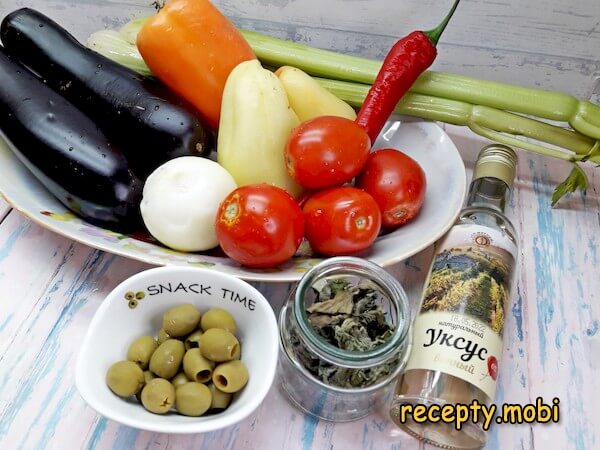
I prepare all the ingredients for the Sicilian caponata.
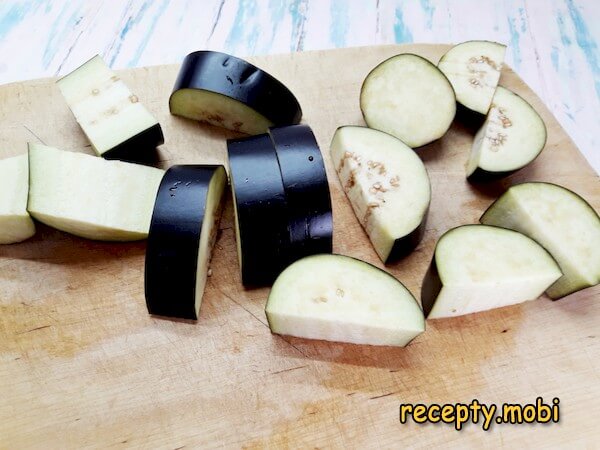
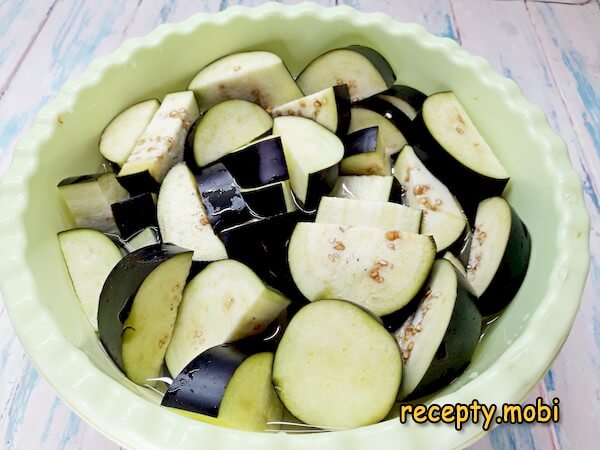
I trim the stem and tip off the eggplant. I cut it crosswise into 1.5 cm slices, then halve the circles.
I stir a large spoon of rock salt into a litre of water and soak the prepared eggplant pieces in it.
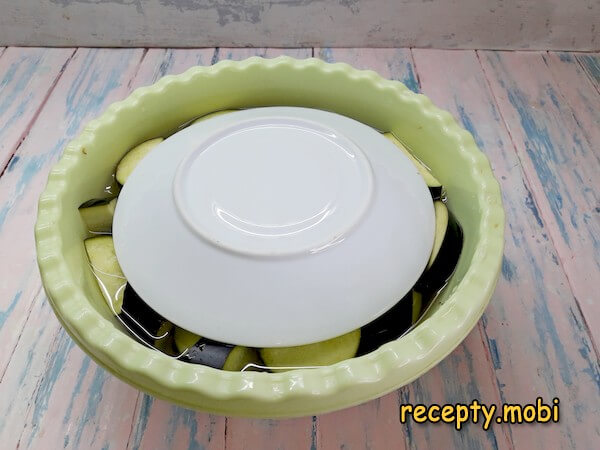
To keep the eggplant fully submerged in the brine, I cover it with a small plate on top.
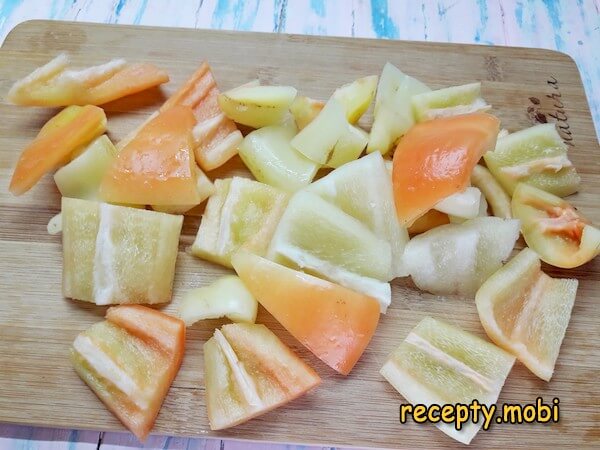
Meanwhile, I chop the pepper into large pieces.
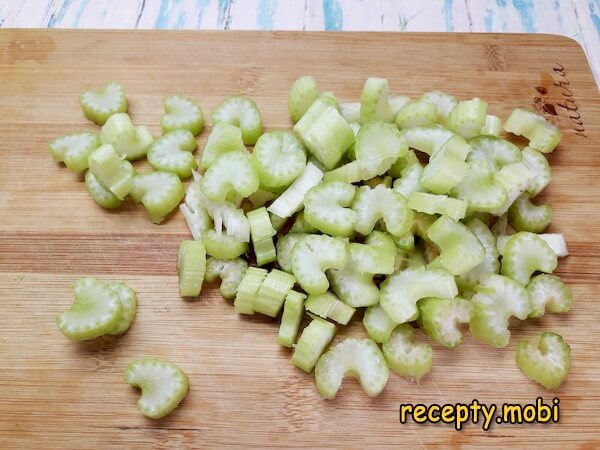
I slice the celery stalks into rings.
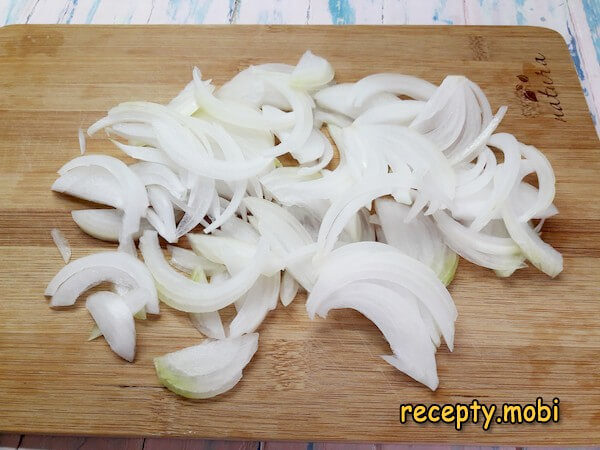
I shred the onion (any kind will do, including a sweet red onion) into thin feathers.
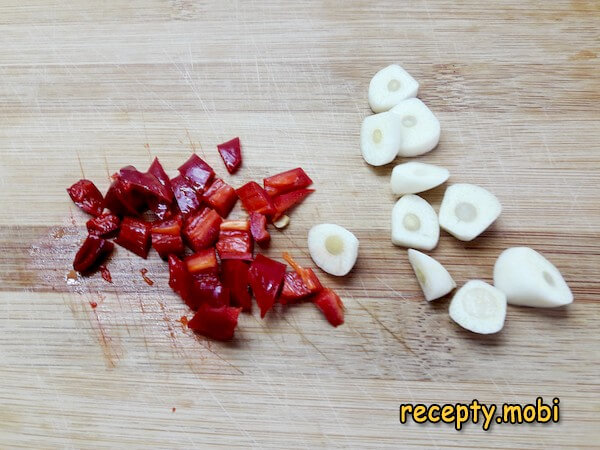
I chop the garlic fairly coarsely, unlike the chili pepper, which needs to be finely minced.
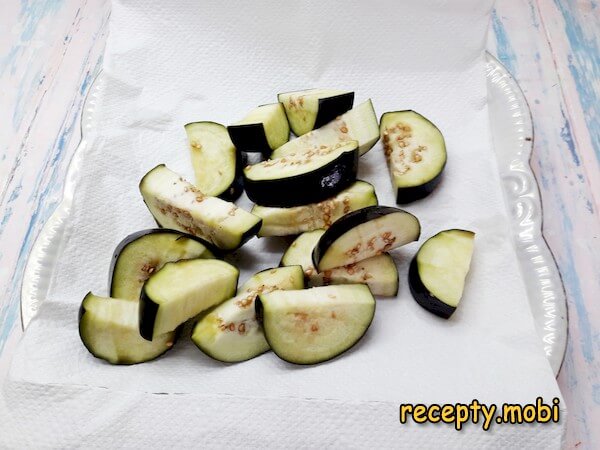
By the time this work is done, about 15 minutes will have passed, after which I can take the eggplant out, squeeze it and pat it dry with a napkin. The pieces have now lost not only their bitterness but also their tendency to soak up too much fat.
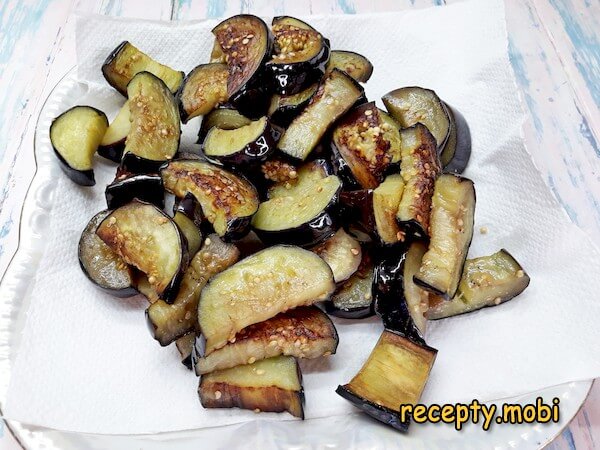
I fry them in oil until they take on a golden-brown crust.
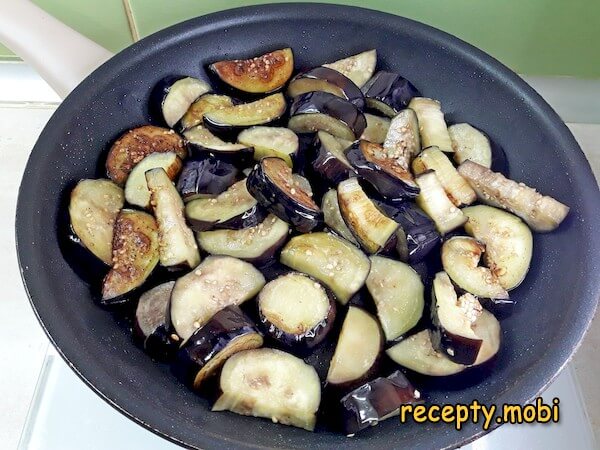
I take the eggplant out of the skillet onto a paper towel first, so it can absorb the surface fat.
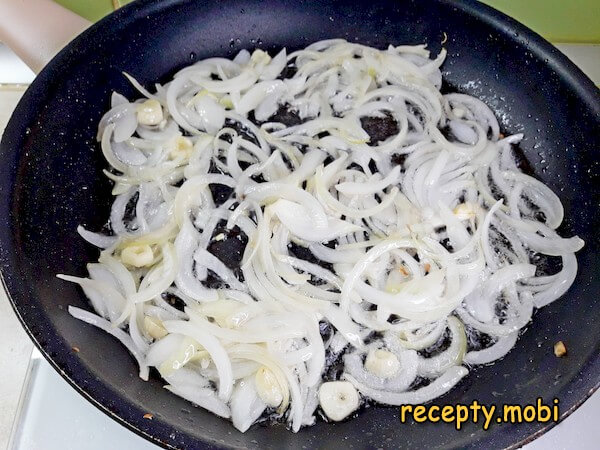
Now I sauté the onion and garlic until they are lightly fragrant.
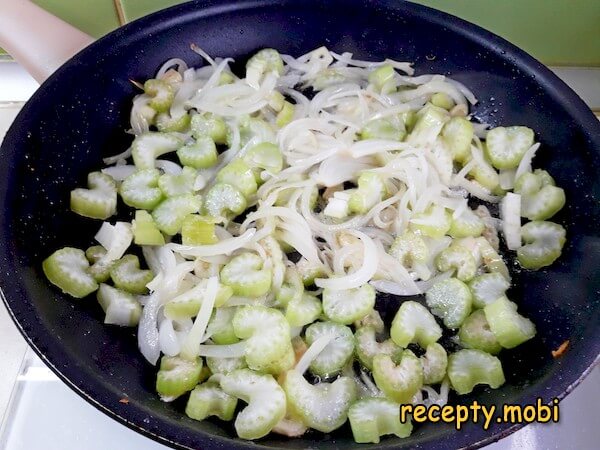
I add the celery here as well and cook it over medium heat for 3–4 minutes.
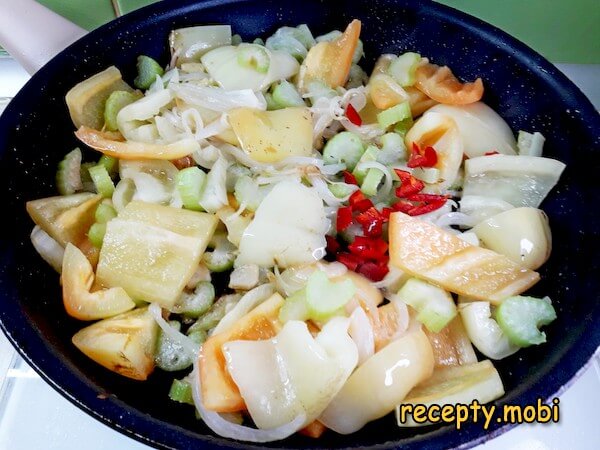
I add the pepper.
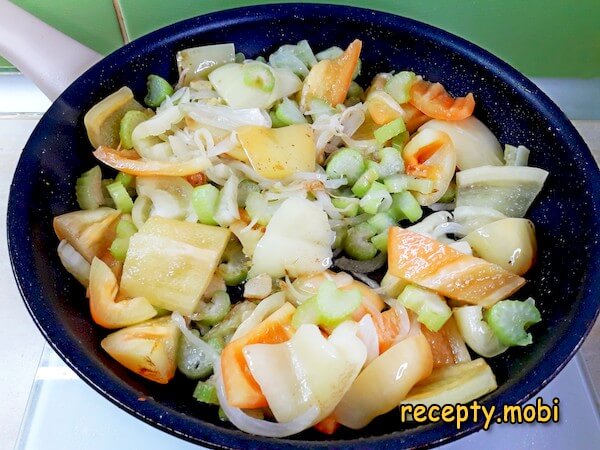
And straight away – the hot chili pepper. I sauté all the components, stirring occasionally, for 5–7 minutes.
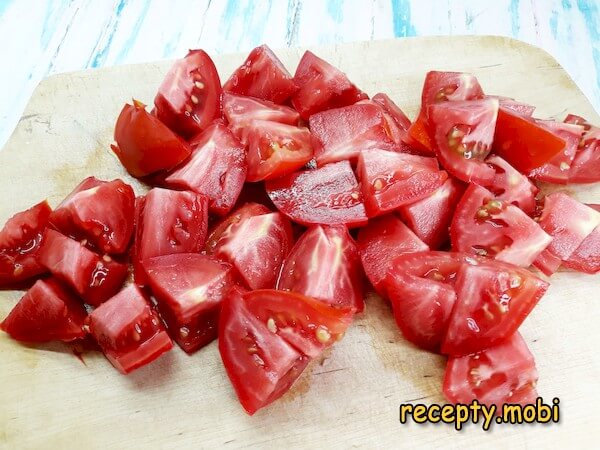
I cut the tomatoes into fairly large pieces, without removing the skin.
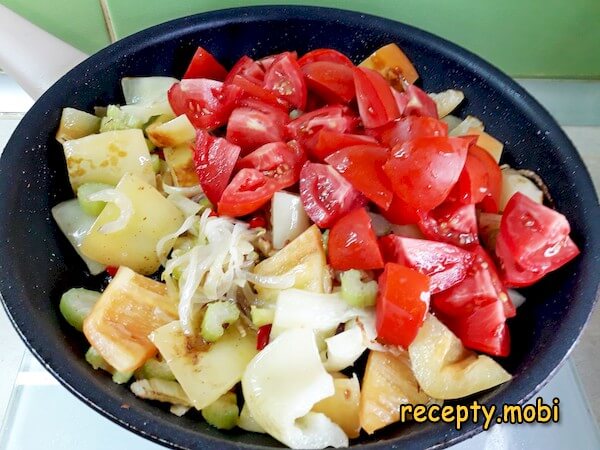
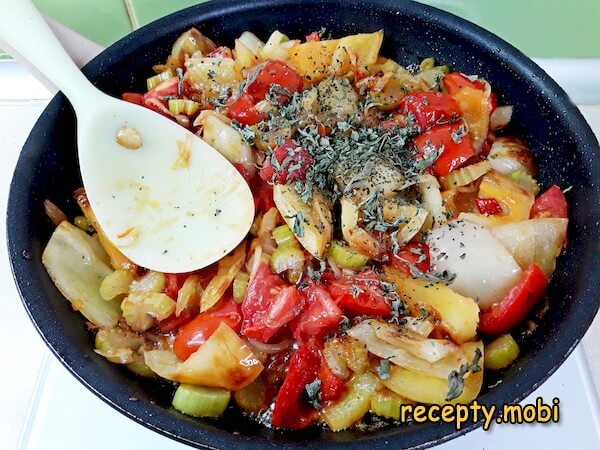
I add them to the common skillet.
I fry everything for about 5 minutes. At this stage I add salt and soften the tartness of the tomatoes with the sugar.
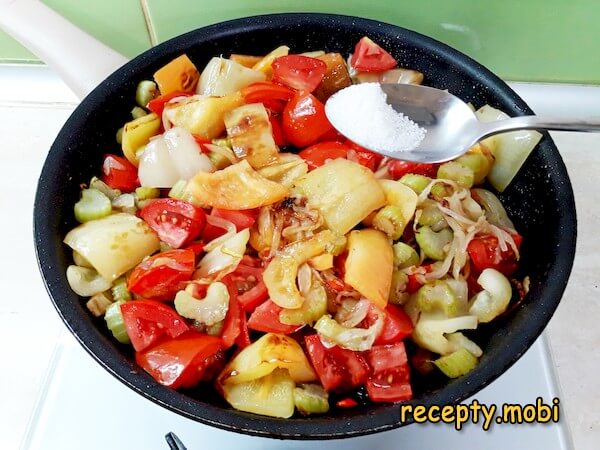
I add the dried basil.
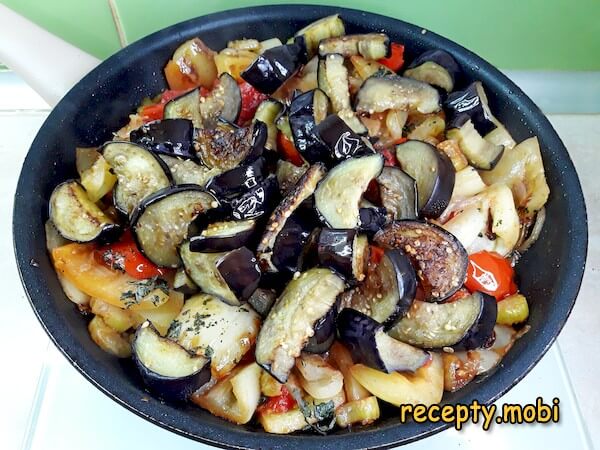
I transfer the eggplant into the skillet and warm it through a little with the other vegetables.
I sprinkle in the olives.
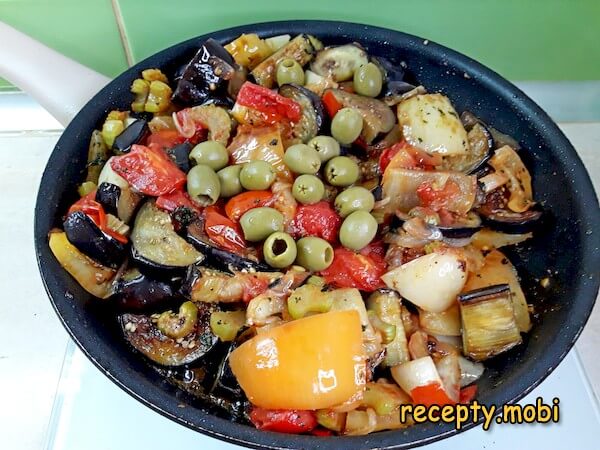
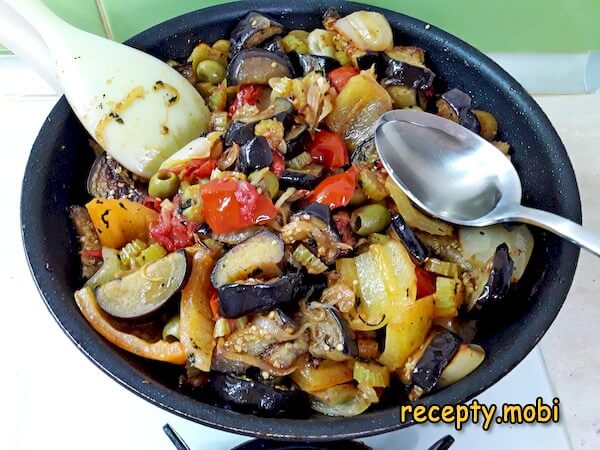
I add the vinegar and stir. After 2–3 minutes I turn off the heat.


Tips
- 1
SOAK IN SALTED WATER – the secret against bitterness and fat. Fifteen minutes under a small plate and the eggplant loses its bitterness and absorbs less oil.
- 2
FRY THE EGGPLANT SEPARATELY – the secret of texture. If you fry it together with everything else, the eggplant will turn mushy. Cooked separately, it stays firm.
- 3
SUGAR FOR THE TOMATOES – the secret of balance. Tomatoes add a tartness, and 0.5 tsp of sugar softens it.
- 4
OLIVES AT THE END – the secret of keeping their shape. Long frying will turn the olives to mush. Add them after the eggplant, for 2–3 minutes. The same principle works in other kinds of vegetable stews.
FAQ
Which olives should I choose? +
Ideally – medium-sized pitted green olives (Castelvetrano, Manzanilla, Halkidiki). Alternatives: olives stuffed with lemon or garlic (for a premium version), black olives (50 g – darker in colour), or a mix of green and black (50 g – interesting). Fresh olives in brine are a premium option. If they have pits, remove them before use. Do not use: olives stuffed with almond or anchovy (they will change the flavour), or dried "Greek" olives (too intense). For a premium version – Sicilian or Calabrian olives.
What can replace the wine vinegar? +
Alternatives: apple cider vinegar 6% (30 ml – milder), balsamic (15 ml – premium), white wine vinegar (20 ml – brighter), 9% vinegar (15 ml + 5 ml water – "budget"), or lemon juice (30 ml – without the alcohol note). Fresh red or white wine vinegar is the "classic" choice. Do not use: herb-flavoured or expired vinegar. For a "spicy" version – add 1/4 tsp of cayenne pepper. For a "mild" version – reduce the vinegar to 15 g. For "classic Sicilian" – red wine vinegar.
How long does caponata keep? +
In the fridge, wrapped in film or in a container – 4–5 days. Any longer and the vegetables lose their firmness and the olives lose their flavour. Before serving it chilled, leave it for 15–20 minutes at room temperature or warm it for 3–5 minutes. I do not recommend freezing it – the eggplant and olives will lose their structure. Fresh caponata is at its "star" 2–3 hours after cooking (once it has "rested"). On the second day the flavour is deeper and brighter. Do not leave it at room temperature for longer than 4 hours – the tomatoes will turn sour. It is ideal to make it the day before serving – the caponata will reveal its full flavour.
What goes with caponata? +
The Sicilian classic: as a side dish to meat or fish. With pasta (spaghetti, fettuccine). With rice side dishes. With boiled potatoes or mashed potatoes. On bruschetta – with toasted bread. With cheeses (mozzarella, ricotta, parmesan). With baked or grilled chicken. With grilled or fried fish. With a glass of red Italian wine (Chianti, Nero d'Avola) – premium. With a shot of grappa or limoncello. For a "party" – as an antipasto on a platter. With a green salad – a "light lunch". A versatile Mediterranean appetiser for guests and family.
- Comment
or post as a guest
Be the first to comment.