avg —
Whole Roasted Cauliflower in the Oven

Instructions
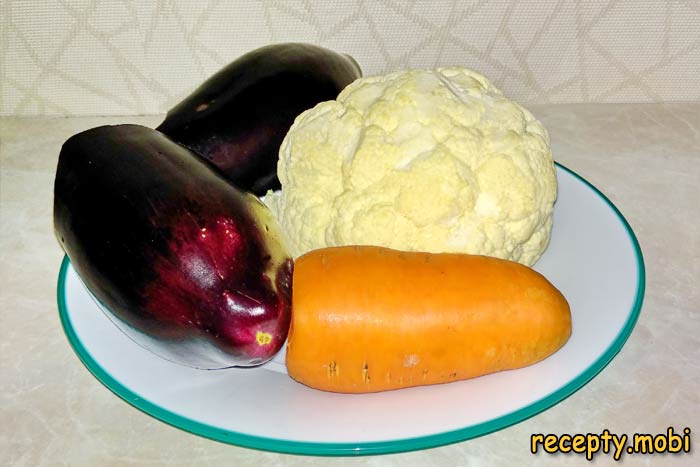
I choose a nice white head of cauliflower with no yellow or brown spots and no damage – fresh cauliflower is firm and heavy for its size. I wash it thoroughly under cold water and cut off the outer green leaves, keeping the head whole with a short stem so it stands steady. The carrot and eggplant are supporting vegetables for the garnish around the cauliflower.
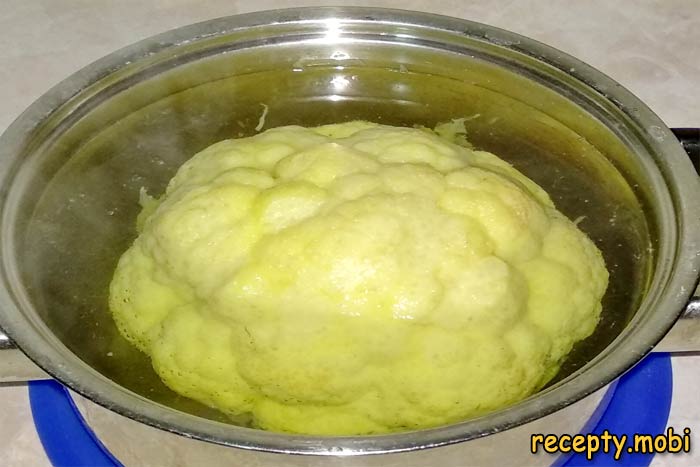
I lower the prepared head into a large pot of boiling salted water (1 tbsp of salt per 2 litres of water) and blanch it for exactly 6 minutes – no longer! Overcooking will turn the cauliflower to mush during roasting. I take it out straight away with a slotted spoon and plunge it into ice water for 2 minutes – this "thermal shock" stops the cooking and keeps it crisp.
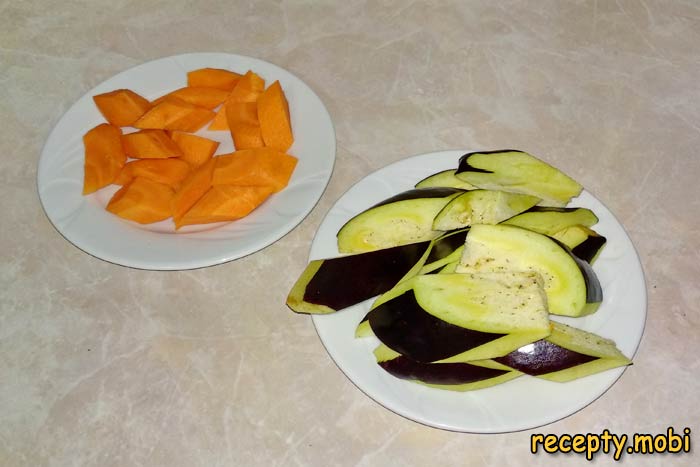
I scrub the carrots (2 pcs) and eggplant (1 pc) thoroughly with a brush – I do not peel them, so the skins add more fibre and vitamins. I cut them into large 4–5 cm pieces: the carrots into batons and the eggplant into large cubes. Cutting them large lets them roast evenly alongside the whole head of cauliflower.
I get the set of spices ready for the fragrant dressing: turmeric (gives the yellow colour), curry (an Indian blend), paprika (a sweet note), khmeli-suneli (a Georgian character), dried basil and mint (fresh herbal notes), black pepper, garlic (1 clove through a press) and tomato paste.
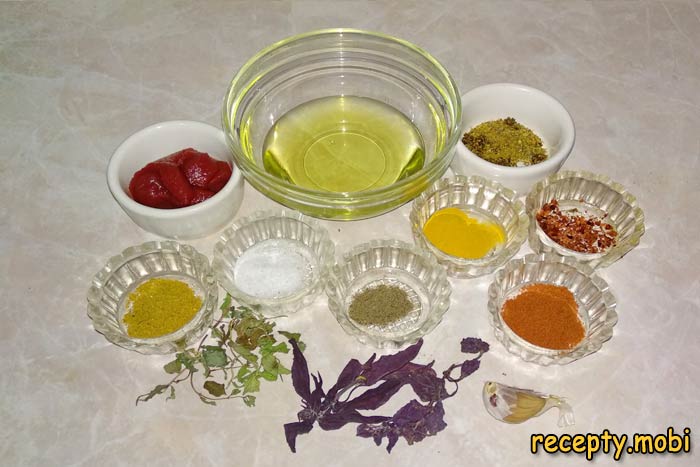
In a large bowl I mix the vegetable oil (130 ml), tomato paste (1 tbsp), all the spices and the crushed garlic into a smooth, fragrant mixture. If the dressing is too thick, add another spoonful of oil. The dressing should be thick yet pourable, so it is easy to apply with a brush.
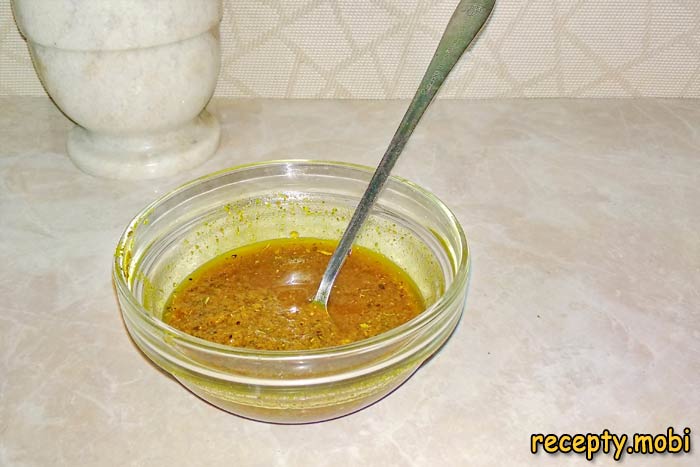
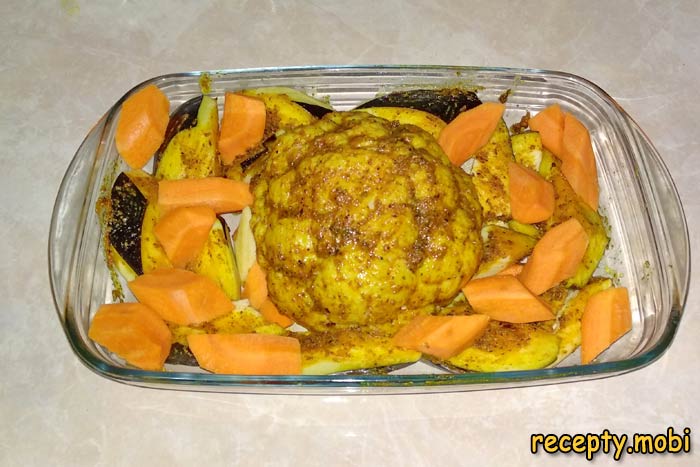
With a silicone brush I carefully apply the dressing to the cooled cauliflower on all sides, working it between the florets for deep soaking. I also coat the cut carrots and eggplant completely with the dressing. Do not miss any spot – uncoated areas will stay pale and dry.
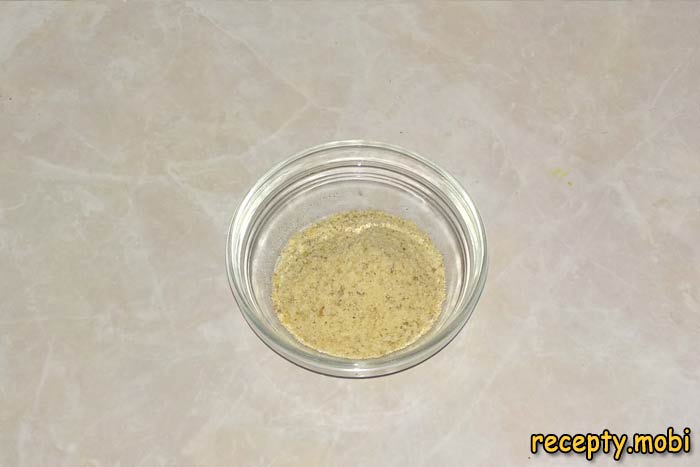
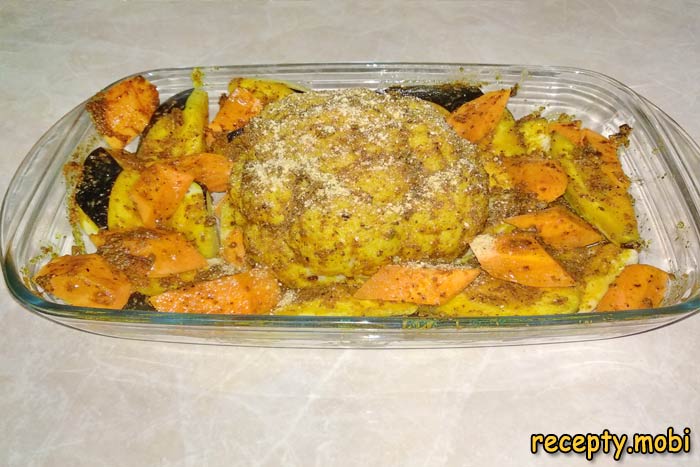
I generously sprinkle the dressed cauliflower with breadcrumbs (2 tbsp) on all sides – the crumbs soak up the excess oil and form a crisp crust. Without the crumbs the crust turns out greasy and less striking. You can swap the breadcrumbs for ground nuts or sesame seeds for variety.
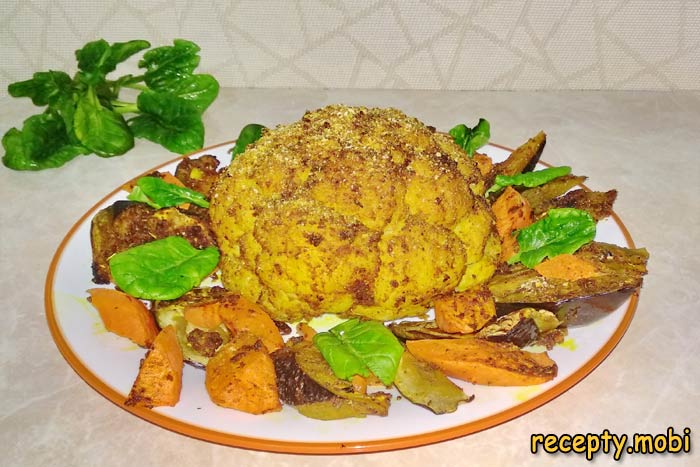
I transfer the prepared vegetables to an ovenproof dish or a baking tray lined with parchment: the whole head in the centre, the cut carrots and eggplant around it. I roast in a preheated oven at 210 °C for about 25–35 minutes, until the desired softness (al dente or soft) and a crispy crust on top.
The finished cauliflower has a lovely golden-orange crust and a soft inner texture. I carefully move it to a serving platter, surrounded by the roasted carrots and eggplant. I cut it right in front of the guests – this "theatrical serving" makes a strong impression. The whole roasted cauliflower in the oven is ready!


Tips
- 1
Do not overcook the cauliflower when blanching – exactly 6 minutes and straight into the ice. Overcooking will turn it to mush during roasting.
- 2
Serve it on green salad leaves, drizzled with lemon juice and olive oil – a "Mediterranean" presentation.
- 3
Add broccoli, zucchini, bell pepper or cherry tomatoes to vary the garnish. I roast broccoli in the oven on a similar principle.
- 4
Cut the cauliflower right on the platter in front of the guests – this "theatrical" serving gives an impression of a striking, fresh dish.
FAQ
Can I roast the cauliflower without blanching? +
Yes, you can roast the raw head straight away, but the cooking time will increase to 50–60 minutes at 200 °C. Blanching guarantees a soft inside while keeping the crunch outside. Without blanching there is a risk that the cauliflower will scorch on the outside while staying raw inside. You can make a "compromise" version – blanch for just 3 minutes to open up the structure first, then roast for 30–35 minutes. Blanched cauliflower has a more tender texture when done, while raw cauliflower is juicier with a slight crunch.
Is this dish suitable for Lent? +
Yes, whole roasted cauliflower is a fully Lenten dish with no products of animal origin. It is ideal for Great Lent, the Nativity Fast, the Dormition Fast and other fasting periods of the church calendar. It also suits vegans, vegetarians and people allergic to dairy and egg products. For a strict fast, check the composition of the breadcrumbs – they should be free of eggs and oil. For a strictly Lenten version, leave out the breadcrumbs entirely or replace them with ground nuts. It is a striking festive alternative to a meat dish on the Lenten table.
What can I use instead of breadcrumbs? +
Several alternatives will work: sesame seeds (1–2 tbsp, for a crunchy, nutty crust and calcium), ground nuts (walnuts, almonds, cashews – for a nutty crust), flaxseed flour (a wholesome substitute for crumbs), ground oats (for a gluten-free version) or a coating of mixed herbs and seasonings (without a bread base). You can also use grated Parmesan cheese (50 g) for an "Italian" cheesy crust (not for the Lenten version). Each substitute gives the dish its own character; the main thing is to provide an absorbent layer for the oily dressing and a lovely crust.
What do I serve with whole roasted cauliflower? +
The ideal side dishes for the Lenten version are boiled basmati rice, quinoa, buckwheat porridge or baked jacket potatoes. For sauces – tahini (sesame paste), hummus, a garlic-yogurt sauce (for a non-fasting meal) or a tomato-garlic sauce. For salads – a Greek salad or a vegetable mix with lemon dressing. For drinks – a dry white wine (Riesling for a non-fasting meal), herbal tea or cranberry fruit drink. For a Lenten table – with Lenten bread and sauerkraut as a starter. Perfect for a themed vegetarian dinner or for a fasting period.
- Comment
or post as a guest
Be the first to comment.