avg —
Apple Compote for Winter Without Sterilization

Instructions
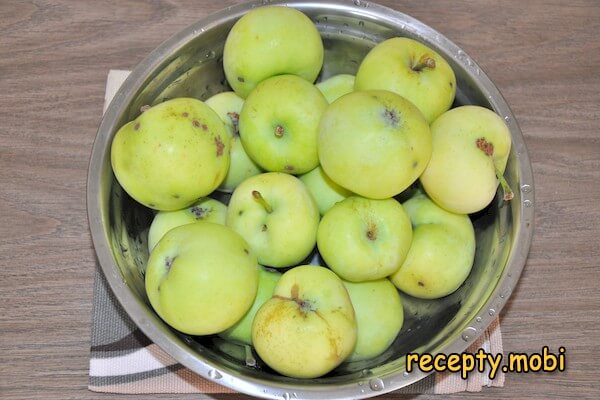
Rinse the picked apples well under running water.
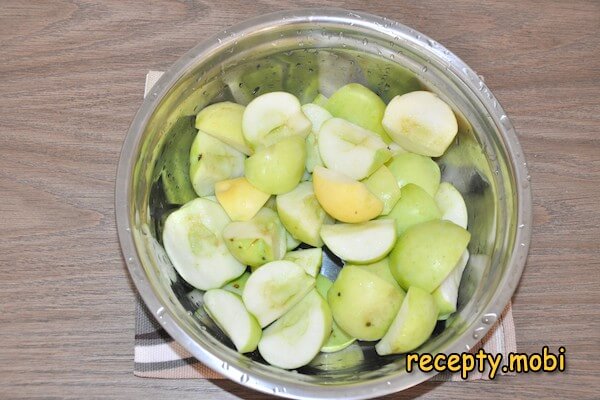
Then cut them into quarters, having first removed the cores from the fruit.
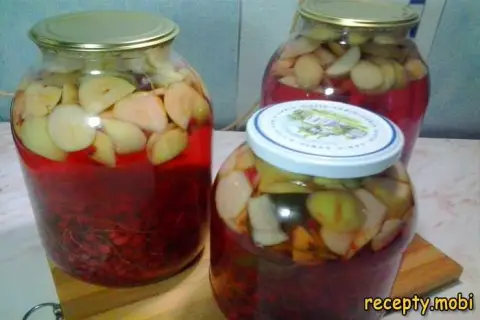
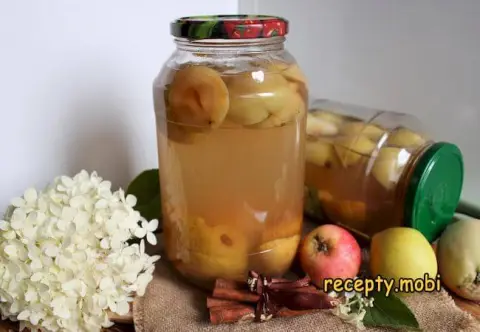
Put the cut apples into pre-sterilized 3-litre jars, filling each about one-third full.


4. Pour boiling water over the apples in the jars, then leave them to infuse – cover the jars with lids first – until completely cool (this takes roughly 20–30 minutes). Once the future compote has cooled, drain it from the jars and bring it to the boil a second time. 5. Add the sugar to each jar. 6. Then pour in the boiling compote (up to the neck of the jar) and seal the jars. 7. Wrap the jars of apple compote until they are completely cool, then put them away to store somewhere cool. Happy canning! Tips and Tricks
Tip 1. The double pour of boiling water is the "secret" to going without sterilizing. The first pour warms up the apples and the jars; the second, with sugar, is the finished preserve.
Tip 2. Filling the jar one-third full with apples is the optimum. Half full gives a "concentrate" (an acquired taste); less than that gives a "pale" compote.
Tip 3. Wrapping the jars in a blanket is a kind of "self-sterilization". The heat holds for 12–24 hours, the jar cools slowly, and this helps preserve the contents further.
Tip 4. Removing the cores is essential. Pips in the compote give a bitter taste and can cause it to ferment. The same principle applies to other kinds of apple preserves.
FAQ
Which apples should I choose? +
Tart or sweet-and-sour varieties are ideal (Antonovka, Simirenko, Idared, Bogatyr). Alternatives: Golden (a little sweet, so you need less sugar), Gala (all-purpose), or Granny Smith (for a more "lemonade"-like taste). Sweet varieties are not suitable – the compote will be cloying. Choose fresh apples that are firm and free of brown patches; around 200–250 g each is a good size. Don't peel them – the skin gives the compote its colour. Slightly spoiled apples can be used if you cut away the bad parts; throw away wormy ones. For a more aromatic result, use a mix of 2–3 varieties. If you sprinkle the cut apples with lemon juice before use, they won't darken.
Can I add spices? +
You can vary it: a cinnamon stick (1 per jar, for a "mulled-wine" version), cloves (2–3), cardamom (1–2 pods), lemon zest, fresh mint (3–4 leaves), or star anise (1). For a fruit version, mix with pears or plums 50/50; for a berry version, add 100 g of redcurrants or raspberries. Don't use clove oil (bitter) or large amounts of spice (they overpower the apple). For a version for children, leave out the spices and use only apples and sugar. For a spiced version, combine cinnamon and cloves (1–2 of each). Adjust the sugar – 400 g for tart apples, 500 g for more neutral ones.
How long does the compote keep? +
In sealed jars kept somewhere cool (a cellar or pantry), up to a year. Any longer and the apples start to darken and the flavour fades. Don't store the jars in the sun, as pressure can build up. If a lid bulges, don't open it – throw it away (bacteria). The usual storage temperature is +2 to +15 °C. Once opened, keep it in the fridge for 5–7 days. Freezing is not recommended (the jars will crack). Write the date on the jars so they are easy to keep track of. It is best used within the first 3–6 months, when the flavour is brightest. Sealing it in smaller 1-litre jars makes it easier to open (a 3-litre jar suits a family for one or two servings).
What goes with the compote? +
It is a drink in its own right – chilled, in a glass with ice. Serve it with pies or buns at tea time for a "Russian" touch, or at breakfast with pancakes or syrniki. Have it with lunch instead of shop-bought juice, or take a bottle of home-made compote on a picnic. For a children's afternoon snack it is a healthy alternative to fizzy drinks. With desserts (cakes and pastries) it is refreshing, and in summer, with a sprig of mint or some ice, it becomes a kind of "cocktail". Serve it as a digestif after a hot supper, or alongside sauerkraut for a "winter" pairing. It is an all-purpose home-made drink for the whole family, all year round.
\nSeasonal collection: 15 Lenten apple recipes for Apple Spas 2026.
\n- Comment
or post as a guest
Be the first to comment.