avg —
Apricot Jam with Kernels

Instructions
I prepare the ingredients. The amount of sugar is set once the weight of the pitted apricots is known: I take half as much sugar as fruit (this is the minimum, since the apricot variety used is very sweet, but if you like you can increase it up to an equal ratio with the weight of the fruit). I sterilise the jars and lids in any way you are used to.
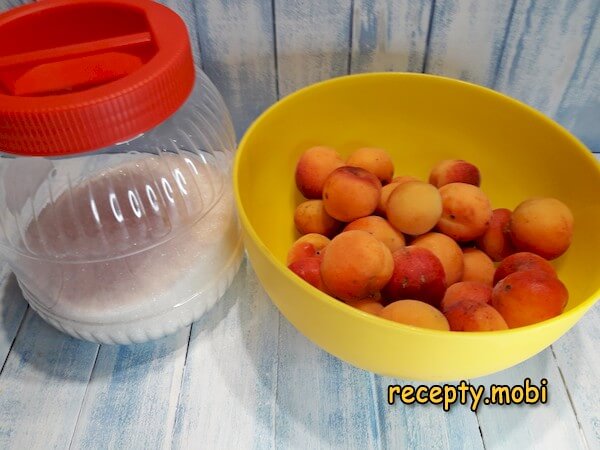
I rinse the apricots carefully, without pressing hard on the skin so that it does not burst. Then I split each fruit in half and remove the pit.
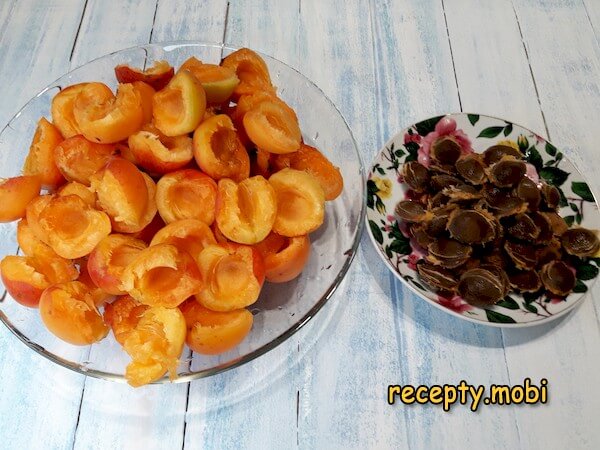
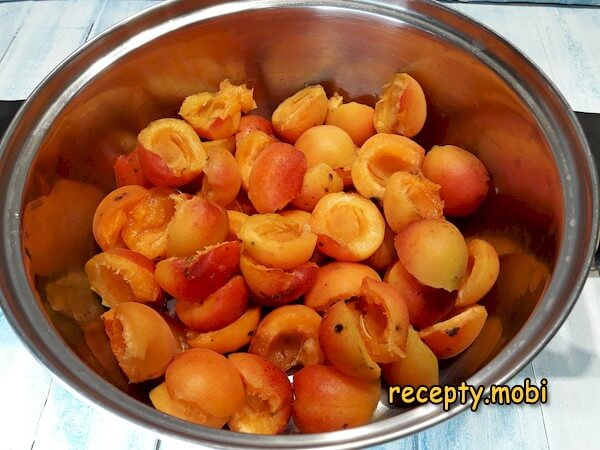
I transfer all the halves to the pot or bowl in which the jam will be cooked and weigh the cleaned apricots. In this example it is 630 g, which means I need half as much sugar, that is, 315 g.
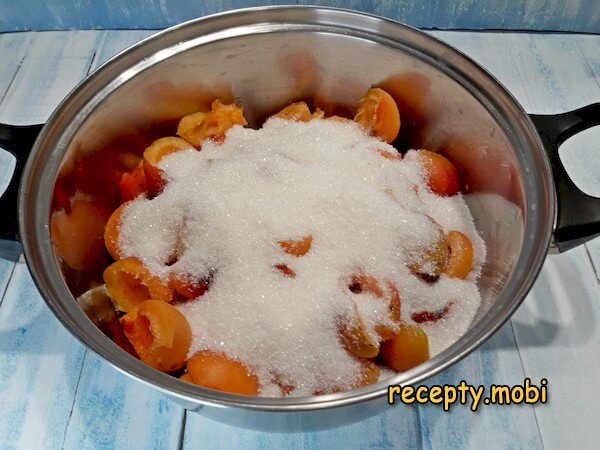
I sprinkle the fruit with the sugar and leave it at room temperature for 4 hours. During this time the juice is released and part of the sugar dissolves.
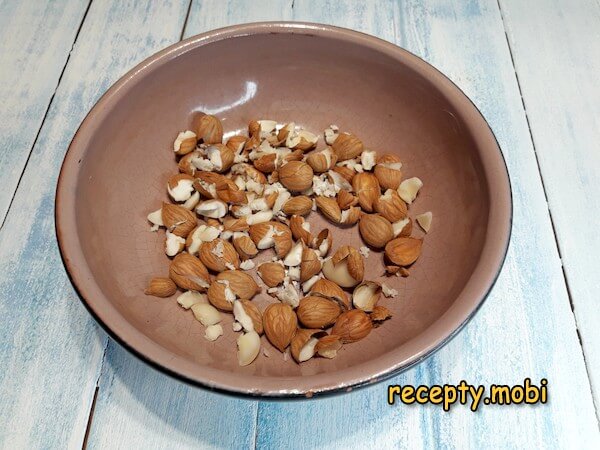
Meanwhile, I dry the pits in the oven or in a skillet and crack out the kernels. Some varieties have a very hard pit that is difficult to crack, but it is still possible.
After 4 hours the apricots have released enough juice to be put on the stove.
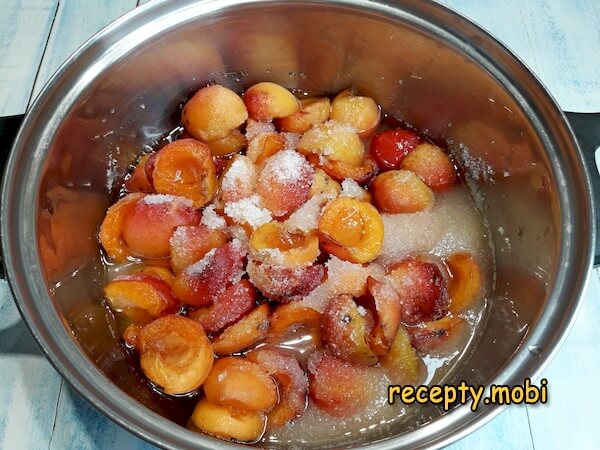
I add the kernels to the pot and start cooking the jam.
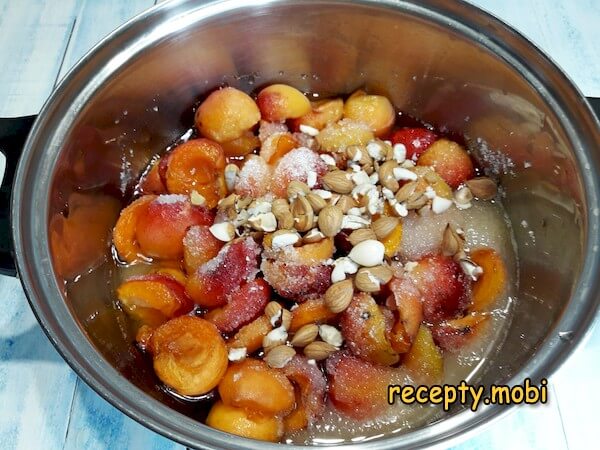
I keep the heat slightly below medium so the sugar still left in crystals has time to dissolve. There is no need to stir the apricots with a spoon – you can simply rotate the pot and shake it a little to help the mixture heat evenly. As it warms, foam will keep rising to the surface; I skim it off carefully. After it comes to the boil, I keep the jam cooking for 5 minutes.
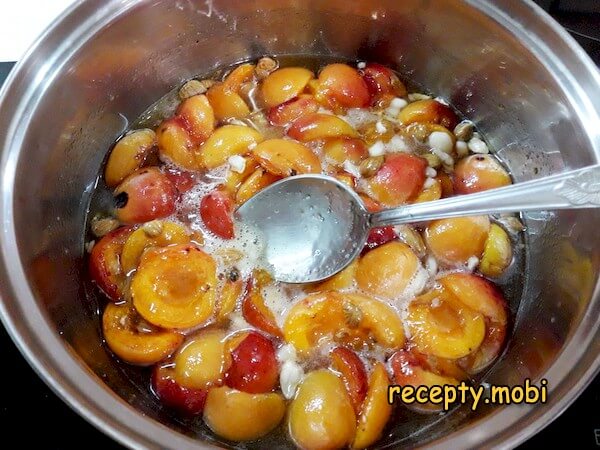
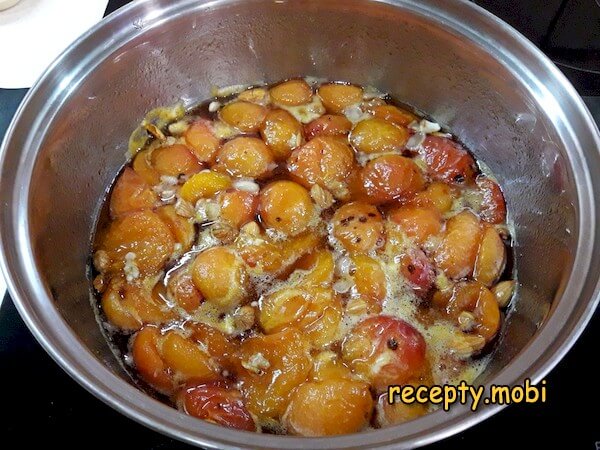
Then I turn off the stove and leave the jam to cool naturally. This takes about another 4 hours. During this time the apricots soak up the syrup, which is very important, and the syrup thickens. After that I cook the jam again for 7–10 minutes, skimming off the foam as needed. I mix the contents the same way as the first time, by rotating and shaking the pot.
I place a paper or cloth napkin under the jar, which I fill with boiling jam right to the top.
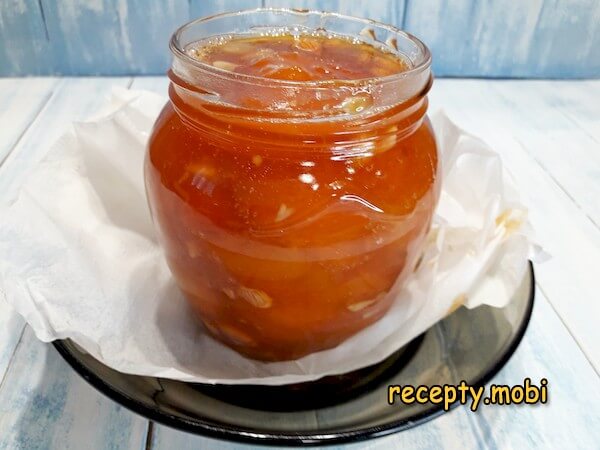
I screw on the lid, then turn the glass jar upside down to make sure the seal is secure. If everything is fine, I return the jar to its upright position and leave it like that until it has cooled completely.
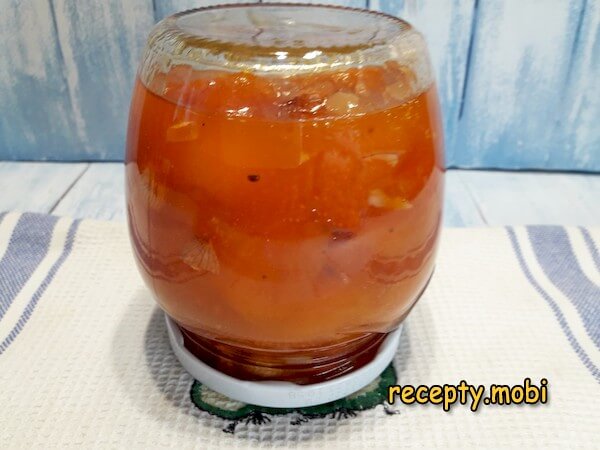
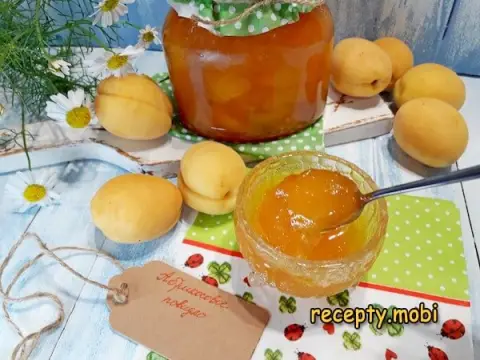
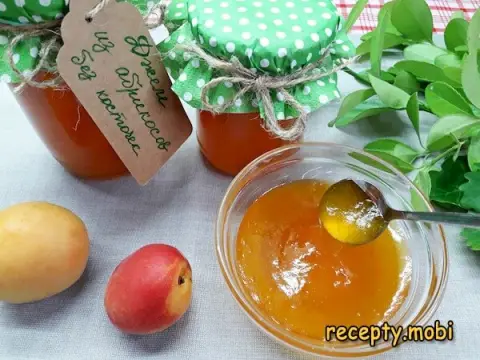
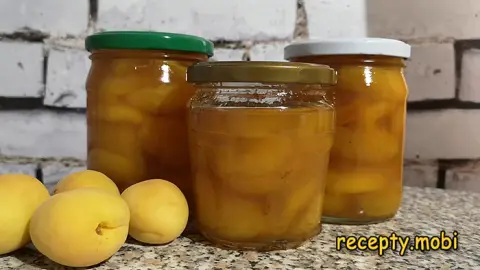
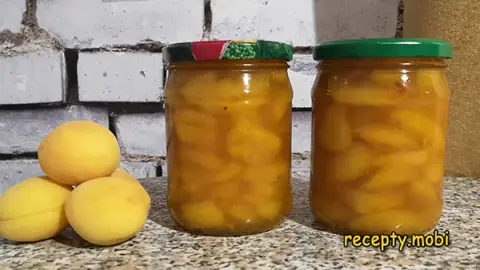
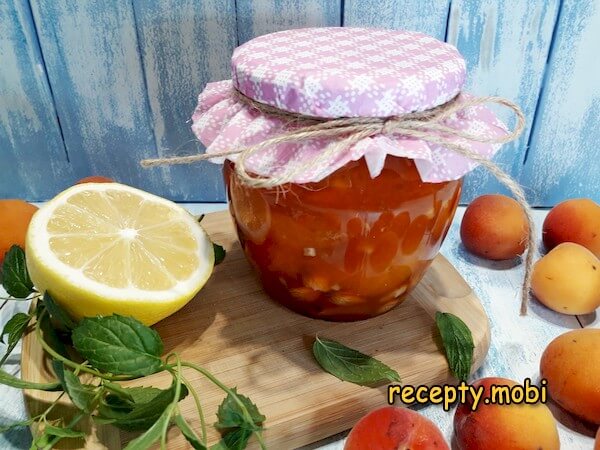
The apricot jam with kernels is ready. It keeps at room temperature for more than a year, but if you can move the preserves to a cool place, that is the best option. Each apricot half holds the warmth of the summer sun, and drinking tea with such a fragrant, bright treat is a real pleasure!


Tips
- 1
Taste the kernels – the "secret" to the flavour. Bitter kernels will spoil the jam. Taste one before adding them: if they are bitter, be sure to remove the skin by soaking the kernels in boiling water.
- 2
Four hours in sugar – the "secret" to the juice. Cook the fruit straight away and it stays dry and gives no juice. Left for 4 hours in sugar, it releases plenty of juice and the jam cooks in its own syrup.
- 3
Swirling the pot – the "secret" to the shape. A spoon breaks the apricot halves apart. Rotate and shake the pot instead, and the fruit mixes on its own while keeping its shape.
- 4
Two-stage cooking – the "secret" to soaking the fruit. A single boil leaves the syrup thin. Five minutes, then a 4-hour rest, then another 7–10 minutes lets the kernels and fruit soak through and the syrup turn thick.
FAQ
Which apricot variety should I choose? +
Ideally "Medovy" or "Lel", which have an easily cracked pit. Other suitable varieties are "Krasnoshchyoky", "Triumf severny", "Aysberg", "Khabarovsky", "Chyorny barkhat" and "Ananasny tsyurupinsky". It is best to buy them at the market from farmers, and apricots from your own garden with a pit that splits easily are the best choice of all. Do not use overripe soft fruit, as it will fall apart, or varieties with bitter kernels, which need pre-treatment. For the classic result, use a variety with sweet kernels such as "Medovy".
How do I crack apricot pits? +
You can use a hammer with a cloth (strike the end of the pit), a special nutcracker, pliers (press the flat sides together until it splits), a wooden mortar and pestle, a flat-bladed garlic knife pressed flat, a garlic press for small pits, or a meat-tenderising mallet. For safety, wrap the pits in a towel so shell fragments do not fly about. Fresh pits crack more easily than dried ones. Do not use pincers, which crush the kernel, or a food processor, where shell fragments get mixed in.
How long does apricot jam with kernels keep? +
In a cellar or a cool, dark place at 5–15°C it keeps for up to 1.5 years. Important: the kernels contain amygdalin and during long storage (more than a year) they release hydrocyanic acid, so jam with kernels is best eaten within a year. At room temperature up to 25°C it keeps for 1 year. Once opened, it keeps in the fridge for 2 months. Opened jam can be kept in the freezer in a plastic container for up to 6 months. Do not leave it in sunlight, or the jam will darken.
What do I serve apricot jam with kernels with? +
It is a classic for tea time: with a cup of black tea, with unsweetened green tea, or with a cup of cappuccino or espresso. It also goes with cold milk, a scoop of vanilla ice cream, pancakes and fritters, syrniki and cottage-cheese bake, toast at breakfast, a croissant or a bun, Easter kulich, cheesecake, panna cotta, whipped cream, charlotte, fresh raspberries and blueberries, or children's porridge. It is a fragrant jam for the winter table, for fasting days, for gifts and for cosy home tea parties.
- Comment
or post as a guest
Be the first to comment.