avg —
Apricot Jam Without Pits for Winter

Instructions
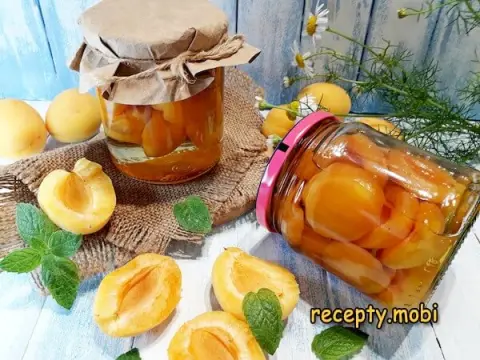
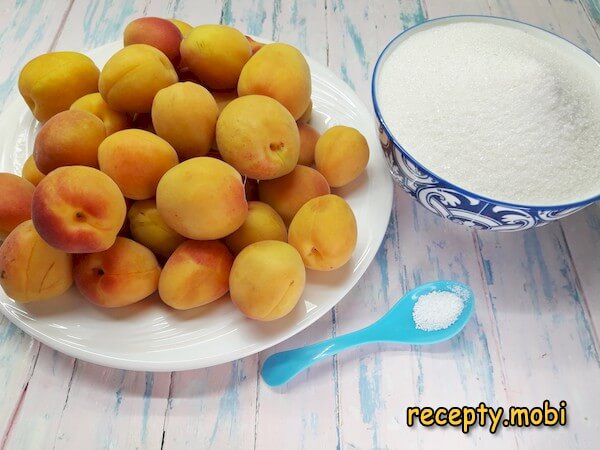
I get the ingredients ready for the pitted apricot jam for winter. The apricots need to be ripe; rotten ones will not do, though simply bruised or knocked fruit is fine.
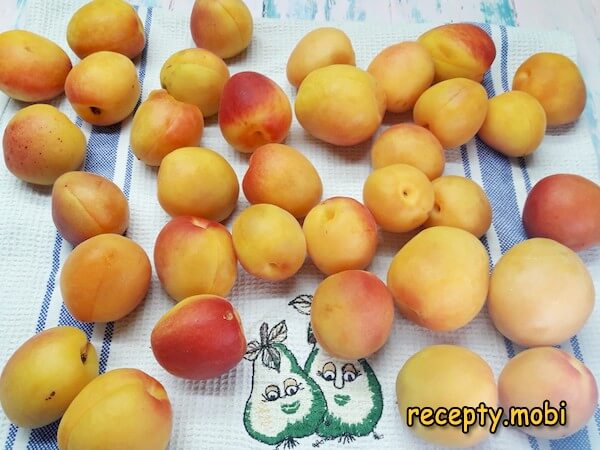
Pat the washed fruit dry with a towel.
Remove the pits by breaking or cutting the fruit open.
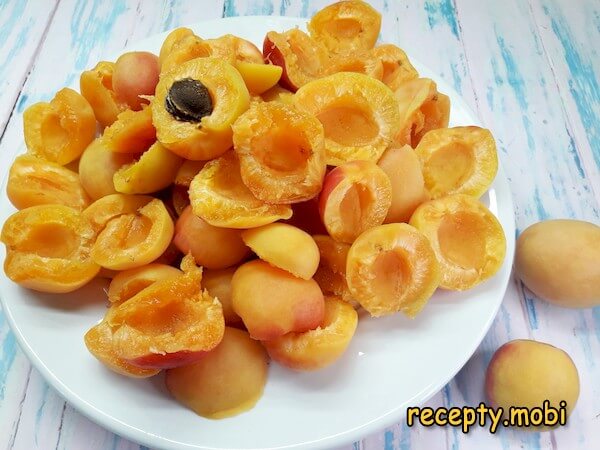
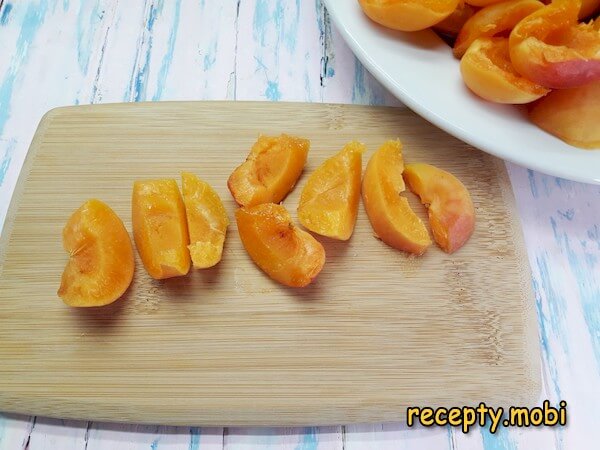
Cut the halves of the larger ones into several pieces, and the small ones simply in half.
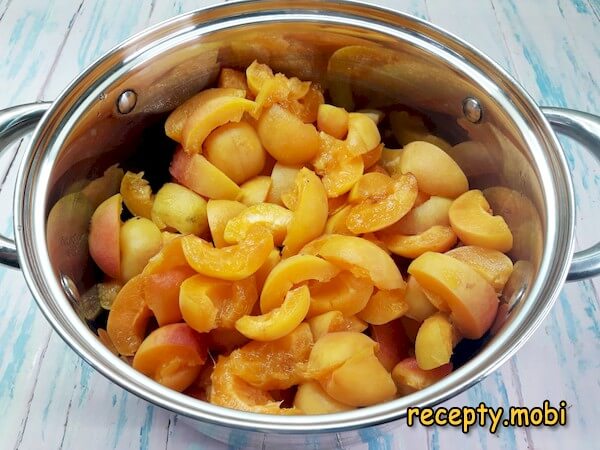
It is better to use a stainless steel pot (in an enamel one the apricots are sure to burn). As a safeguard I pour in a little water (40 ml) and tip in the prepared chopped fruit.
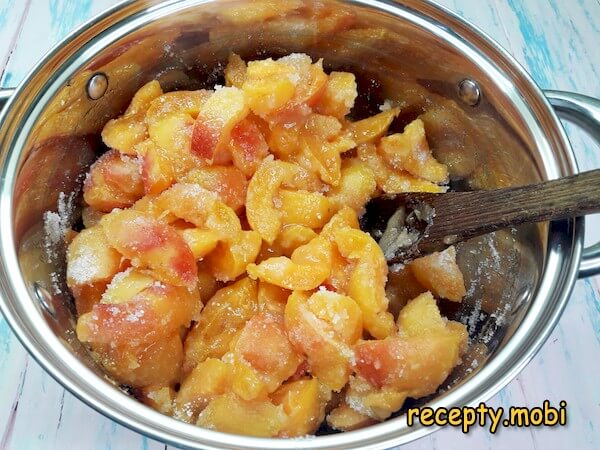
I add the citric acid and a set share of the sugar, namely a quarter of the total weight (that is 275 g). Stir.
I set the pot over the heat. The apricots release plenty of juice at once. As soon as it comes to a boil, I lower the heat. I cook the jam for 5 minutes, not leaving it and stirring from time to time.
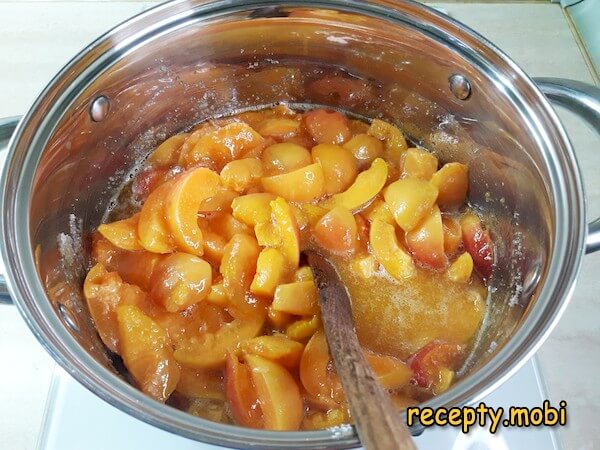
If foam gathers, I skim it off with a spoon. When the 5 minutes are up, I add the next quarter of the sugar, that is 275 g. I simmer the apricots for another 5 minutes.
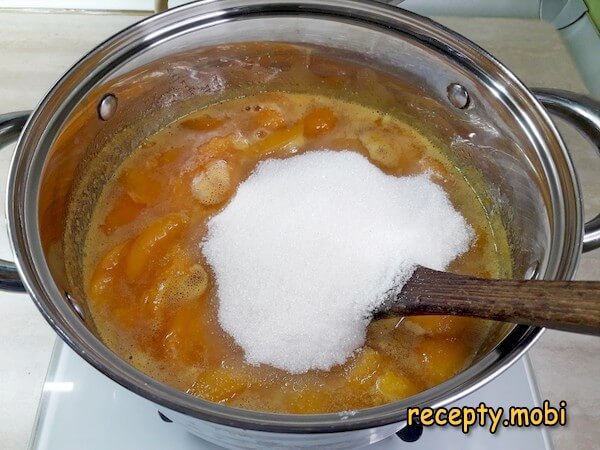
Over time the apricots noticeably change shape, and the syrup grows richer. The jam is not thick yet, but it has clearly changed. To make it smooth, I blend the mass with an immersion blender. I repeat the procedure with the sugar two more times. The last time I simmer the mixture a little longer – 7 to 10 minutes.
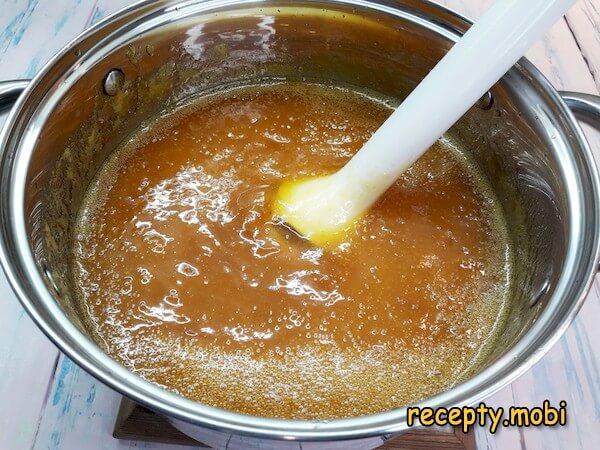
I do a test for doneness. I drop a little jam onto a saucer and run the back of a spoon through it. If the edges of the stripe do not flow back together, the apricots have cooked down enough.
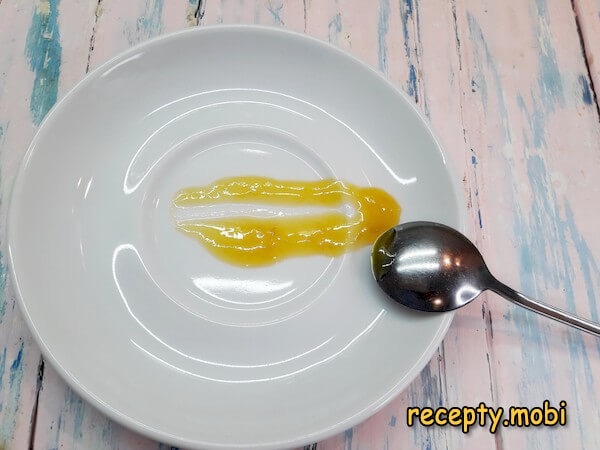
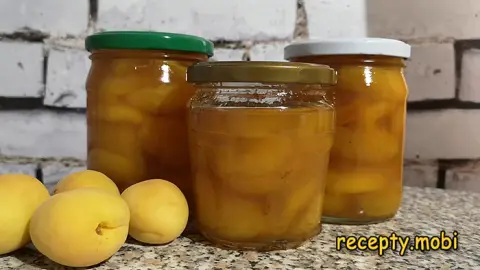
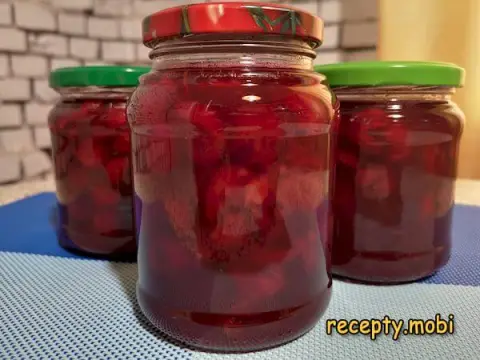
I pour the jam into jars pasteurized by any method, right up to the top.
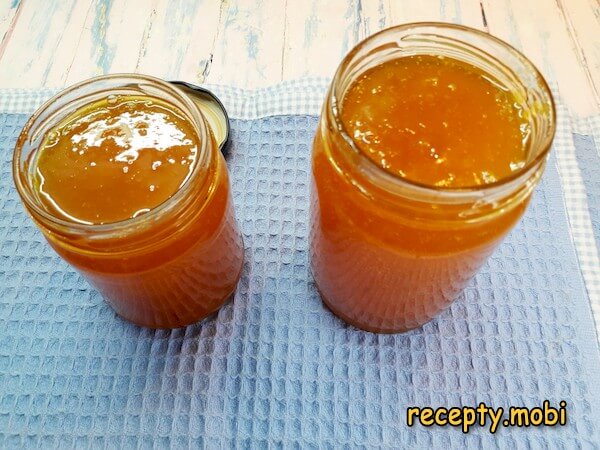
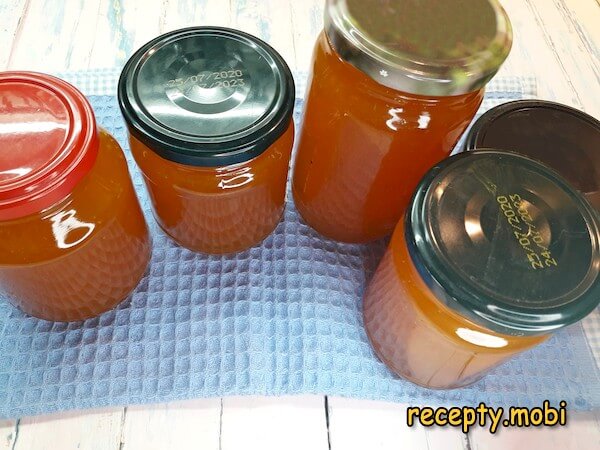
I screw on the lids and, without turning the jars over, cover them with a towel and leave them to cool like that.


Tips
- 1
SUGAR IN 4 STAGES – the "secret" to thickness without long boiling. A quarter of the sugar is added every 5 minutes. Added all together, the sugar will not dissolve evenly and will give lumps.
- 2
CITRIC ACID – the "secret" to the colour. It keeps the bright orange shade. Without it the apricots will darken to a dirty orange.
- 3
STAINLESS STEEL, NOT ENAMEL – the "secret" against burning. In an enamel pot the apricots will stick to the bottom and a burnt taste will appear.
- 4
THE SAUCER TEST – the "secret" for checking doneness. A drop of jam on a cold saucer – run a spoon through it. If it does not flow back together, it is ready. The same principle works with other kinds of fruit jam for winter.
FAQ
Which apricots should I choose? +
Ideally ripe, bright apricots (as in the recipe). Varieties such as Krasnoshchyokiy, Nikitskiy, Polesskiy or Chyornyy Prints (Black Prince, for a dark version). A size of 4 to 6 cm is best. Not suitable: green ones (sour, they will not give any aroma) and rotten ones (they will spoil the whole batch). Bruised or knocked fruit will do (cut off the bad parts). Imported Turkish or Spanish apricots are fine too. If the apricots are sour, reduce the citric acid to a pinch. Throw the pits away straight away.
Can I make it without citric acid? +
You can, but the colour of the jam will be a dirty orange. Alternatives: 2 tablespoons of lemon juice (per 1.1 kg of apricots), malic acid or cream of tartar. Without acid, the cooking has to be long (1.5 to 2 hours) for it to thicken. Do not use vinegar (it will change the taste) or synthetic sugar substitutes. The keeping time does not depend on the acid – just sterilize the jars properly.
How long does the jam keep? +
In sealed jars at room temperature – up to 1 year. In a cool, dark cellar – up to 2 years. Once opened, in the fridge – 1 month. Write the date of sealing on the jars – it is handy for keeping track. If a lid bulges, do not open it, throw it away (bacteria). Do not store it in the sun – the colour will fade. There is no need to freeze it (it keeps for a long time in jars). It is best used within the first 6 months – the flavour is brighter. Seal it in small jars of 250 to 500 ml – they are easier to open. The thickness will increase after cooling – this is normal.
What do you serve the jam with? +
The classics: at breakfast with toast, pancakes or fritters. With a cup of tea with lemon, or green tea, for a fragrant tea break. With syrniki or a cottage cheese bake. For layering cakes and pies. With ice cream or plain yogurt. On bread and butter with a crusty baguette. With granola yogurt. In porridge (oatmeal, semolina) for aroma. With hard cheeses. With hot milk. A versatile sweet preserve for the whole family.
- Comment
or post as a guest
Be the first to comment.