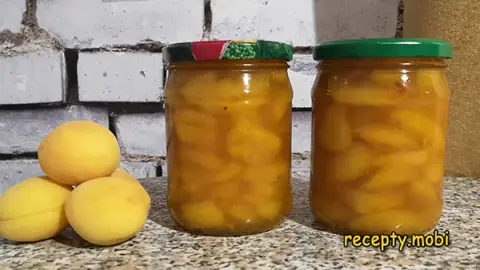
avg —
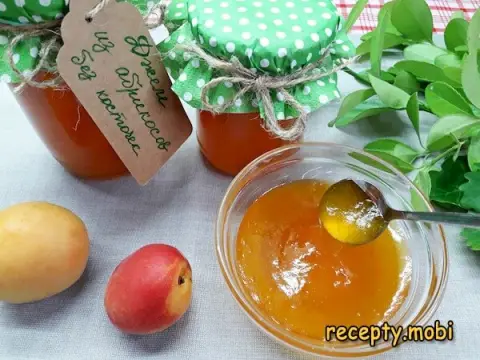
Apricot Jam

Instructions
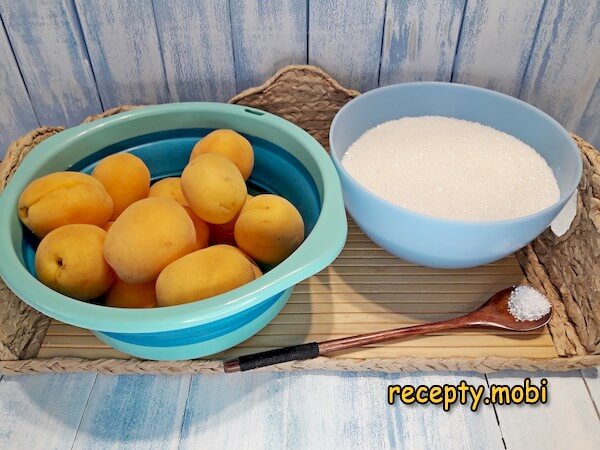
I get the ingredients ready for the apricot jam. Citric acid really is worth adding: it acts as an extra preservative, gives the jam a pleasant tartness, and keeps it from crystallising.
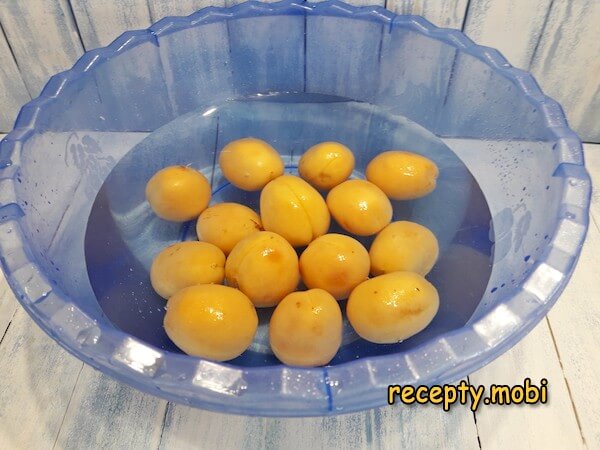
I cover the fruit with water for a couple of minutes, then wash it well without damaging the delicate skin. I sterilise the jars and lids using any method I find convenient.
I remove the pits, splitting the fruit in half by hand, or cutting it with a knife if it is very ripe and squashes under pressure.
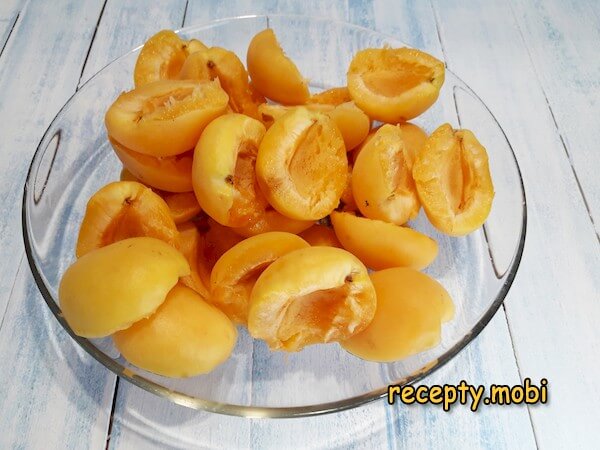
I pour 2 tablespoons of water into the pot the jam will cook in. If the apricot halves are fairly large, I cut them in half again and put them into the pot. Small ones can be left whole.
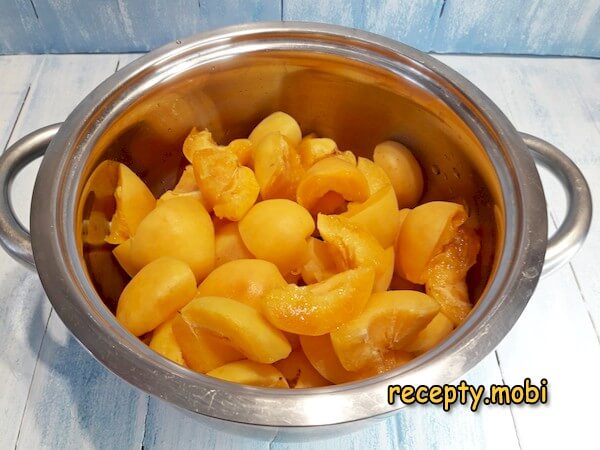
I add the citric acid.
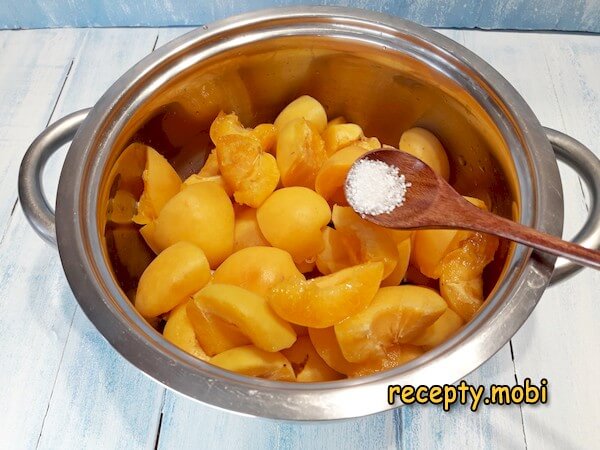
I will add the sugar in four stages, so I start by sprinkling the apricots with a quarter of the total amount (great precision is not needed here, so you can judge the portion by eye — on the scales it is 125 grams).
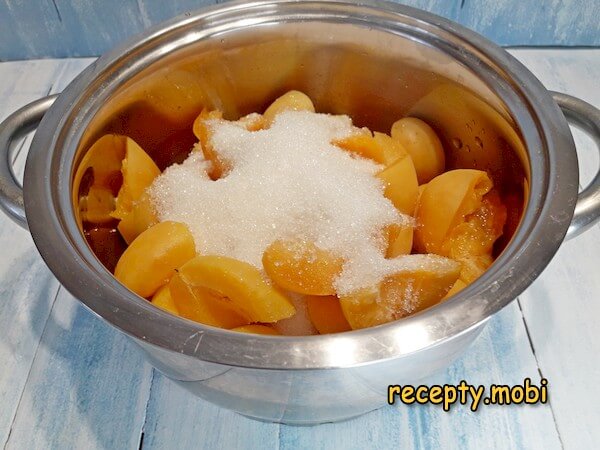
I stir everything together and set the pot on the stove.
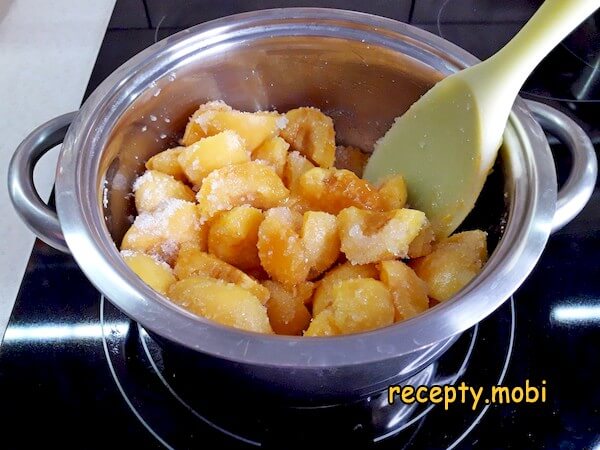
Once it comes to a boil, I cook the mixture for exactly 5 minutes.
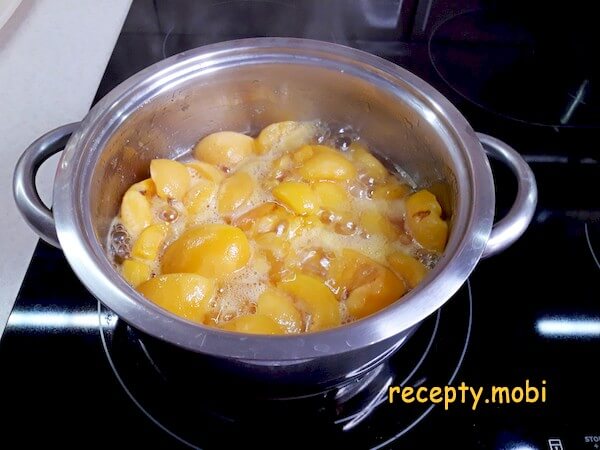
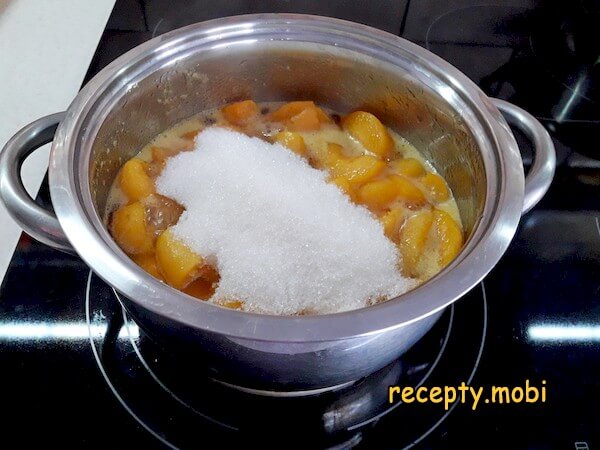
Without taking the pot off the heat, I add the next portion of sugar (the same 125 grams). Once it returns to a boil, I cook the jam for 5 minutes again.
As foam forms, I skim it off with a spoon throughout the whole process and discard it.
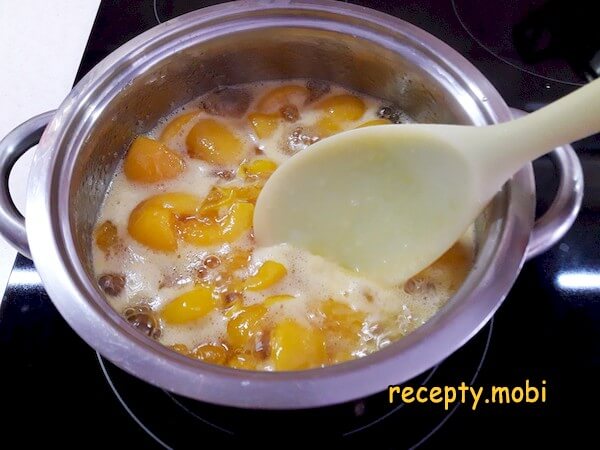
I add a third portion of sugar and again cook the mixture for 5 minutes.
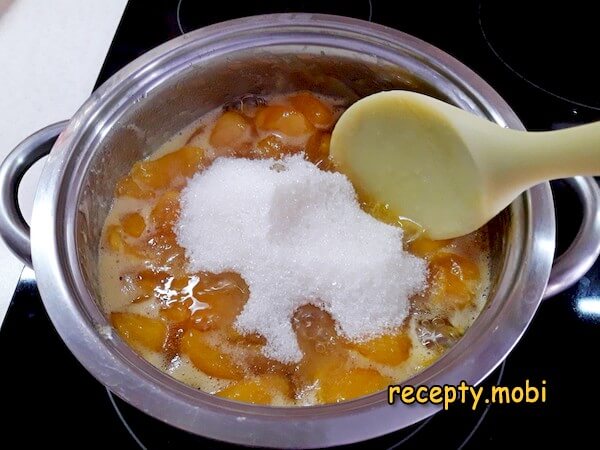
For the last, fourth time, I thicken the jam with the rest of the sugar.
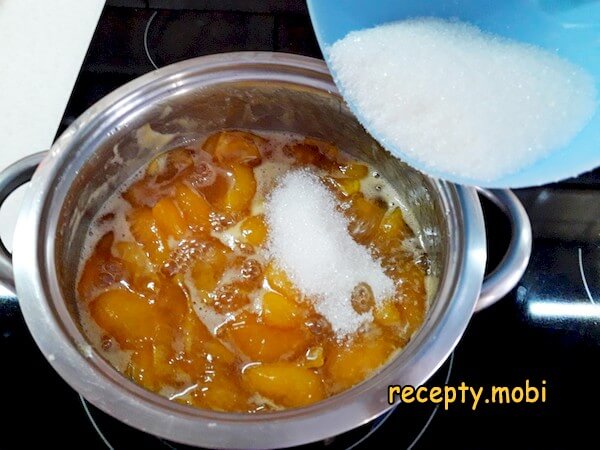
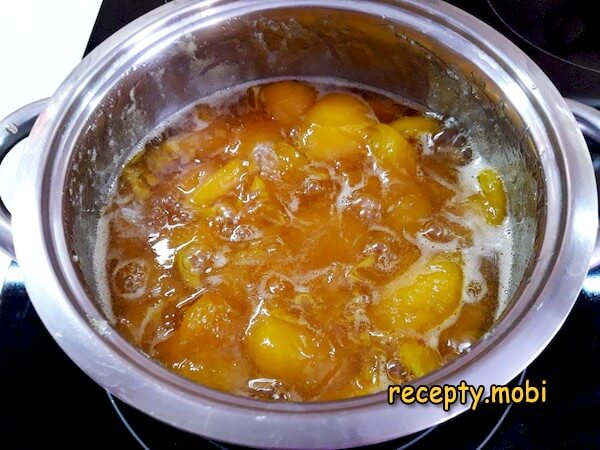
After another five-minute boil, the mixture noticeably changes its consistency and the bubbles become less frequent.
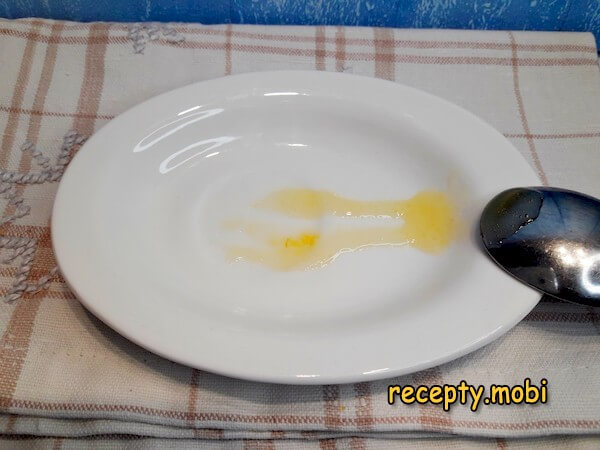
To check whether the jam has thickened enough, drop a little onto a saucer and draw a spoon through it. If the separated lines do not flow back towards each other, the jam is ready. If you want a thicker mass, you can increase the boiling time by another 5 minutes. Keep in mind that hot jam is still runny, but once it stands on the table for a day it thickens a great deal.
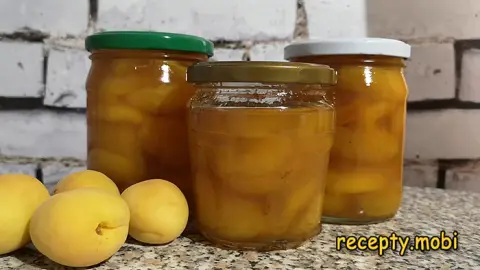
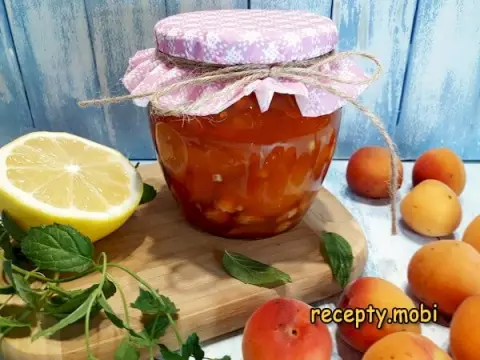
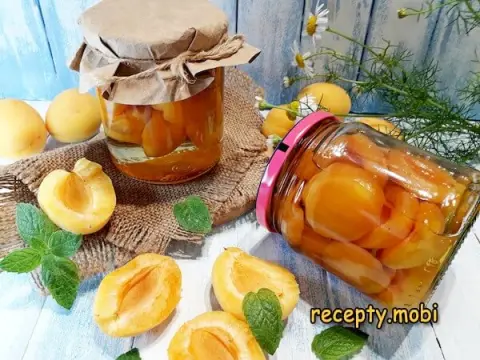
I fill the jar with hot jam right to the very top.
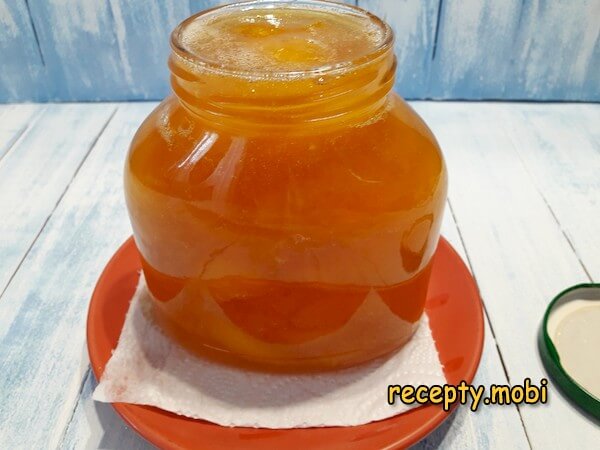
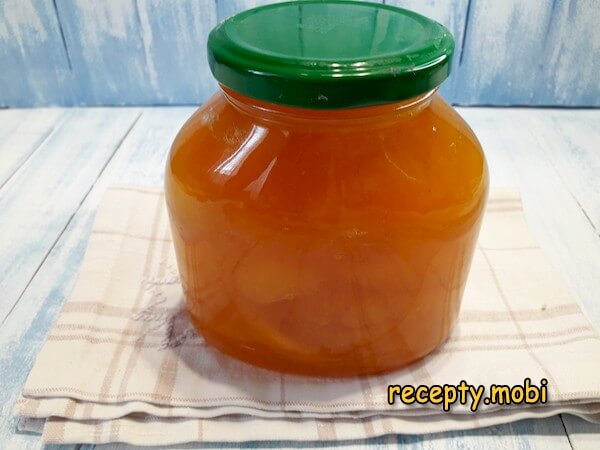
I screw on the lid and leave the sealed jar to cool on the table.


Tips
- 1
Sugar in four stages is the "secret" to an even texture. All the sugar at once gives caramelisation and a dark colour. Added in portions, with a five-minute boil after each, the jam turns out uniform.
- 2
The 2 tablespoons of water are the "secret" against burning. Dry fruit with no liquid will catch on the bottom. A minimum of water at the start, until the juice is released, protects against burning.
- 3
The saucer test is the "secret" to checking doneness. Hot jam is always runny. Drop a little onto a cold saucer and draw a spoon through it — if the lines do not flow back together, it is ready.
- 4
Citric acid is the "secret" to keeping. Without acid the jam will crystallise within six months. A third of a teaspoon holds the texture for 2–3 years in a cellar. The same principle works in other kinds of jam and preserves for winter.
FAQ
Which apricots should I choose for jam? +
Ideally, soft, sweet, slightly overripe fruit. Bruised or lightly crushed apricots are perfect for jam. You can also use a mix of apricots and plums (250 g each), or a mix of apricots and apples (250 g each). Do not use rotten or mouldy fruit, or very sour, underripe apricots. For the classic result, use soft, sweet, ripe fruit (even with bruised sides).
Can I reduce the amount of sugar? +
You can use 400 g of sugar (a 1:0.8 ratio) for a fruitier jam, or 300 g (1:0.6), though it will need longer cooking. For the classic 1:1 ratio, use 500 g of white sugar, which gives reliable storage for 2 or more years.
How long does apricot jam keep? +
In a cellar or a cool, dark place at 5–15°C it keeps for up to 2–3 years. At room temperature, up to 25°C, it keeps for about 1.5 years. Once the jar is opened, it keeps for 2 months in the fridge. If mould or a bulging lid appears, do not use it — throw it out. Do not leave the jar in sunlight, or the jam will darken.
What do you serve apricot jam with? +
The classics: on buttered toast for breakfast, with pancakes and fritters, with cheese pancakes and baked curd pudding. As a filling for pastries and pies, as a layer in a sponge cake or sponge rolls, with a croissant or a bun. It also goes well with a cup of tea or coffee, with cold milk, a scoop of vanilla ice cream, Greek yogurt, or with porridge. Apricot jam is ideal for winter tea time and as a gift for those close to you.
- Comment
or post as a guest
Be the first to comment.