avg —
Bilberry Jam for Winter

Instructions
I prepare the ingredients. The blueberries should be clean, with no twigs or leaves.
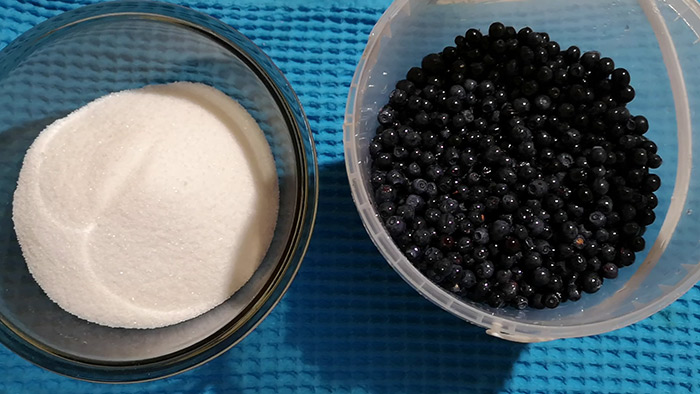
Before you start boiling the jam, the berries need to release their juice. To do this, I tip the fruit in, alternating the layers with sugar. I leave them for a few hours, and better still overnight.
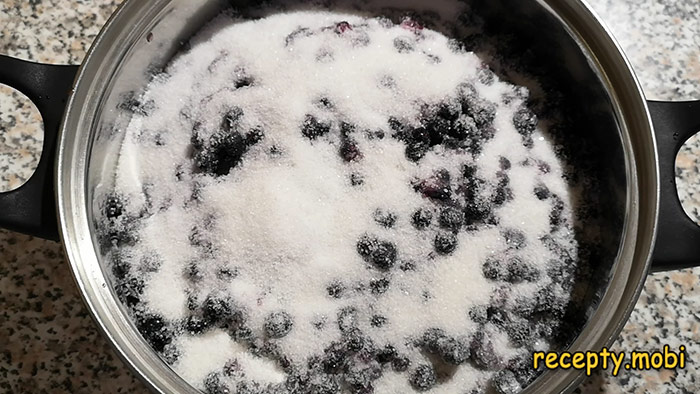
Once that time has passed, the juice will have come out and you can carry on working with the berries. I stir the blueberries.
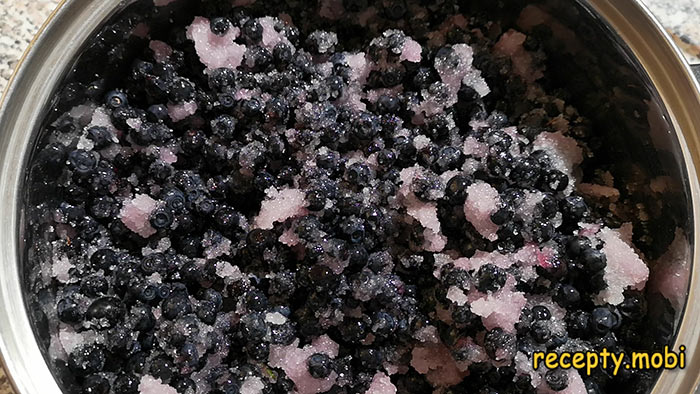
I set the pot of blueberries over moderate heat. As soon as the boil shows itself with the first bubbles, I time 5 minutes, during which I let the blueberries simmer. If foam appears, I carefully skim it off.
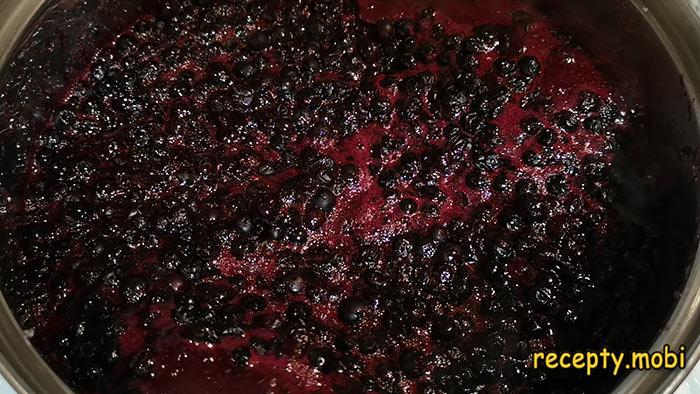
I take the preserve off the stove and wait 5 minutes.
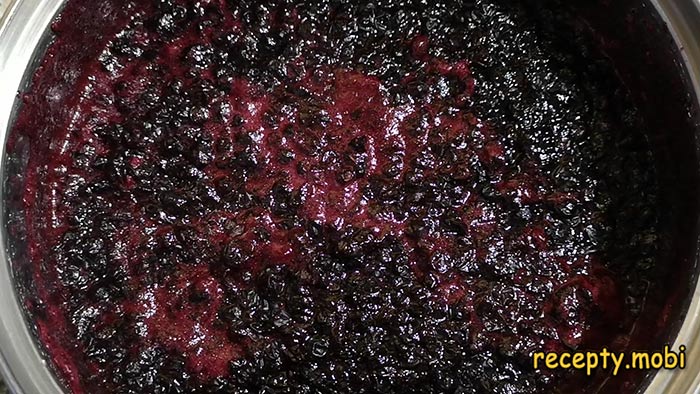
After that I repeat the boiling of the jam and its brief cooling. And for the third and last time I boil the blueberries for the same 5 minutes.
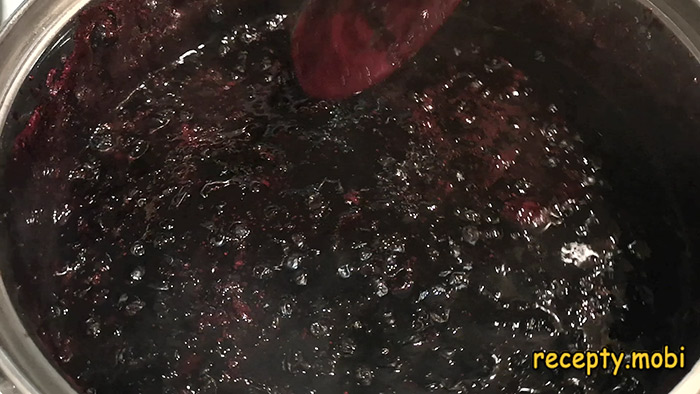
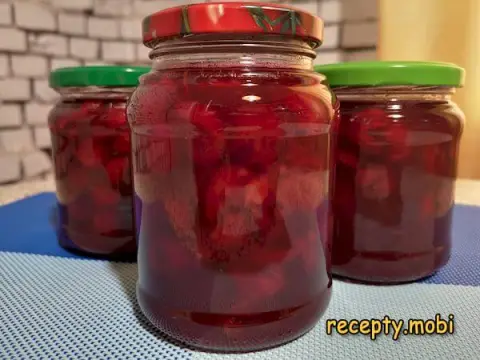
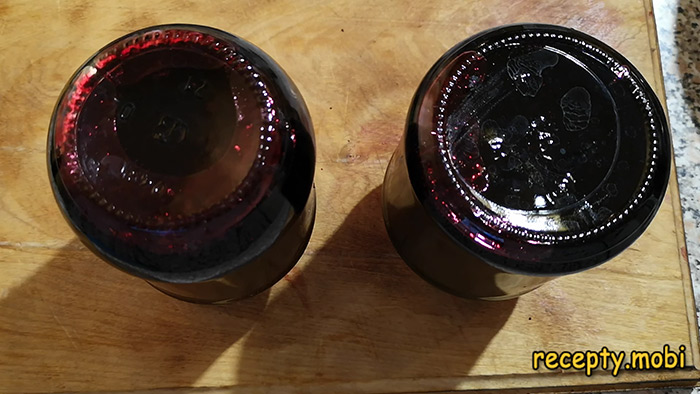
I stand the jars prepared for sealing on a towel, so the glass does not crack from contact with the high temperature of the jam. I pour it into these containers. After screwing on the lids, I turn the jars upside down and leave them until completely cool. The blueberry jam for winter is ready.


Tips
- 1
Layering with sugar overnight – the "secret" of the juice. Without this soaking, the berries give little juice and the jam will catch and burn. Allow at least 4 hours.
- 2
Three boils of 5 minutes each – the "secret" of the shape. Prolonged boiling turns the berry to mush. Short stints keep the little berries whole.
- 3
Skimming the foam – a clean colour. Foam with impurities spoils the clarity of the syrup. Skim it off the moment it appears.
- 4
Cooling for 5 minutes between boils – the "secret" of soaking. The berry has time to drink up the syrup. The same principle works in other kinds of berry jam.
Video

FAQ
Which blueberries should I choose? +
Ideally, freshly picked forest blueberries (dark blue, with a waxy bloom, firm). Alternatives: garden blueberries (larger and sweeter), or frozen blueberries (200 g = 250 g fresh; thaw for 30 minutes). Fresh berries are glossy, with no green or crushed ones. Not suitable: overripe berries (they will leak) and berries with mould. Wild blueberries from trusted forests (away from any roads) are the "premium" choice. Before cooking, sort them through and remove twigs, leaves and unripe berries. Rinse quickly in a colander under cold water – long soaking will "draw out" the juice and aroma.
What can I use instead of sugar? +
Alternatives: brown cane sugar (a caramel note, a darker colour); fructose (700 g – the "diabetic" option, sweeter than ordinary sugar); honey (300 g + 300 g sugar – do not boil for more than 5 minutes, or it loses its beneficial properties); stevia (for a "healthy-eating" version – but the jam will not thicken). Do not use: aspartame-based sweeteners (they turn bitter when heated) or icing sugar (it will not dissolve evenly). A ratio of 60% of the weight of the berries is optimal for blueberries. For a "less sweet" version, use 500 g, but the shelf life will drop to 6 months. For a "premium" version, use demerara cane sugar.
How long does the jam keep? +
In sterile, sealed jars at room temperature – up to 1 year. In a cool cellar – up to 2 years. Once opened, in the fridge – 3–4 weeks. Write the sealing date on the jars. If mould or fermentation appears, do not open it – throw it away. Do not store it in the sun – the colour will "fade". It is best used within the first 6–8 months. Seal it in small 250 ml jars – they are easier to open (a large one will crystallise within a couple of weeks). If it has crystallised, warm it in a water bath for 10 minutes. The beneficial properties of blueberries are at their highest in the first 3 months after sealing.
What do I serve the jam with? +
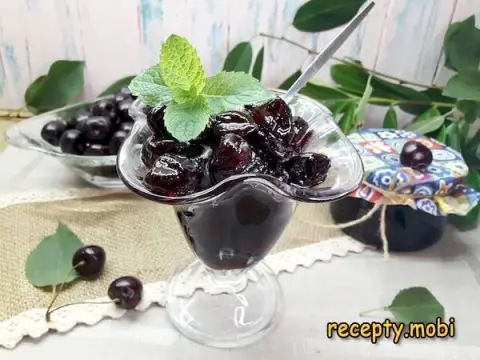
A classic with tea: with toast, pancakes, oladyi and syrniki. With cottage cheese or a cottage-cheese bake. With vanilla ice cream or yoghurt. As a filling for shortcrust pies and tarts. As a layer for a sponge cake. With cheeses (camembert, brie, goat's cheese) – the "French" way of serving. With porridge, oat or semolina. With hot waffles and croissants. On sandwiches with butter and cottage cheese. In hot milk – a folk remedy for a cold. With a cup of herbal mint tea. With warm bread and butter. A versatile, wholesome jam for winter tea-drinking.
- Comment
or post as a guest
Be the first to comment.