avg —
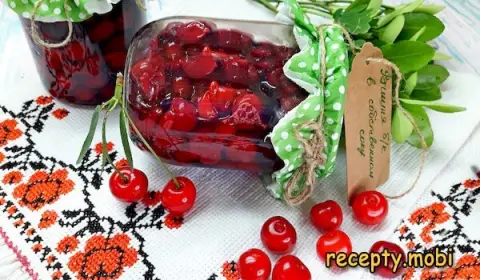
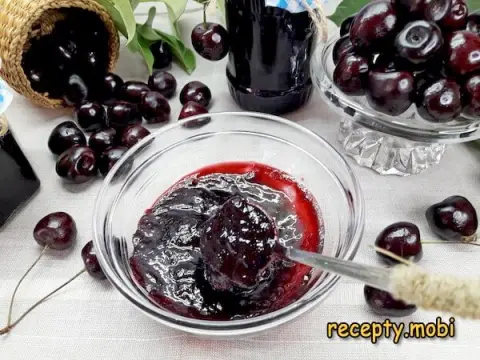
Cherry in its own juice for the winter

Instructions
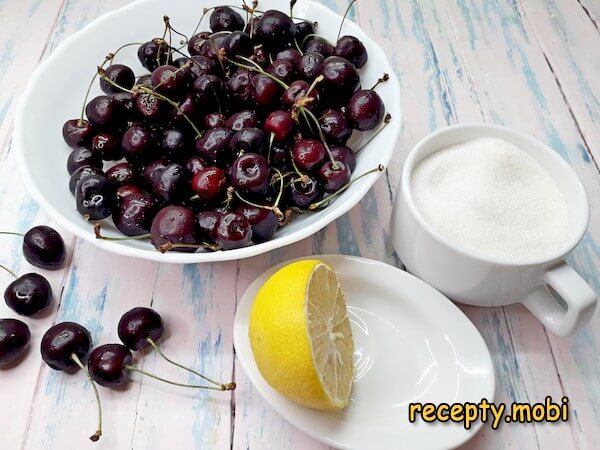
I get the listed ingredients ready.
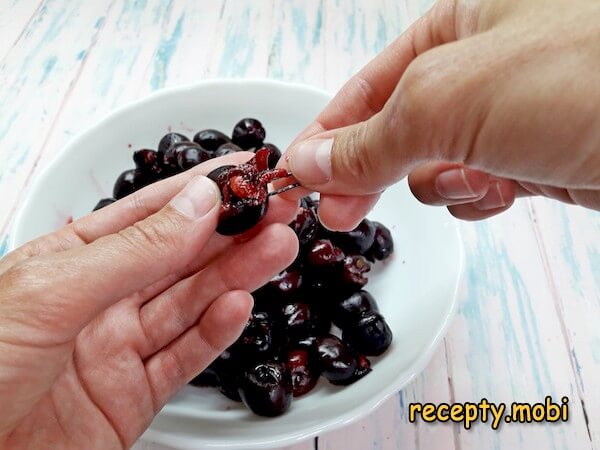
There is no need to dry the washed cherries. What you do need to do is pull off the stems and sort out any dry, damaged or substandard berries. I remove the stones in a convenient way (a pin is less damaging to the fruit, as it only pierces a hole on one side).
As cherries are quite sweet, it does no harm to balance the flavour with a pinch of citric acid or a spoonful of the same juice. The acid also acts as an extra preservative and helps the cherries release more juice, the very juice they will be preserved in.
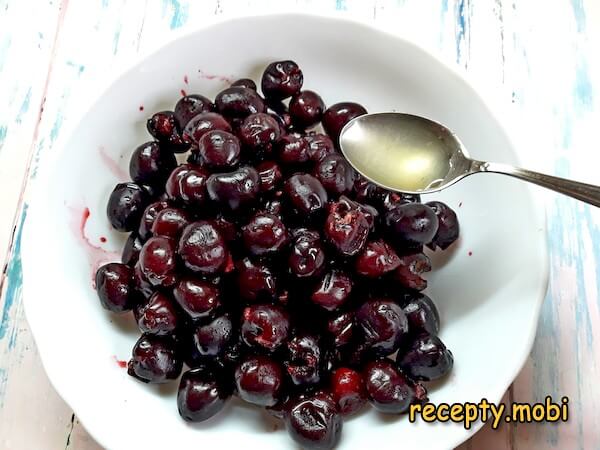
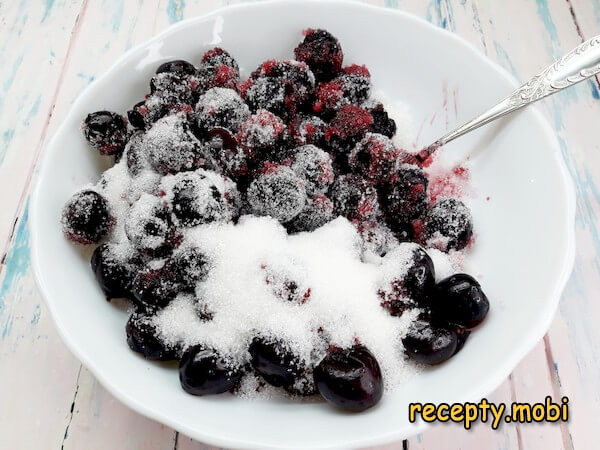
I cover the berries with sugar. After waiting about 10 minutes, I stir them (don't be afraid of bruising the cherries – their dense structure holds its original shape very well).
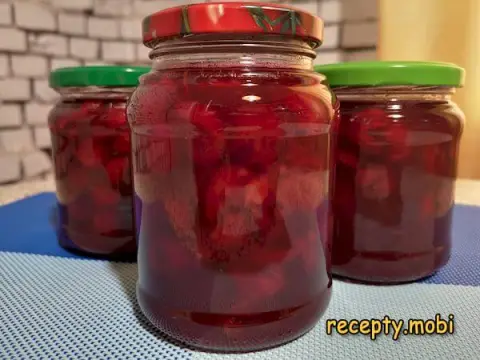
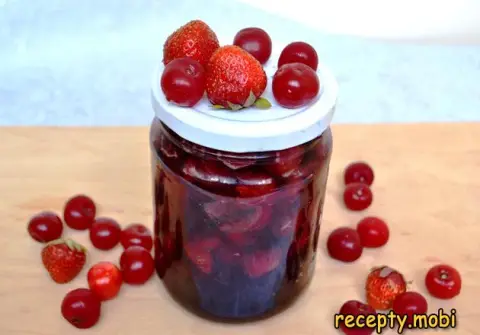
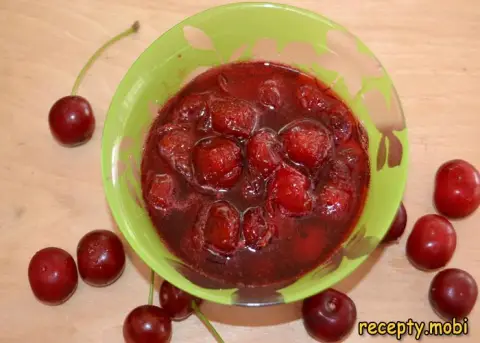
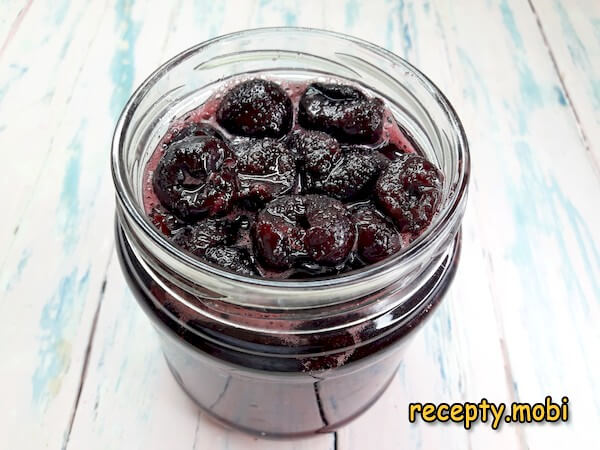
I transfer the berries into the jar, pressing them down lightly. I pour over the remaining juice with its sugar granules. All the cherries fit neatly into one jar.
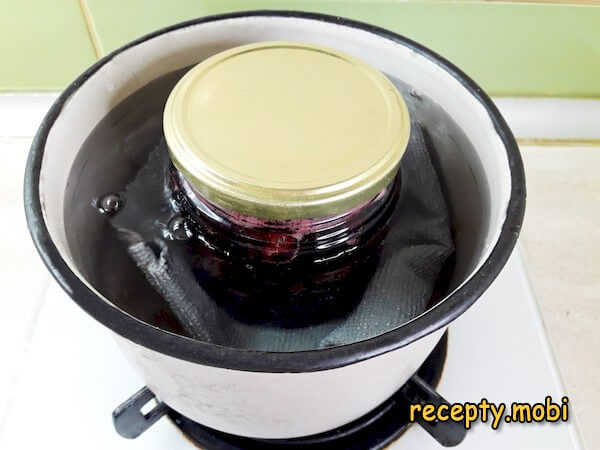
I cover the jar with a lid (without screwing it on). I stand it in cold or warm water poured into a pan of a suitable size (the water should not rise above the shoulders of the jar). I put a piece of cloth on the bottom so the glass does not crack from the heat. Once the water comes to a rolling boil, I sterilise the sealed jar for 10 minutes (for a 1-litre jar the time should be extended to 20 minutes).
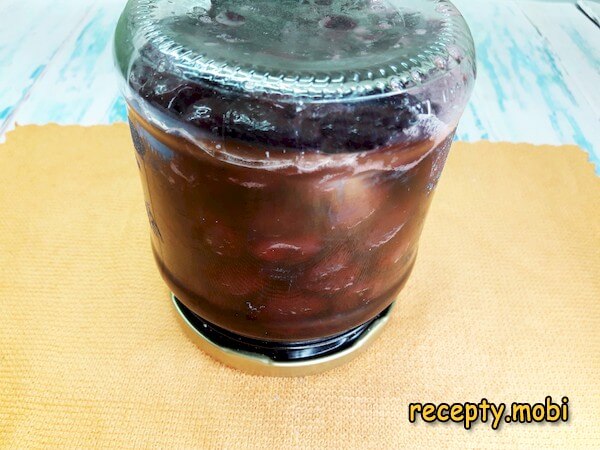
I take the jar out of the water, screw the lid on tightly and turn it upside down onto the lid. I leave it to cool just like that.


Tips
- 1
A pin for the stones – the "secret" to keeping them whole. A stone remover damages the berry from two sides, while a pin pierces only one – the berry stays almost intact.
- 2
Lemon juice – the "secret" to balance. Cherries are very sweet, and the lemony tang balances the flavour and works as a preservative.
- 3
10 minutes on the table before transferring – the "secret" to the juice. The sugar draws the juice out of the berries, so let them macerate before packing into the jar.
- 4
Cloth on the bottom of the pan – the "secret" against cracked glass. Without something underneath, the jar may crack from sudden changes in temperature. The same principle works for other kinds of berries in their own juice.
Proportions for 0.5, 1, and 2 Liter Jars
My baseline is a simple rule: for every 500 g of berries you use 150 g of sugar (about 30 percent of the weight) and 1 teaspoon of lemon juice. There is just enough sugar here to draw out the juice, but not so much that the preserve turns into jam. Below is a ready conversion for the most common jar sizes.
| Jar | Sweet cherry | Sugar | Lemon juice (or citric acid) |
|---|---|---|---|
| 0.5 L | 350 g | 100 g | 2/3 tsp juice (a pinch of citric acid) |
| 1 L | 700 g | 200 g | 1.5 tsp juice (1/3 tsp citric acid) |
| 2 L | 1.4 kg | 400 g | 3 tsp juice (3/4 tsp citric acid) |
The scaling rule is a single one: about 30 percent sugar by the weight of the berries and 1 teaspoon of juice per 500 g. Weigh the berries already sorted, without stems and spoiled fruit. A tightly packed jar holds about 10-15 percent more berries than the volume suggests, so prepare a small surplus.
Why Sweet Cherries Must Have Added Acid
This is the main way it differs from sour cherry. Sour cherry is naturally acidic, and its own acid is almost enough for safe canning. Sweet varieties behave differently: their acidity is noticeably lower, the environment inside the jar comes out low-acid, and it is exactly this kind of environment where the bacteria that cause spoilage and bulging lids develop most actively.
Lemon juice or citric acid is needed here not for flavor but for safety: acidifying shifts the environment into the zone where sterilization in boiling water works reliably. My working dose: 1 teaspoon of juice or a pinch (about 1/4 teaspoon) of powdered citric acid per 500 g of berries. Add it to the berries together with the sugar, before the juice starts to run, so it spreads evenly. Do not skip this step and do not cut the dose, even if the berries taste a little tart on the tongue.
Sterilization Time by Jar Size
I count the time from the moment the water in the pot around the jars comes to a boil, not from when you put the pot on the heat. The berries are delicate and there is no reason to overhold them: as soon as the preserve is heated all the way through, the job is done. Here are the guidelines for a fruit preserve.
| Jar | Time in boiling water | Note |
|---|---|---|
| 0.5 L | 10-12 minutes | the berries barely soften |
| 1 L | 15 minutes | the most common size |
| 2 L | 20-25 minutes | heats through more slowly, add 5 minutes to be safe |
Set the jar up properly: put a cloth napkin or a rack on the bottom of the pot, otherwise the glass will crack from contact with the hot bottom. The water should reach up to the shoulders of the jars, to the level of the preserve. Lay the lid on top but do not screw it down, so steam can escape. Keep a gentle simmer, without vigorous bubbling: that way the berries stay whole and the jar will not dance around the pot.
Variations
The basic recipe with whole berries and pits has a few handy variations for different needs.
Pitted, tightly packed. Handy in winter: nothing to spit out, and more flesh fits into the jar.
- pitted sweet cherries 600 g
- sugar 180 g
- lemon juice 1.5 tsp
- Remove the pits with a pitter over a bowl to catch the juice that runs out.
- Toss the berries with the sugar and citric acid, and let them sit for 15 minutes.
- Pack them tightly into the jar and top it up with the collected juice.
- Sterilize for the time from the table and seal.
Note: pitted berries give off more juice, so drain it carefully and be sure to return it to the jar rather than pour it away.
With added sour cherry. A handful of sour cherries gives a pleasant tartness and a deeper ruby color.
- sweet cherries 400 g
- sour cherries 100 g
- sugar 150 g
- lemon juice 1 tsp
- Sort both fruits, and leave the pits in the sour cherries for aroma.
- Mix with the sugar and citric acid, keep the juice dose at the standard rate for the total weight, and treat the tartness of the sour cherries as a bonus to the flavor.
- Let them release juice for 10 minutes, then transfer to the jar.
- Sterilize and seal as usual.
Note: use no more than a fifth of the total weight in sour cherries, otherwise they will overpower the mild flavor of the main berry.
In a light syrup. For those who like it sweeter and want a ready compote syrup, not just concentrated juice.
- sweet cherries 500 g
- water 200 ml
- sugar 120 g
- lemon juice 1.5 tsp
- Cook a syrup from the water and sugar, and let it cool a little.
- Pack the berries into the jar and add the lemon juice.
- Pour in warm, not boiling syrup up to the shoulders.
- Sterilize per the table and seal.
Note: there is more liquid in the syrup, so I take a bit more citric acid than the base rate, since the water dilutes the berries' own juice. And pour in warm syrup, not fierce boiling water, so the cold berries do not trigger a crack in the glass.
Common Mistakes
The slips that most often ruin this particular preserve.
| Mistake | What happens | How to fix |
|---|---|---|
| Skipped the acid | low-acid environment, higher risk of spoilage and bulging | always add juice or citric acid at the standard rate per jar |
| Under-sterilized | the juice (syrup) turns cloudy, the lid bulges within a week or two | hold the full time from the moment the water comes to a boil |
| Put a cold jar into boiling water | the glass bursts from the temperature shock | heat the water together with the jar, do not drop it into boiling water |
| Used overripe, bruised fruit | the berries fall apart into mush and lose their shape | use firm, slightly underripe fruit, overripe ones will fall apart |
| Screwed the jar shut before sterilizing | the steam blows the lid off and the jar may crack | during heating only lay the lid on top |
Two pillars of a tidy preserve: hold the full sterilization time for the jar size and pack whole, firm berries tightly. Follow them along with the mandatory acidifying, and the jars will keep until the next harvest without surprises.
FAQ
Which cherries should I choose? +
Ideally, ripe, meaty cherries (both the sweet yellow kind and the dark maroon kind). Popular varieties include "Drogana Yellow", "Bull's Heart", "Bigarreau Burlat" and "Napoleon". A size of 1.5–2.5 cm is best. Cherries picked fresh in the morning are the most fragrant. Avoid any that are rotten, cracked or worm-eaten. Imported Turkish or Serbian cherries will do as well. For "premium" preserving, use farm cherries straight from the tree. A mix of yellow and dark varieties looks brighter in the jar.
Can I do it with the stones in? +
You can, but in that case:
1) The storage time drops to 1 year (the stones release prussic acid during long storage).
2) The berries keep their shape perfectly.
3) You need to pick out the stones as you eat.
Without the stones (as in the recipe) it is more convenient in finished dishes, baking and for children. Storage increases to 2 years. Decide according to your personal preference. For a "premium" look, leave the stones in (the cherries stay "whole" and beautiful).
How long does the preserve keep? +
In sealed jars in a cool place – up to 2 years (without the stones). Once opened, 5–7 days in the fridge. Do not keep it in the sun – the jars may "explode". If the lid bulges, do not open it – throw it away. Label the jars with the canning date. There is no need to freeze it. Use small 0.5 l jars – they are more convenient to open. It is best used in the first 6–12 months, when the aroma is brighter. A large jar (1 l) needs 20 minutes of sterilising. Once a jar is open, pour the contents into a glass container with a lid.
Where can I use the preserve? +
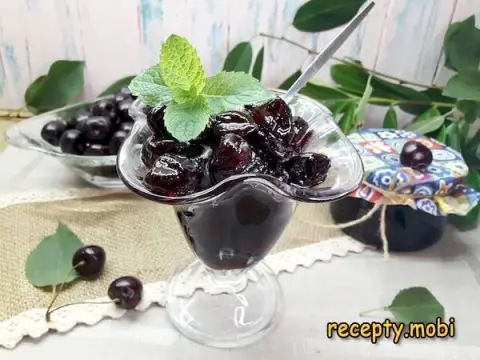
A dessert in its own right – with cottage cheese, yoghurt or ice cream. As a filling for pies and croissants (on the author's advice). With pancakes and fritters. With casseroles and cheese pancakes. In breakfast porridge. The syrup goes into cocktails (with champagne or prosecco), compotes and fruit drinks. For soaking sponge cakes and gateaux. With hot tea and lemon. With a cup of coffee. With a scoop of ice cream for a summer dessert. On sandwiches with butter. In mulled wine instead of dried fruit. A versatile sweet preserve for the whole year.
Can I make it without sterilization? +
For this berry it is risky. It is low-acid, and without heating, microorganisms stay in the jar that only thrive in the mild environment. There are two reliable paths: full sterilization with acidifying, as in the recipe, or freezing the berries in their own juice. A cold pour of sugar without heating does not give safe storage at room temperature.
What can I use instead of citric acid? +
The easiest is lemon juice at the dose from the table above. You can also take the powdered acid itself, dissolving it in a spoon of water for even distribution. I would not advise apple cider vinegar in this sweet preserve: it gives an off taste, and it is harder to control the acidity you need through it.
Can I add less sugar or none at all? +
You can cut the sugar down to 100 g per 500 g of berries: the taste will be less cloying and the juice thinner. But I do not recommend going fully sugar-free, since sugar helps draw out the juice and supports keeping quality. If sugar is off-limits for you, it is more honest to freeze the berries rather than seal them. When you reduce the sugar, do not touch the acid dose and do not shorten the sterilization time: those two are what keep it safe.
The sweet cherries floated up in the jar, is that a defect? +
No, this is normal and does not affect quality. The berries are lighter than the syrup and naturally rise toward the neck, especially if the packing was loose. To avoid it next time, pack the fruit more tightly and give the jar a slight shake before sealing. The only thing to worry about is cloudy liquid, bubbles, or a bulging lid: now those are signs of spoilage.
How soon can I taste the preserve? +
Let it rest for at least 3-4 weeks, so the berries soak through and the flavor rounds out. There is little point in opening it earlier, the syrup has not gained depth yet. In winter the concentrated juice is handy to dilute with cold water as a base for fruit drink or kissel, or you can drink it as is.
- Comment
or post as a guest
Be the first to comment.