avg —
Cherry Jam for Cake and Pie Fillings

Instructions
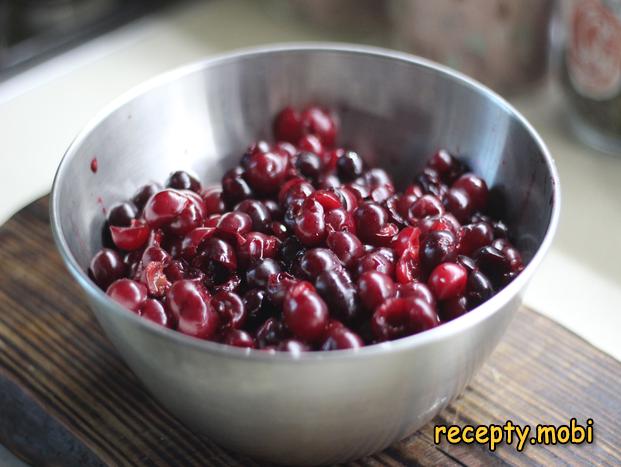
I prepare the cherries (1 kg). Fresh cherries I wash thoroughly under cold running water and remove the stems. Frozen cherries should be used without thawing. I always remove the pits with a special cherry pitter or an ordinary pin – the confiture must be "stone-free" so it is convenient as a cake filling. Sweet-and-sour varieties (Lyubskaya, Shubinka) are ideal.
I prepare the 500 ml glass jars (2 of them) and metal lids. I wash the jars thoroughly in a hot soda solution and rinse them with boiling water. I sterilise them with steam over a kettle for 5 minutes (neck down), in the oven at 100°C for 10 minutes, or in the microwave with 2 tbsp of water for 3 minutes at 800 W. I boil the lids separately for 5 minutes.
Instead of cherries you can use any seasonal berries and fruit: apricots (for a golden confiture), raspberries (a delicate summer version), peaches or nectarines in cubes, blackcurrants or redcurrants (with pectin, an extra thickener), figs in cubes, pears in cubes. The method is the same for all berries.
I prepare a saucepan with thick walls and a non-stick coating, 2–3 litres in capacity. The non-stick coating is critical – confiture has a high risk of catching and burning. Enamelled cookware is not suitable – the confiture will stick to the walls. Teflon or ceramic coating is ideal.
I transfer the pitted cherries into the saucepan. I put it over medium heat and bring to the boil, stirring occasionally with a silicone spatula to prevent burning. The cherries will release a lot of juice within 5–7 minutes – the heat triggers the juice to run.
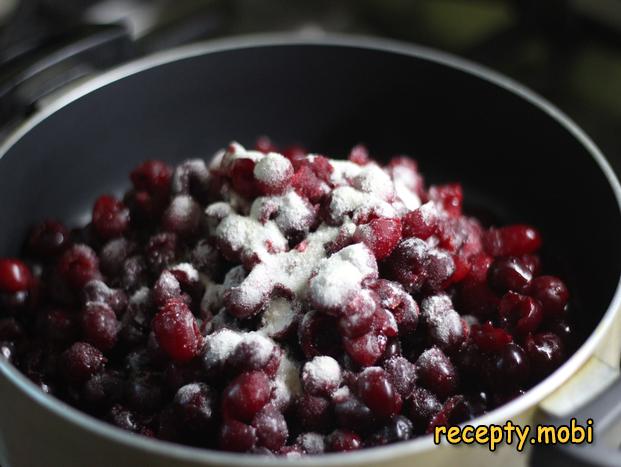
The critical step for activating the agar-agar: once the cherries come to the boil, I sprinkle the dry agar-agar (20 g) into the saucepan. I stir thoroughly with a silicone spatula until it is fully distributed through the mass, with no lumps. The agar-agar should "dissolve" into the hot cherry mixture.
I add all the sugar (500 g) and stir thoroughly until it dissolves. The sugar will start to dissolve in the hot mixture within 2–3 minutes. If you like, add fresh lemon juice (1 tbsp) – it will enhance the cherry flavour and help the confiture keep longer. You can also add the seeds from ½ vanilla pod or vanillin (1 g) for a delicate aroma.
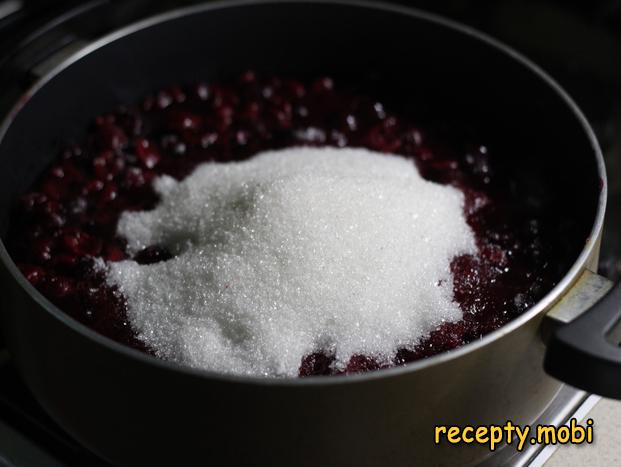
I reduce the heat to the lowest setting and cook the confiture for 30–40 minutes until thickened, stirring constantly with the spatula. The mass will gradually thicken and take on a characteristic glossy sheen. Constant stirring is very important – work the spatula along the bottom to prevent burning.
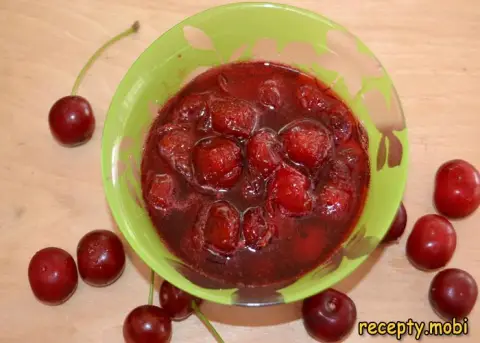
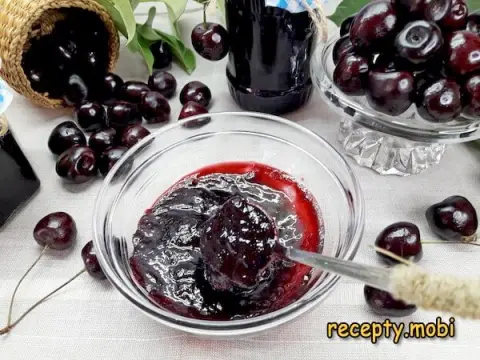
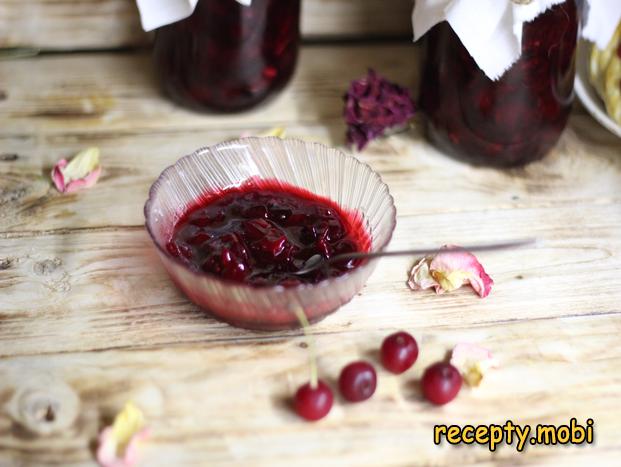
The finished confiture has a dense, jam-like consistency – a spoon stands upright in the mass. The doneness test: drop 1 tsp of hot confiture onto a cold plate – after a minute the drop should "set" into a firm jam and not spread. If it is still runny, cook it for another 5–10 minutes.
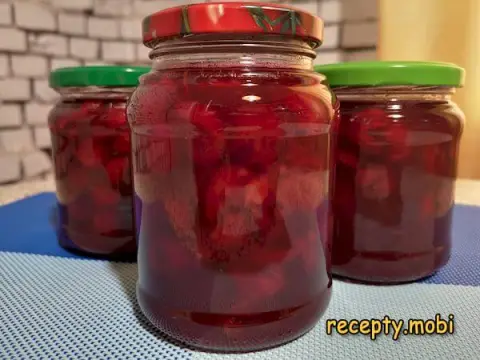
I fill the sterilised glass jars with the boiling confiture, right up to the top (to the shoulders). Do not delay – the hot confiture should "seal" the lid for long storage. Tap the jar gently against a towel to release any air bubbles.
I immediately close the jars airtight with the steamed lids: I seal them with metal lids using a sealing key, or screw on twist-off lids. I check the seal – I turn the jar upside down, and there should be no leaks around the edges.
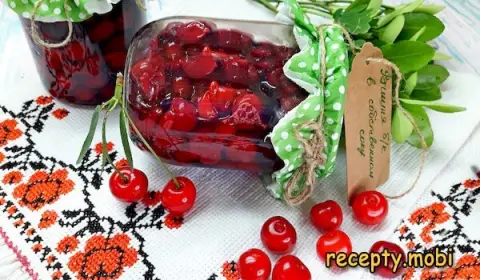
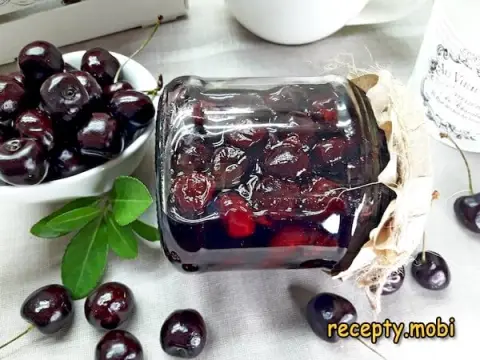
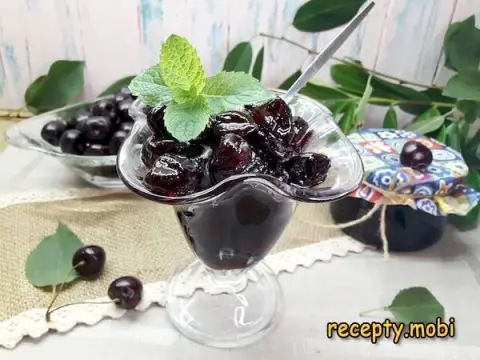
I wrap the upturned jars snugly in a thick blanket or towel "in a fur coat" for 12 hours until they cool completely – this is "extra sterilisation" by the steam of the jam itself. Once fully cooled, I store them in a cool dark place (a cellar or larder) or in the refrigerator for up to 1 year. The cherry confiture is ready!


Tips
- 1
Use sweet-and-sour cherries (Lyubskaya, Shubinka) – varieties that are too sweet will give a cloying confiture without the characteristic note.
- 2
Use a saucepan with a non-stick coating – confiture has a high risk of burning in enamelled cookware.
- 3
Constant stirring during cooking is the "secret" to preventing burning and to a smooth, even consistency. On a similar principle I make cherry jam with pits.
- 4
The "drop on a cold plate" test is the only reliable way to check doneness. After a minute the drop should "set".
FAQ
What can I use instead of agar-agar in confiture? +
The following will work: pectin (10 g, a classic fruit thickener), the "Confityurka" gelling mix (1–2 sachets, as per the packet instructions), a special jam thickener (as per the instructions), potato starch (30 g, diluted in 100 ml of cold water), cornflour (30 g, for a more delicate texture), or gelatine 30 g (but the confiture will "melt" when heated – not suitable for hot desserts). Agar-agar is the "universal" choice: it is suitable for vegans, does not "melt" when heated and gives a firm texture. For a "classic" Russian jam without thickeners, use only pectin-rich berries (currants, gooseberries, sour apples).
Can I replace the cherries with other berries? +
Yes, the method is universal for most berries and fruit. Suitable ones include: raspberries, strawberries, currants (black or red), gooseberries, blackberries, blueberries, bilberries, apricots (pitted, in cubes), peaches, nectarines, figs, pears and apples. Each berry has its own nuances. For raspberries and strawberries, reduce the cooking time to 20 minutes (delicate berries). For currants, with their extra pectin, the agar-agar can be reduced to 15 g. For apples, cut them into 1 cm cubes and cook longer, up to 50 minutes. Each confiture will have its own character. Cherry is the "classic" for chocolate cakes and pies.
How long does the finished confiture keep? +
Properly sterilised and sealed, the confiture keeps in a cool dark place for up to 1–2 years. Keep an opened jar in the refrigerator with the lid on for up to 14 days. If you do not plan to store it for long, you can additionally sterilise the filled jars in a pressure cooker or a large pan of water for 10 minutes after sealing. Signs of spoilage – a bulging lid, mould on the surface, an unpleasant "yeasty" smell – mean the jars should be thrown away, as they are dangerous to eat. For long storage, avoid direct sunlight.
What do you serve cherry confiture with? +
It is a versatile filling for confectionery and a dessert in its own right. Its main uses: a filling for Black Forest and Drunken Cherry cakes, chocolate roulades, sponge cakes and between the layers of a honey cake. A filling for pies made from yeast dough, sweet hand pies, pancakes and croissants. A topping for vanilla ice cream, cheesecakes, panna cotta, curd desserts and muesli with yoghurt. With tea – on fresh toast with butter or cream cheese. With a cheese board – with hard cheeses and red wine. To drink – black tea, a latte, cocoa with milk, or a sweet white wine.
- Comment
or post as a guest
Be the first to comment.