avg —
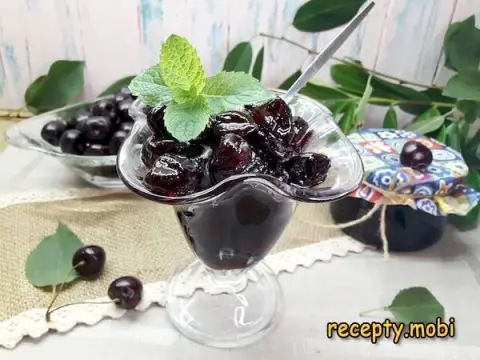
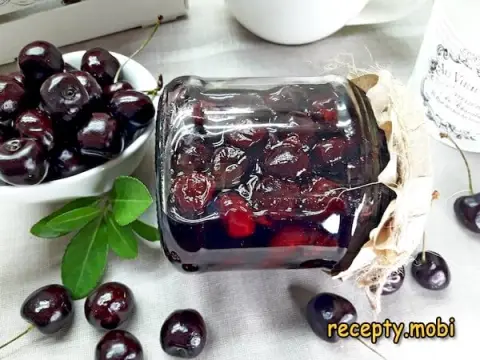
Cherry Jam with Lemon

Instructions
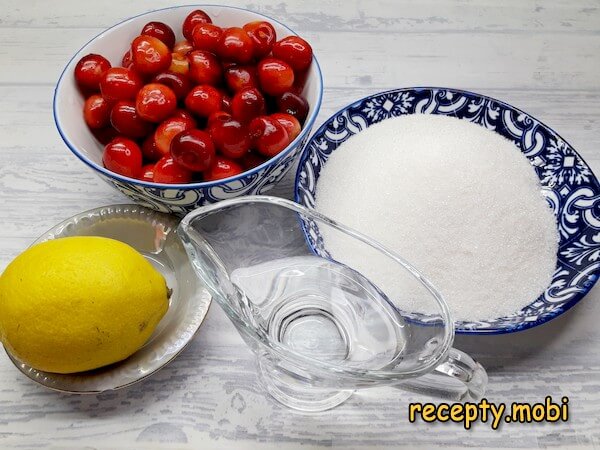
I prepare the ingredients for the cherry jam with lemon.
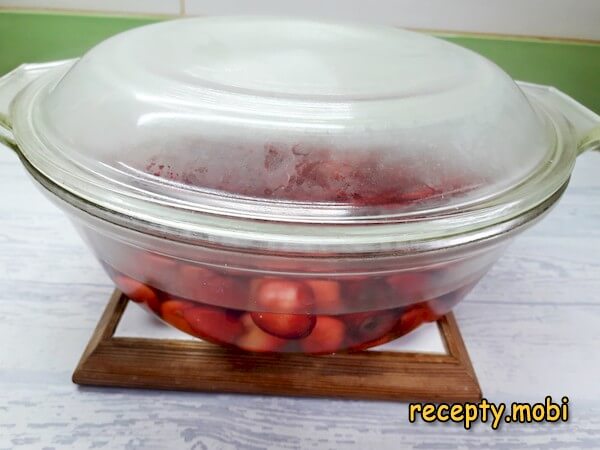
So that the thick cherry skin starts soaking up the sweet syrup faster, I pour boiling water over the berries so it covers them completely. This step also helps remove any chemicals more reliably, in case the trees were treated with them.
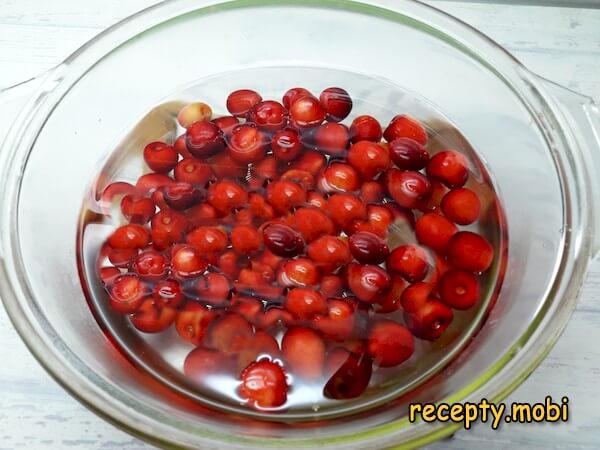
I cover the container with a lid and leave it for 5 minutes. Then I drain the water and rinse the cherries with fresh water.
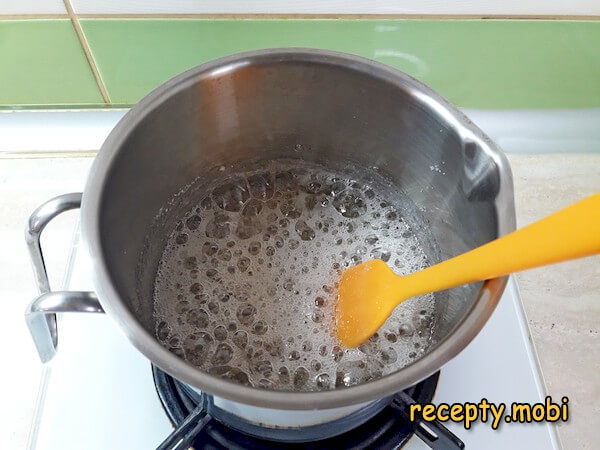
From the sugar (500 g) and water (75 ml) I cook a syrup for 2–3 minutes.
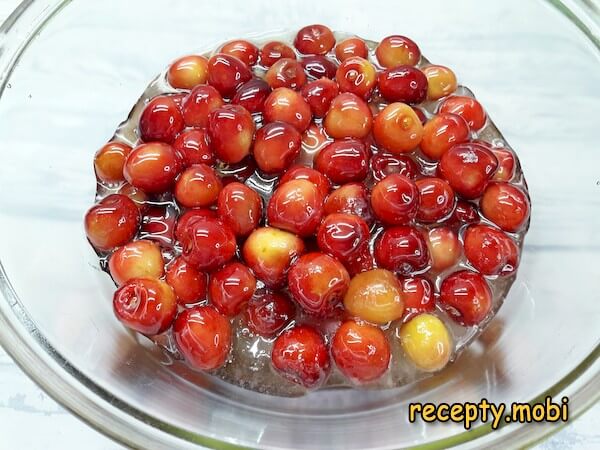
I pour the resulting syrup over the berries.
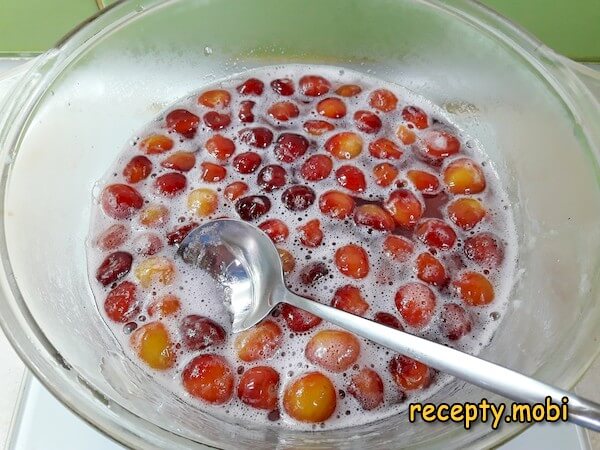
Over low heat I boil the mixture for 5 minutes. I skim off the white foam that forms right away.
I set the pot aside and let it stand like that for 2 hours.
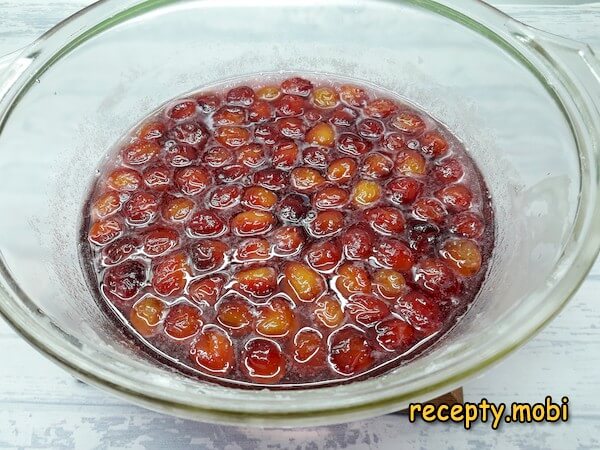
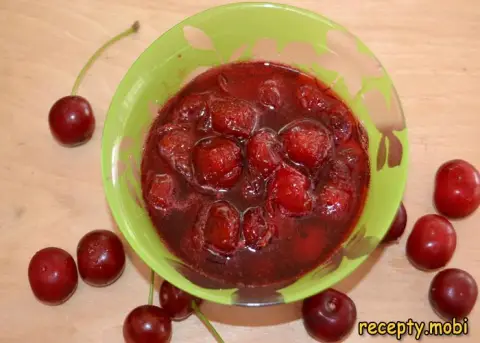
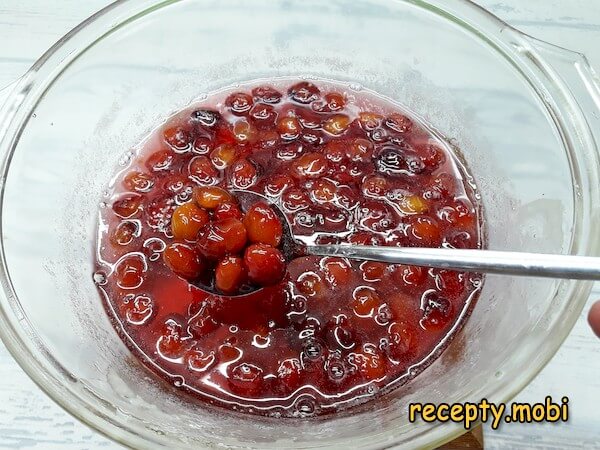
During this time the cherries take on an amber transparency and shrink a little.
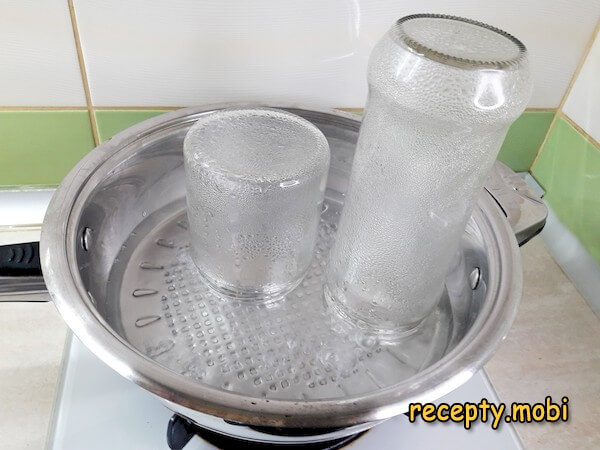
In the meantime I get the glass jars and lids ready – the lids can simply be boiled for 3 minutes, and the jars warmed with steam by pouring a little water into a frying pan. Once the glass walls are covered with drops of condensation, the sterilisation can be considered complete.
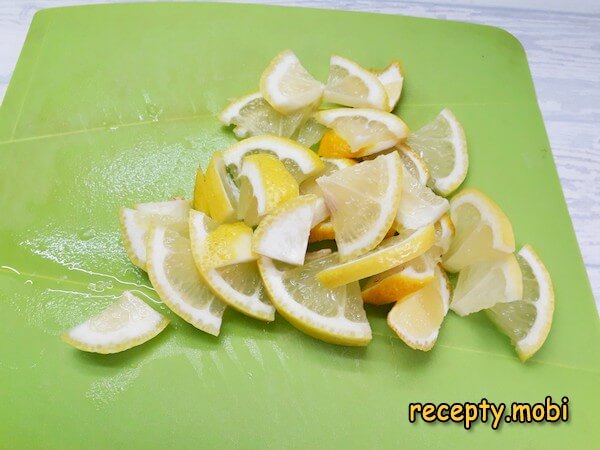
I thinly slice the lemon.
I add it to the cherries and boil everything for 5 minutes.
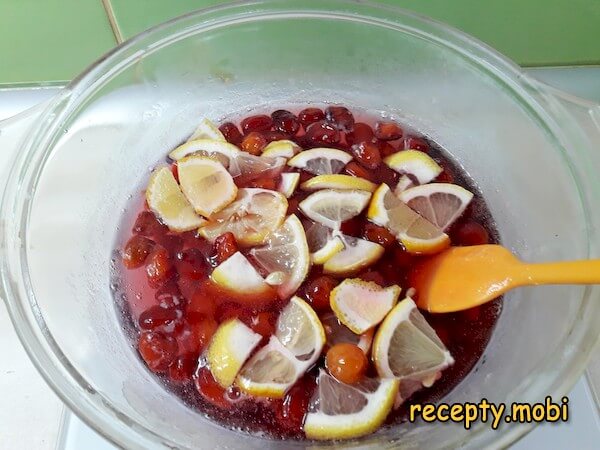
If any foam still rises, I skim it off.
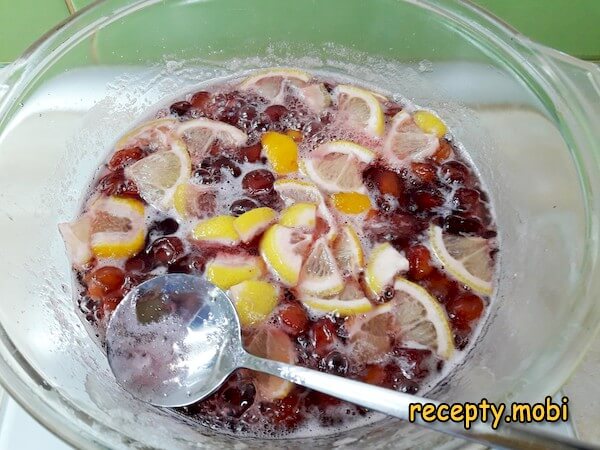
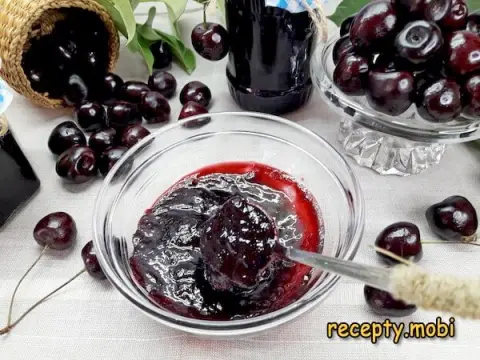
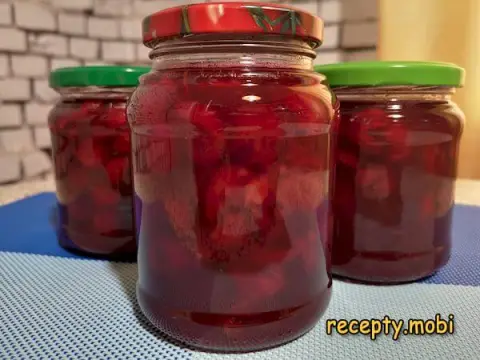
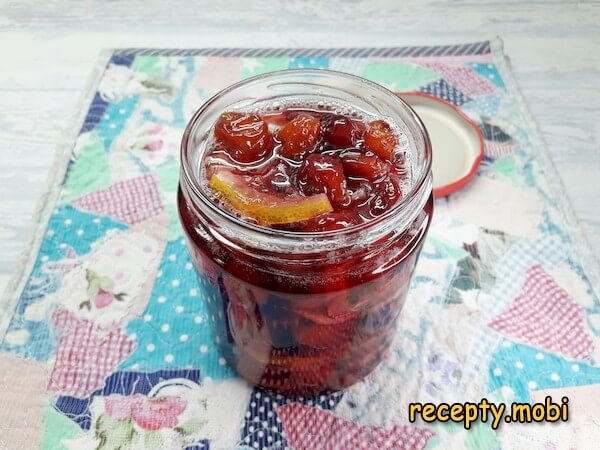
I cool the jam again for 2 hours, after which I boil it for 5 minutes and pour it into jars, which I turn upside down after sealing and leave to cool that way on the table.


Tips
- 1
Scalding with boiling water – the "secret" against chemicals. Five minutes under boiling water washes any treatment off the skin and prepares it to absorb the syrup.
- 2
Slicing the lemon thinly – the "secret" of the aroma. Thin rings give up all of their citrus and don't turn bitter during cooking.
- 3
Two hours of cooling – the "secret" of clarity. Between boilings the berry shrinks and soaks up the syrup, turning amber.
- 4
Lemon at the end – the "secret" of freshness. The citrus is added only after the first boiling, otherwise the peel would pass on a bitter note. The same principle works in other kinds of jam made from berries with citrus.
FAQ
Which cherries should I choose? +
Ideally, ripe, fleshy varieties (Bull's Heart, Regina, Valery Chkalov) – they hold their shape and have a richer colour. Alternatives: yellow cherries (Drogana Yellow) – the jam comes out a light amber, pink ones (Napoleon) – a compromise. Fresh fruit is firm and glossy, with no cracks or dents. A size of 2.5–3 cm is best. Not suitable: overripe, soft cherries (they fall apart during cooking) and unripe ones (sour, with no aroma). Frozen cherries are the "budget" option – thaw them completely and drain off the juice. For a "premium" version, use southern farm-grown cherries. Be sure to remove the stems. Leave the pits in as the recipe says – they help the berries keep their shape.
What can replace the lemon? +
Alternatives: lime (1 pc. – a tropical note), orange (1/2 pc. – sweeter), grapefruit (1/4 pc. – with a touch of bitterness), citric acid (0.5 tsp – simpler, but without the aroma of the zest), mandarin (1 pc. – a mild citrus). Fresh lemon is the "premium" choice. Don't use: a lemon coated in wax (rinse it with boiling water) or juice from a carton with preservatives. Thin rounds of 2–3 mm are best (thinner ones "fall apart", thicker ones turn bitter). Leave the peel on – it gives a bright aroma. Remove the lemon pips – they will keep turning up. For a "premium" version, use a mix of lemon and orange. For the "classic" version, only lemon.
How long does the jam keep? +
In sterile, sealed jars with the pits in – up to 1 year in a flat, up to 1.5 years in a cellar. Without the pits – up to 2 years. Once opened, in the fridge – 2–3 weeks. Write the bottling date on the jars. If mould or fermentation appears, don't open it – throw it away. Don't store it in the sun – the colour will "fade". Bottle it in small 0.5 L jars – they're easier to open. It's best used within the first 9–12 months. If it crystallises, warm it in a water bath for 10 minutes. After a year, don't eat the pit version – hydrocyanic acid builds up. Better to finish it all within the season.
What do you serve the jam with? +
A classic with tea: with toast, pancakes, fritters, syrniki. With vanilla ice cream or yoghurt. With cottage cheese or a cottage-cheese casserole. With casseroles (cottage-cheese, semolina, rice). With syrniki and cottage-cheese balls. On bread and butter. With hot waffles and croissants. With a cup of black tea with lemon – a "double" citrus effect. With hot buttered toast. With cheeses (brie, camembert, goat) – a "French" serving. With a glass of cognac or liqueur – an "evening" option. With hot milk – a "children's" one. A versatile sweet citrus jam for tea-drinking and desserts.
- Comment
or post as a guest
Be the first to comment.