
avg —
Hawthorn Jam Without Pits

Instructions
Before cooking, I sort the berries, wash them thoroughly and pat them dry with a paper towel. I trim off both ends of each berry – where the stalk was and the little "nose". Any spoiled or green berries I throw away – they would ruin the taste of the whole batch.
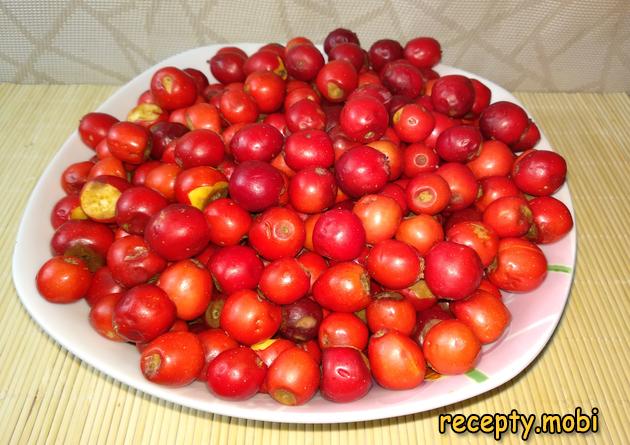
I cut the pits out of the berries (you can also cook the jam with the pits left in – that is an acceptable option, but without pits it tastes better and is nicer to eat). I transfer the prepared berries to a heavy-bottomed pot, sprinkle them with sugar and pour in the water. A heavy bottom matters – it gives even heating so the jam does not catch on the bottom.
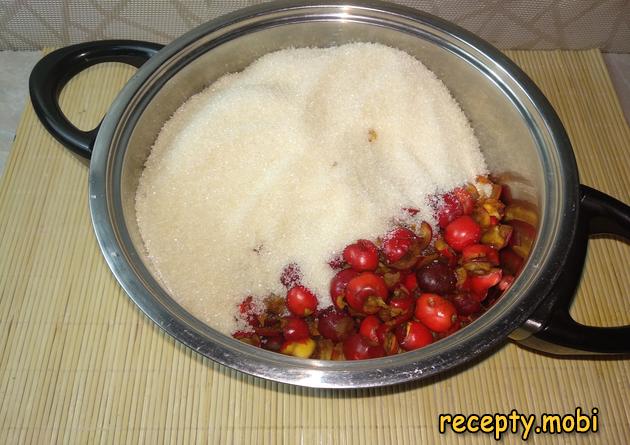
I bring the jam to the boil and cook it for 15 minutes over low heat. Low heat is the key point: the jam should simmer gently, not boil hard. A hard boil would burst the berries and turn them to mush. I take it off the heat and set it aside under a closed lid for a full day (24 hours) – this is called "resting".
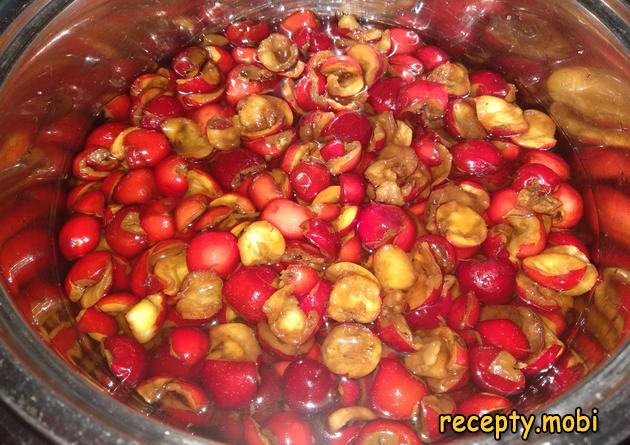
After 24 hours of resting the jam has already taken on an amber tint, the berries are soaked through with syrup and become firm, but not "boiled to pieces". This is exactly the result of a "proper" jam – whole berries in a thick syrup.
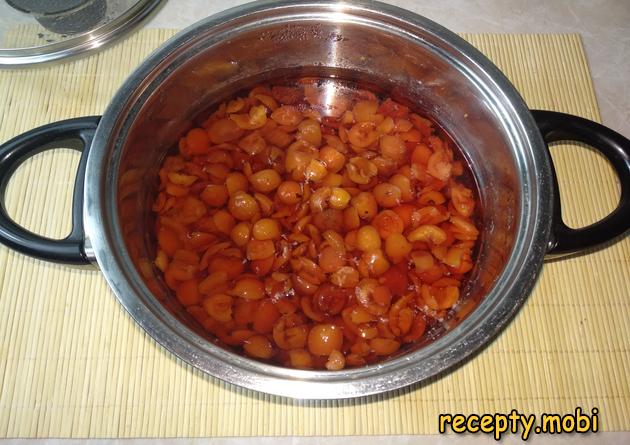
I put the pot of jam back on the stove and cook it over low heat for another 15 minutes. I take it off the heat and set it aside for another 24 hours – the second resting cycle. Each time the berries soak up more syrup, and the syrup grows thicker.
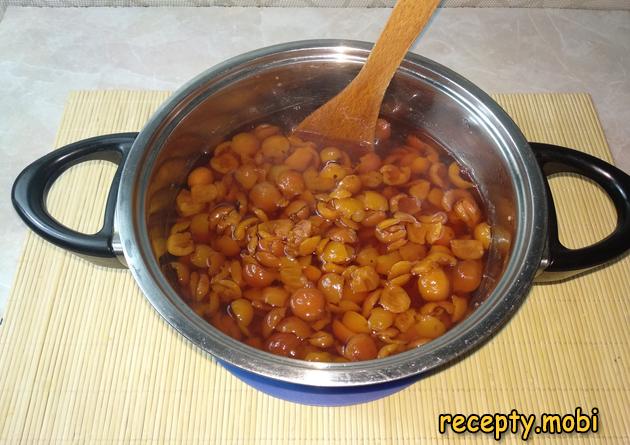
On the third day the jam takes on an even deeper amber colour. I cook it a third time for 15 minutes after it comes to the boil – this is the final cooking. At this point I taste the jam and add citric acid – I added ¼ teaspoon. The acid brings out the berry flavour and prevents the jam from crystallising during storage.
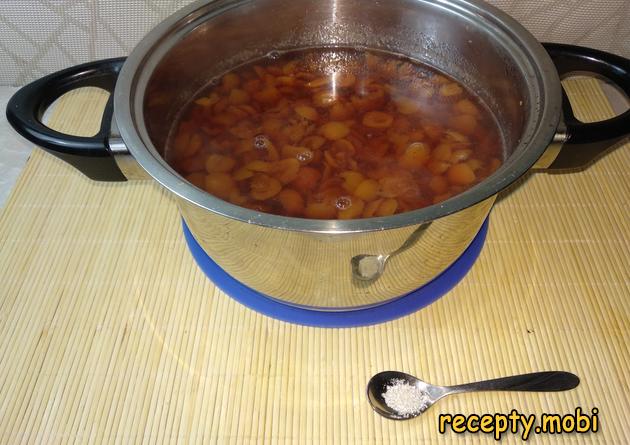
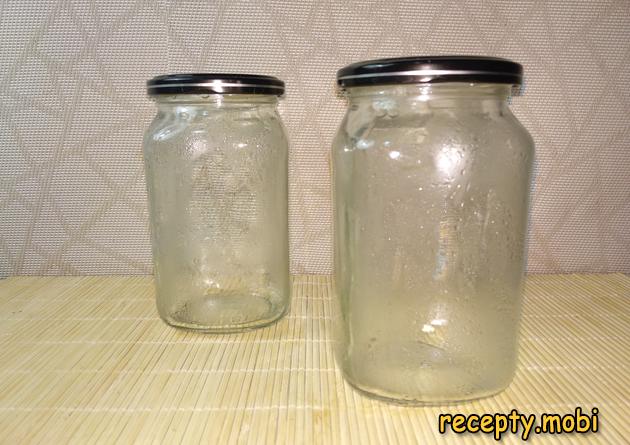
While the jam is cooking, I sterilise the prepared jars and lids. Sterilisation is essential – without it the jam may ferment or grow mould. The jars can be sterilised over steam (10 minutes) or in the oven (150 °C, 15 minutes). The lids should be boiled in water for 5 minutes.
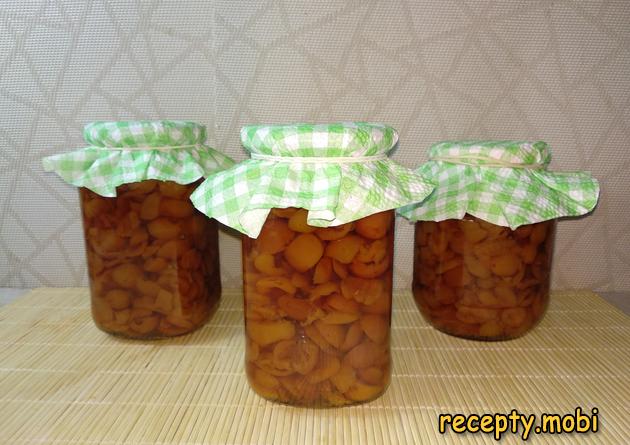
I fill the jars with the boiling jam and screw the lids on tightly. It is important that the jam is boiling – jam that has cooled will create a weaker vacuum when sealed, and the lid may not be "sucked" down. I turn the jars upside down, cover them with a towel and a blanket, and leave them until completely cool – this is an extra "steam sterilisation".
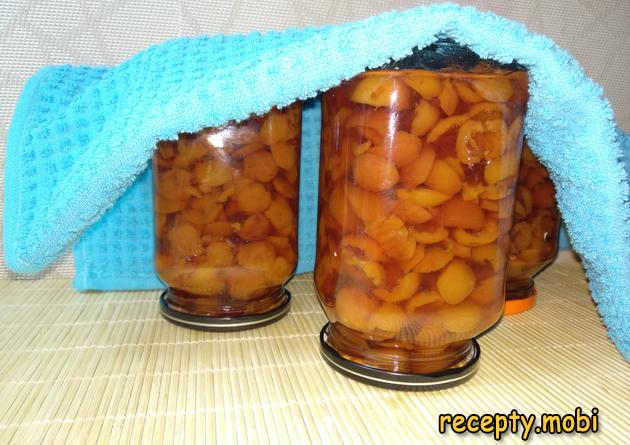
The hawthorn jam without pits is ready! I put it away in the pantry until the cold weather comes – this homemade treat is perfect with winter tea. It keeps in a dark, cool place for up to 1 year without losing its taste or benefit.


Tips
- 1
Cook over LOW heat – a hard boil will burst the berries and you will get "jam" instead of a preserve with whole fruit. Gentle simmering is the key to a good-looking jam.
- 2
Three cooking stages with 24-hour rests in between are the "secret" of a thick syrup and firm berries. You can shorten the process to a single cooking, but the result will be worse.
- 3
Hawthorn berries do not have to be pitted – a jam made from puréed berries comes out more uniform. Hawthorn also goes well with red currants, rowan berries or sea buckthorn – the pairing boosts the benefit. I use a similar principle in other berry jams.
- 4
Always sterilise the jars and lids – this extends the jam's shelf life. Without sterilisation the jam may ferment even in the fridge within 2–3 months.
Types of hawthorn jam: which method to choose
Hawthorn can be preserved in several ways, and the texture of the finished treat depends heavily on the method. The classic version in this recipe, sieved pulp without stones, gives a smooth fruit butter with a spiced note, but there are quicker options too. Compare them and pick the one that suits your goals and the time you have.
| Method | How it is made | Result | Best for |
|---|---|---|---|
| Sieved, stone-free | The berries are blanched for 5 minutes and rubbed through a sieve, then the pulp is simmered with sugar for 30-40 minutes | Smooth, thick fruit butter with no seeds or tough skins | Spreading on bread and filling for baking |
| With whole berries | The fruit is cooked whole in syrup over 2-3 stages, with the stones left inside | Firm berries in a clear syrup, rather like candied fruit | Those who enjoy texture and do not mind the stones |
| Five-minute jam | The puree is brought to the boil and cooked for 5-7 minutes, then poured out hot | Runnier, with a fresher flavour and a lighter colour | When keeping as many nutrients as possible matters most |
| Hawthorn with apples | Tart apples are added to the sieved pulp in a 1:1 ratio | Thicker and more fragrant thanks to the apple pectin | When you have only a little hawthorn of your own |
If you want a smooth mass like the one in this recipe, choose rubbing through a sieve. If you prefer preserves where the fruit holds its shape, look at how whole berries are gently kept intact in this cherry tomato jam: the same principle of cooking in several stages works with hawthorn too.
What makes the jam thick and fragrant
Hawthorn contains plenty of its own pectin, so it thickens readily, but the result is easily spoiled by too much water or by rushing. A few techniques help you achieve a firm, spoonable consistency and a deep flavour.
- Do not add too much water: 1.5-2 cups per 700 g of berries are needed only for blanching, and the finished pulp is simmered down with almost no liquid.
- Citric acid or the juice of half a lemon activate the pectin and make the mass set faster, while also balancing out any cloying sweetness.
- Test for doneness with a drop: put a little jam on a cold saucer and after 20-30 seconds it should not run.
- Cook over low heat and stir constantly with a wooden spatula, as thick puree scorches easily at the bottom.
- A pinch of cinnamon, a star anise pod or a strip of zest, added 5 minutes before the end of cooking, gives a spiced note.
When to pick hawthorn for preserving
The flavour of the jam is set while the fruit is still on the bush. Hawthorn is gathered late, at the end of September and in October, once the fruit has built up the most sugars and turned soft to the touch. The ideal moment comes after the first light frosts: the cold breaks down some of the astringent tannins, the pulp becomes sweeter and more fragrant, and the puree turns a rich burgundy colour.
Pick well away from roads and industrial areas, as the berries absorb everything from the air and soil. Sort the fruit the same day, setting aside the damaged and unripe ones. If the harvest is large, some of it can go into other sweet winter preserves, for example a tinned apple compote for winter with a handful of hawthorn added for a spiced note, or an apple and pumpkin juice, into which hawthorn puree is stirred to add body.
Sterilisation and safety of preserves
Hawthorn jam keeps thanks to its high sugar concentration: the sugar binds moisture and prevents mould and yeast from developing. But this only works with the right proportions and clean jars, so do not skip the preparation.
- Keep to the sugar quantity: no less than 400 g per 700 g of berries in this recipe. Cutting the sugar sharply turns the jam into a perishable product that only keeps in the fridge.
- Wash the jars with bicarbonate of soda and sterilise them: over steam for 10-15 minutes, in the oven at 120 degrees, or in the microwave with a spoonful of water. Boil the lids for 5 minutes.
- Citric acid not only helps it thicken but also slightly raises the acidity of the mass, which gives extra protection against microbes in this low-acid berry.
- Pour the jam in boiling hot right to the top, seal it at once, turn the jars upside down and wrap them until fully cooled.
- Store in a dark, cool place. Any jar with a bulging lid, fermentation, foam or mould on the surface goes in the bin without a taste test.
Common mistakes and how to avoid them
- The pulp was poorly sieved: hard seeds and skins end up in the fruit butter. Rub the hot, softened mass through a fine sieve in 2 passes.
- Overcooked: the jam has gone dark and stretches like rubber. Go by the 30-40 minutes and the drop test rather than by maximum thickness.
- Too much water: the mass will not thicken for hours. Drain off the blanching liquid and keep only the pulp for cooking.
- Poured into warm or damp jars: condensation and mould form under the lid. The jars must be sterile and dry.
- Picked underripe berries: the flavour is astringent and sour. Hawthorn should be soft and fully coloured.
What to serve it with and how to use it
Thick hawthorn fruit butter with its spiced tang is lovely on its own, with a cup of tea and a slice of fresh bread or with curd cheese pancakes. It goes in as a filling for pies, croissants and pastries, where it holds its shape and does not leak out. A spoonful of jam brightens up morning porridge, curd cheese or plain yoghurt, and let down with hot water it becomes a warming fruit drink. It makes a layer for sponge cakes and a sauce for roast duck or chicken: the spiced tang sets off rich meat beautifully. A small jar makes a warm homemade gift, especially alongside other unusual sweet preserves from the autumn harvest.
Video

FAQ
What are the benefits of hawthorn jam? +
Hawthorn is a healing berry with a marked effect on the cardiovascular system: it strengthens the blood vessels, normalises blood pressure (gently lowering high pressure) and improves the work of the heart. It contains vitamin C, potassium, magnesium and antioxidant flavonoids. In jam most of the beneficial substances are preserved, especially with gentle cooking over low heat and resting periods. It is not recommended for people with low blood pressure (hypotension) or during pregnancy. One or two teaspoons of jam a day with tea make an excellent "sweet preventive measure".
Can I cook it with the pits? +
Yes, cooking with the pits is quicker (there is no need to cut them out), but such jam is less pleasant to eat – the pits are hard and large. An alternative method: rub the cooked berries with sugar through a sieve – you get a thick jam WITHOUT pits, but also without whole fruit. Each method has its advantages: with pits saves time, without pits looks neat and is easy to eat, and through a sieve gives the smoothest, purée-like texture.
How do I choose hawthorn berries? +
The ideal berries are fully ripe – bright red or dark red, with no green sides. They should feel firm but not hard. The first frosts (or 2 days in the freezer) improve the flavour – the berries become sweeter and more fragrant. Pick them in clean areas, away from roads. Dried shop-bought hawthorn is not suitable for jam – you need fresh, juicy berries. The season in Russia is September–October. If you do not have your own, ask at the market – the price is usually low.
How long does the finished jam keep? +
In a cool, dark pantry (up to +20 °C) it keeps for up to a year if properly sterilised. In the fridge after the jar is opened, up to 2 months. Signs of spoiled jam: mould on top (even a little – the whole jar is ruined), a smell of fermentation, a sour taste, or foaming when opened. Storing it in a dark place matters – sunlight destroys vitamin C and other beneficial substances. There is no point in freezing the jam – it already keeps for a long time in the jar.
Do I really have to add citric acid or juice? +
Yes, for hawthorn it is advisable. The acid activates the berries' own pectin, so the jam thickens faster and does not need long simmering. It also balances the sweetness and slightly raises the acidity of the low-acid pulp, which helps the preserve keep better. For a batch made to this recipe, a quarter of a teaspoon of acid or the juice of half a lemon is enough.
Why has my jam turned out too thick and stringy? +
Most often this is a sign of overcooking: during long boiling all the moisture evaporates and the sugar starts to caramelise, hence the dark colour and the rubbery, stretchy texture. Keep to a time of 30-40 minutes and test for doneness with a drop on a cold saucer. Jam that is too stiff can be rescued by warming it through with 2-3 spoonfuls of boiling water and taking it off the heat at once.
Can I freeze hawthorn and make the jam in winter? +
Yes, hawthorn freezes well, and freezing even improves the flavour by breaking down some of the astringent compounds. Wash and dry the berries, portion them into bags and keep them in the freezer for up to six months. There is no need to thaw them before cooking: drop them straight into boiling water to blanch and then carry on as usual.
How much sugar do I need per 1 kg of hawthorn pulp? +
For sieved, stone-free jam, use 700 to 800 g of sugar per 1 kg of finished puree. A smaller amount gives a less cloying flavour, but such jam keeps less well and is better off in the fridge. If the berries are very astringent, you can increase the sugar to a kilogram per kilogram of pulp.
What should I do if the jam crystallises during storage? +
Crystallisation, that is the forming of sugar crystals, does not mean the jam has gone off, it is simply a matter of too much sugar or too little acid. Tip the mass into a pan, add a little water and warm it over low heat, stirring, until the crystals dissolve. Next time add a touch more lemon juice, as acid prevents crystallisation.
Can I reduce the amount of sugar or replace it? +
You can reduce the sugar, but then the jam is no longer a stable winter preserve: without a high enough sugar concentration it soon turns sour at room temperature, so such a jar should be kept only in the fridge and eaten within a couple of weeks. Sugar substitutes give no preserving effect at all. For proper storage on the shelf it is best not to lower the sugar quantity.
- Comment
or post as a guest
Be the first to comment.