avg —
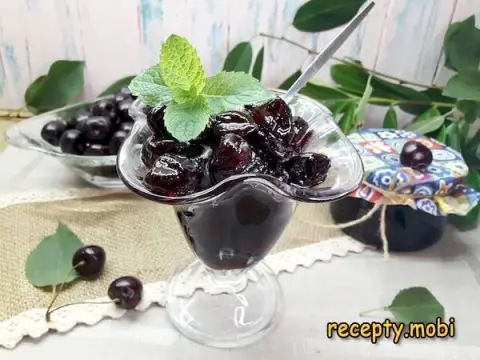
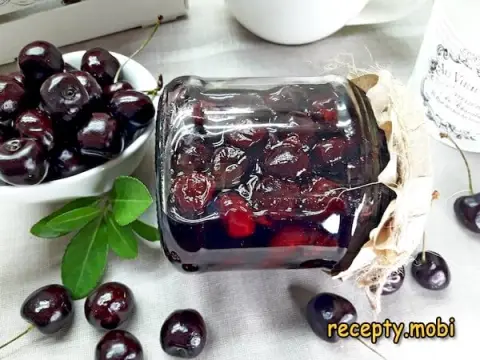
Pitted Sweet Cherry Jam for Winter

Instructions
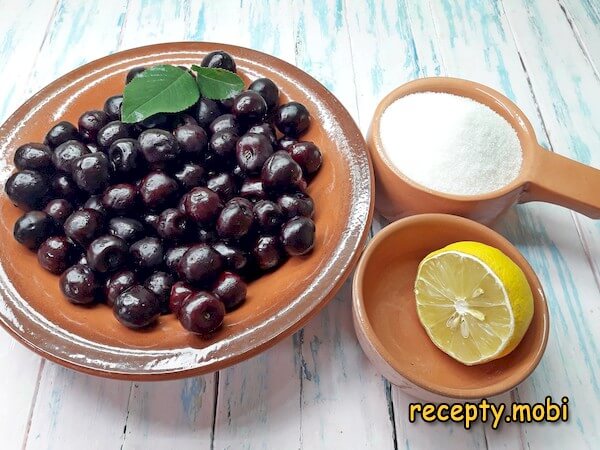
I prepare the necessary ingredients.
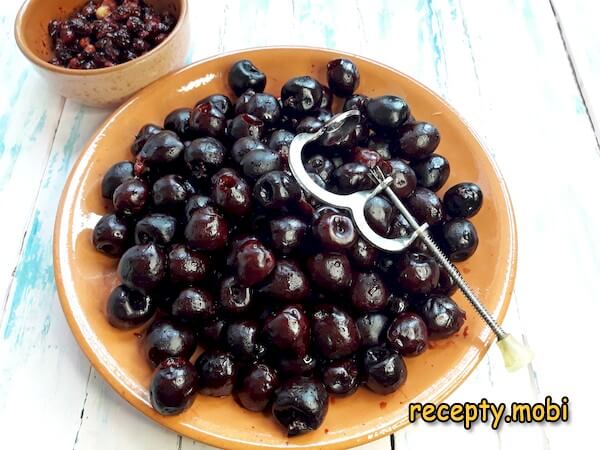
Using a special gadget or an ordinary hairpin, I remove the pits from the berries. The job seems tedious but goes quite quickly (about 10 minutes).
I transfer the cherries to a small saucepan, where they will also be cooked later. First I add half the sugar, so that it dissolves faster and helps the berries release their juice. I wait 10 minutes.
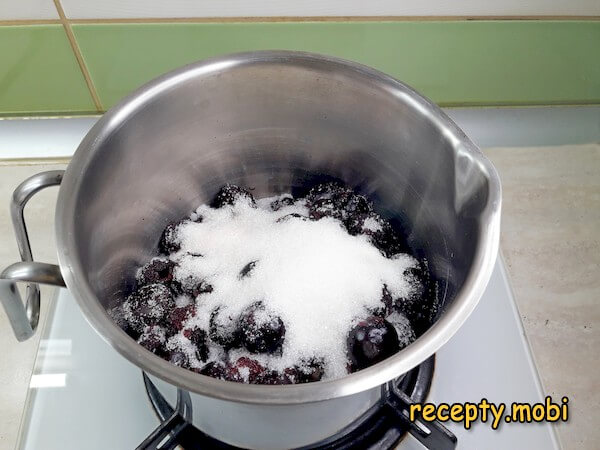
By this time a certain amount of sweet liquid will have formed, enough to keep the berries from burning.
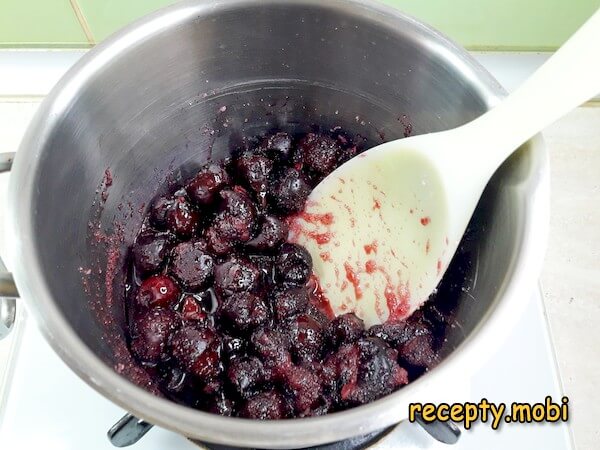
I turn the stove to medium heat. The amount of juice will start to increase, and once the first little bubbles appear, I add the remaining sugar. I cook it all for 5 minutes.
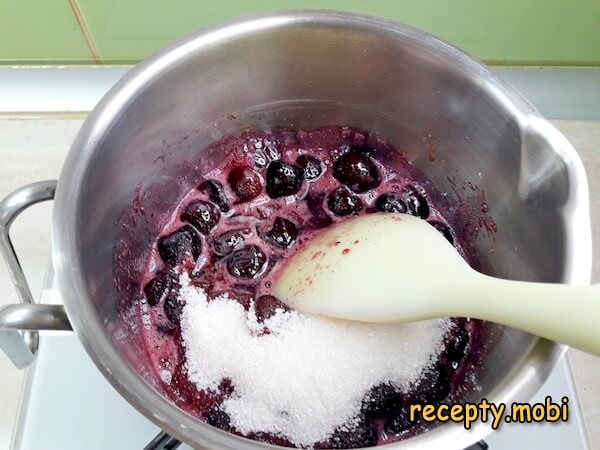
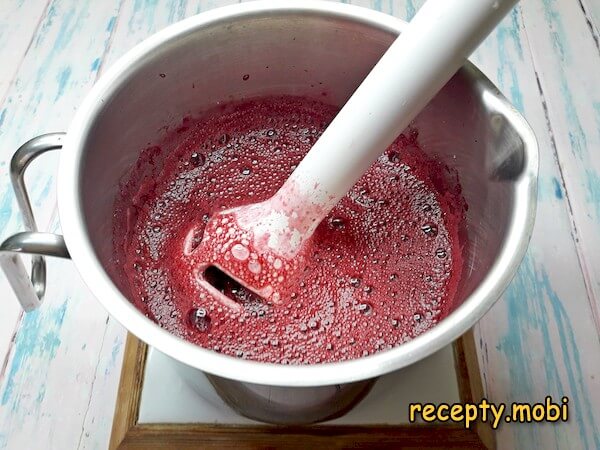
By now the berries have softened. I take the saucepan off the heat first and then blend them into a smooth, homogeneous mash with a blender.
During this time I sterilize the jars (over steam, in the oven, or in the microwave) and the metal lids. I finely grate the yellow top layer of the zest and squeeze out the lemon juice.
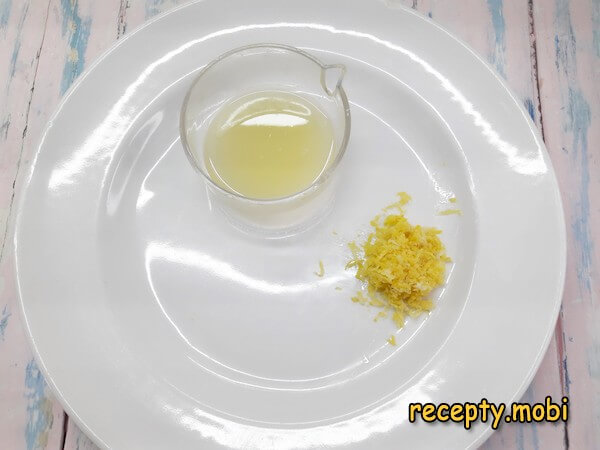
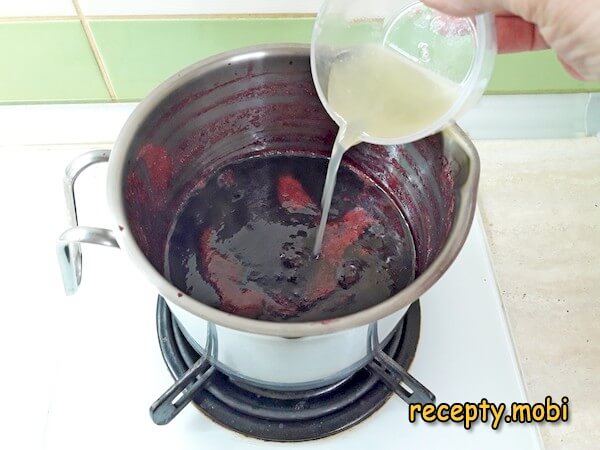
I pour the lemon juice into the almost-ready jam, add the zest, and cook for a couple of minutes.
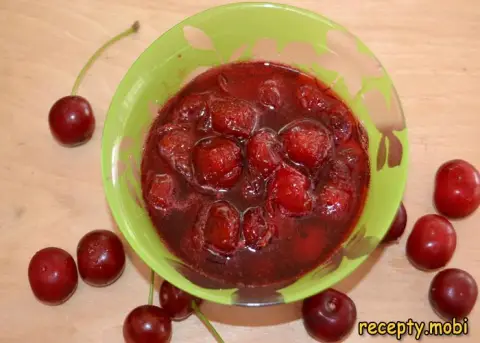
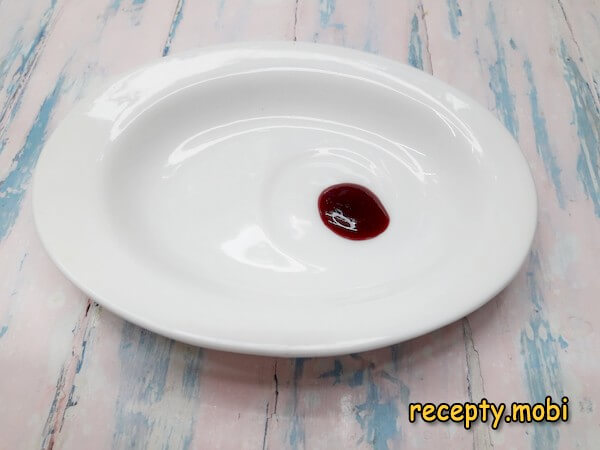
To test it, I drop a little of the hot mass onto a saucer. If it doesn't run or spread, I turn off the heat.
I pour the jam into the jars, laying a cotton cloth underneath them.
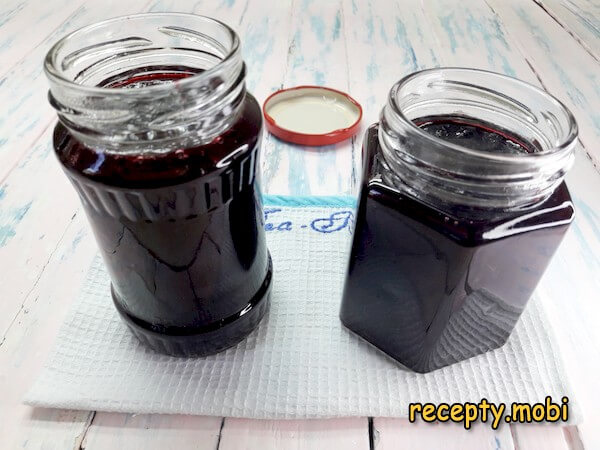
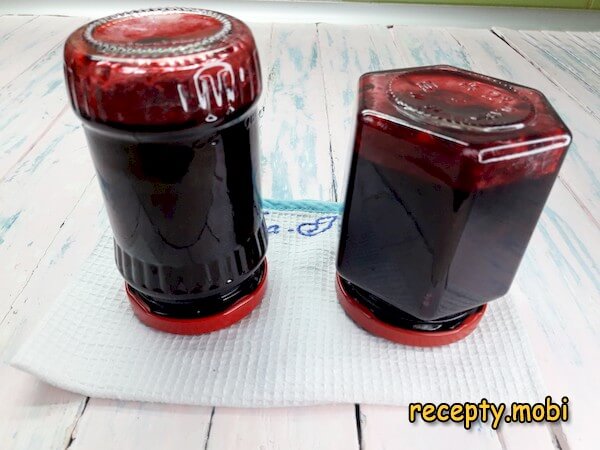
I screw on the lids and turn the jars upside down onto them (this is extra sterilization for the lids and the necks of the jars). After about a couple of hours I return the jars to their normal position, and once they have cooled I move them to wherever the sealed jars are stored (even an ordinary shelf in the flat will do).


Tips
- 1
ADD THE SUGAR IN 2 STAGES – the "secret" to the juice. The first half of the sugar "draws out" the juice at the start; the second half goes in during cooking.
- 2
LEMON AT THE END – the "secret" to freshness. Lemon juice and zest added before jarring give a bright flavour and offset the cloying sweetness.
- 3
THE SAUCER TEST – the "secret" to thickness. If the drop doesn't spread, the jam is ready. If it spreads, cook it for another 5 minutes.
- 4
REMOVE ALL THE PITS – for safety. A hairpin or a special gadget – about 10 minutes of work. The same principle applies to other kinds of berry jams.
FAQ
Which cherries should I choose? +
Ideal are ripe dark cherries (Bull's Heart, Valery Chkalov, Regina) – brighter in colour and more aromatic. Alternatives: yellow cherries (Drogana Yellow, Francis) give a lighter, amber jam, while pink cherries (Napoleon) are a compromise. Seed brands such as Gavrish and Poisk are reliable. Fresh cherries are glossy and firm, with no dents or cracks. A size of 2–3 cm is optimal (meaty flesh). Not suitable: overripe ones (they go mushy) and underripe ones (sour and without aroma). Frozen cherries are the "budget" option – defrost them and drain off the excess liquid. For a "premium" jam, use farm-grown southern cherries. Always remove the pits – a stray one will spoil the impression.
What can I use instead of lemon? +
Alternatives: lime (1/2 pc., a tropical note), citric acid (1/3 tsp – simpler, but without the aroma of zest), orange (1/2 pc., a "sweeter" option), grapefruit (1/4 pc., with a slight bitterness). Freshly squeezed juice and zest are the "premium" option. Bottled lemon juice will do (15–20 ml). Don't use: waxed lemons (the zest turns bitter – rinse them with boiling water) or carton juice with preservatives. Grate only the yellow layer of the zest – the white part is bitter. For a "diet" version, leave out the lemon and increase the cooking time to 40 minutes (it will thicken naturally). For a "premium" version, use the zest and juice of a fresh lemon.
How long does the jam keep? +
In sealed sterile jars at room temperature – up to 2 years. In a cool cellar – up to 3 years. After opening, in the fridge – 2–3 weeks. Label the jars with the date they were put up. If mould appears – don't open the jar, throw it out. Don't store the jars in the sun – the colour will fade. It is best used within the first 12 months. Put the jam up in small 250 g jars – they are easier to open (a large one will crystallize within a couple of weeks). If the jam has crystallized – warm it in a water bath for 5–10 minutes and the crystals will dissolve.
What do I serve the jam with? +
A classic with tea: with croissants, toast, crispbreads, and pancakes. With cottage cheese or a cottage cheese bake. With vanilla ice cream or yogurt. As a filling for shortcrust baskets and tartlets. As a layer in a sponge cake. With cheeses (brie, camembert, goat's cheese) – a "French" serving. With porridge made from oats or semolina. With rice cakes or galettes. With hot fritters and syrniki. On buttered sandwiches – a "children's" option. With warm milk – an "evening" dessert. With a cup of coffee with milk. A universal sweet preserve for breakfasts and desserts.
- Comment
or post as a guest
Be the first to comment.