avg —
Watermelon Jam from Pulp

Instructions
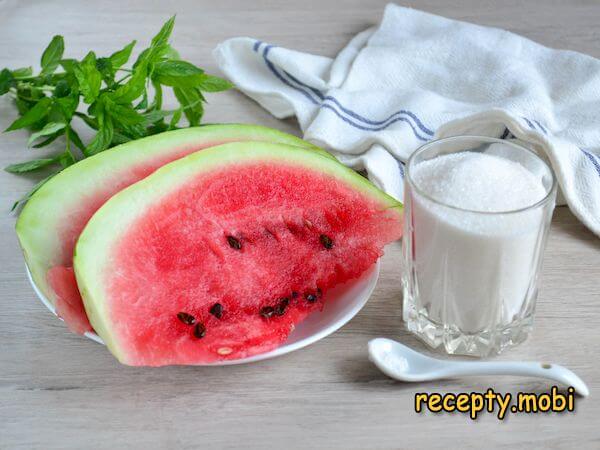
I prepare the ingredients. The quantities given make 2 jars of 350 ml of jam.
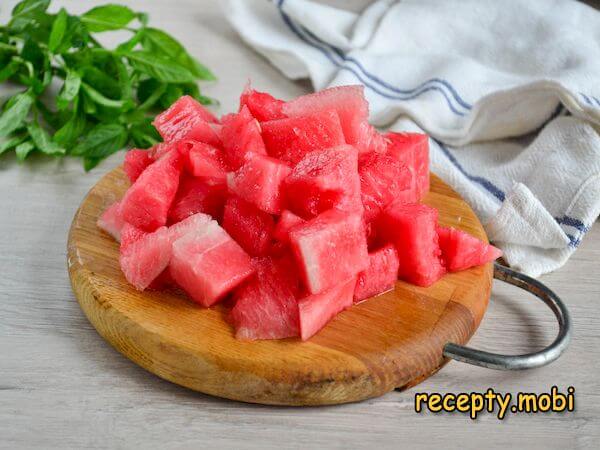
I cut the watermelon pulp into pieces, removing the seeds. The size of the pieces is up to you. I like them fairly large, so they are clearly noticeable in the jam. But if you cut them small, they soften and shrink further during cooking, giving something more like a jam – that is tasty too.
I move the watermelon cubes into a saucepan, add the sugar and leave it for an hour so the watermelon starts to release its juice. Then I put the saucepan on the heat, bring it to a boil and cook for 20 minutes.
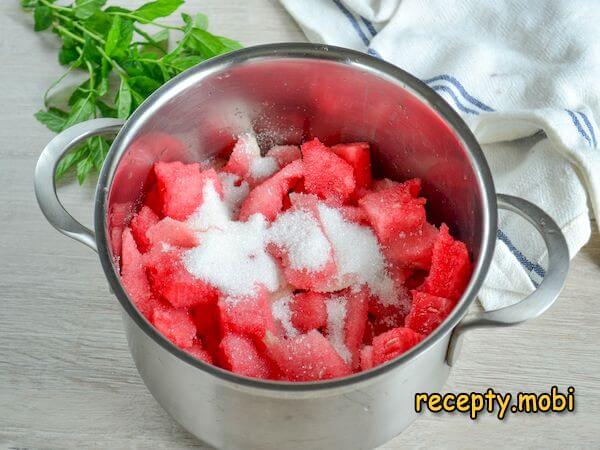
I cool the jam for 1–2 hours and boil it again for 15 minutes.
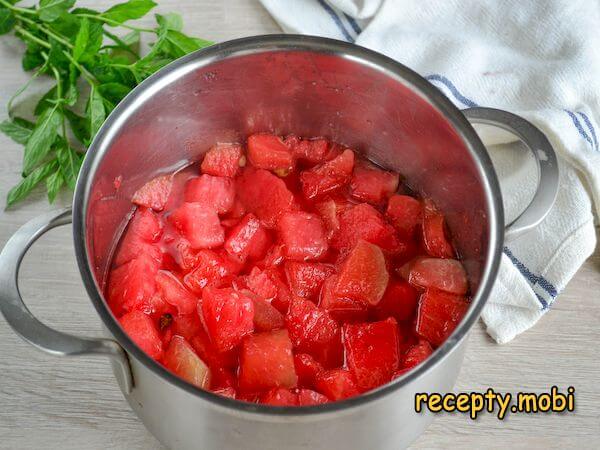
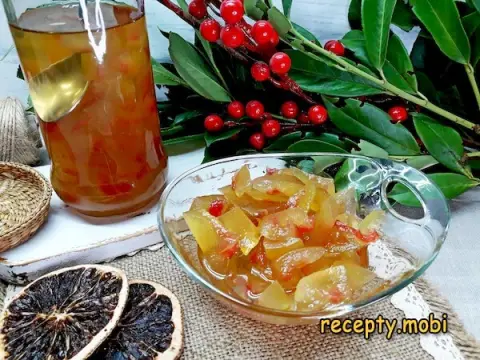
After 1–2 hours I boil the jam once more for 10 minutes, adding the citric acid – it lets the jam keep for a long time. You can see that the pieces of watermelon have become soft, but thanks to the staged cooking they have not fallen apart and hold their shape. The syrup, meanwhile, is thick and very tasty.
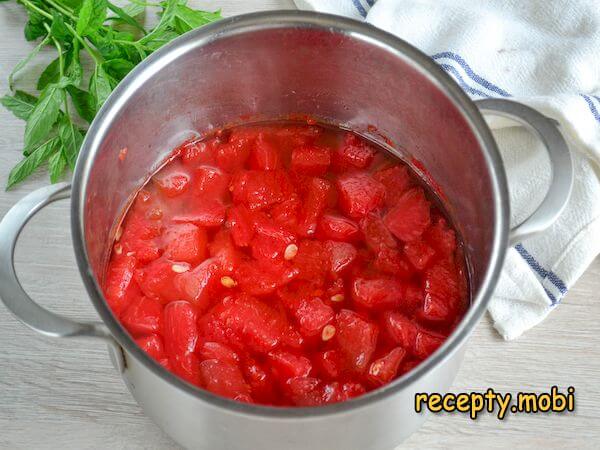
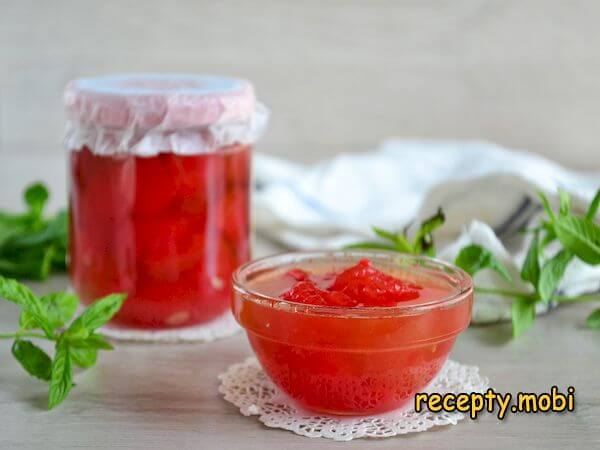
You can seal the jam in jars after the third boiling – or boil it a fourth time if you want a thicker syrup. The watermelon pulp jam is ready.


Tips
- 1
CHOOSE a ripe watermelon, but NOT overripe (soft, with cracks). The best one is at the height of the season (August–September), of the Astrakhan or Ogonyok variety.
- 2
THREE STAGES OF COOKING – do not rush. This method keeps the pieces in shape and makes the syrup as thick as honey.
- 3
ALWAYS REMOVE THE SEEDS – in the jam they give bitterness and crunch unpleasantly when you eat it.
- 4
Citric acid is ESSENTIAL for long storage. Watermelon is sweet in itself and has no acid of its own – without citric acid the jam quickly crystallises. The same principle works for other unusual "watermelon" preserves.
FAQ
Can I use watermelon rinds? +
Yes, watermelon rinds make a separate popular jam – "watermelon candied fruit". The rinds are peeled of the tough green skin, leaving the white part. They are cut into cubes or fancy shapes. They are boiled for 20 minutes, cooled, then cooked in sugar syrup (1:1) over 3–4 stages, as in this recipe. The cooking time for each stage is 10 minutes. The result is a "crunchy" jam, similar to candied fruit. It is ideal for baking – cupcakes and Easter cakes. From 1 kg of rinds you get 700–800 ml of jam. This is a more economical recipe if the watermelon has already been eaten.
How long does the jam keep? +
In a cellar or cool larder – up to 12 months. At room temperature – 6–8 months. Once opened – 1–2 months in the fridge. Watermelon jam with citric acid preserves well. Over time the syrup may crystallise slightly – this is normal; warm the jar in warm water and the sugar will dissolve back. Signs of spoilage: mould on the surface, a bulging lid, a sour "fermenting" smell – do not eat jam like that.
How can I tell that a watermelon is good? +
Signs of ripeness: a dry "tail" (green = unripe), a yellow patch on the side (where it lay on the ground – at least 5 cm across), a resonant "hollow" sound when tapped, heavy for its size, smooth skin with no damage. Size: large ones (8–10 kg) are more often overripe, small ones (4–5 kg) are ideal. For jam it is better to take varieties with firm flesh: Astrakhan, Ogonyok, Podarok Solntsa. Seedless watermelons (seedless hybrids) are also suitable – they are quicker to clean.
What should I serve watermelon jam with? +
It is versatile. With tea, alongside fresh bread and butter. On crepes, fritters and pancakes. As a filling for puff-pastry pies (especially tasty!). As a layer in a cake between the sponges. With vanilla or pistachio ice cream. In porridge – oatmeal or rice (a spoonful of jam on top). For dessert – with Greek yoghurt and nuts. On toast with cream cheese. In a smoothie (1 tbsp + milk + banana = an exotic mix). For adults – with strong tea or even a light rosé wine as an unusual dessert.
- Comment
or post as a guest
Be the first to comment.