
avg —
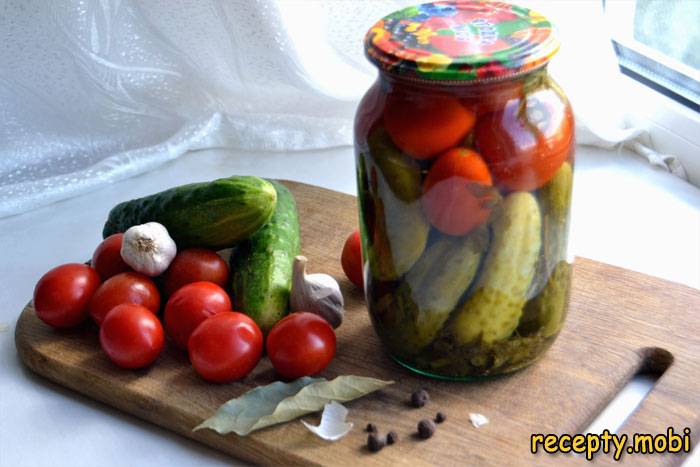
Cucumber and Tomato Assortment for Winter in a Liter Jar

Instructions
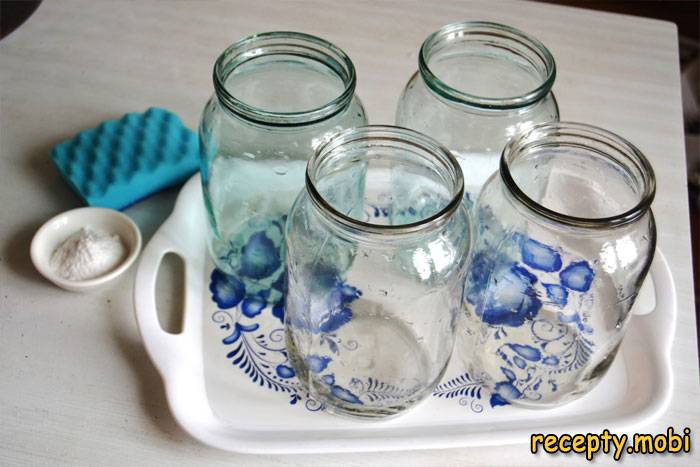
I scrub the jars with baking soda, wash them thoroughly and sterilise them over steam or in the oven at 120 °C for 15 minutes. Sterilising the containers is essential for long-term storage.
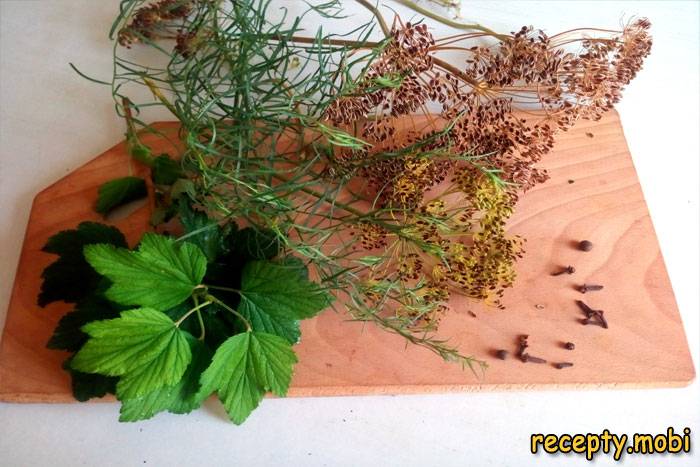
I rinse all the greens under cold water and pat them dry — horseradish, dill, parsley, and currant or cherry leaves. The greens give the preserve its distinctive "summer" aroma.
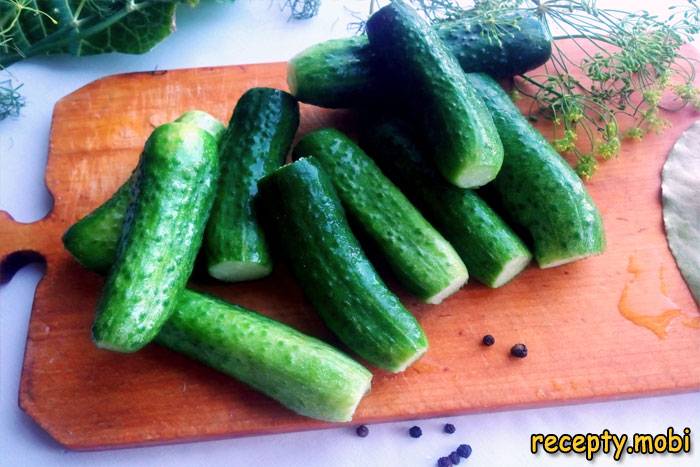
I always soak the cucumbers in cold water for 2 hours — this restores their firmness, especially if they were bought and have wilted a little. I wash them and trim the ends from the stem side — this is where any bitterness leaves.
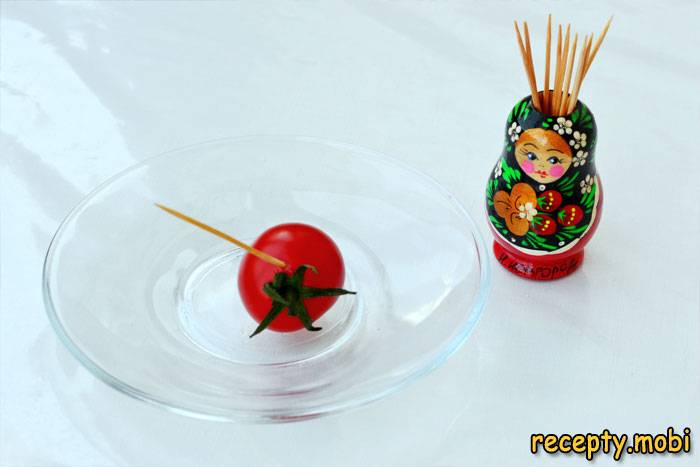
I choose small, firm tomatoes, ideally the "Slivka" (Plum) or "Damskie Palchiki" (Lady Fingers) varieties — they have thick skin that splits less often. I prick each tomato near the stem in 2–3 places with a toothpick — this lets the marinade soak in without the skin tearing when the temperature changes.
I cut the bell pepper into 1 cm strips. I take red pepper for a beautiful bright colour.
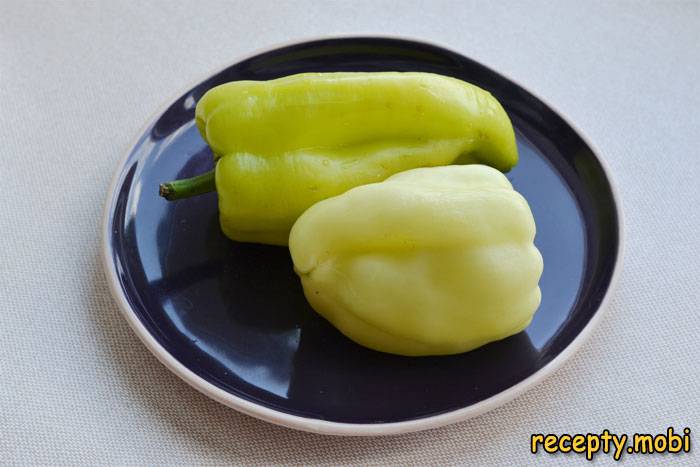
On the bottom of the jar I put the peppercorns, dill umbrellas, bell pepper, garlic, horseradish and a piece of hot pepper. On top I pack the cucumbers tightly (standing upright) and the tomatoes (filling the gaps above).
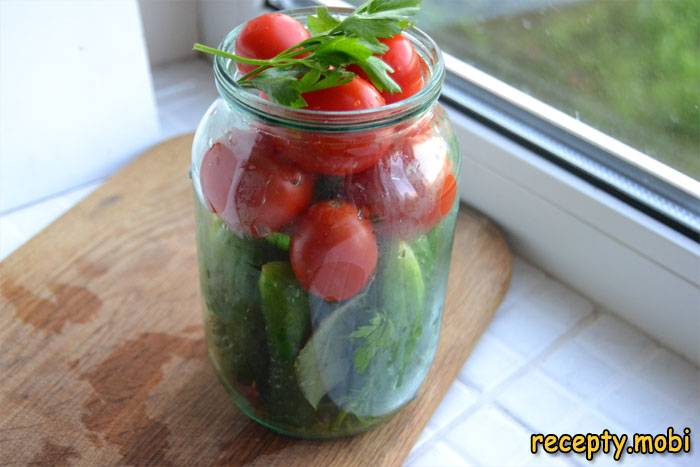
I pour boiling water right up to the brim, cover with a sterile lid and leave for 15 minutes. I drain the water into a saucepan, bring it back to the boil and pour it over the vegetables again for 15 minutes, making sure to wrap the jar in a towel — this creates a pasteurising effect.
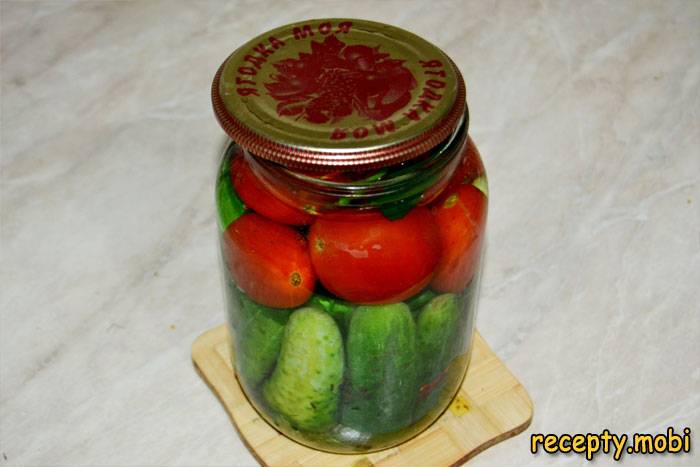
The third pour is the marinade. To the drained water I add 50 ml of water (to make up for evaporation), the salt and the sugar. I boil it until everything has fully dissolved. I pour the 9% vinegar straight into the jar, followed by the hot marinade. I seal it with a metal lid, turn it upside down and wrap it in a blanket for 12 hours — this is the final pasteurisation.
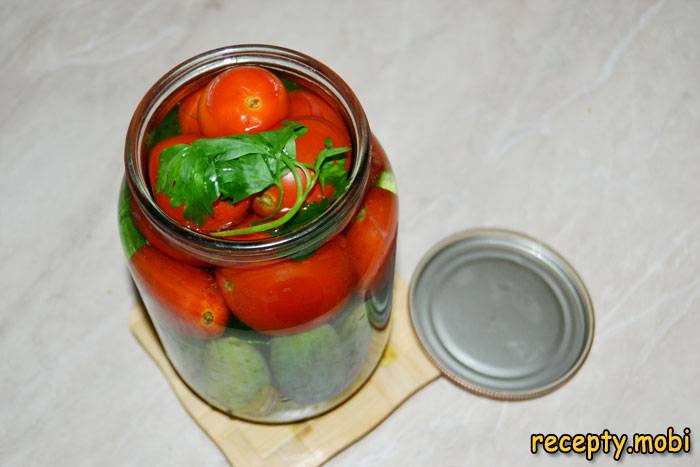
After 12 hours of cooling, I move the jar to a cool, dark place for storage (a cellar or pantry) — kept this way, the preserve lasts up to a year.


Tips
- 1
Choose fruits of the same size — the preserve then looks prettier in the jar. Cucumbers of 8–10 cm and tomatoes about the size of an egg.
- 2
Tomatoes of the "Slivka" (Plum) or "Damskie Palchiki" (Lady Fingers) varieties, with their firm skin, split less often — an ideal choice for canning.
- 3
Wrapping the jar helps the vegetables heat through better and works as extra sterilisation. Pickled tomatoes for winter are made on a similar principle.
- 4
Store in a cool, dark place at a temperature of 5–15 °C — kept this way, the preserve will retain its taste and quality for up to a year.
Types of mixed cucumber and tomato preserves: which method to choose
The same one-litre jar can be sealed in several different ways, and the method you pick affects how crunchy the cucumbers stay, how long the jar keeps, and how much time you spend at the stove. Below is a comparison of three popular options, so you can settle on the one that suits you best.
| Method | How it is made | Result and storage |
|---|---|---|
| Triple hot-fill (this recipe) | The jar is filled three times with fiercely boiling water at intervals of 5-7 minutes, the last time with marinade, then sealed | The cucumbers stay crunchy and the jar keeps for up to 12 months somewhere cool |
| With a single sterilisation | The jar of vegetables and marinade is heated in a pan of water for 8-10 minutes, then sealed | Reliable, but the cucumbers turn out a touch softer and the method takes longer |
| Cold salting (fermenting) | The vegetables are covered with cold brine without vinegar, left to ferment, then moved to the cold | Turns naturally sour, but keeps only under a plastic lid in a cellar or the fridge |
If you would like to gather even more vegetables in one jar, take a look at the mixed vegetable preserve without sterilisation: it adds courgettes, peppers and carrots to the cucumbers and tomatoes using the same triple hot-fill principle.
How to choose cucumbers and tomatoes for a mixed jar
A good jar starts with the right vegetables. Salad varieties go soft in a marinade, so choose pickling types and keep an eye on firmness.
- Cucumbers: short, 7-9 cm, of a pickling variety with black bumps and firm skin. Smooth salad cucumbers are no good for sealing.
- Tomatoes: small plum or cherry types, firm, with a thick wall, ideally slightly underripe. They will not split or fall apart under boiling water.
- Take both vegetables at roughly the same size, so they pickle evenly in a single jar.
- The skin should be free of cracks, dents and dark spots: even one spoiled vegetable can make the whole jar swell.
- Soaking the cucumbers in cold water for 3-4 hours restores their firmness and removes any excess bitterness.
Firm small tomatoes are lovely on their own too: they are sealed whole in tomatoes in their own juice, where that same firm skin matters.
What keeps cucumbers in the jar crunchy
Crunch in a mixed jar comes down not to luck but to a few simple things that are easy to control.
- Freshness: a cucumber picked no more than a day ago is crunchy in itself, whereas a limp one cannot be revived.
- Tannins: a leaf of horseradish, blackcurrant or cherry gives that very firmness, so they are in the recipe for good reason.
- Cold water during soaking fills the cells with moisture, and the cucumber becomes firmer.
- A precise dose of salt and vinegar: a weak marinade leaves the vegetable flabby, while measured proportions hold the texture.
- Quick cooling: the jar is turned upside down and wrapped, but then moved somewhere cool rather than left in the warmth for weeks.
Sterilisation and the safety of preserves
Cucumbers, bell peppers and garlic are low-acid vegetables, and it is precisely in such an environment that the agent of botulism develops. So the acid in the marinade is there not for flavour but for safety, and it must not be reduced.
- 9% vinegar in the stated amount (2 tsp per one-litre jar) is essential. Skipping it or adding less is not an option.
- Wash jars and lids with soda and scald them with boiling water, even if the recipe is made without sterilisation: clean containers are half the battle.
- Triple filling with fiercely boiling water heats the contents through, but it does not replace the acid: the two work only together.
- Store the finished jars in a dark, cool place: a cellar, a pantry or the bottom shelf of the fridge, at 2-15 °C.
- Throw out any swollen lid, cloudy brine or unpleasant smell on opening straight away, without tasting: botulinum toxin does not change the flavour of the food.
Anyone who wants a preserve with the same carefully judged acidity will enjoy pickled courgettes in one-litre jars, which are sealed using the same triple hot-fill principle.
Common mistakes and how to avoid them
- Packing too tightly. The vegetables need to be bathed in marinade on every side, otherwise the middle of the jar will not pickle. Leave small gaps.
- Pouring the boiling water in a stream down the centre, straight onto the tomatoes. Their thin skin splits from this. Pour down the side of the jar, resting a knife blade or a spoon against it.
- Skimping on vinegar. It may seem sour enough already, but it is the acid that keeps the jar from swelling. Follow the proportions precisely.
- Warm storage. A jar forgotten by the radiator will ferment even with a perfect recipe. Move the preserve somewhere cool.
- Vegetables of different sizes. A large cucumber next to a small cherry tomato will pickle unevenly, so choose pieces of a similar size.
What to serve it with and how to use it
A one-litre jar of mixed vegetables is both a ready appetiser and the base for a dozen home-cooked dishes.
- With boiled or fried potatoes, with meat and with pilaf: the classic pairing of salted vegetables and a hot side.
- Cucumbers and tomatoes from the jar, diced, go into a winter Olivier salad, vinaigrette or rassolnik soup.
- Do not pour the marinade away: it comes in handy in dumpling dough or as a base for rassolnik.
- On a festive table the mixed jar looks lovely if you pile the vegetables up and scatter fresh herbs over the top.
Video
FAQ
Why soak the cucumbers before pickling? +
Soaking restores the cucumbers' firmness and crunch, especially if they were bought and have sat for a few days. Cucumbers are 95% water and lose some of it in storage — during soaking they "drink" it back. Soaking also removes any possible bitterness. Cucumbers fresh from the garden need just 1 hour in water, shop-bought ones a full 2 hours. There is no point soaking too long (more than 4 hours) either — the cucumbers will start to turn sour. Change the water once or twice during soaking for a better result.
Can I skip sterilising the jars? +
The triple pour of boiling water replaces full sterilisation in a pot — it is a "lazy" method, and no less reliable. It is important to keep the containers clean (wash them with soda and scald them with boiling water) and to use the right proportions of vinegar and salt. Without any sterilisation at all (even the pouring), store the jars only in the fridge for 1–2 weeks — longer is dangerous because of the risk of botulism. To guarantee long-term storage (up to a year), always use either sterilisation in a pot or the triple pour.
Why do the tomatoes split when boiling water is poured over them? +
The main causes are: using soft tomato varieties with thin skin (you need firm ones such as "Slivka", "Damskie Palchiki" or "Rio Grande"); not pricking them near the stem in 2–3 places (an absolute must!); the tomatoes being cold from the fridge (they should be at room temperature); or pouring the boiling water too quickly (pour it down the side of the jar, not onto the tomatoes themselves). Pricking near the stem is the most important step: steam escapes through these holes, so the skin does not tear from the pressure inside.
How long do mixed cucumber and tomato preserves keep? +
A sealed jar with the right acidity and clean containers keeps for up to 12 months in a cool, dark place. Once opened, store it in the fridge and eat it within 3-5 days. If the lid has swelled or the brine has turned cloudy, the jar must not be eaten.
Can I replace the vinegar with citric acid? +
Yes, but the proportion has to be judged precisely: roughly 1/3 tsp of citric acid replaces 2 tsp of 9% vinegar per one-litre jar. The acid is there specifically for safety, so this dose must not be reduced. The flavour comes out milder, without the vinegary smell.
Do the jars need to be turned upside down after sealing? +
Yes, the jar is turned upside down straight away and wrapped in a warm blanket until it has cooled completely. This is how you check the lid is airtight, and the heating continues and kills off any remaining micro-organisms. Once cool, the jar is set the right way up again and moved somewhere cool.
Can I add other vegetables to the mix? +
Yes, pieces of bell pepper, young courgette, cauliflower florets and rounds of carrot all go well with the cucumbers and tomatoes. The main thing is that the low-acid vegetables do not crowd out the acid: keep the proportions of salt, sugar and vinegar per litre the same. Cut firm vegetables smaller, so they have time to pickle.
Why has the brine in the jar turned cloudy? +
The most common cause is a poorly washed container, too little acid or a spoiled vegetable that ended up in the jar. Sometimes a slight cloudiness comes from particles of spice or garlic, and it is harmless. But if the murkiness comes with a swollen lid or bubbles, throw the jar out at once without tasting it.
Do I have to add hot pepper and horseradish? +
Hot pepper is added to taste, it only lends a mild heat and can be left out. Horseradish leaf or root, though, is best kept: it not only adds aroma but also helps the cucumbers stay crunchy and the brine stay clear.
- Comment
or post as a guest
Be the first to comment.