avg —
Cucumbers in Mustard Dressing for Winter

Instructions
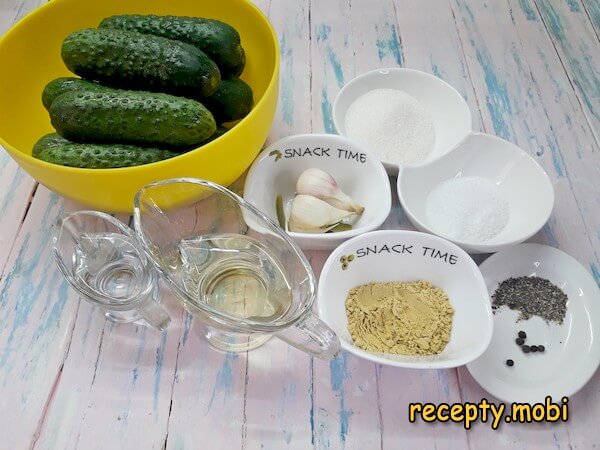
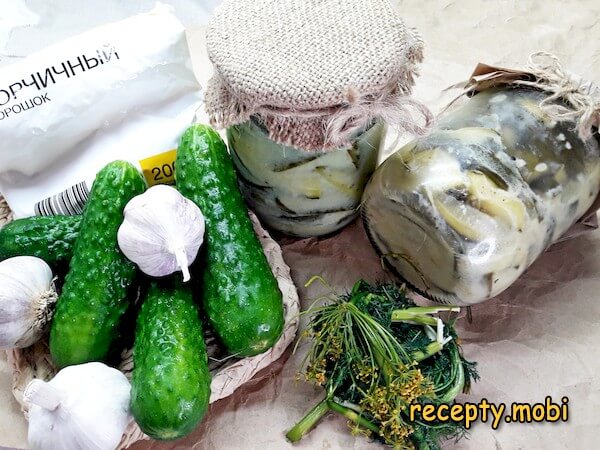
I get the listed ingredients ready.
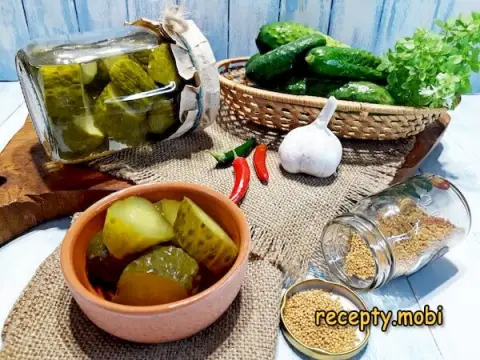
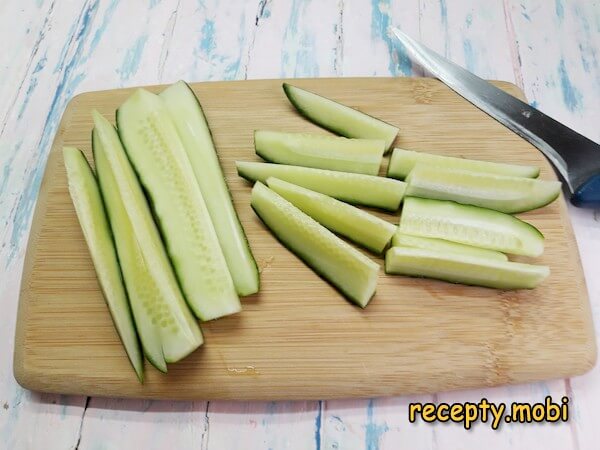
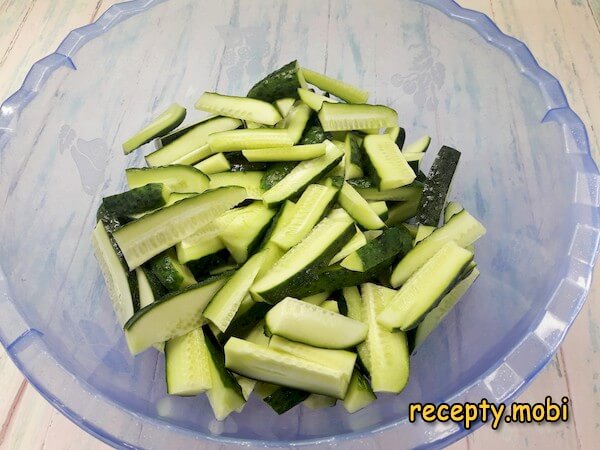
I trim the ends off each cucumber, cut it in half lengthwise, then into 3 or 4 more strips (the widest point measures 1 cm), and make a cut across.
I put all the pieces into a wide bowl.
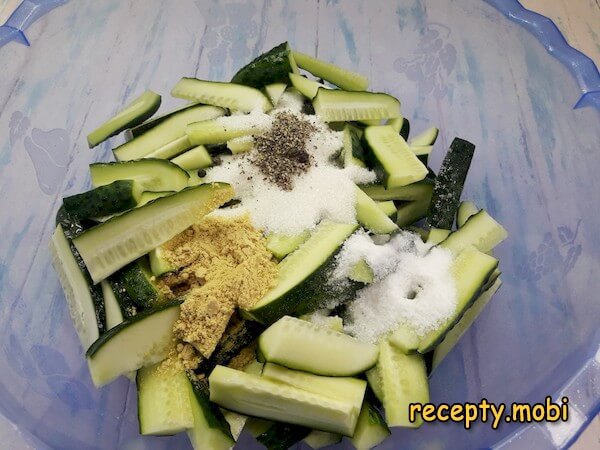
I add the dry ingredients.
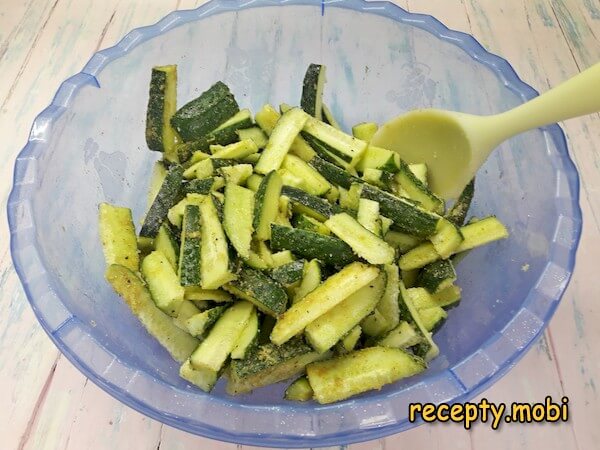
I mix so that all the seasonings are evenly distributed.
Now I add the garlic paste, pressed through a press. I pour in the vinegar and the oil.
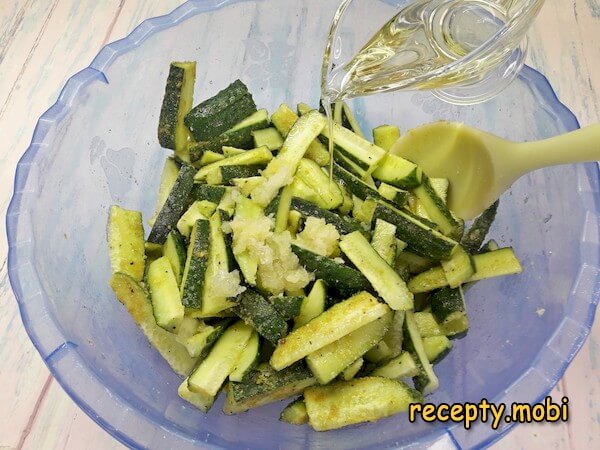
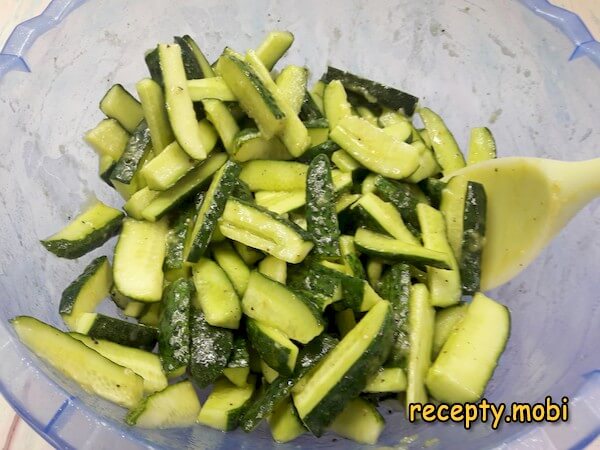
I stir the mixture and leave it like that on the table, coming back every half hour to stir the cucumbers with the marinade that forms.
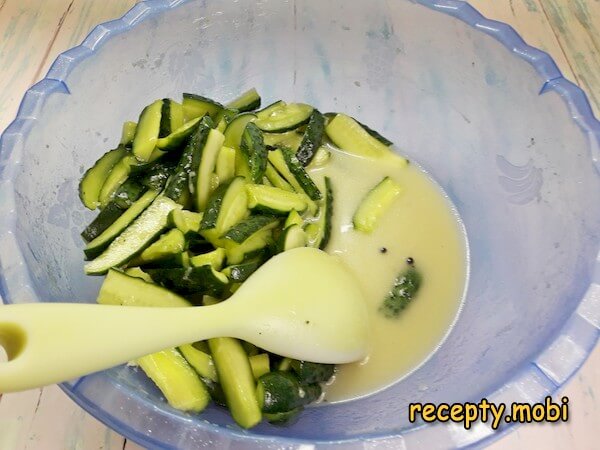
After exactly 4 hours the marinating is done. By then a huge amount of juice has been released. The snack is already ready at this stage and can be eaten straight away. But for winter storage, the work should continue.
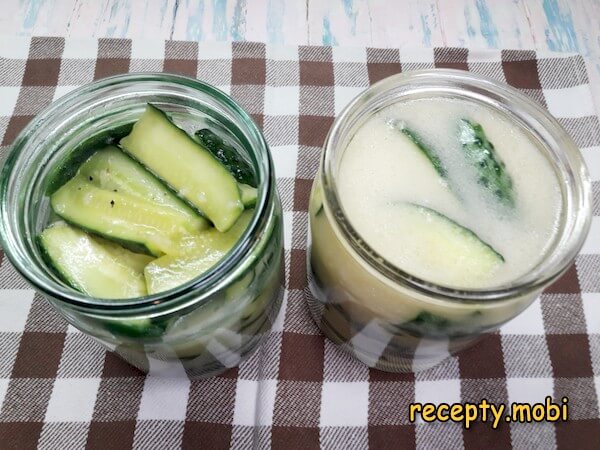
I pack the cucumbers into the jars, tamping them down now and then (the less marinade that fits afterwards, the crunchier the cucumbers will be). After that I pour in the fragrant liquid.
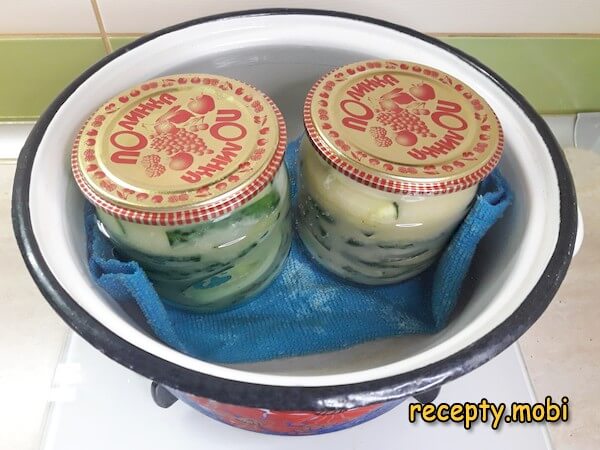
I cover the jars with metal lids (but do not screw them on). I stand the jars in a pot with a cloth laid on the bottom. I fill it with cold water up to the shoulders of the jars. I boil 0.5-litre jars for 10 to 12 minutes from the moment the water boils (1-litre jars – 15 to 17 minutes).
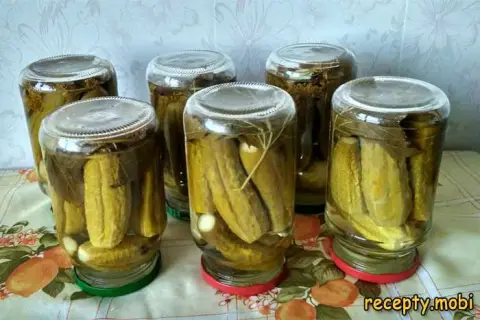
After sealing, I turn the jars upside down, set them on a thick blanket and wrap them up for 12 hours. It is best to put the cucumbers in mustard dressing for winter in a dark place with no heat source nearby.


Tips
- 1
4 HOURS OF MARINATING WITH STIRRING is the "secret" of the flavour. Stir every 30 minutes so that all the slices soak up the marinade evenly.
- 2
MUSTARD POWDER is the "secret" of the sharpness. Ready-made mustard gives a "sauce", while the powder gives the sharp, robust flavour that this recipe needs.
- 3
TAMPING DOWN IN THE JARS is the "secret" of the crunch. The tighter the slices are packed, the less marinade there is, and the crunchier the result.
- 4
TRIMMING THE ENDS is the "secret" against bitterness. The ends of cucumbers are often bitter. The same principle works in other kinds of cucumbers for winter.
FAQ
Which cucumbers should I choose? +
Ideally – pickling varieties (Nezhinsky, Parisian cornichon, Rodnichok, Konkurent). Alternatives: greenhouse cucumbers with bumps. A size of 8 to 15 cm is optimal (for cutting into long strips). Fresh ones are firm, dark green and unblemished. The seed brands Gavrish, Poisk and Semko are tried and tested. Not suitable: salad varieties (bitter) and limp ones. Soak the cucumbers in cold water for 1 to 2 hours before cutting – they will be crunchy. Trim the ends – they are often bitter. Do not peel off the skin – it gives crunch. For a "premium" snack, use farm barrel cucumbers. Greenhouse cucumbers are less crunchy, so choose field-grown ones.
What can replace mustard powder? +
Alternatives: whole mustard seeds (10 g – they will give specks of flavour), ready-made jarred mustard (15 to 20 g, a milder option), a mix of yellow and brown mustard powder (for sharpness). The brands Kotanyi, Aromaty Zhizni and Magiya Vostoka are tried and tested. Do not use: mustard with honey (it will change the taste) or sweet mustard (it will upset the balance). For a "sharp" version, add 1/2 tsp of ground black pepper. For a "mild" one, reduce to 5 g of powder. 10 g of mustard powder per 1 kg of cucumbers is the optimal ratio. Fresh powder is more aromatic than old.
How long do the cucumbers keep? +
In sealed jars at room temperature – up to 1 year. In a cool cellar – up to 1.5 years. After opening, in the fridge – 5 to 7 days. Write the canning date on the jars. If a lid bulges, do not open it – throw it away. Do not store in the sun – the colour will fade. Without sterilising (after 4 hours of marinating), in the fridge – 5 to 7 days. Freshly made after 4 hours of marinating, they are "star" quality and can already be served. It is ideal to use them within the first 6 months. Bottle them in small 0.5-litre jars – they are easier to open (a large one will spoil within a week).
What goes with the cucumbers? +
A snack in their own right – with a hot meat dish. With fried or boiled potatoes. With steak, shashlik or lamb ribs – the "manly" serving. With pelmeni and vareniki – the "winter" serving. With a shot of cold vodka – the "Russian" serving. With a glass of red semi-sweet wine or light beer. With borscht or shchi as a snack. With pirozhki and meat-filled pancakes. For a "family dinner" – with mashed potatoes and meat. With garlic sauce. With boiled chicken. For an "office snack" – handy in a small jar. A versatile spicy preserve for the Russian-Ukrainian table.
- Comment
or post as a guest
Be the first to comment.