avg —
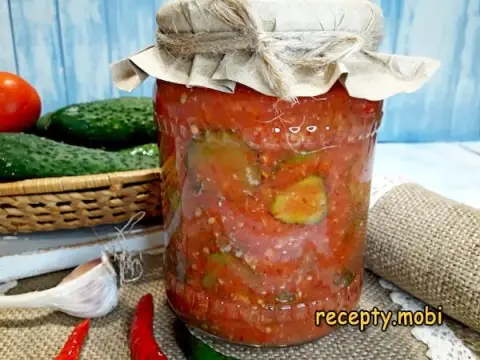
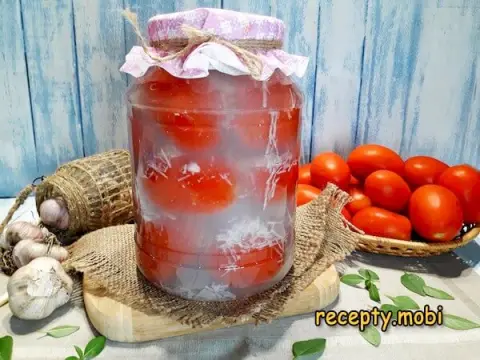
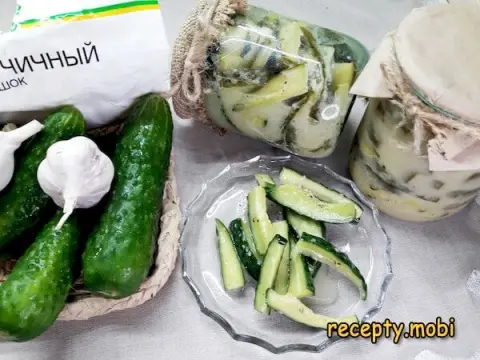
Cucumbers in tomato sauce for winter

Instructions
I prepare the ingredients for the cucumbers in tomato sauce for winter. The jar itself does not need to be sterilised, only washed well with baking soda or mustard – the double hot pour with boiling water in steps 7-10 replaces sterilisation. The herbs can be either dried or fresh, depending on the season.
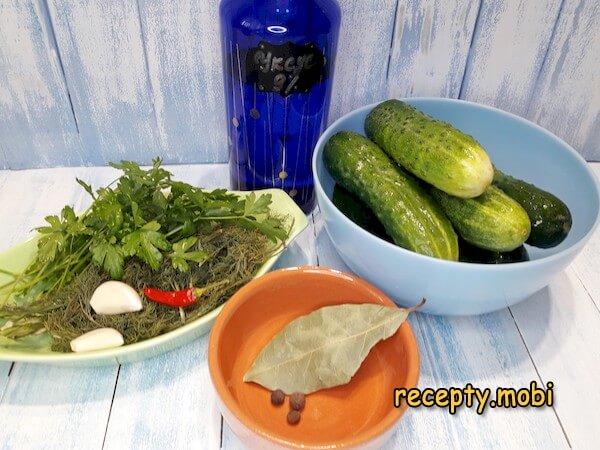
I measure out all the marinade ingredients in advance – there's no time to add them while cooking, as the tomato comes to the boil quickly.
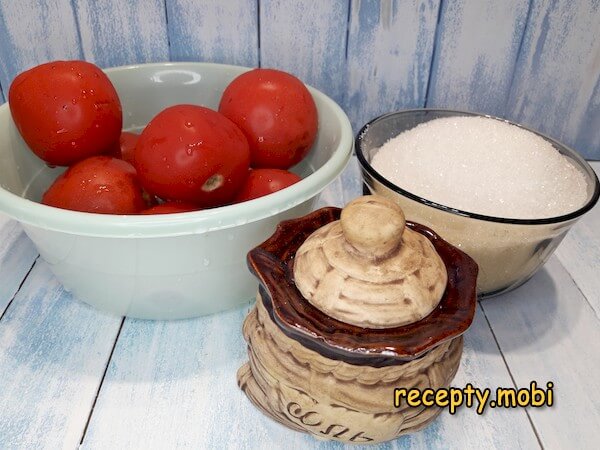
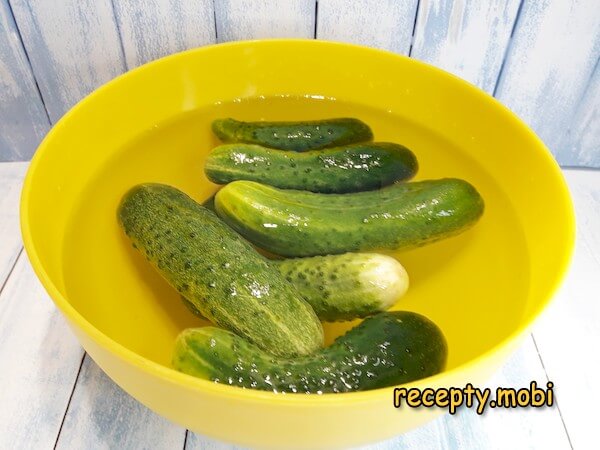
I cover the cucumbers with cold water and leave them for 1-2 hours – the water restores the moisture lost since they were picked, and the cucumbers will be crisp. Don't soak them any longer, as they can start to ferment.
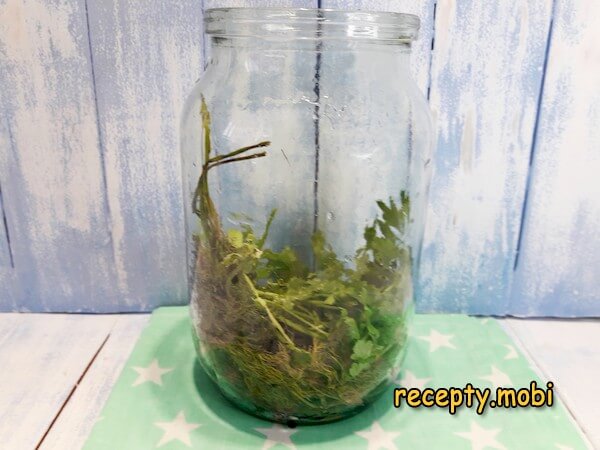
I line the bottom of the jar with dill and parsley – herbs placed at the bottom don't float up in the finished jar and gradually release their aroma into the sauce.
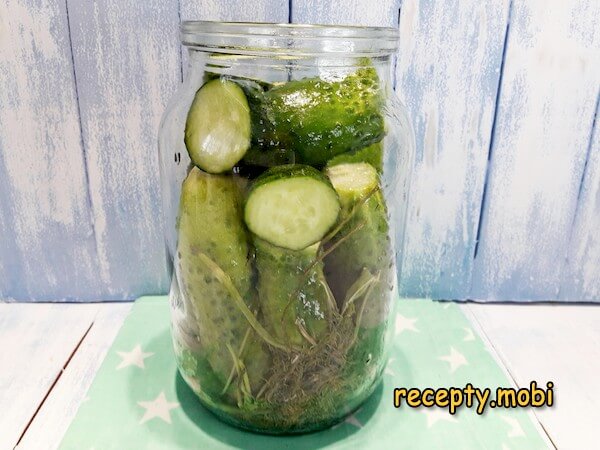
I rinse the cucumbers and cut off the ends – this lets the marinade penetrate better. First I stand whole ones around the perimeter of the jar, then loosely arrange cut pieces on top. I fill the jar as much as possible, but don't press it down by hand – there should be free space left for the tomato.
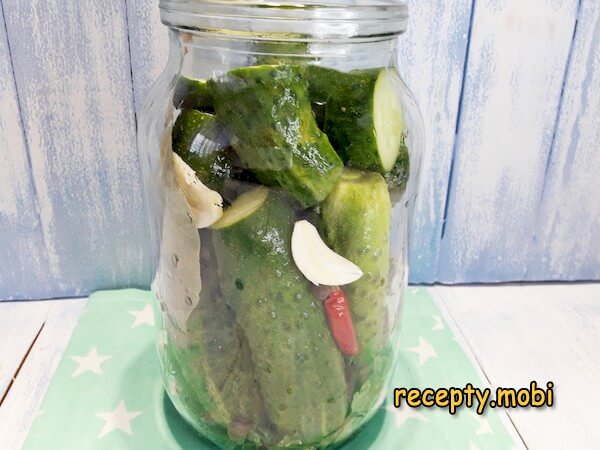
I add garlic sliced into thin slivers, hot and allspice pepper, and the bay leaf – slivers of garlic release their aroma faster than whole cloves.
I start pouring fiercely boiling water over the contents of the jar, but not all at once – pouring in portions. Sudden contact between cold glass and boiling water causes thermal shock and the jar can crack. I pour gradually, letting the walls warm up.
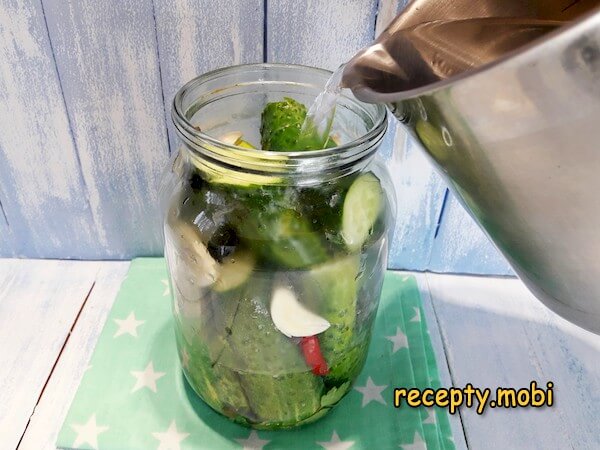
I top up with boiling water right to the top and let the jar stand for 5 minutes so the cucumbers warm through from the inside. At the same time I boil the lid so it's ready for the final sealing.
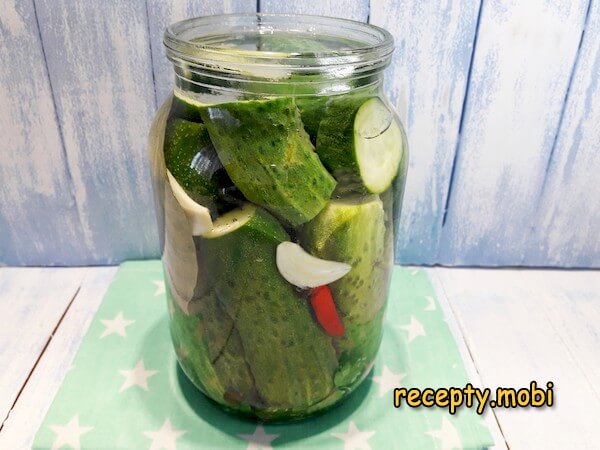
Next I pour the water from the jar into a measuring cup to determine the volume of tomato needed. A 1-litre jar will take 450-500 millilitres – this tells you how much marinade to cook.
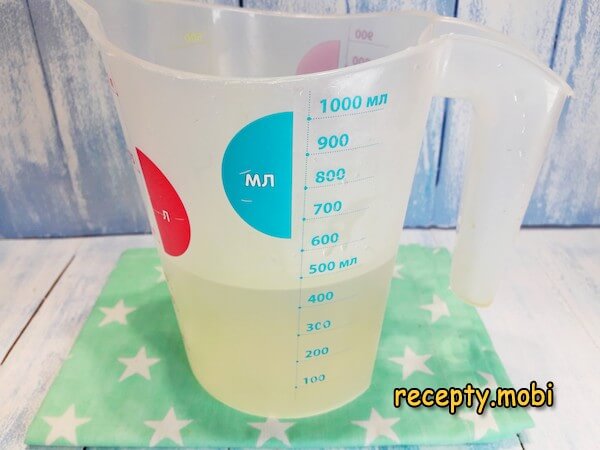
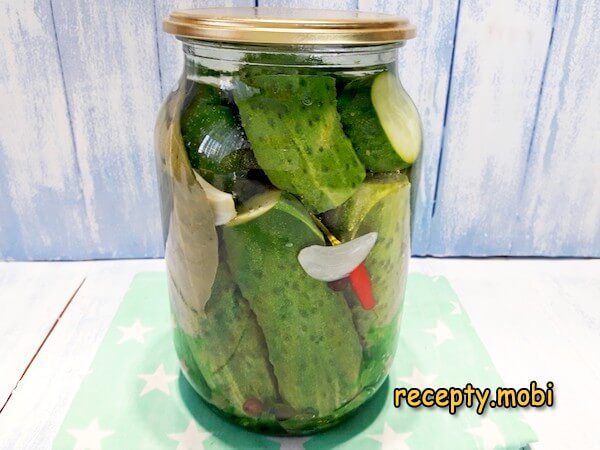
I bring the same volume of clean water to the boil and pour it over the cucumbers again. I cover with the lid and leave for 20 minutes – the second hot pour completes the warming and works as sterilisation without a separate pan.
Meanwhile I get on with the marinade. I cut the tomatoes into quarters, removing the stem ends, and load them into a food processor (you can also use a meat grinder – the result will be coarser).
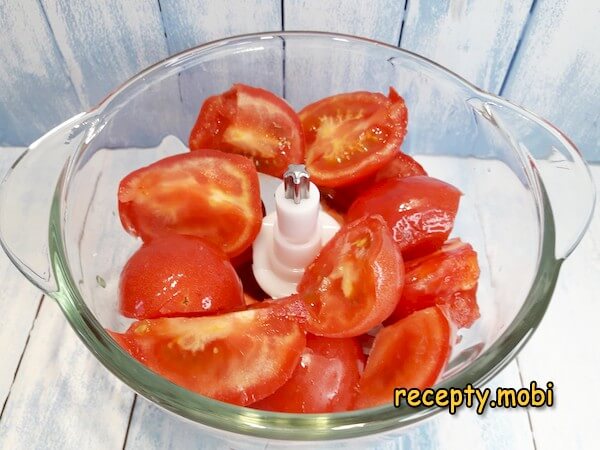
I grind the pieces into a meaty tomato juice with pulp – it's the thick fresh juice that gives a better flavour than diluted tomato paste.
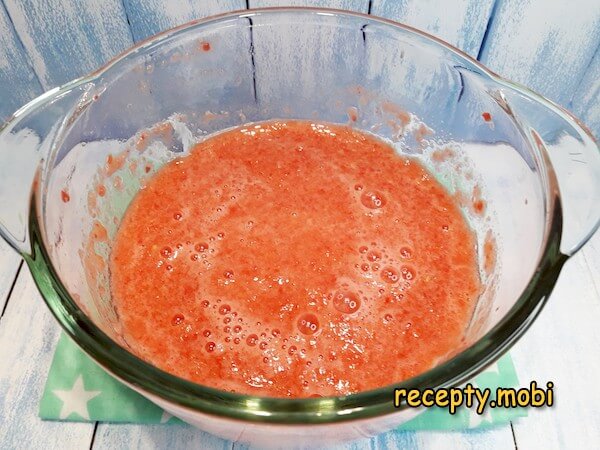
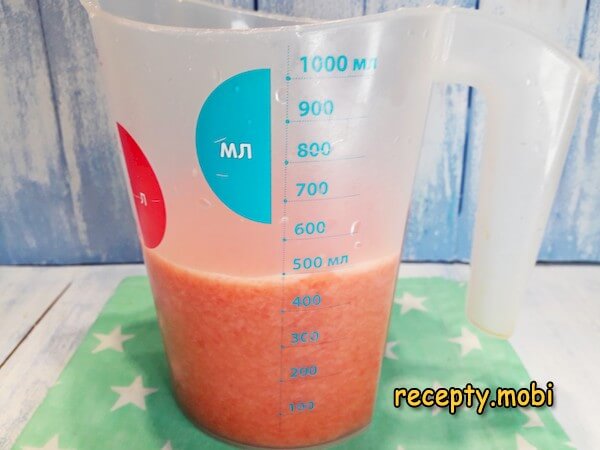
I measure the resulting volume – it should come to about 500 millilitres.
I pour the tomato into a saucepan and add the sugar – it balances the natural acidity of the tomatoes and removes their "green" flavour note.
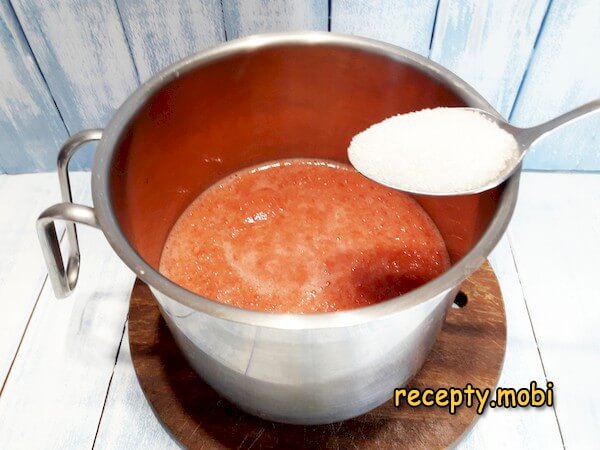
I add the portion of salt as well – salt acts as a preservative and at the same time brings out the flavour of the vegetables.
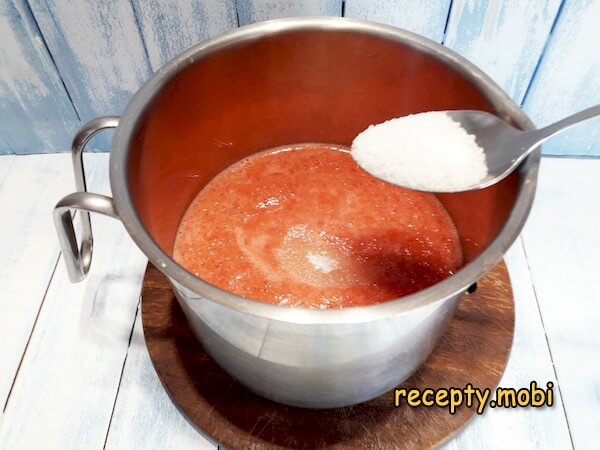
I stir and put the saucepan on the hob. Once it comes to the boil, I cook the juice for 5 minutes – this is enough for pasteurisation and light reduction, but not enough to kill the aroma.
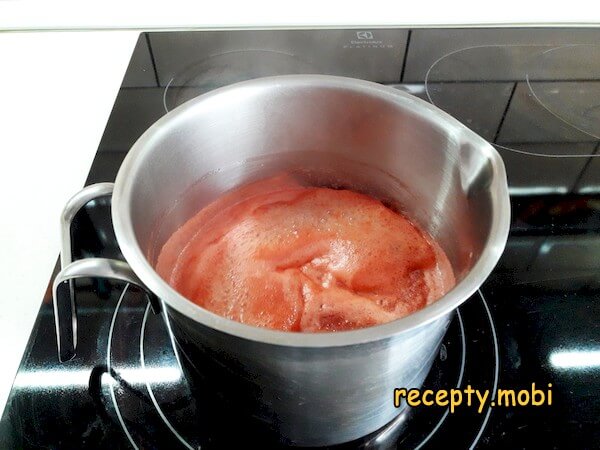
Then I pour the hot marinade into the jar with the cucumbers, but not all the way – only about halfway, leaving room for the vinegar and the final top-up.
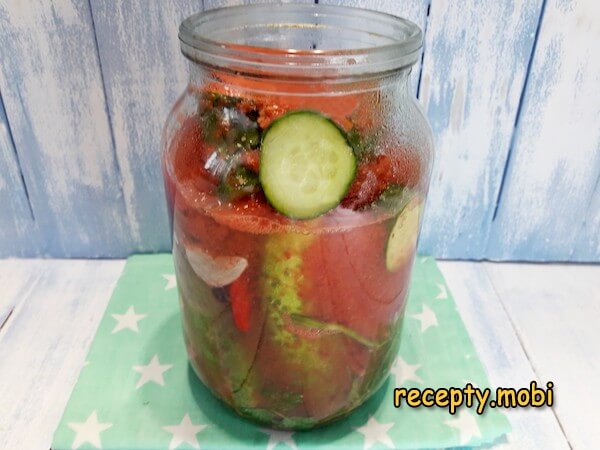
Next I add the vinegar to the jar – at this stage, not into the boiling marinade, otherwise the vinegar would boil away and lose its strength as a preservative.
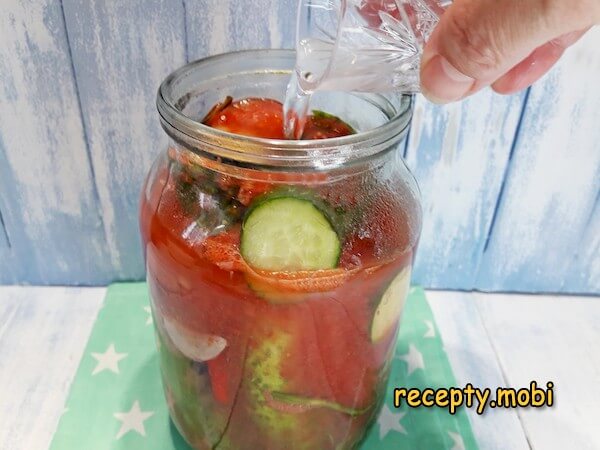
And I pour in the remaining marinade – there should be enough to reach the very top of the jar. The least air gap means the least oxidation during storage.
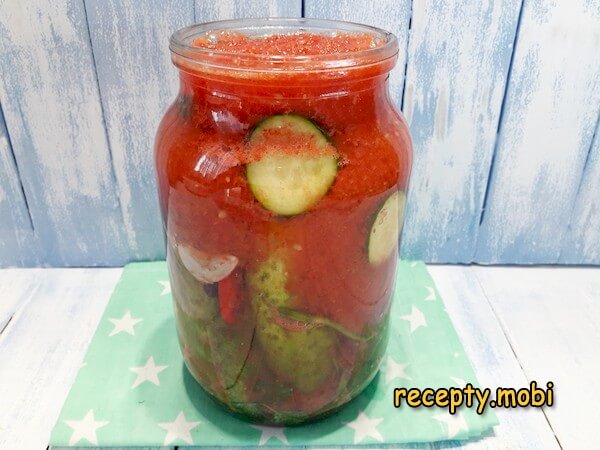
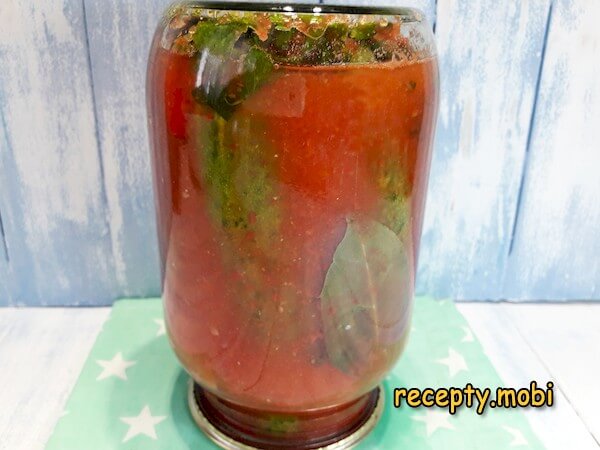
I screw on the lid and turn the jar upside down, leaving it like that for a couple of hours – this sterilises the lid and checks the seal for leaks. There's no need to wrap the jar, so the cucumbers don't turn out too soft. Then I return the jar to its normal position. Once the jar has cooled completely, I move it to its permanent storage place.


Tips
- 1
POURING THE BOILING WATER IN PORTIONS – the "secret" to a jar that doesn't crack. Pouring fiercely boiling water into a cold jar all at once is thermal shock, and the glass cracks. Pouring gradually, with a 10-15 second interval, warms the jar evenly so it withstands any temperature.
- 2
VINEGAR AT THE END – the "secret" to the preservative's strength. Vinegar added to a boiling marinade partly evaporates and loses its strength. Adding the vinegar to the almost-finished jar keeps all the acetic acid inside, working as a preservative at full power. The same trick works in cucumbers in mustard sauce for winter.
- 3
FRESH TOMATO JUICE – the "secret" to the sauce's flavour. Tomato paste diluted with water gives a "shop-bought" aftertaste and you'll want to throw the sauce out. Fresh ground juice with pulp is thick and rich, and the sauce itself turns into a ready-made base for borscht.
- 4
DON'T WRAP THE JAR – the "secret" to crispness. Under a blanket the jar cools for 10 hours – the cucumbers inside go soft and lose their firmness. Without wrapping, the jar cools in 2-3 hours and the cucumbers stay as crisp as freshly picked. The same principle is used in pickled cucumbers for winter in a litre jar with vinegar.
FAQ
Which cucumbers are best for tomato sauce for winter? +
Ideal are pickling varieties with bumpy skin, 8-12 cm long ("Nezhinsky", "Zasolochny", "Parisian Cornichon" are the "classics"). Alternatives: overgrown cucumbers (cut into pieces, as the recipe allows – the "budget" option), any small cornichons up to 6 cm (premium for small jars), a mix of varieties from the same bed (versatile). Don't use salad varieties with smooth skin and watery flesh – under the double hot pour they go mushy and lose their shape. Cucumbers straight from the plant, still with the flower on, are the premium option.
Can fresh tomatoes be replaced with tomato paste? +
You can, but the flavour will noticeably suffer. Substitution: dilute 5 tbsp of good-quality tomato paste (without starch or thickeners) with 450 ml of water – this makes about 500 ml of sauce. It's better to use paste in glass jars rather than tubes. Fresh tomatoes give a meaty sauce with a light tang, while paste gives an even, smooth marinade with no character. Whenever possible, it's always worth choosing fresh tomatoes in season.
How long do cucumbers in tomato sauce keep after the double pour? +
In a cool pantry (8-15°C) – up to 2 years without loss of quality. In an ordinary kitchen cupboard at room temperature – up to 1 year. After the jar is opened – 5-7 days in the fridge under a lid. Signs of spoilage: a bulging lid, cloudy sauce with fermentation bubbles, a sour or rotten smell – such a jar goes straight in the bin without hesitation. A properly made preserve only gets richer with age – the cucumbers soak up the marinade more deeply, and the tomato becomes darker and thicker in consistency.
What to do if there wasn't enough tomato sauce to fill the jar? +
If it's just a tiny bit short of the rim (5-10 mm) – I do nothing, the jar stores fine. If it's short by more than that – I boil a little clean water with a pinch of salt and top up the jar. You can also prepare a spare marinade from 100 ml of water + 1 tbsp of tomato paste + a pinch of salt and sugar, boil it for 2 minutes and top up. The main thing is that the jar must be filled right to the rim, otherwise mould will start in the air gap. It's better to make the marinade with a margin – at the rate of 550 ml instead of 500.
- Comment
or post as a guest
Be the first to comment.