avg —
Eggplants for Winter in Jewish Style

Instructions
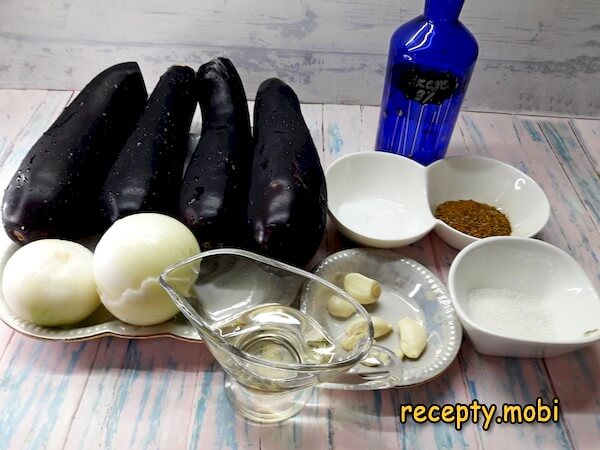
I gather the ingredients I will need.
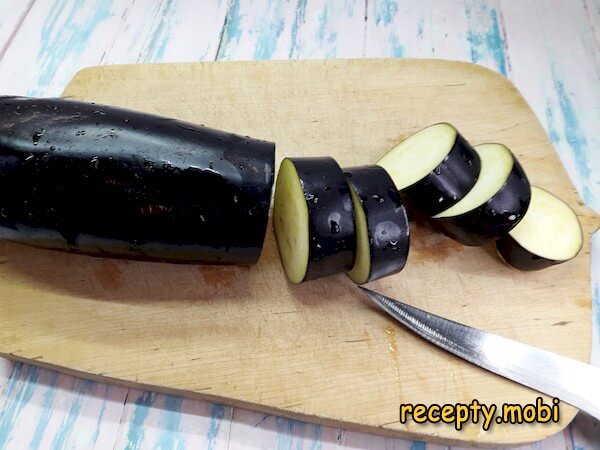
Trim the tip and the stem end off each eggplant, then slice it into rounds about 2 cm thick.
Cut each round into four wedges.
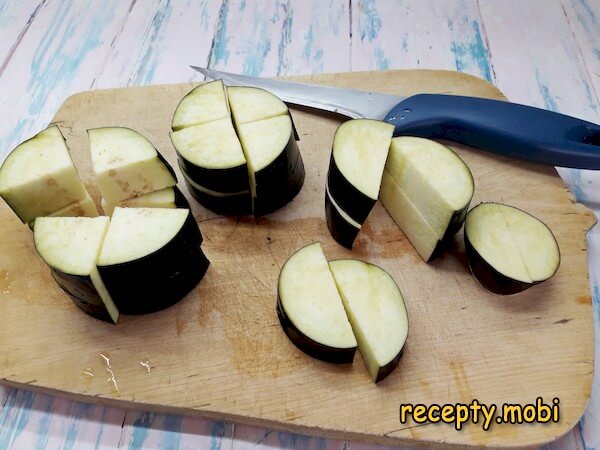
Put all the pieces into a deep bowl.
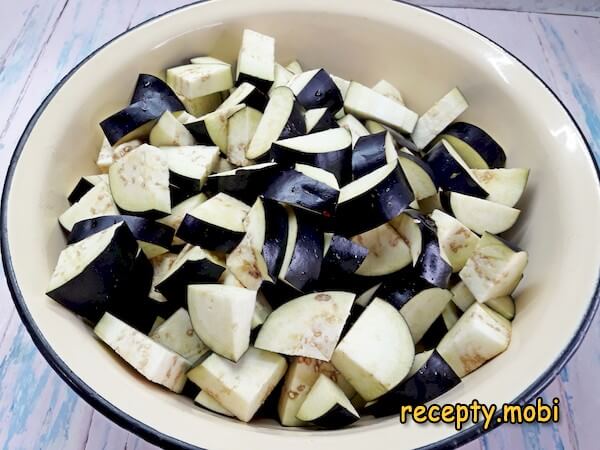
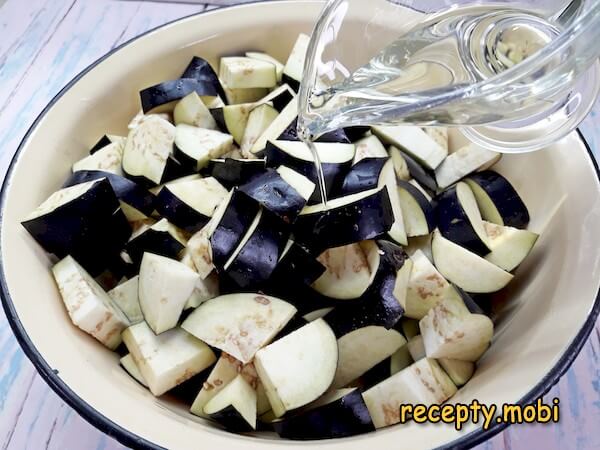
Drizzle the oil over the eggplant.
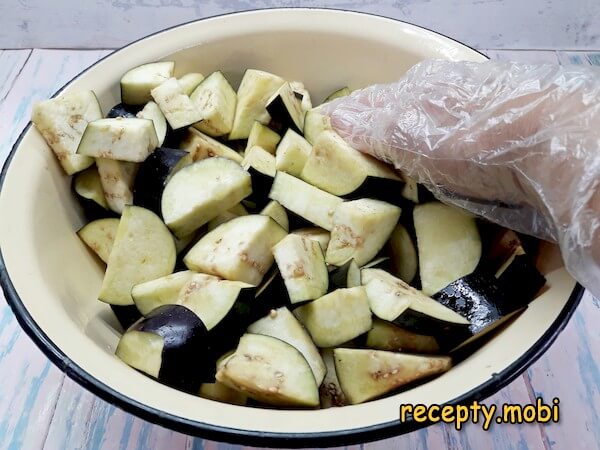
Mix thoroughly so that every piece is coated in oil; this is easiest to do by hand.
Heat a dry frying pan and lay out part of the eggplant in a single layer. Fry on both sides until half-cooked and lightly coloured.
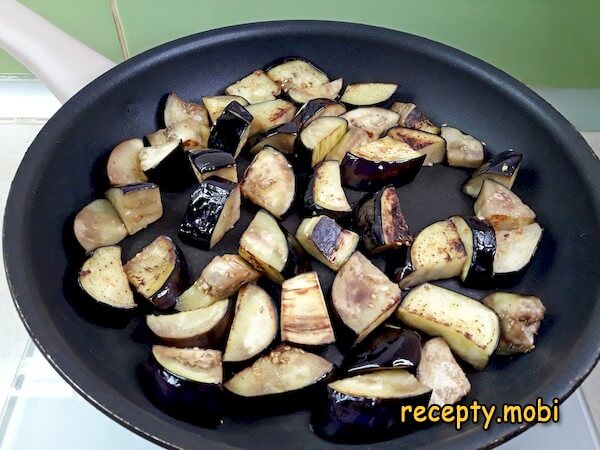
Working in small batches, fry all the pieces this way.
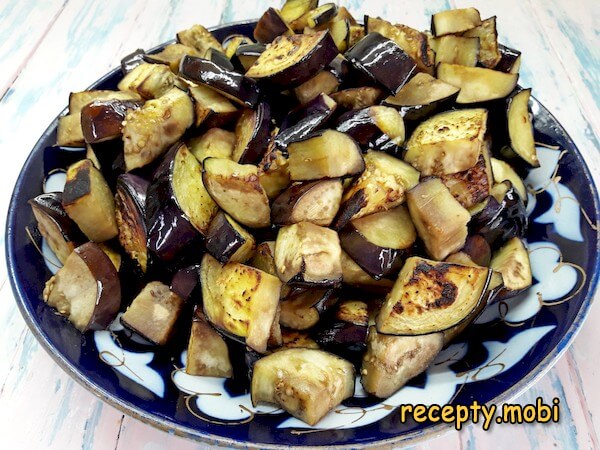
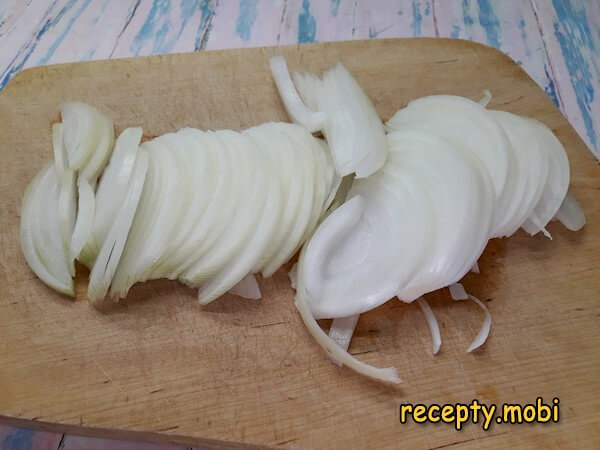
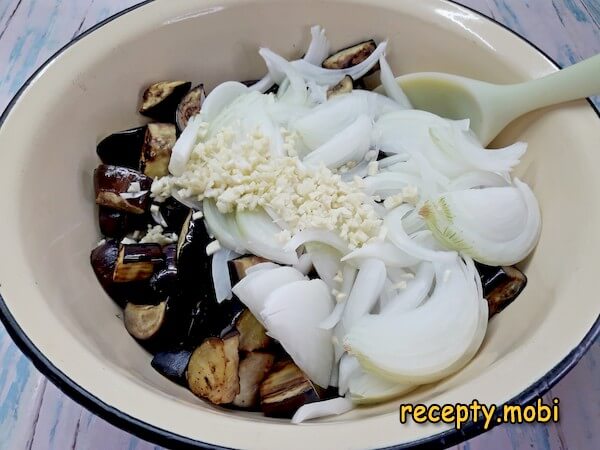
Slice the onion into thin feathers.
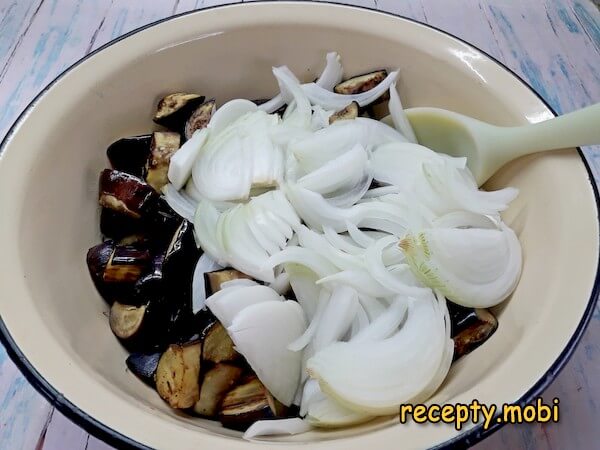
Add it to the fried eggplant.
Add the garlic, finely chopped rather than crushed through a press.
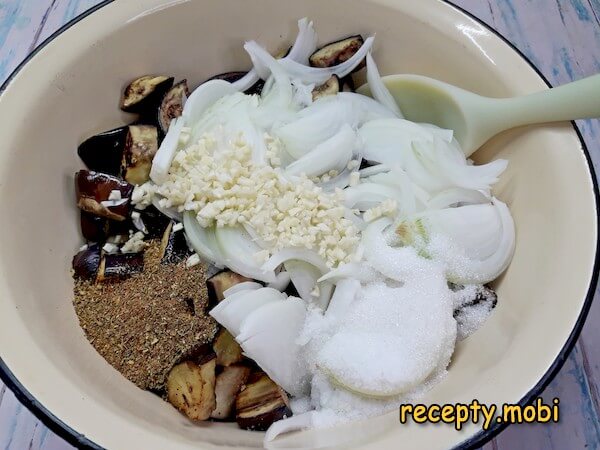
Add the shashlik seasoning, sugar and salt.
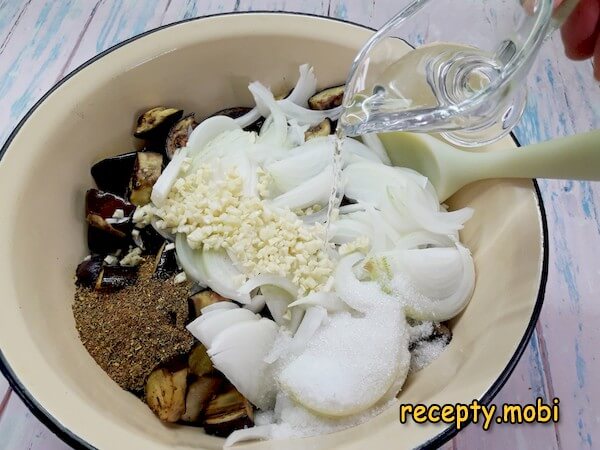
Pour in the vinegar right away.
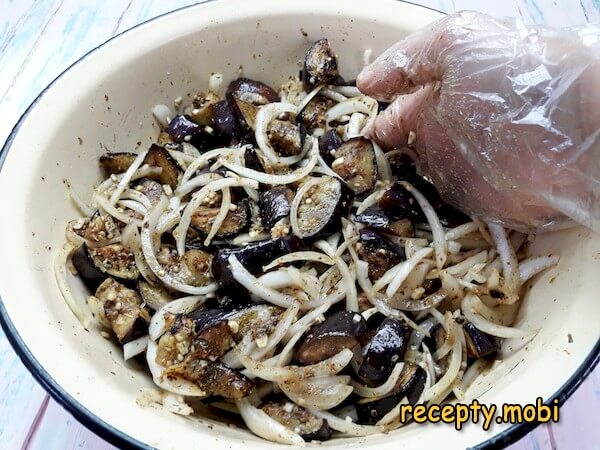
Mix everything very thoroughly by hand into an even mixture, taking care not to crush the eggplant pieces.
Cover the whole mixture with a plate of a suitable diameter.
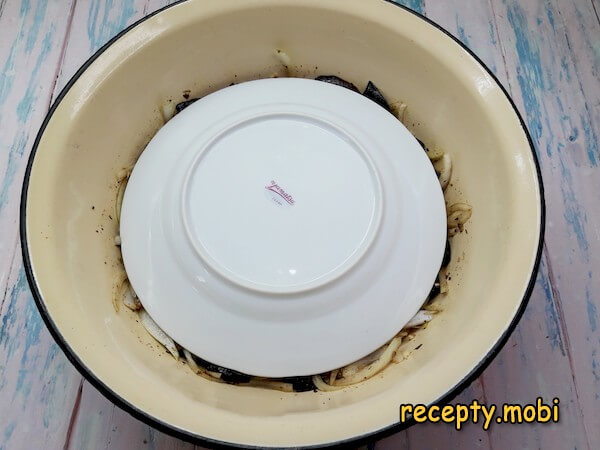
Set a weight on top – about 3 kg is enough – and let the eggplant marinate at room temperature.
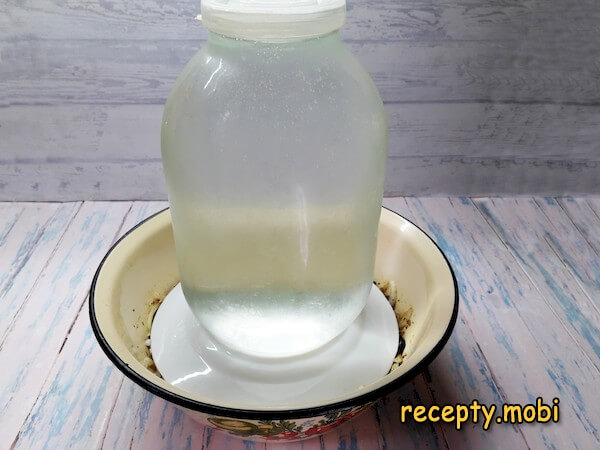
After 7 hours a large amount of juice will have been released.
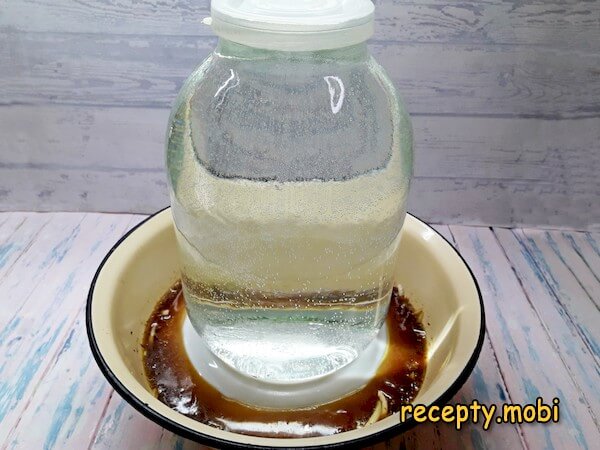
Stir the mixture and pack it tightly into clean jars. You can sterilise them beforehand, but it is not strictly required.
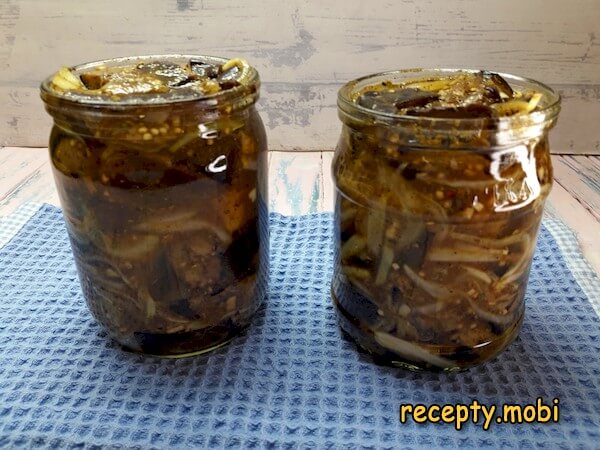
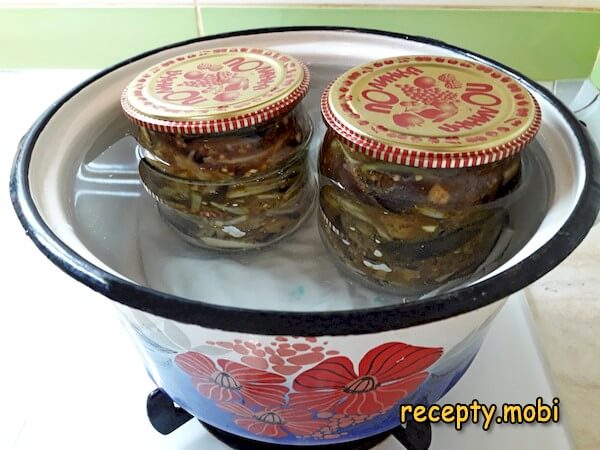
Set the jars in a pot that is taller than the jars themselves, with a piece of cloth on the bottom. Pour in water (cold or hot, it does not matter) up to the shoulders of the jars, rest the lids on top and turn on the stove. Once a steady boil is reached, sterilise for 30 minutes.
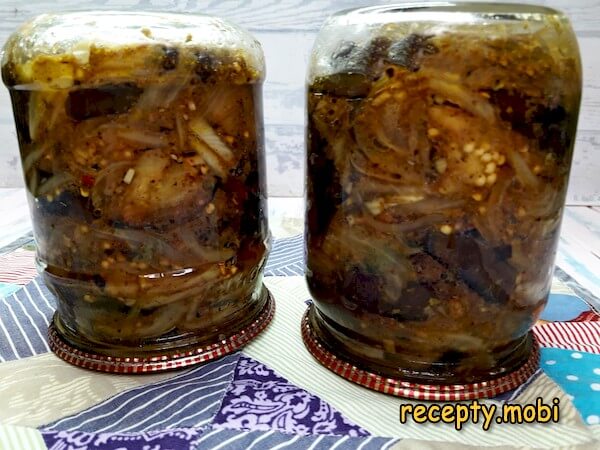
Carefully lift the jars out of the boiling water, screw on the lids, turn them upside down and check that the seal is tight.
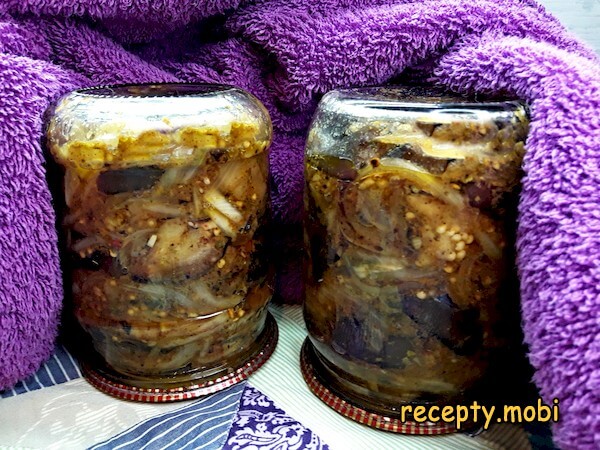
Wrap the jars in a thick towel and leave them for 8 hours to cool slowly.
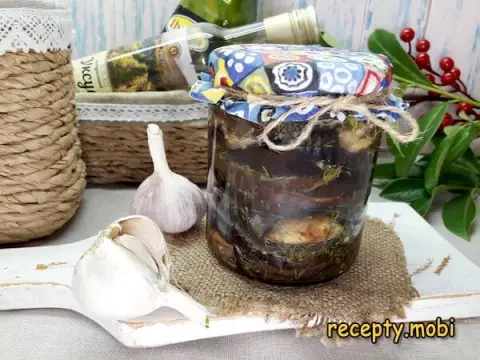
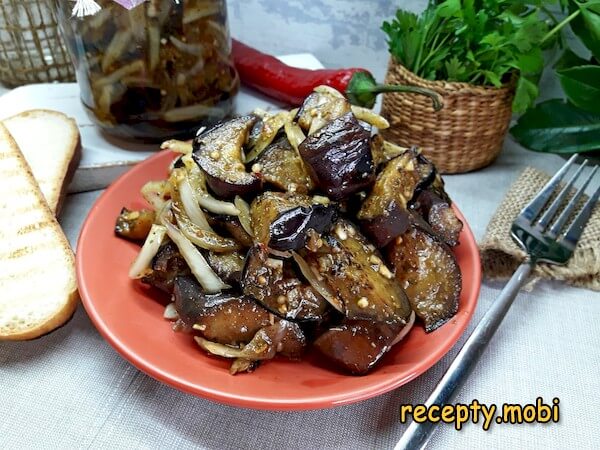
Eggplants for winter in Jewish style keep well even without a cellar, in a heated room. They will happily last until the next harvest, if they are not eaten sooner, because their flavour is much more interesting than that of ordinary caviar – do give them a try.


Tips
- 1
Dry-frying. Because the pieces are coated in oil in advance, you do not need any oil in the pan – just fry them on a dry surface. This keeps the dish from soaking up extra fat and means fewer calories.
- 2
A 3 kg weight for 7 hours. The weight is the secret to the juice: without it the eggplant will not release its juice, and without that juice you do not get the authentic texture.
- 3
Chop the garlic. Garlic crushed through a press gives a sharp taste, whereas finely chopped garlic is milder and more fragrant.
- 4
Shashlik seasoning. A ready-made kebab spice blend is what gives the eggplant its recognisably "Jewish" character. The same idea works in other kinds of eggplant preserves for winter.
FAQ
Which eggplants should I choose? +
Dark-purple eggplants with glossy skin are ideal. White eggplants are a good alternative, being more tender and free of bitterness, and striped varieties also work. Choose fresh, firm, heavy fruit with a green (not dried-out) stalk; a size of about 18–22 cm is best, as there are fewer seeds. Avoid overgrown eggplants with large seeds, as these tend to be bitter, as well as any with brown spots or wrinkled skin. If an eggplant tastes bitter, salt it before frying. Do not peel off the skin – it helps the pieces hold their shape.
What can I use instead of shashlik seasoning? +
There are several options. Khmeli-suneli (12 g) gives a Georgian-style version; a mix of dry paprika, coriander and cumin (about 4 g each) is a more classic choice; a "ten herbs" blend (12 g) is a universal option; curry powder (12 g) adds an Indian note; and an Italian herb mix (12 g) lends a Mediterranean accent. Avoid salted seasonings, which will throw off the salt balance, and sweet ones, which will spoil the flavour. For a spicier version, add 1/4 teaspoon of cayenne pepper.
How long do the eggplants keep? +
In sterilised, sealed jars at room temperature they keep for up to a year, and in a cool cellar for up to about 18 months. Once opened, they last 5–7 days in the fridge. Without the 30-minute sterilising step in the pot they keep at most 2–3 months in the fridge. Label the jars with the canning date. If a lid bulges, do not open the jar – throw it out. Do not store the jars in the sun, or the colour will fade. They are best used within the first 6–8 months. Small 0.5-litre jars are handier to open, and it is best to take a jar out about 15 minutes before serving.
What do you serve them with? +
They make a fine appetiser on their own, spread on buttered bread. They go well with boiled potatoes (the classic pairing) or with fried potatoes, and with steak, shashlik or lamb ribs for a heartier serving. They suit pelmeni and vareniki for a wintry meal, a chilled glass of vodka in the Russian manner, and a rice or buckwheat side, as well as pilaf or fried rice. Try them with boiled chicken or turkey, with fried fish, or with a light beer. They also work for a family dinner alongside mash and meat, with cheese and olives, or as a side to a bowl of borscht. All in all, this is a versatile, savoury appetiser for winter meals.
- Comment
or post as a guest
Be the first to comment.