avg —
Pickled Beets for Winter in Jars

Instructions
I prepare the ingredients. Beets of any size are fine for sealing – from the smallest to the very largest. The main thing is that they are sweet, free of white streaks and a dark burgundy colour. I prepare the jars and lids, sterilising them by any convenient method – over steam, in the oven or in the microwave.
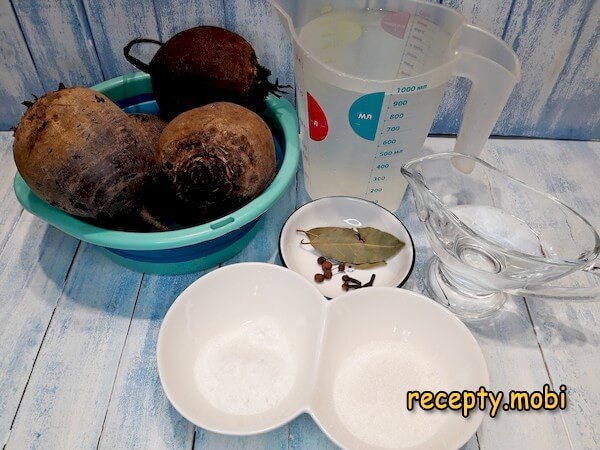
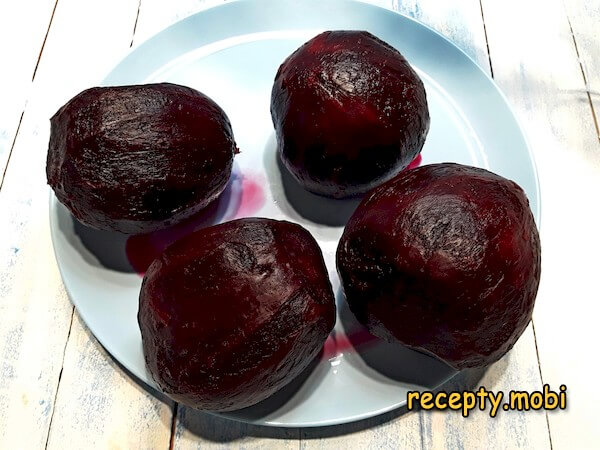
I boil the beets in plain water. Small ones cook in half an hour, while large ones need an hour or even more. I check for doneness by piercing the roots with a fork – it should slide easily all the way to the centre. Then I peel the beets, which is very easy to do under cold running water.
Next I cut the beets into 1.5 cm cubes. You can also grate them on a coarse grater or even on a special Korean-carrot grater – it all depends on how you plan to use the preserve. Cubes can go straight into a vinaigrette, any salad, or borscht. Grated beet strips are handy for salads, herring under a fur coat and borscht. Whether you grate the beets or cube them is up to you; it makes no difference to the taste.
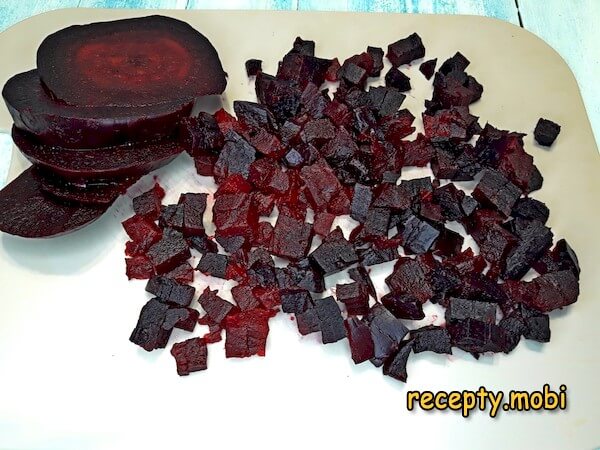
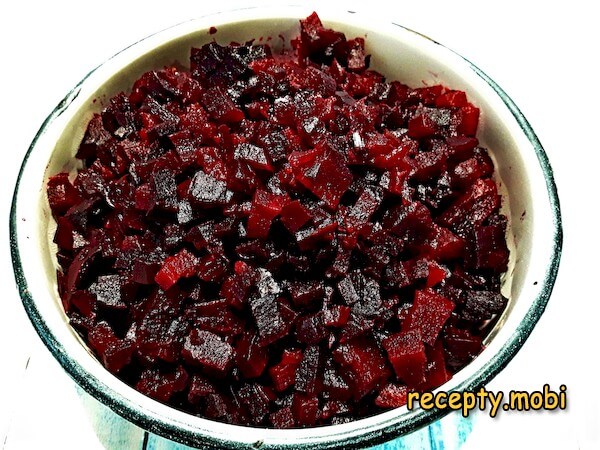
I process all the beets the chosen way – it is important that all the pieces are roughly the same size, so they soak up the marinade evenly during the 2 minutes of cooking.
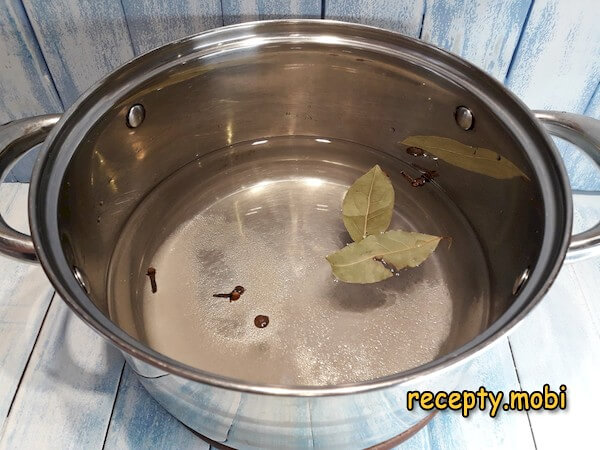
For the marinade, I put the salt, sugar, cloves, allspice and bay leaves into a pot of water and set it on the heat. I boil the marinade for 5 minutes so the aroma of the spices opens up as fully as possible in the hot liquid.
Then I add the prepared beets to it – I tip them all in at once and stir gently so the pieces sink evenly into the hot marinade.
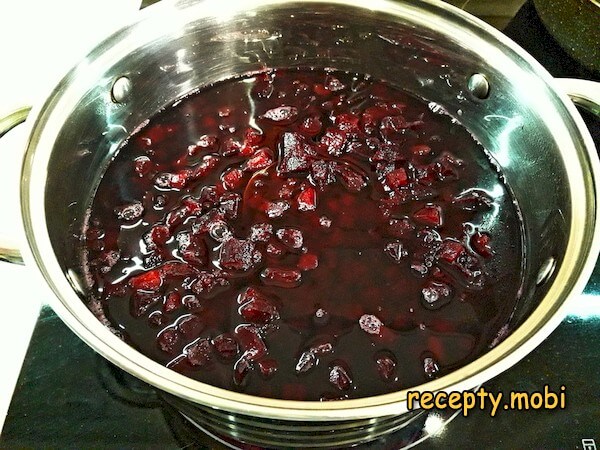
I bring everything up to a boil and pour in the vinegar. I add the vinegar at exactly this point, into the boiling marinade, so the acid dissolves evenly throughout and does not boil away during cooking.
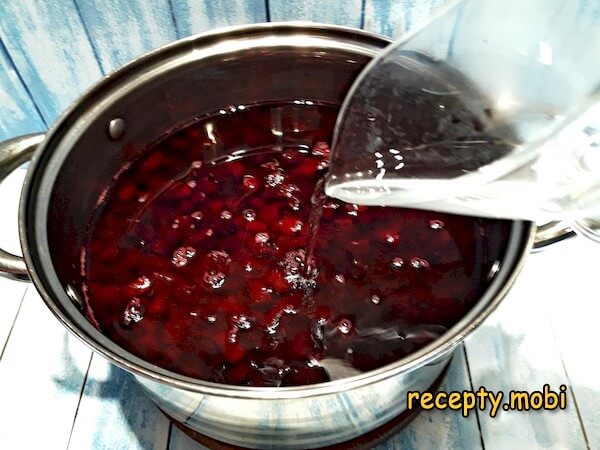
Next I boil the beets for exactly 2 minutes, no longer – you must not keep them on the heat any longer, or the cubes will lose their firmness and texture. 2 minutes is just enough for the beets to soak up the marinade while staying firm.
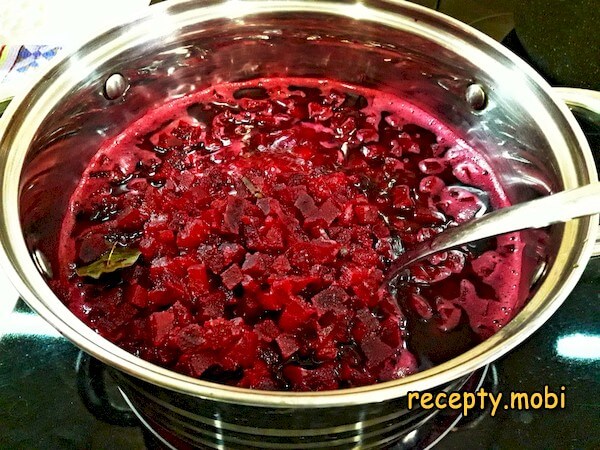
After that I divide the beets together with the marinade among the jars, filling them right to the top – the smallest possible air gap means the best keeping quality for the whole winter.
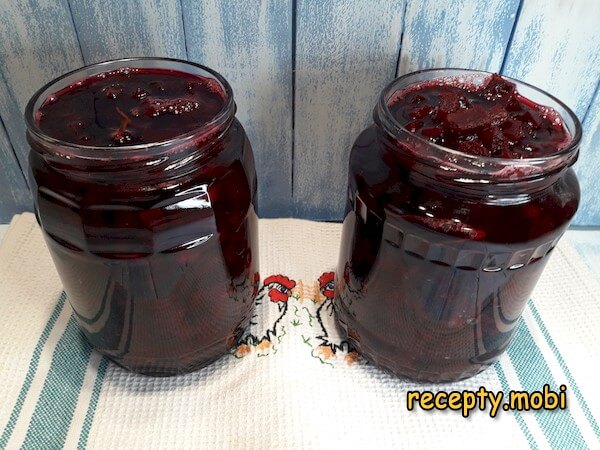
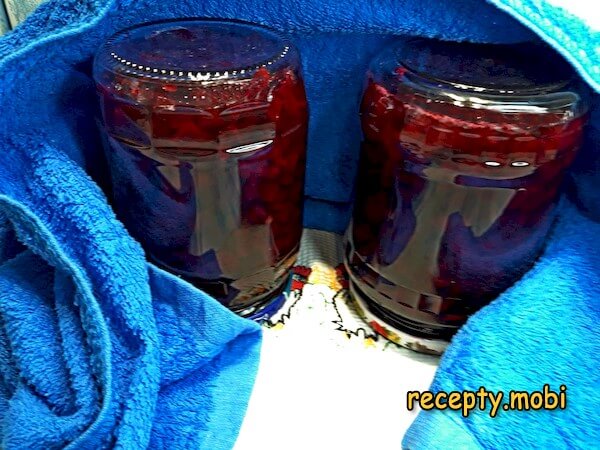
I screw on the lids and turn the jars upside down – this way the lid is sterilised by the hot marinade and the tightness of the seam is checked.
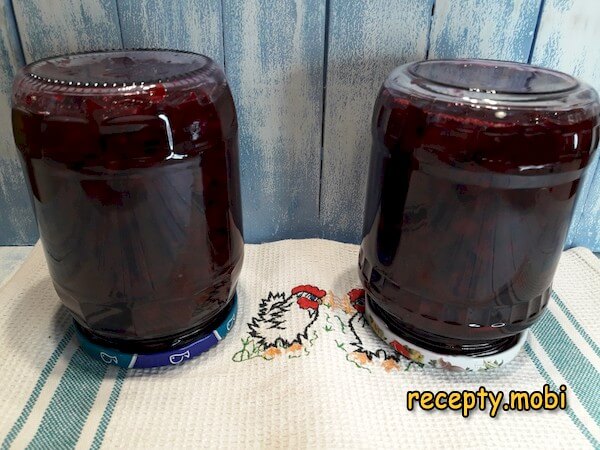
If everything is done right and the lids are not leaking, I wrap the jars in a blanket and leave them until completely cool – slow cooling under a blanket works as extra pasteurisation and improves the tightness of the seam.


Tips
- 1
2 MINUTES OF BOILING WITH VINEGAR – the secret to firm cubes. Long repeated boiling after the vinegar makes the beets soft and stringy – they fall apart in the jar and lose their texture. Exactly 2 minutes is just enough for the pieces to soak up the marinade inside while staying firm and springy on the outside. This preserve does not like being overcooked.
- 2
CHOICE OF VARIETY – the secret to colour and sweetness. Ideal are dark burgundy sweet varieties such as Cylindra, Bordo or Detroit. They give the marinade a rich colour and a sweetish taste. Pale, yellow-pink varieties are less suitable – the colour comes out faint and the taste watery. Before cutting, I check the variety by the cross-section: if it is dark purple inside with no pale rings, the beet is top grade.
- 3
ONE SIZE – the secret to evenness. All the cubes or all the strips should be the same calibre. If one batch has pieces of different sizes, the small ones will be over-salted and over-soaked while the large ones are still not done. A Korean-carrot grater gives perfectly uniform beet strips – it is the most convenient option for borscht.
- 4
USE IN BORSCHT – the secret to saving 30 minutes. Ready pickled beets turn making borscht into a 30-minute job – no boiling, peeling or sautéing of beets. I simply tip the contents of the jar into the finished stock with the vegetables – along the lines of borscht with pickled beets and sauerkraut. It is one of the most convenient semi-prepared winter preserves.
FAQ
How long do pickled beets keep? +
In a cool pantry at 8–15°C – up to a year without loss of quality. In an ordinary kitchen cupboard at room temperature – up to 8–9 months. Once the jar is opened – 5–7 days in the fridge under the lid. Signs of spoilage: a bulging lid, cloudy marinade with fermentation bubbles, a film on the surface, a sour or fermented smell – such a jar I throw out without regret. When the method is followed, the preserve keeps reliably all season, even at room temperature in a kitchen cupboard.
What can you make from pickled beets? +
A universal preserve with dozens of uses. A standalone salad: pickled beets + onion + vegetable oil + garlic – 5 minutes to assemble. Vinaigrette: I add them as a ready component without separately boiling beets. Herring under a fur coat: grated pickled beets straight from the jar on the top layer – brighter and faster than with boiled beets. Borscht: in the same way as pickled cauliflower with beets "Pink Clouds" you can make a "pink" borscht in half an hour. A starter alongside grilled meat, an addition to hot meat dishes – it is fitting everywhere.
Can the 9% vinegar be replaced with another? +
Yes, in equivalent proportions. Substitutions: 6% apple cider vinegar (105 ml instead of 70 ml – milder, with a fruity note), 6% white wine vinegar (105 ml – neutral), 70% vinegar essence (9 ml = 70 ml of 9%). Do not use: balsamic (dark, it will turn the marinade brown), 4% rice vinegar (too weak for reliable preserving); fresh lemon juice is not suitable either, as it does not have the acid concentration needed for long storage. For the classic version, use 9% table vinegar.
Should the beets be pickled cubed or in strips? +
It depends on the intended use. 1.5 cm cubes are the universal option for all salads, vinaigrette, borscht and as a standalone starter. A coarse grater gives strips – handy for herring under a fur coat, vinaigrette, and for adding to borscht as a ready beet dressing. A Korean-carrot grater gives thin, long strips, handy for "Korean" salads, side dishes and as a garnish for dishes. I usually make two jars with different cuts – so there is a choice to suit the task.
- Comment
or post as a guest
Be the first to comment.