avg —
Pickled Cucumbers with Flowers (Marigolds)

Instructions
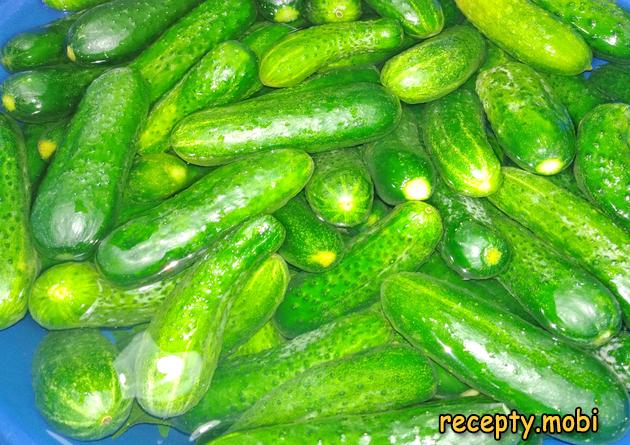
Prepare the cucumbers. Choose fruits of roughly the same size – 7–10 cm long, firm, with bumps (pickling varieties such as Parisian Gherkin, Rodnichok or Nezhinsky). Smooth salad varieties are not suitable – they turn soft and tasteless in the brine. Soak the cucumbers for 1.5–2 hours in cold water – this is the secret of crunchy pickled cucumbers. During this time the cucumbers drink up water and become firm and springy. Without soaking they come out loose and limp. Then take the cucumbers out of the water, thoroughly wash each one with a brush to remove dirt and prickles, and lay them out on a towel so the water drains off completely. Cut the ends off both sides of each cucumber – this helps them soak up the brine better.
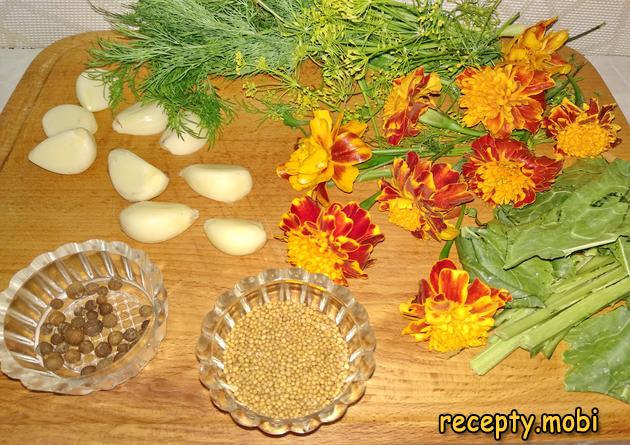
Prepare the spices from the list. Dill greens and umbrellas are the classic of pickled cucumbers and give that characteristic Russian aroma. Horseradish root, or the leaves with their stems, keeps the cucumbers crunchy thanks to its phytoncides. A few cloves of garlic add piquancy. The main highlight of the recipe is the marigold flowers (tagetes, or chornobryvtsi). These are edible flowers, used as a spice in the cuisines of the Caucasus, Georgia and Uzbekistan; in Georgia dried marigold is an essential part of the khmeli-suneli spice blend. The flowers must be free of chemical treatment – from your own garden or a friend's plot. You can use fresh marigolds (just picked in summer) or dried ones (prepared earlier); the aroma is the same, though fresh flowers have more essential oils. Use only the flower head – do not add the stems and leaves.
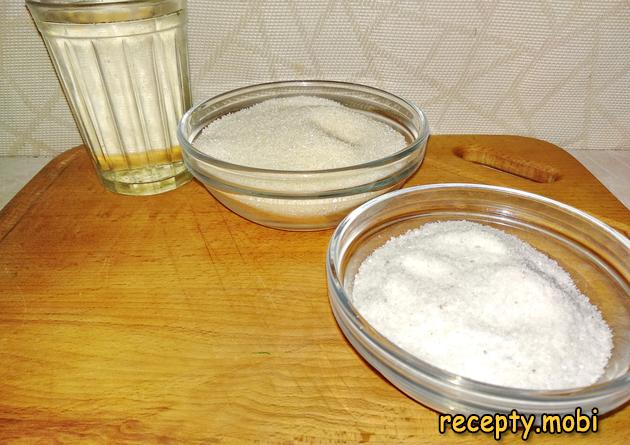
Measure out the right amount of salt (4 tbsp), sugar (8 heaped tbsp) and 9% vinegar (250 ml) for the brine for 3 jars of 1.5 l. Per 1 litre of water that is 2.5 tbsp salt, 4.5 tbsp sugar and 145 ml vinegar.
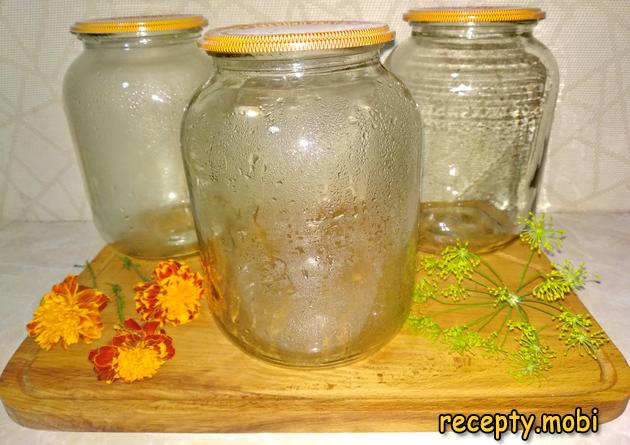
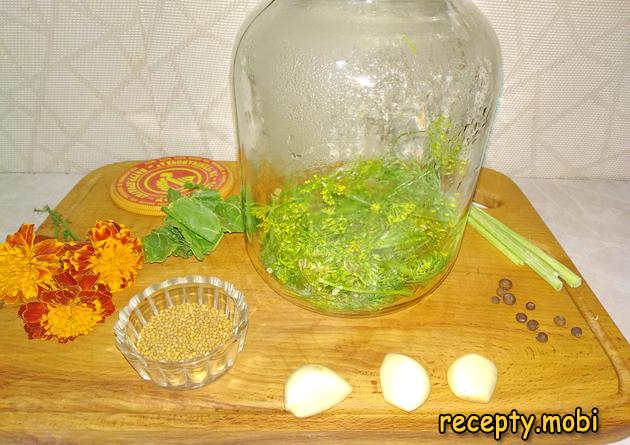
Prepare three 1.5 l glass jars and metal lids. Wash the jars thoroughly in a hot soda solution and sterilise them by any convenient method, then boil the lids. You can sterilise over steam from a kettle for 5 minutes, in the oven at 100°C for 10 minutes, or in the microwave with 2 tbsp of water for 3 minutes at 800 W; boil the lids separately for 5 minutes. 5. Put a bunch of spices on the bottom of each jar: dill greens and umbrellas (1–2 sprigs), 10 allspice berries, 1 tsp mustard seeds, and a few pieces of horseradish root or a small part of a leaf with its stem. This mixture is the base of classic pickled cucumbers.
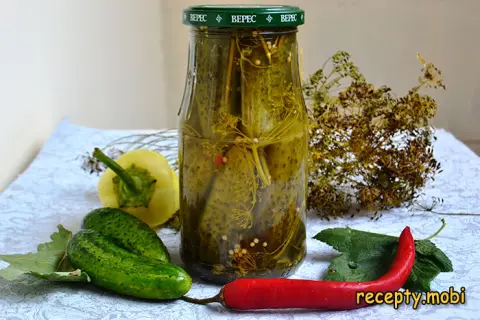
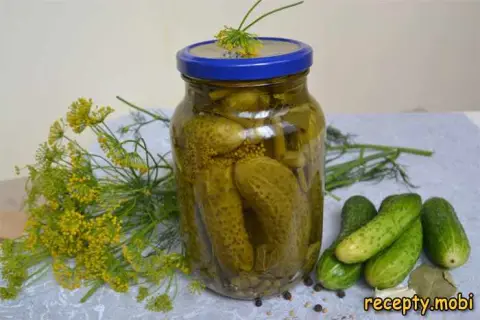
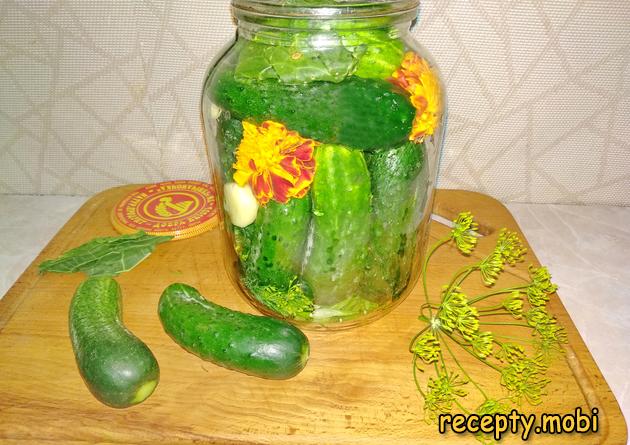
Pack the cucumbers tightly into the jar, vertically or horizontally, close together. Cucumbers 7–10 cm long are ideal for a 1.5 litre jar – they fit by height without trimming. One jar takes about 1 kg of cucumbers. Cut 3 cloves of garlic (for one jar) in half and tuck them into the gaps between the cucumbers, so the piquant aroma spreads evenly through the jar. Add 3 marigold flowers – the highlight of the recipe; you can sink them between the cucumbers or lay them on top. Cover the top of the jar with a small horseradish leaf – it closes off the cucumbers and adds extra crunch through its phytoncides. Fill all 3 jars in the same way.
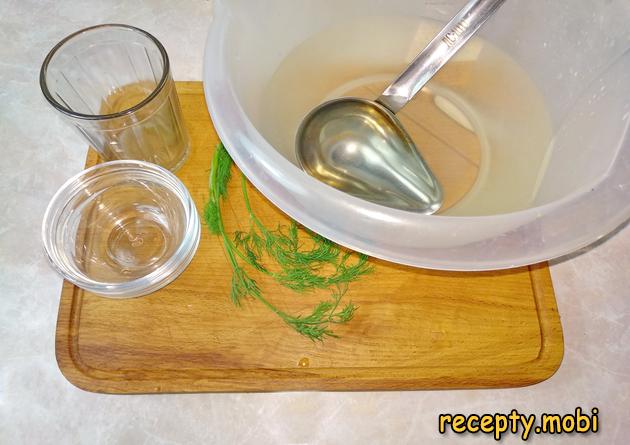
Make the brine. Pour clean water (1750 ml) into a pot. Add rock salt (4 level tbsp) and sugar (8 heaped tbsp). Put it on the heat and bring to the boil, stirring well until the salt and sugar dissolve completely, and boil for 2 minutes. Right at the end pour in 9% table vinegar (250 ml), which gives the pickling power. Do not boil it long with the vinegar – it will evaporate. Take the boiling brine off the heat at once.
Pour the boiling brine into all 3 jars right to the very top, so the cucumbers and spices are completely covered. If there is not enough brine, top up with boiling water to the shoulders of the jar. Cover the jars loosely with the sterilised lids (do not seal them yet) to keep dust out during sterilisation.
Immediately seal the jars with a canning key or screw on twist-off lids. With twist-off lids the canning is even easier and faster.
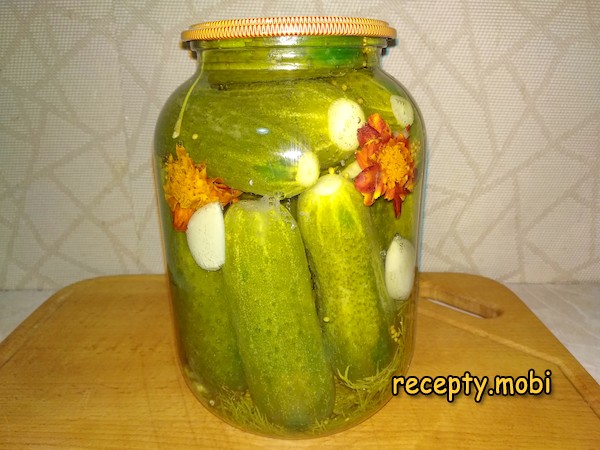
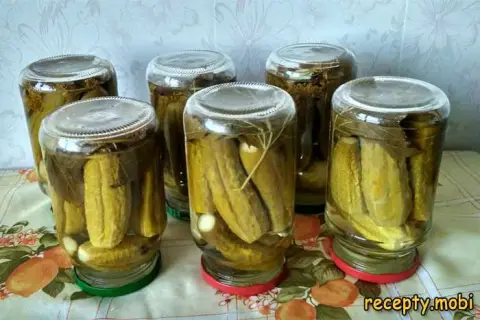
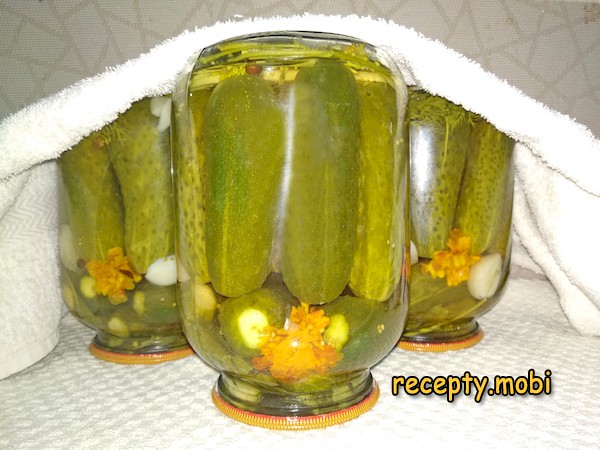
Turn the jars upside down to check that they are airtight and set them on their lids on a towel. Cover them with a thick towel or a blanket and leave for a full day until completely cool.
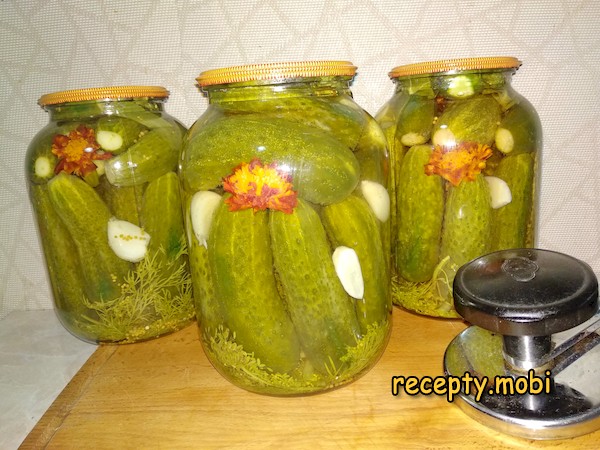
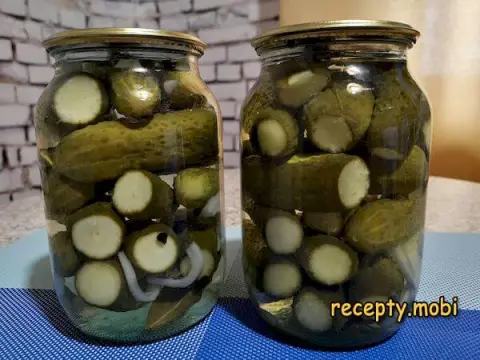
After a day, move the jars to a pantry or cellar to keep until winter. The pickled cucumbers with marigolds for the winter are ready! Open them in 2–3 weeks so the flavour can fully ripen.


Tips
- 1
Always soak the cucumbers in cold water for 1.5–2 hours – this is the secret of crunchy pickled cucumbers.
- 2
The marigolds must be free of any chemical treatment – from your own garden, not the bouquet flowers sold in shops.
- 3
Sterilise for only 2–3 minutes – any longer and the cucumbers will turn to mush. On a similar principle I also make classic pickled cucumbers.
- 4
Add the vinegar right at the end of the brine – long boiling will kill its pickling power.
FAQ
Are marigolds safe to eat? +
Yes, marigolds (tagetes) are edible flowers that have long been used in the cuisines of the Caucasus, Georgia, Uzbekistan, Mexico and India. In Georgia, dried marigold (Imeretian saffron) is an essential ingredient of the famous khmeli-suneli blend and is used in kharcho soup and other classic dishes. In Uzbekistan it goes into pilaf and shurpa. In Mexico marigolds are part of the Day of the Dead. In Russia they have traditionally been used as a cheap saffron to colour pilaf, rice and marinades. Important: use only flowers that are free of chemical treatment – from your own garden or a friend's plot. Bouquet marigolds sold in shops are not suitable, as they are sprayed with pesticides against pests.
Where can I get marigolds for preserving? +
The main sources. Your own garden or plot: marigolds are undemanding annuals that grow well in any soil and flower from June to October. Plant 5–10 bushes in spring and by August you will have a harvest for preserving. Fellow gardeners: ask neighbours with a garden for untreated flowers. Dried marigold among spices: Imeretian saffron in Georgian spice shops or online stores. Eastern spice shops: markets in the eastern regions of Russia. Do not use: bouquet marigolds from shops, or flowers from city flower beds (they are sprayed with chemicals and dusty).
How long do pickled cucumbers keep? +
Properly sterilised and sealed jars keep in a cool dark place (5–15°C, a cellar or pantry) for up to 1–2 years. Keep an opened jar in the fridge for up to 14 days under the lid. On a flat balcony (with no temperature swings or frost) they keep for up to 1 year. Signs of spoilage: a bulging lid (fermentation), cloudy brine, mould on the surface, an unpleasant yeasty smell – throw such jars away, as they are dangerous to eat. The best flavour comes 2–3 weeks after canning, when the cucumbers have fully absorbed the brine and the aroma of the marigolds. By the New Year the preserve will be perfectly ripe.
What do you serve pickled cucumbers with marigolds with? +
They are ideal as a winter snack with strong drinks (vodka, brandy, whisky) – a piquant taste and a pretty orange-and-green look. With meat: fried pork, shashlik, cutlets, boiled beef, hunter's sausages. With fish: fried pike-perch, smoked mackerel. With potatoes: boiled with butter, mashed, or country-style. For a festive table, serve an assortment with pickled tomatoes, mushrooms and garlic. From drinks for serving on their own – compote, fruit drink, kvass or light beer. On the New Year table they make an unusual snack for guests, one that will surprise everyone with the beautiful flowers in the jar.
- Comment
or post as a guest
Be the first to comment.