avg —
Vegetable Assortment for Winter Without Sterilization

Instructions
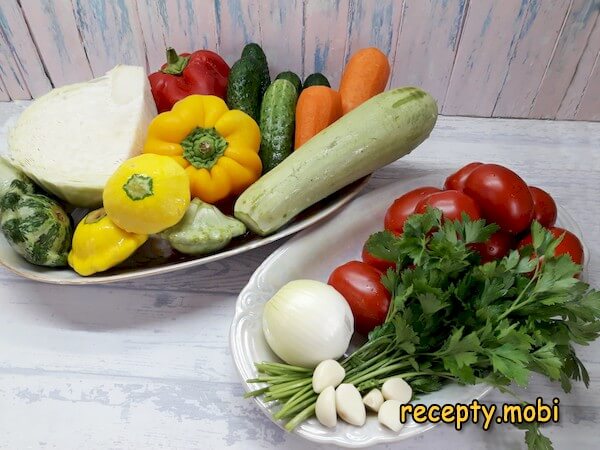
I prepare the vegetables for the assortment.
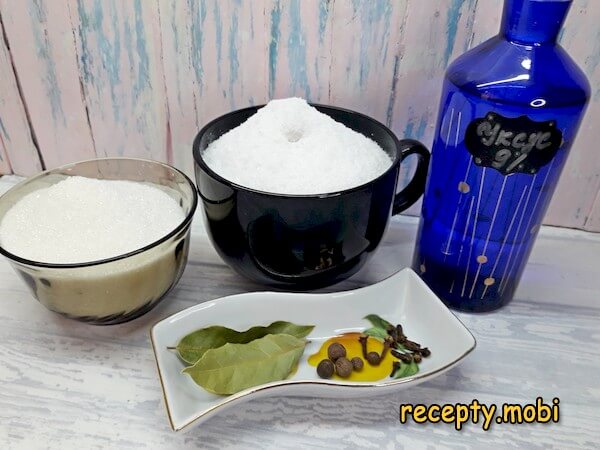
And the marinade ingredients too.
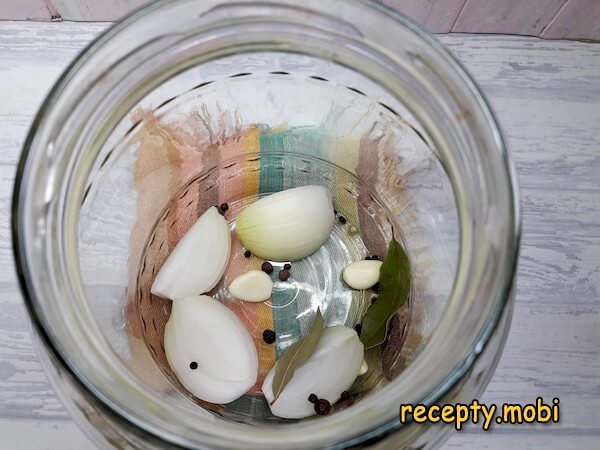
Straight away I put water on to boil – about 1.5 L for the pattypans and carrots, which need a little thermal treatment first. Meanwhile, I drop the quartered onion, whole garlic cloves, bay leaves and peppercorns into the jar.
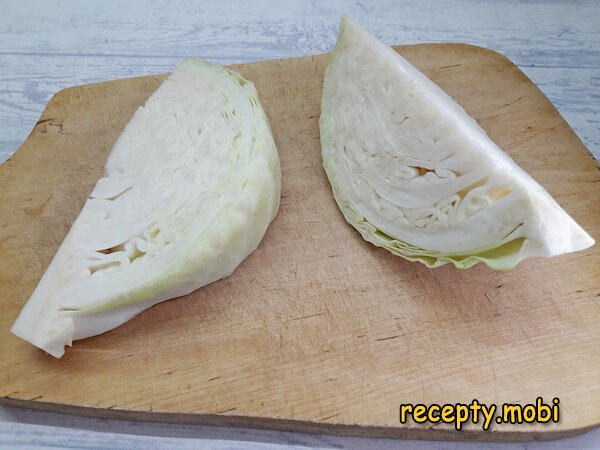
I cut the cabbage into small wedges, each one keeping a little of the stump so the leaves don't fall apart.
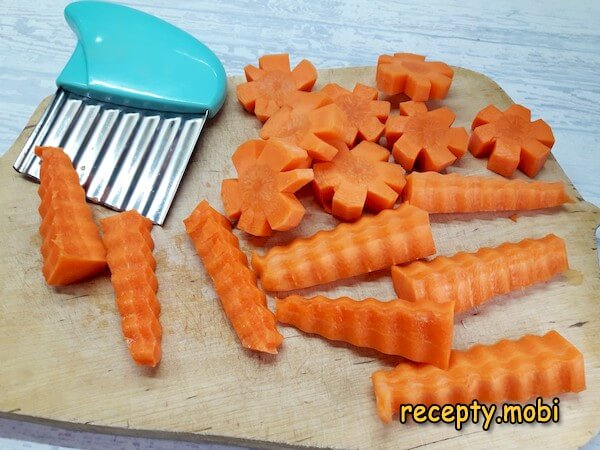
I cut the carrots into decorative shapes – flowers and fluted sticks.
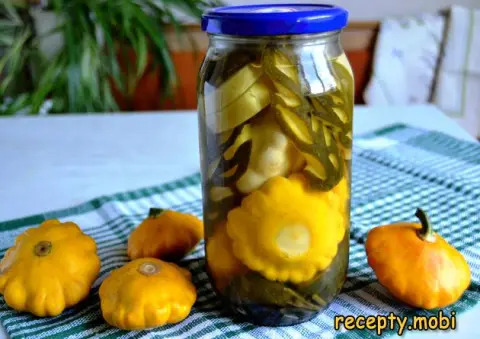
I trim the ends off the pattypans.
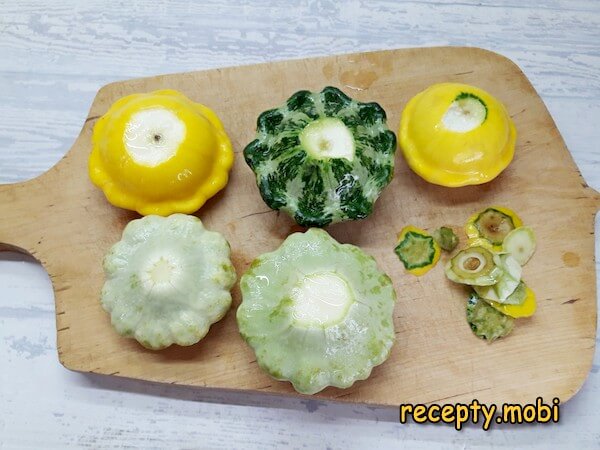
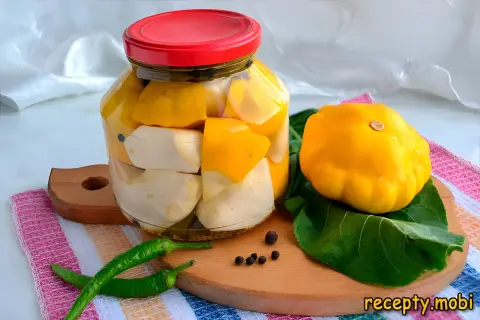
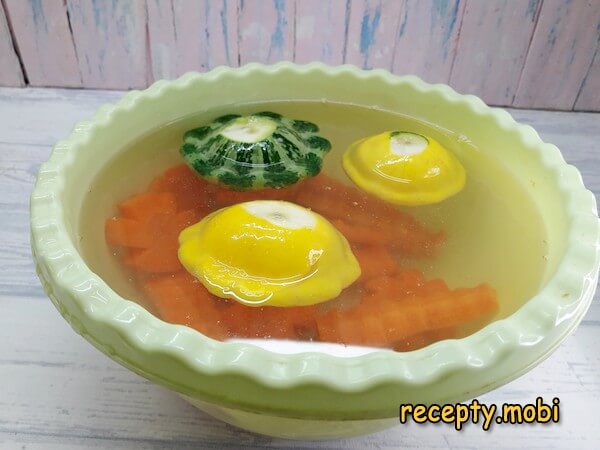
I put the firm pattypan varieties (the yellow and striped ones) into a deep bowl along with the carrots. The ones the colour of zucchini need no extra treatment. I pour boiling water into the bowl and leave it for 7 minutes.
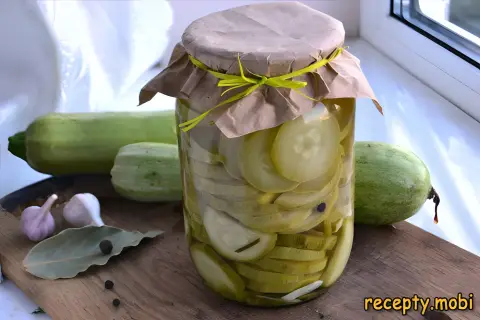
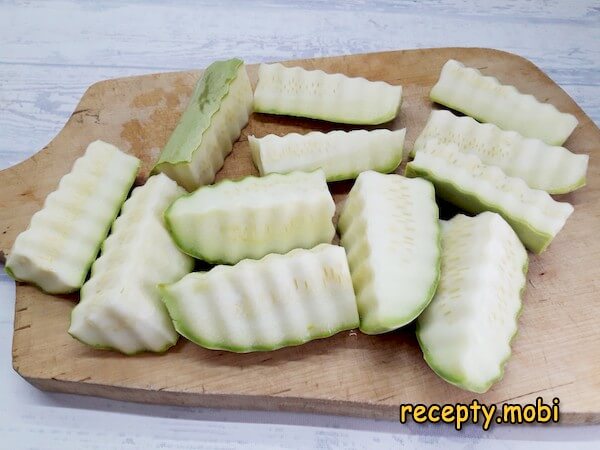
I put a pot of water (about 2.5 L) back on the heat. I cut the zucchini into rough pieces.
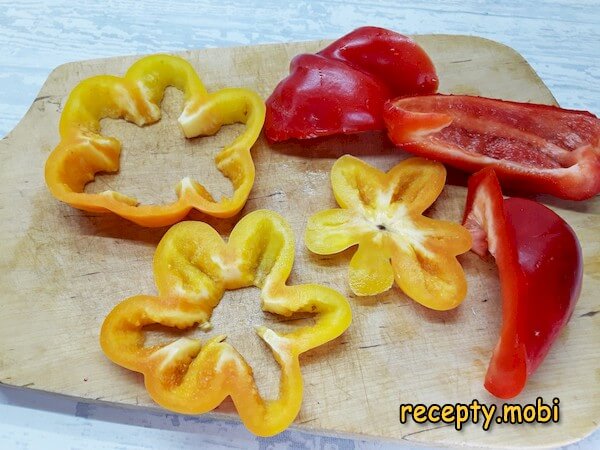
I prepare the colourful peppers.
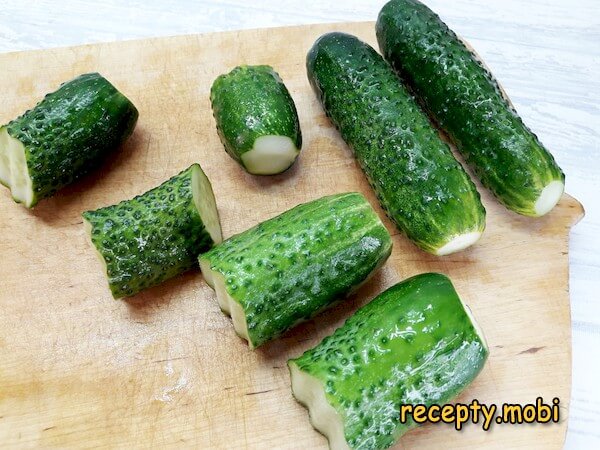
I cut the medium cucumbers in half and leave the little cornichons whole.
So the tomato skins don't burst in the hot water, I make a few punctures around the stem with a toothpick.
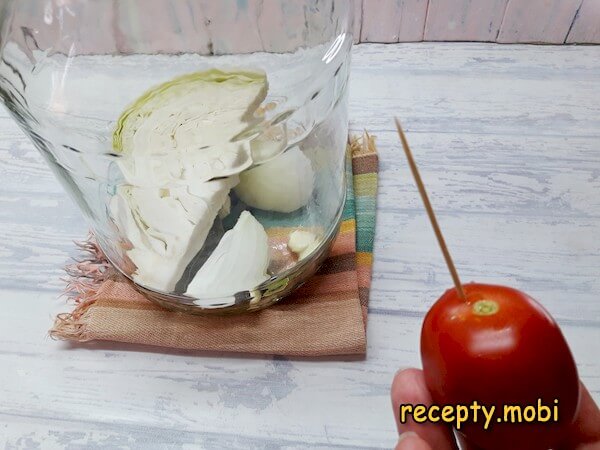
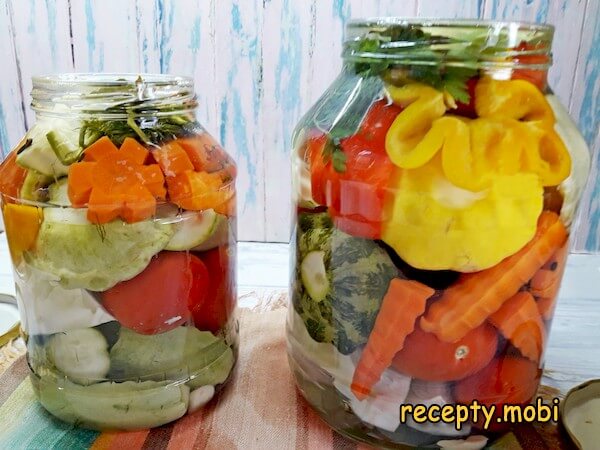
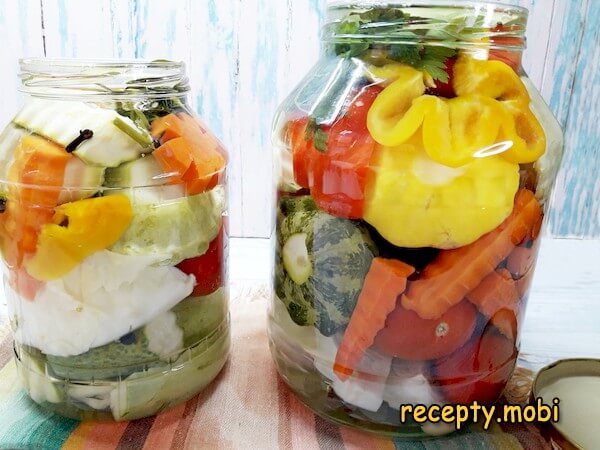
I load the cabbage and tomatoes into the jar.
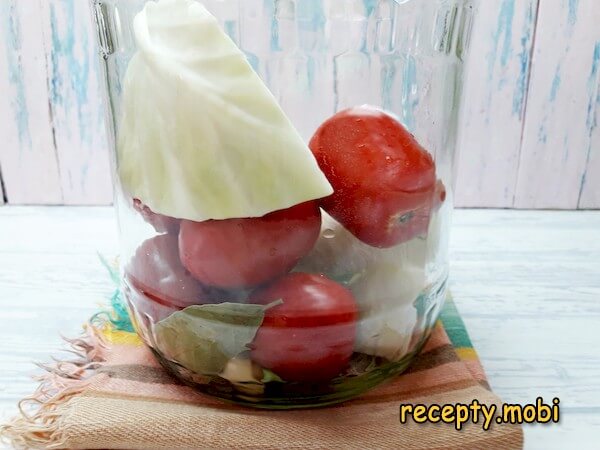
Next, the pattypans and carrots.
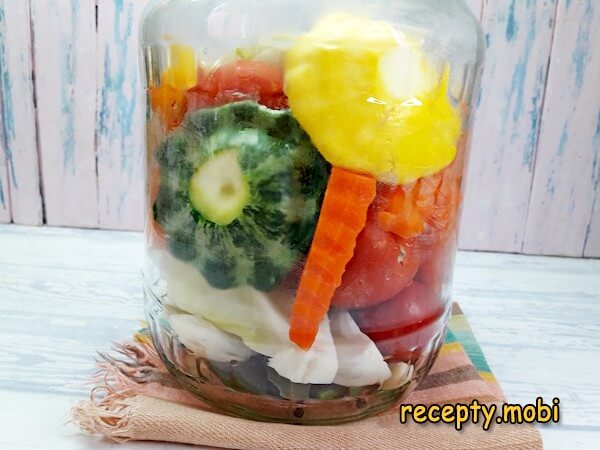
I tuck the sweet peppers in against the walls.
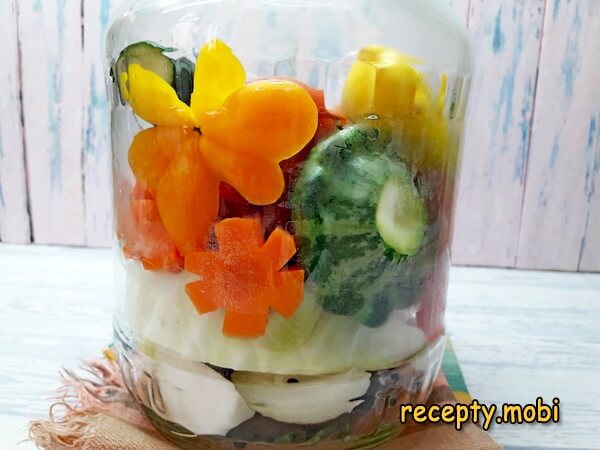
I load in the cucumbers.
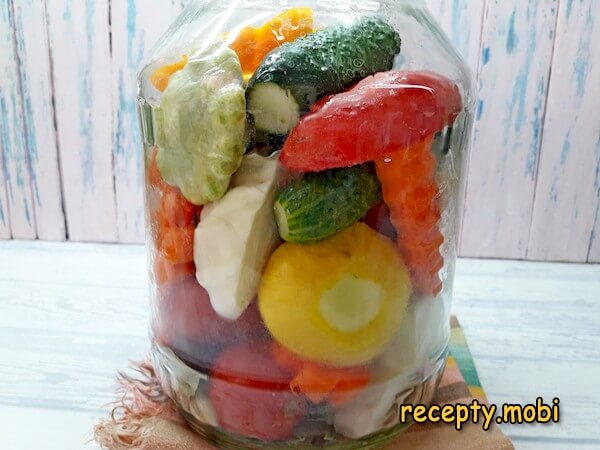
I fill the free spaces with the remaining vegetables.
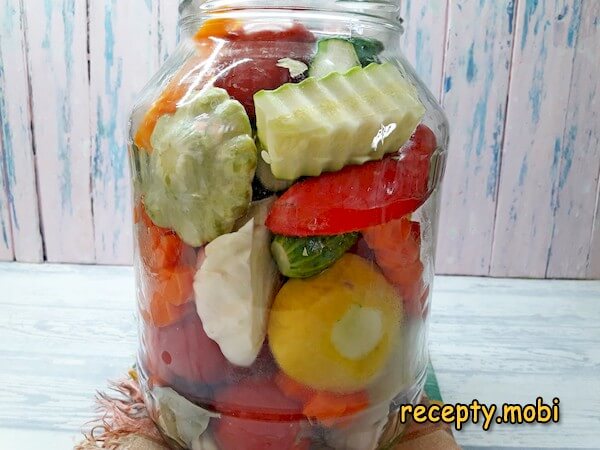
I hold the top in place with a bunch of parsley.
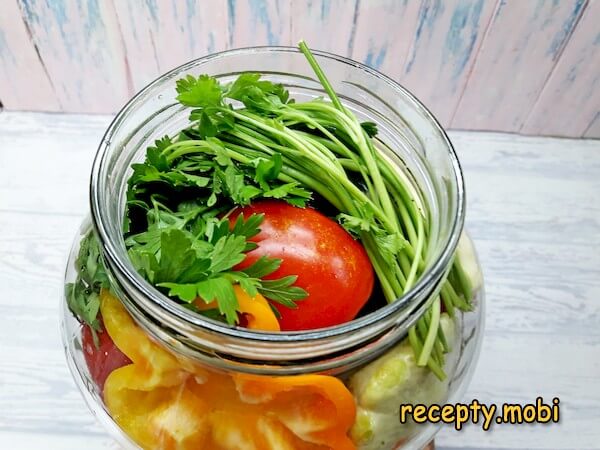
I pour boiling water over the vegetables for the first time. I cover with a lid and let them stand like this for 40 minutes.
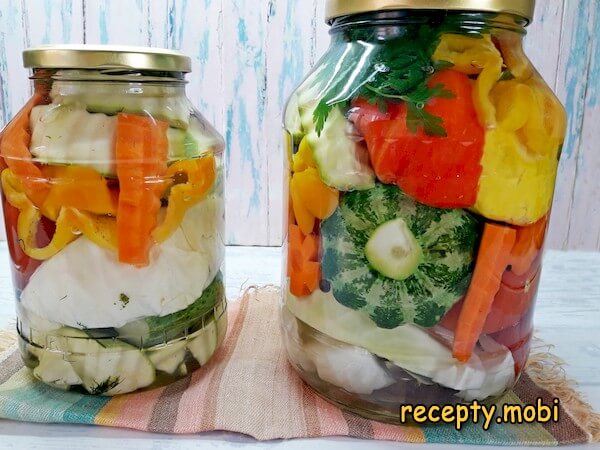
I drain the water – not into the sink, but into a measuring cup, so I know the exact volume of liquid needed. These jars take about 2 litres.
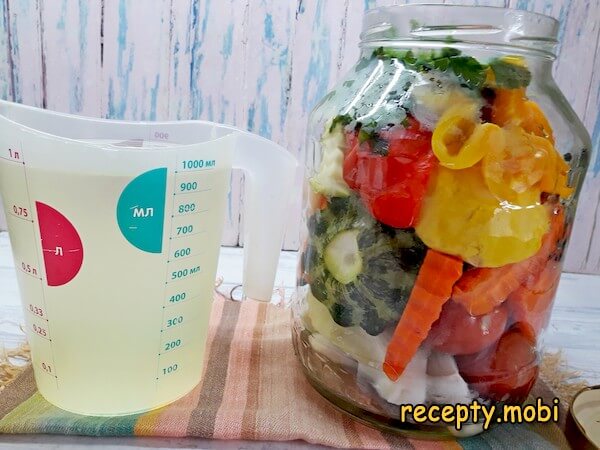
I boil the water a second time and pour it over the vegetables again, letting them stand for half an hour, then drain the water once more.
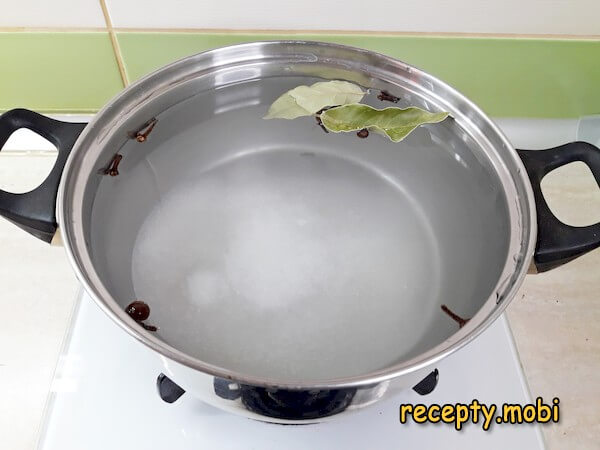
Meanwhile, I make the marinade from 2 litres of purified water (for this example). I put all the listed ingredients except the vinegar into a pot.
Once the solution boils and the dry ingredients have dissolved, I pour in the vinegar. With the lid on (so the vinegar vapours don't escape), I boil everything for 1 minute.
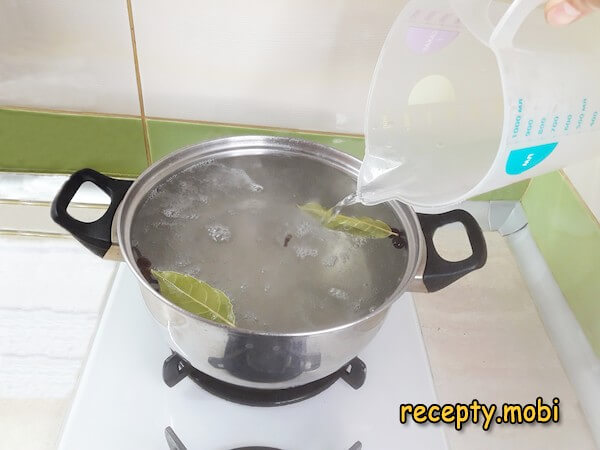
I pour the marinade over the vegetables, distributing the seasonings evenly.
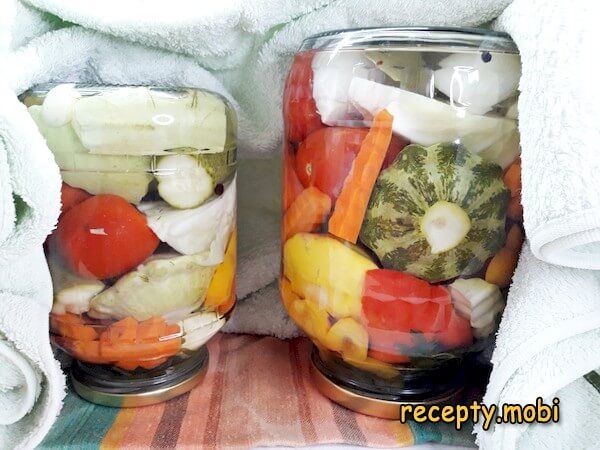
I screw the lids onto the jars, turn them upside down and make sure the seals are airtight. Then I wrap them in a towel and leave them for 12 to 15 hours to cool slowly.


Tips
- 1
THE DOUBLE BOILING-WATER POUR – the "secret" of keeping without sterilisation. 40 + 30 minutes under the lid means the vegetables are heated through twice.
- 2
PRICK THE TOMATOES – the "secret" against cracking. A toothpick around the stem keeps the skin from bursting in the boiling water.
- 3
A BUNCH OF PARSLEY ON TOP – the "secret" of shape. The greens hold the vegetables in place and stop them floating up when you pour the liquid in.
- 4
MEASURE THE WATER – marinade accuracy. The water you drain off is the guide for working out the marinade. The same principle works in other kinds of vegetable assortment for winter.
FAQ
Which vegetables can I add? +
To the ones listed you can add: cauliflower (florets, 200–300 g), broccoli (florets, 200 g), green beans (200 g), baby corn cobs (200 g), young turnip (150 g), round radishes (200 g) and sweet cherry tomato varieties (200 g). Not suitable: beetroot (it will turn the whole assortment red), large carrots (they go woody) and aubergine (it turns "slimy"). Fresh garden vegetables are the "premium" option. Greenhouse ones will also do, but are less crunchy. For a "premium" version, add grapes (50 g) and currant berries (50 g). For a "budget" version, leave out the pattypans and zucchini.
What can I use instead of vinegar? +
Alternatives: 6% apple cider vinegar (75 ml – milder), wine vinegar (50 ml – "European"), balsamic (30 ml + 20 ml water – "premium"), 70% vinegar essence (8 ml + 42 ml water – more compact) and citric acid (1 tsp + 50 ml water – no aroma). Natural 9% vinegar is the "classic". The brands "Mr. Ricco", "Baltimor" and "Buratino" are reliable ones. Do not use: vinegars flavoured with herbs or honey, or any that are past their date. For a "spicy" version, add 1 tsp of ground red pepper. For a "mild" one, reduce the vinegar to 35 ml. For "premium" keeping, 50 ml of 9% vinegar is a must.
How long does the assortment keep? +
In sealed jars at room temperature – up to a year. In a cool cellar – up to a year and a half. Once opened, in the fridge – 5 to 7 days. Label the jars with the canning date. If a lid bulges, don't open it – throw it away. Don't keep it in the sun, or the colour will "fade". It is best used within the first 8 to 10 months. Can it in 1- to 3-litre jars – they are easier to open. Before serving, take it out 15 to 20 minutes ahead (cold "dulls" the flavours). Without the 12 to 15 hours under a blanket, cut the shelf life to 6 months. Don't leave an open jar at room temperature for longer than 4 hours.
What do you serve the assortment with? +
As a standalone appetiser with a hot meat dish. With fried or boiled potatoes. With steak, shashlik or lamb ribs – the "manly" serving. With pelmeni and vareniki – the "winter" one. With a shot of cold vodka – the "Russian" one. With a rice side or buckwheat. With pilaf or fried rice. With boiled chicken or turkey. With fried fish. With light beer – the "bar" serving. For a "family dinner" – with mashed potato and meat. With cheese and olives – the "Mediterranean" serving. As an appetiser alongside a bowl of borsch. With meat pies. A versatile preserve for winter meals.
- Comment
or post as a guest
Be the first to comment.