avg —
Leek for winter

Instructions
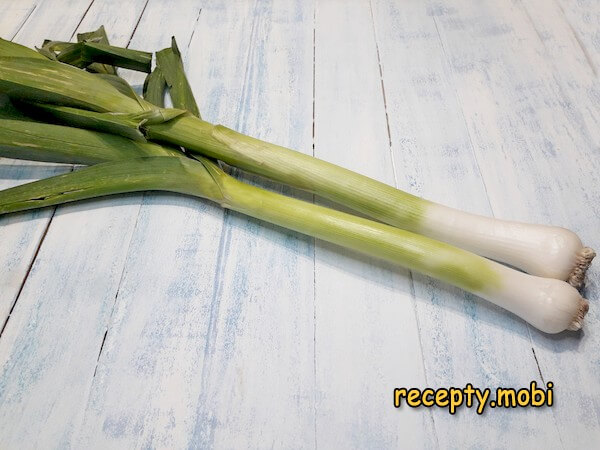
I prepare the only ingredient – the leek needs thorough washing, especially in the leaf axils, where most of the dirt collects. Sand and soil build up between the tightly packed leaves and will not rinse out with a simple wash. Then I blot the stalks with a paper towel, since moisture interferes with the drying that follows.
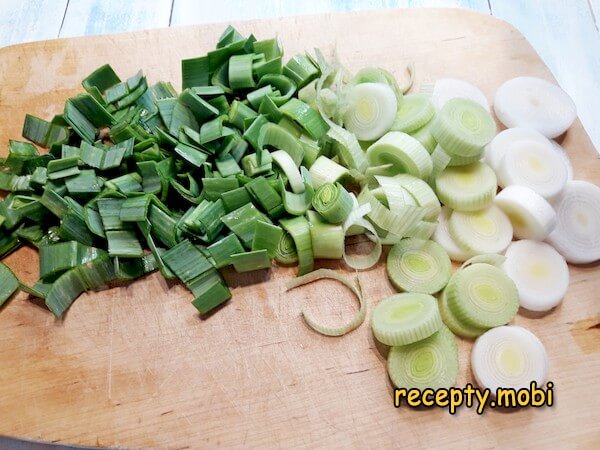
I slice the white part of the leek into rings. The green tops matter too – these I shred thickly into strips. The white part is more tender and slightly sweet, the green more aromatic and coarser; both are needed for different culinary jobs.
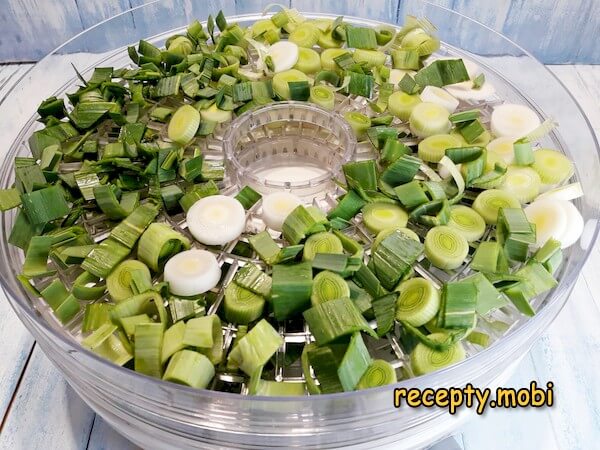
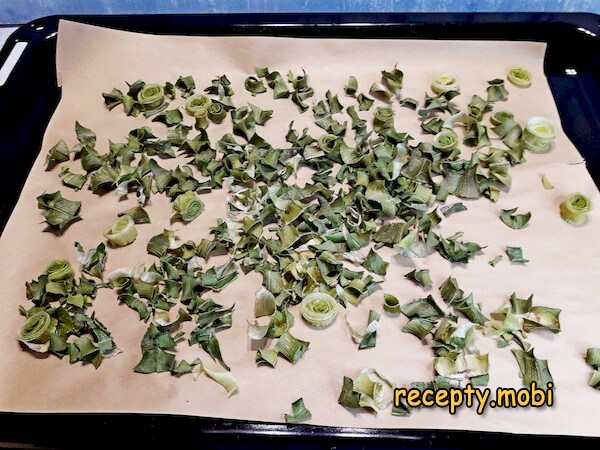
Part of the slices is worth drying. For this I take more of the green pieces – they give more aroma once dried. If you have a food dehydrator, the process is easier: I spread the slices on the rack and set the temperature to 50 degrees. Higher, and the aroma escapes with the steam; lower, and the drying takes a full day.
You can also dry leek in the oven with top and bottom heat and the convection switched on – the oven door should be held slightly ajar so the moisture can escape. The temperature is the same as in the dehydrator – 50 degrees.
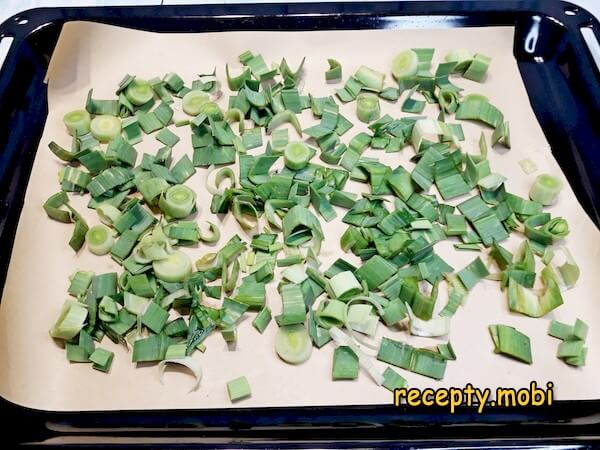
I dry the leek until it turns brittle – this takes about 2.5–3 hours. Properly dried leek snaps like a dry leaf rather than bending – that is the main sign it is ready. Under-dried leek will later rot in the jar from the leftover moisture.
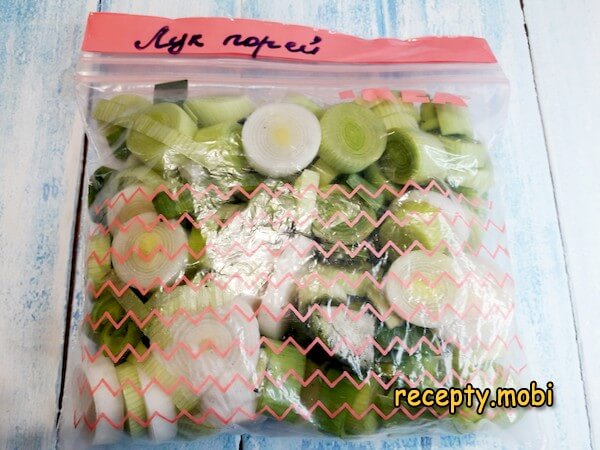
The second part of the leek, where there is more of the white stem, I put into a bag and send to the freezer. Freezing preserves the tenderness of the white part better than drying – in winter it can be used in soups and sauces like fresh leek.
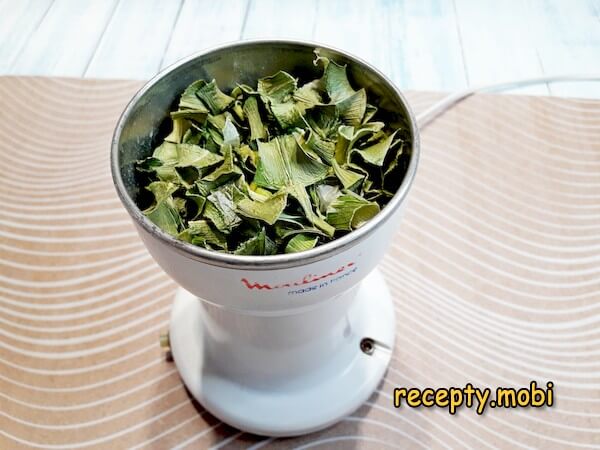
Dried leek can be stored as large shavings (just as it dried), or you can transfer it to a coffee grinder to grind it down – a fine crumb takes up far less room in the jar.
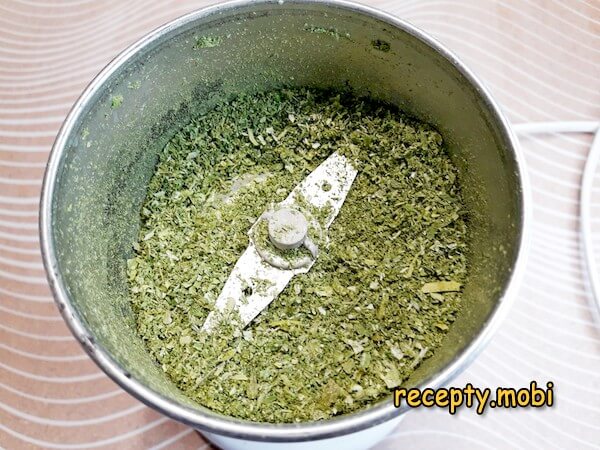
I grind the leek into a fine crumb – the finished seasoning spreads more quickly through hot dishes and does not stick out in large pieces in soups.


Tips
- 1
Wash inside the leaf axils – the "secret" against grit. Dirt collects in the leek between the tightly packed leaves, and simply rinsing the outside does not reach it. I carefully spread the leaves apart with my fingers under running water – the sand washes out completely.
- 2
50 °C for drying – the "secret" to keeping the aroma. Above 60 °C the leek's aromatic essential oils escape with the steam and the finished dried leek is bland. At exactly 50 °C the aroma is preserved, and the leek slowly loses moisture without losing its qualities. The same trick works in mushroom marinade for one litre of water for winter.
- 3
The crunch as a sign of readiness – the "secret" against mould. Under-dried leek with leftover moisture develops mould in the jar within 2–3 weeks. Ready leek should snap with a crunch, like a dry leaf – there is no moisture inside and it keeps for years.
- 4
Two methods at once – the "secret" of versatility. Drying alone, and in winter you have no "fresh" leek for salads and sauces. Freezing alone, and you have no compact seasoning for soups. Drying the greens plus freezing the white part solves both jobs at once. The same principle is used in borscht dressing for winter with beetroot.
FAQ
How do I choose leek for preserving for winter? +
The "classic" choice is fresh leek with a long white stem of 15–20 cm and a juicy green top, without yellow spots or dried-out tips. Alternatives: young leek with a thin stem (a premium option, more tender), or a bunch from your own garden (freshly cut – the "star" option). Do not use: limp leek with dark spots, sprouted leek with long roots (old, it has already lost its aroma), or leek with bright green, coarse leaves (it tastes bitter). The ideal is the autumn harvest of late September and October, when the leek has gained the most dry matter and aroma.
Can I dry leek in the sun? +
You can, but it takes longer and the result is less predictable. I spread the slices in a thin layer on paper or a rack in a well-ventilated, dry, shaded spot (not in direct sun – ultraviolet light destroys the aroma). Drying in the sun takes 5–7 days in warm, dry weather. The downsides: insects, the risk of getting wet in the rain, and uneven drying. A dehydrator or oven is more reliable, but sun-drying is traditionally considered the "country classic" for those who live outside the city and are in no hurry.
How long do dried and frozen leek keep? +
Dried leek in a tightly sealed glass jar in a dark, dry place keeps for up to 2 years without losing its aroma. In the second year the aroma becomes less intense, but the seasoning is still usable. Frozen leek in a zip-lock bag in the freezer keeps for up to 1 year. After thawing the leek loses its crunchy texture but stays aromatic – it suits hot dishes (soups, stews). It is not suitable for salads once thawed. Signs of spoilage: mould, a sour smell, or darkening colour. Store it separately from other spices – the aroma is strong.
Which dishes should I use the prepared leek in? +
Dried (ground) leek is a versatile seasoning: in soups, broths, pilaf, buckwheat, rice, meat dishes, marinades for kebabs, homemade sausages and pâtés. Frozen leek (used fresh after thawing) goes into soups (especially cream soups and onion soup), into sauces (béchamel, onion sauce), into omelettes and fried eggs, and into pie fillings. Do not use dried leek in cold salads – it will not soften in the time it takes to eat them. Frozen leek is not suitable for fresh vegetable salads either – it turns soft after thawing. It is an ideal seasonal preserve – in winter it comes in handy almost every day in all sorts of dishes.
- Comment
or post as a guest
Be the first to comment.