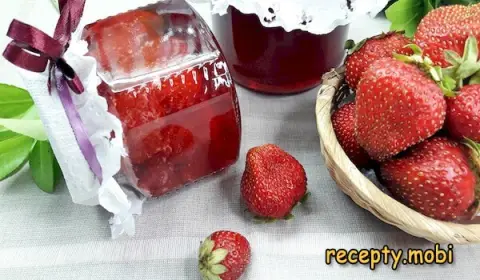
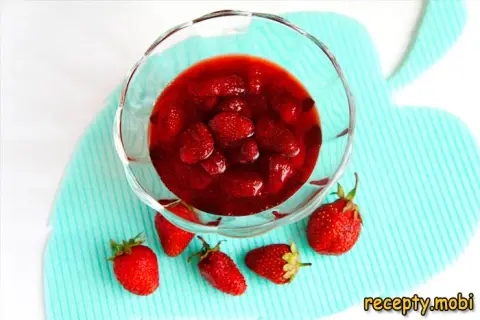
avg —
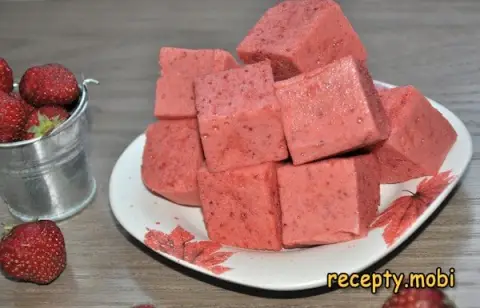
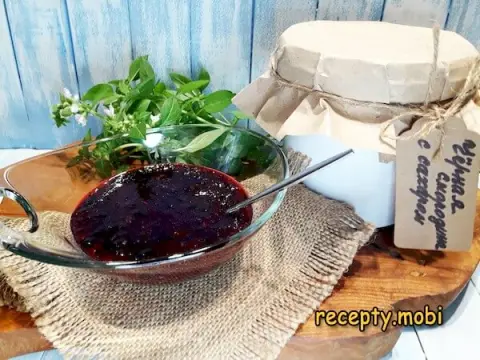
Strawberry Jelly for Winter

Instructions
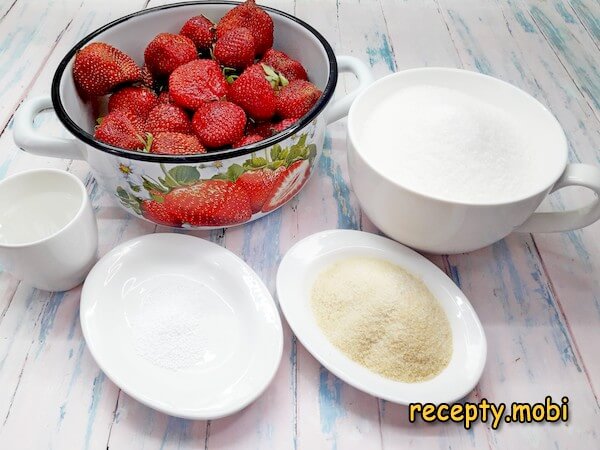
I gather the ingredients listed for the strawberry jelly.
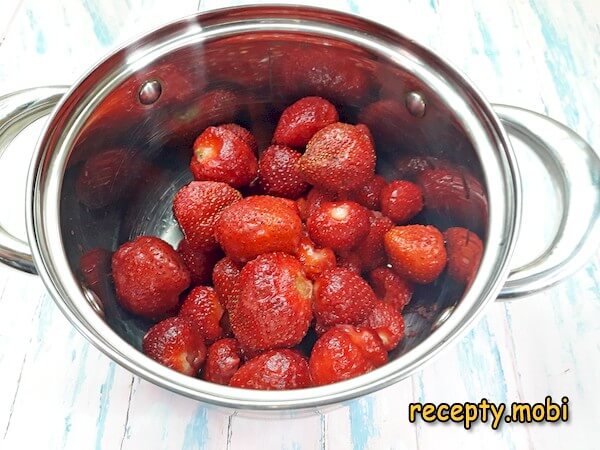
Wash the strawberries and remove the stems, pat them dry with paper towels, and place them in a pot, ideally one with a thick bottom. Large berries can be left whole, as they all soften during cooking and are blended later.
Add the sugar and citric acid in one go, which sharpens the flavour and preserves the natural strawberry colour.
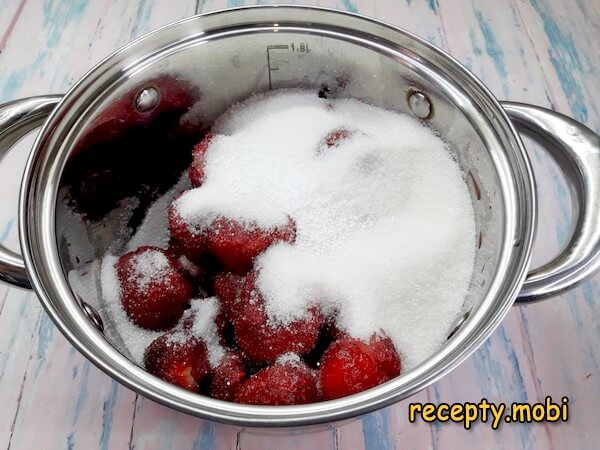
Stir the contents of the pot firmly, without worrying about crushing the berries.
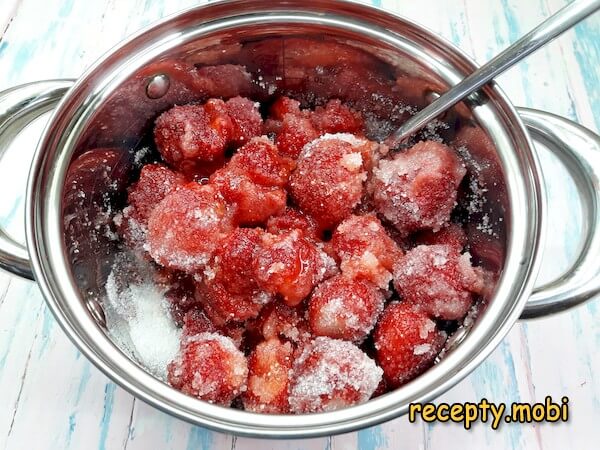
Set the pot over low heat. As it warms, the berries release more juice and the sugar begins to dissolve.
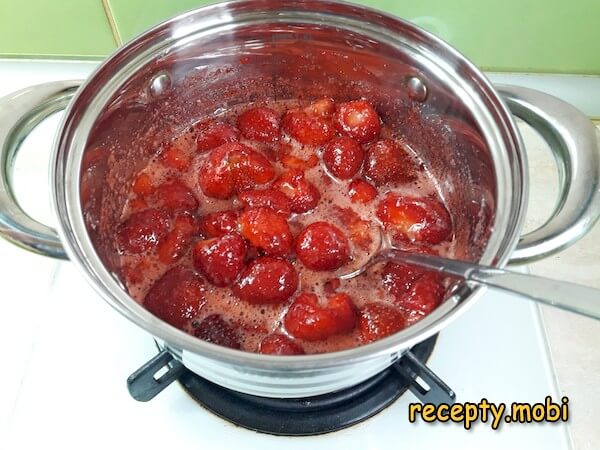
Let the mixture boil for 15 minutes, skimming off the foam from time to time.
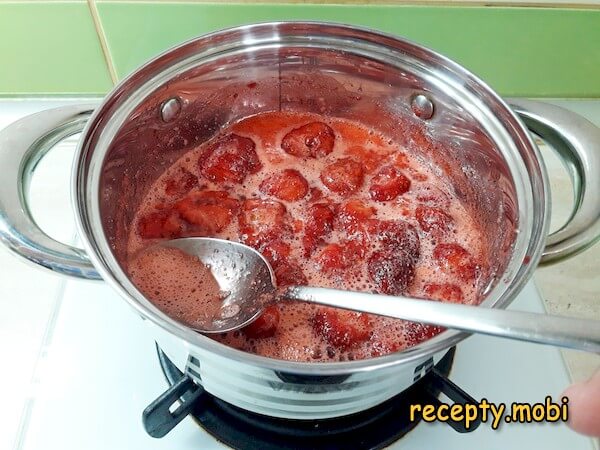
Working carefully to avoid hot splashes, blend the mixture until completely smooth.
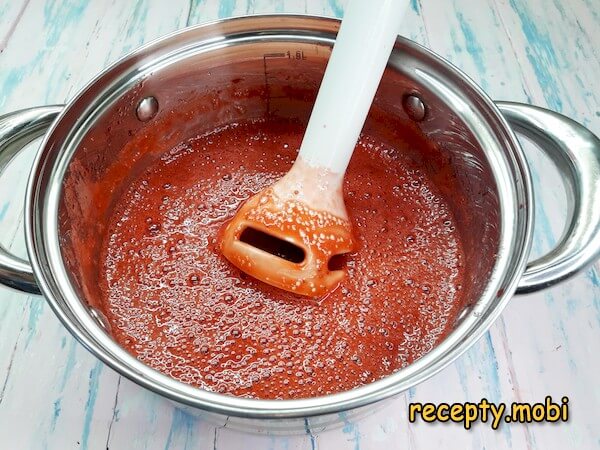
Cover the gelatin with the water, and once it has absorbed the moisture, melt it to a liquid in the microwave on the defrost setting.
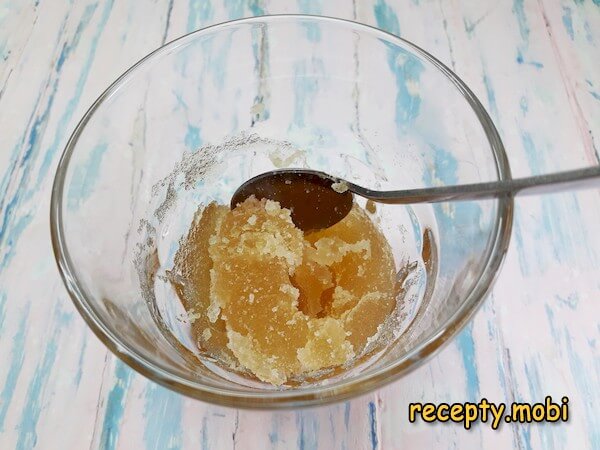
Boil the strawberry mixture for 5 more minutes, then take it off the heat and add the gelatin straight away, distributing it evenly throughout.
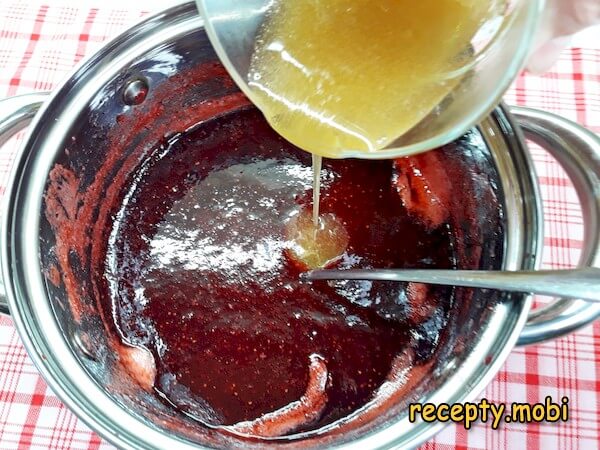
Pour the hot mixture into the prepared jars right up to the top, and set a paper napkin under each jar to keep the glass from cracking.
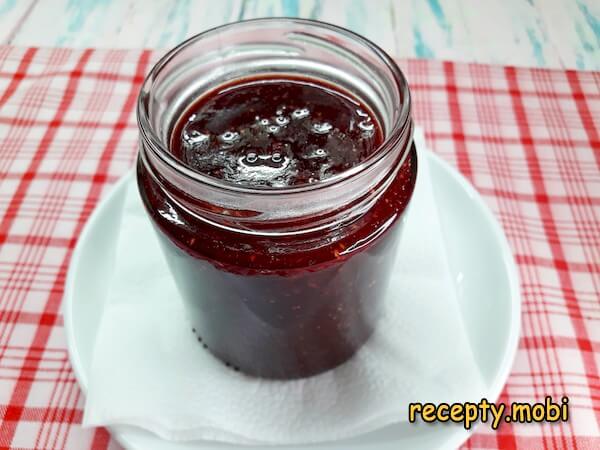
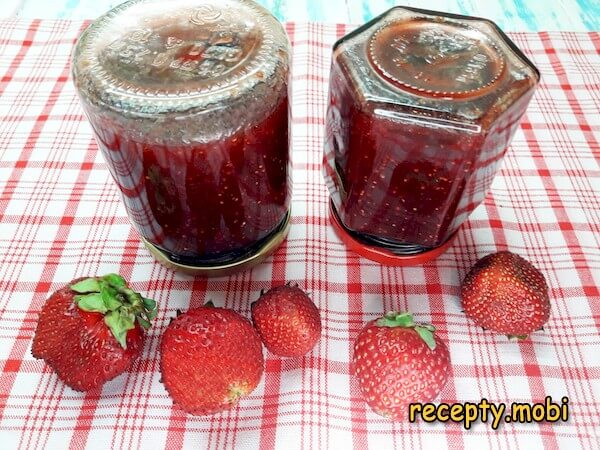
Screw on the lids and turn the jars upside down. Hold them in this position for an hour, then stand them upright and let them cool until the jelly has fully set.


Tips
- 1
30 g of gelatin is the secret to a firm set. A smaller amount (15–20 g) gives a softer jelly, while more makes it rubbery. 30 g is the ideal balance.
- 2
Adding gelatin off the heat is the secret to making it work. Gelatin loses its setting power when boiled, so take the mixture off the heat before pouring the gelatin in.
- 3
One hour upside down is the secret to an even set. The jelly stabilises gradually throughout the jar rather than settling to the bottom.
- 4
Blending after cooking is the secret to a smooth texture. With pieces of strawberry left in, the jelly separates; as a purée it stays whole. The same principle works in other kinds of berry jelly for winter.
Video

FAQ
Which strawberries should I choose? +
Berries of any size – small, medium or large. What matters is that they are ripe and not going bad. You can use overgrown or bruised berries; just cut away the poor spots. Freshly picked berries are the most fragrant. If you are using frozen strawberries, thaw them fully before cooking so the excess moisture can drain off.
What can replace the gelatin? +
The alternatives are agar-agar (10 g instead of 30 g of gelatin, as it is stronger), pectin for jams (15 g), or gelling sugar (one sachet per 600 g of berries). Instant gelatin does not need long soaking, but the ordinary kind used in this recipe gives a more stable consistency. For a less firm jelly, reduce the gelatin to 20 g. Do not use starch, which gives a slimy result rather than a jelly, or dry milk, which will not thicken it.
How long does the jelly keep? +
In sealed jars in a cool place – a cellar, basement or fridge – up to a year. At room temperature it keeps up to 6 months, as gelatin is sensitive to warmth. Once opened, it lasts a month in the fridge; any longer and the jelly starts to separate. Write the canning date on the jars to keep track. If a lid bulges, do not open it – throw the jar out. Do not freeze the jelly, as the jars will burst. It is best to use it within the first 6 months, so seal it in small 250–300 g jars, which are easier to use up before the contents spoil.
What do I serve it with? +
The classic way is at breakfast with toast and butter. As a layer in cakes and pies it is a prized filling. It is lovely with a cup of tea, with syrniki and cottage cheese bakes, on pancakes and fritters, and with any bakes or porridge. Serve it with yogurt or plain cottage cheese, with ice cream or panna cotta, on croissants and buns, or spread on a crispbread for a light snack. It is a versatile sweet treat.
- Comment
or post as a guest
Be the first to comment.