
avg —
Tomatoes in Their Own Juice for Winter Without Sterilization

Instructions
Pass the large tomatoes for juice through a juicer. About 800 g of ready juice is obtained from 1 kg of tomatoes. Without a juicer you can use a meat grinder, but then you must rub the mass through a sieve – otherwise there will be seeds and skin in the finished juice. Meaty varieties such as "Bull's Heart" give more juice than watery round ones.
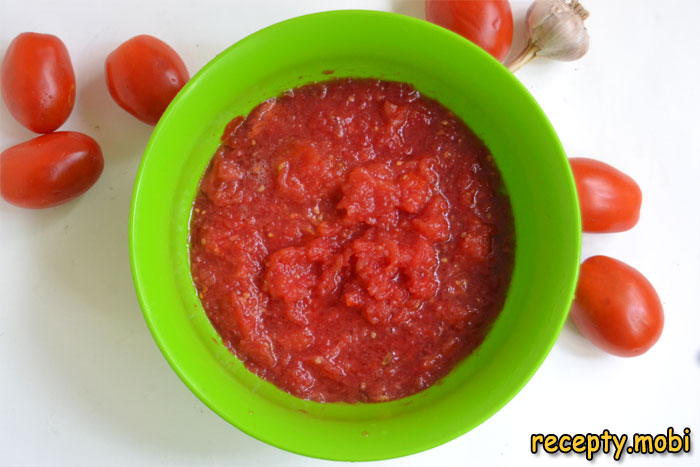
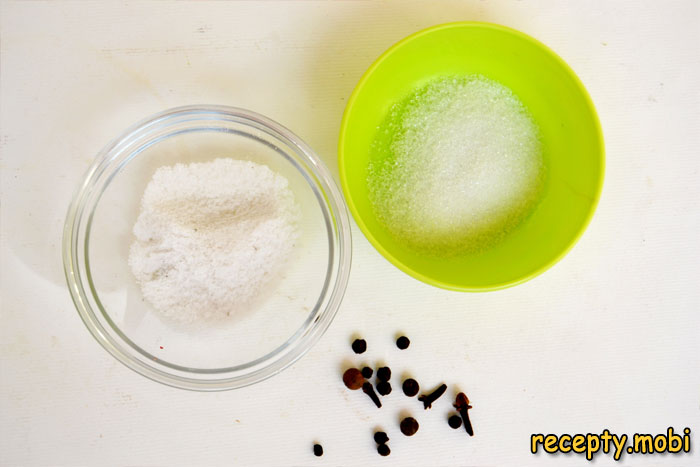
Add salt, black and allspice peppercorns, and cloves to the tomato juice. Boil for 5–10 minutes over low heat, constantly skimming off the foam with a slotted spoon. The foam is protein, and if it is not removed the finished juice will turn cloudy. I do not add sugar – the tomatoes are sweet enough on their own, and the salt balances the acidity.
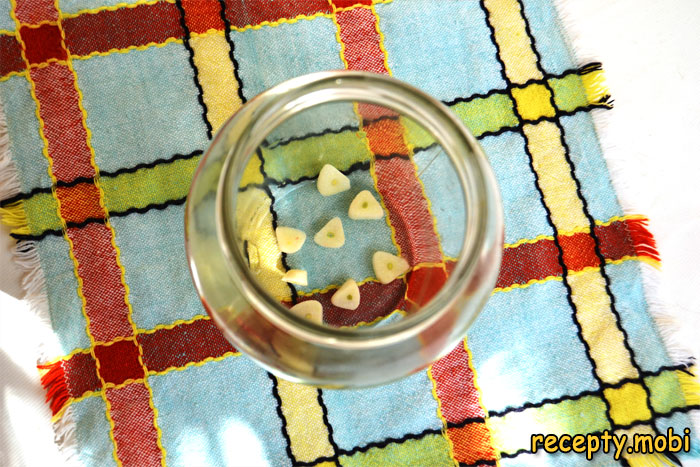
Into a sterilised one-litre jar (I sterilise it for 15 minutes in the oven at 120 °C) put the garlic sliced into thin pieces. Garlic gives a characteristic aroma and works as an extra preservative thanks to its phytoncides.
Wash the small "Slivka" tomatoes under cold water and carefully cut out the stems. Pierce each fruit beforehand with a fork near the stem in 2–3 places – this will prevent the skin from splitting when the boiling water is poured in. Without piercing, 30–50% of the tomatoes burst from thermal shock.
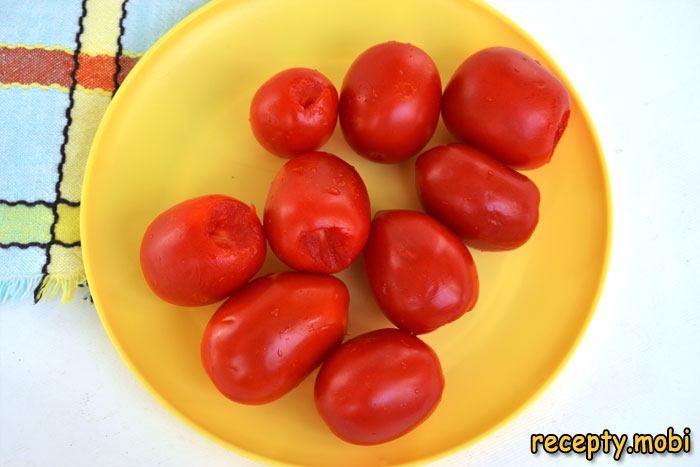
Fill the jars with tomatoes as tightly as possible, but without pressing hard. Pour boiling water right to the very rim and leave for 10 minutes under a towel – this is the first pour, which warms the tomatoes and disinfects them.
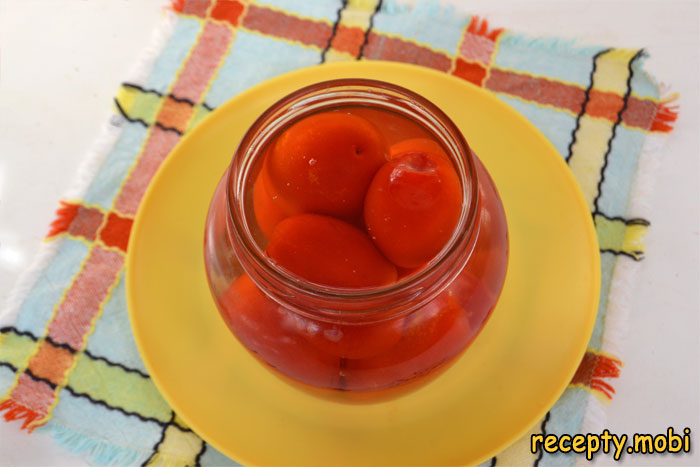
Drain the water through a special lid with holes (an ordinary lid with a gap will do instead). Pour boiling tomato juice over the tomatoes right to the very rim. The interval between the two pours should not exceed 1–2 minutes – otherwise the jar will cool down and the glass may crack from the temperature difference.
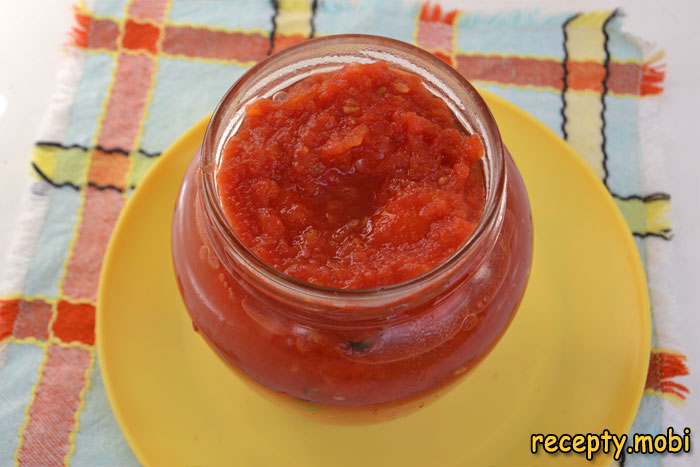
Immediately seal with sterile metal lids using a sealing machine. Turn upside down to check for an airtight seal – not a single drop should seep out. Wrap in a blanket and leave for 12 hours to cool slowly – this creates an additional vacuum.
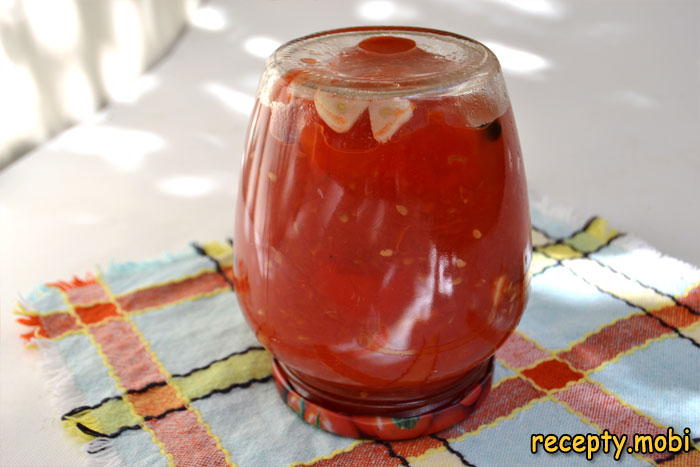
Store the finished, cooled tomatoes in their own juice for winter in a cool dark place – a cellar, pantry, or the bottom shelf of the fridge. The ideal storage temperature is 5–15 °C.
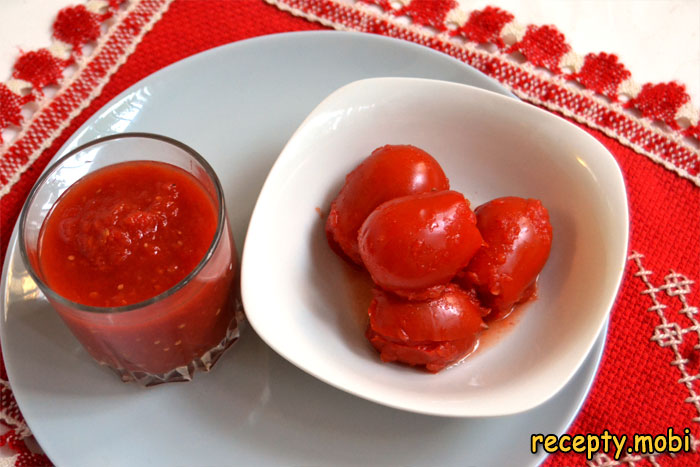
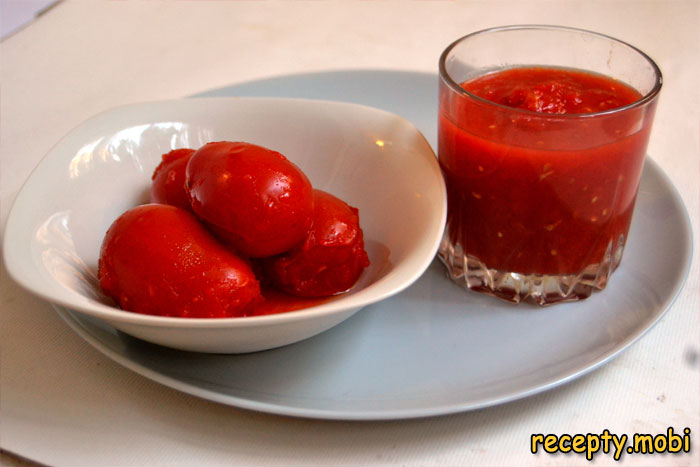
In winter I pour the tomato juice into a glass and drink it with pleasure, and serve the whole tomatoes as a snack with meat or potatoes. The juice is also excellent as a base for borscht, kharcho, or tomato sauces for pasta – two products in one jar.


Tips
- 1
The "Slivka" variety is ideal – small, firm tomatoes with thick skin do not split when boiling water is poured over them and fit well into a one-litre jar.
- 2
You can use slightly bruised or cracked tomatoes for the juice – appearance does not matter, what counts is juiciness and ripeness.
- 3
Store in a cool dark place for up to a year – light and heat destroy vitamins and speed up spoilage. On a similar principle I make marinated tomatoes for winter.
- 4
The juice from the jar can be drunk as a stand-alone beverage or used for making borscht, tomato sauces, and gravies – a versatile product.
Types of tomatoes in their own juice: which method to choose
This preserve can be sealed in several ways, and your choice affects both safety and shelf life. Below is a comparison of the most common options, so you can pick the method that suits your conditions: a warm flat or a cool cellar. For firmer, meatier fruit it is handy to seal jars using the closely related recipe for plum tomatoes in their own juice, where the skin holds its shape best of all.
| Method | Acidity | Sterilisation | Storage | Best suited to |
|---|---|---|---|---|
| Whole in their own juice, double filling | No vinegar | Not needed: the jars are heated twice with boiling juice | Cool, dark place, up to 12 months | The basic version of this recipe |
| With full sterilisation of the jars | No vinegar | 15-20 minutes for a one-litre jar in boiling water | Room temperature | A warm flat with no cellar |
| Peeled, skin removed (pelati) | No vinegar | Short, 10-15 minutes | A cool spot | For sauces, pasta, pizza |
| With citric acid for extra safety | 1/4 tsp per litre of juice | Advisable, though double filling is acceptable | Room temperature | The safest option |
How to choose tomatoes for this preserve
A single jar relies on two groups of fruit, and each has its own job. For the whole tomatoes, use small and medium plum tomatoes, "ladies' fingers" or other firm varieties: they have a sturdy skin and little juice inside, so they hold together in the jar rather than falling apart. The fruit should be ripe but firm, with no cracks, dents or green shoulders around the stem.
- For whole tomatoes: even, roughly the size of a hen's egg, so they pass through the neck of the jar.
- For the juice: large, meaty, overripe fruit, as they give a thick filling and a rich colour.
- Avoid tomatoes with a white core and tough veins, as they spoil the flavour of the juice.
- Do not use bruised or rotting fruit even for the juice: they lower the acidity and raise the risk of spoilage.
Large, meaty varieties such as "beefsteak" are excellent for the filling, but it is best not to pack them whole: there are too many hollows and too much liquid inside. If plenty of pulp is left after pressing, turn it into a thick raw tomato and garlic relish, so nothing goes to waste.
What makes this preserve rich in flavour and stable in storage
The secret to a full, lively taste is not the spices but the quality of the juice and proper heating. Keep three points in mind.
- Filling proportions: for 1 litre of juice, 1 tablespoon of salt and 2 tablespoons of sugar. The sugar does not make it sweet, it softens the acidity and brings out the tomato flavour.
- Double hot filling: the first time, pour over boiling water or hot juice, let it warm through for 10-15 minutes, drain it off, bring the juice back to the boil and fill again. This way the centre of the fruit is heated right through.
- Prick each tomato with a toothpick near the stem in 2-3 places: the skin will not burst, and the fruit heats evenly from the inside.
Boil the juice for at least 5 minutes and skim off the froth: it makes the preserve cloudy in storage. Seal the jars and lids as hot as possible, turn them upside down and wrap them up for 10-12 hours, so the heat escapes slowly.
Sterilisation and the safety of preserves
Tomatoes sit on the borderline for acidity: ripe fruit is usually acidic enough, but in overripe tomatoes and some sweet varieties the acidity drops, and it is precisely an acidic environment that holds back the dangerous botulism bacterium. For that reason, a vinegar-free preserve should be made only from fresh, not overripe fruit and always with a double heating.
- Wash the jars with baking soda and sterilise them over steam for 10-15 minutes or in the oven at 120 degrees, and boil the lids for 5 minutes.
- For complete peace of mind, add 1/4 teaspoon of citric acid per litre of juice: the taste will not change, but the acidity becomes safe.
- Store the preserve in a cool, dark place rather than by the cooker or a radiator: warmth speeds up every process inside the jar.
- Treat a bulging lid, cloudy juice, bubbles or a sour smell on opening as a sign of spoilage. Throw such a jar out without a second thought and do not taste the contents.
Common mistakes and how to avoid them
- The tomatoes burst in the jar: the fruit was packed in cold and covered with boiling water, or the skin was not pricked. Let them warm up and always prick them near the stem.
- There is not enough filling: gather 20-30 per cent more juice than you think you need, as the tomatoes settle and soak up liquid.
- The juice separates: the pulp was not boiled enough. Simmer it for 5-7 minutes and stir it.
- The lid pops off after a month: the jar or lid was poorly sterilised, or the seal was not tight. Check with a sealing key and do not skimp on time for sterilisation.
What to serve it with and how to use it in winter
Tomatoes in their own juice are a versatile base: the whole fruit goes into borscht, solyanka and stews, while the juice replaces shop-bought tomato paste in gravies and pasta sauces. Push the contents through a sieve and you have a ready-made base for pizza or lecho. At the table, these tomatoes are lovely as a starter in their own right alongside a mixed jar of cucumbers and tomatoes or with boiled potatoes. Do not pour away the thick juice that is left: it makes a rich base for cabbage soup and braised meat.
FAQ
Can you make the juice without a juicer? +
Yes, there are several alternatives: pass the tomatoes through a meat grinder and rub through a fine sieve (you get juice without seeds and skin), blend them and also rub through a sieve, or simply simmer and blend without straining (the juice will have pulp and seeds). Each method gives its own result: a juicer – clear juice; a meat grinder with a sieve – thick and natural; a blender without a sieve – with pulp. A food processor with a pureeing attachment is the most convenient option.
Why heat the tomatoes twice? +
The double hot pour replaces the classic sterilisation in a pot and ensures safe long-term storage. The first pour of boiling water disinfects the tomatoes and warms the jar; the second – with hot tomato juice – creates a vacuum as it cools. This method is simpler and faster than ordinary sterilisation, but it requires strict adherence to time and temperature. Without the double pour the tomatoes may ferment or swell the lid within 1–2 months of storage.
How long do the tomatoes keep after the jar is opened? +
In the fridge in a tightly closed container – up to a week. Separate the juice from the tomatoes for convenience of use. If mould or bubbles appear on the surface, throw away the whole jar immediately; do not try to remove the top layer. Signs of good preserving after opening: bright colour, fresh tomato aroma, and firm, springy tomatoes. The juice can additionally be boiled again and sealed into small 200 ml jars for a second life.
What spices can be added for a different flavour? +
The basic peppercorns can be supplemented or replaced: with coriander seeds (an Eastern accent), dried basil (an Italian character), horseradish (a spicier snack), dill umbels (a Russian classic), blackcurrant or cherry leaves (a fragrant aroma), or mustard seeds (a piquant note). Do not add more than 2–3 spices at once – they will overpower one another. Experimenting with small test jars will help you find your ideal flavour.
Do you need to remove the skin from tomatoes before sealing? +
For whole tomatoes the skin is left on: it holds the shape and keeps the fruit from falling apart in the jar. It is only removed for the "pelati" version, when the tomatoes are destined for sauces and pizza. To peel them easily, score the fruit crosswise, drop it into boiling water for 30-60 seconds, then into cold water, and the skin will slip off on its own.
Can I add citric acid or vinegar for extra safety? +
Yes, that is sensible, especially for a warm flat and overripe fruit. Just 1/4 teaspoon of citric acid per litre of juice is enough: the taste barely changes, while the acidity rises to a safe level. Vinegar works too, about 1 tablespoon of 9 per cent per litre, but it gives a noticeable sharpness.
Why do tomatoes burst in the jar and how can I avoid it? +
The skin splits from a sudden change in temperature or because the steam has nowhere to escape. Do not cover cold fruit with fierce boiling water straight away, let the jar warm through a little first. Be sure to prick each tomato with a toothpick near the stem in 2-3 places, then they will stay whole.
Do I have to add sugar to the filling? +
Sugar does not make the preserve sweet, it softens the natural acidity of the tomato and rounds out the flavour. Without it the juice is sharper, but the preserve still keeps. If you are limiting sugar, you can halve it or use half a teaspoon per jar, and it does not affect safety.
What should I do if the juice has gone cloudy and the lid has bulged? +
These are signs of fermentation and spoilage: the contents of such a jar must not be eaten. Do not taste it and do not try to reboil it, it is safer to throw it out at once. The cause is usually poorly sterilised containers, overripe fruit or insufficient heating, so bear that in mind for the next batch.
Can I put tomatoes of different sizes in one jar? +
You can, but it is better to cut the large ones in half so they heat evenly and leave no gaps. Pack the small fruit tightly against the walls and the medium ones in the centre. Tomatoes that differ greatly in size heat unevenly, so try to keep the difference within reason.
- Comment
or post as a guest
Be the first to comment.