
avg —
Eggplants "Firefly" for Winter

Instructions
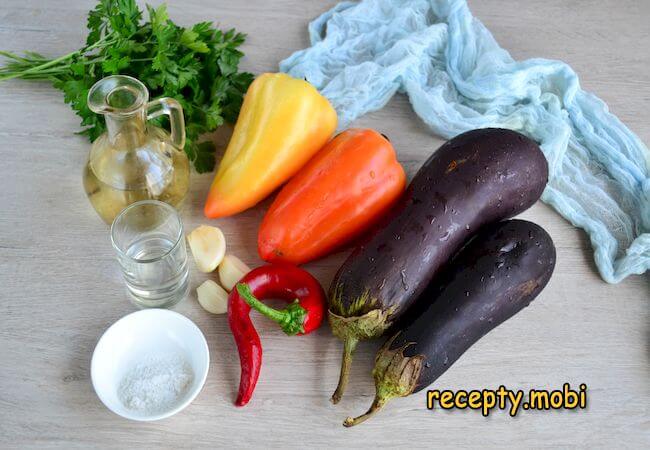
I prepare all the necessary ingredients.
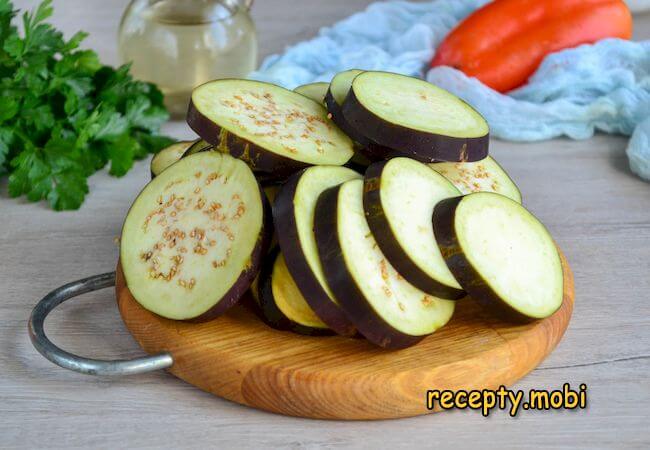
I rinse the eggplants and cut them into rounds about 6–8 mm thick – it is best not to cut them thicker, as they will take a long time to fry.
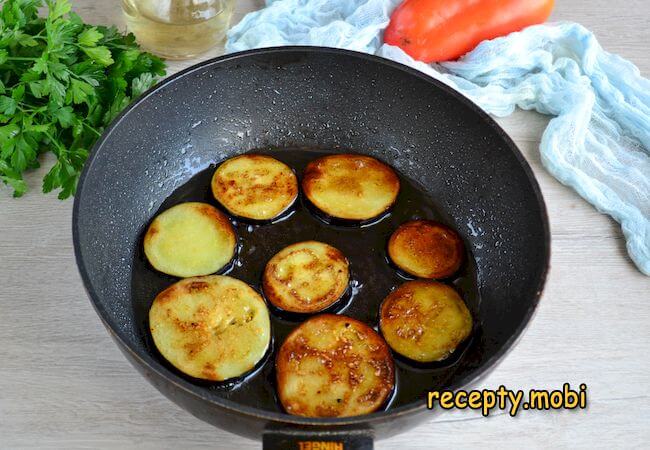
I fry the rounds in hot vegetable oil until golden. I fry them in batches, laying them out in the pan in a single layer.
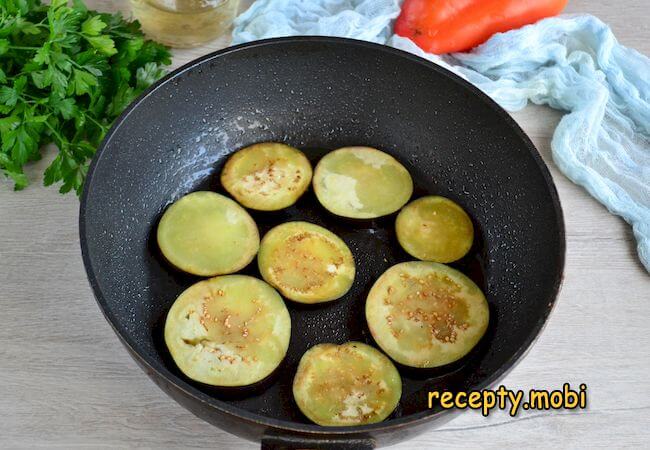
The vegetable soaks up a great deal of oil – you will have to add more each time you put in a new batch.
While the vegetable is frying, I prepare the spicy dressing. I clean the sweet and hot peppers, removing the seeds, membranes and stem attachments. If you want an even more "fiery" snack, you can leave the seeds of the hot pepper. I cut the pepper and garlic into small pieces.
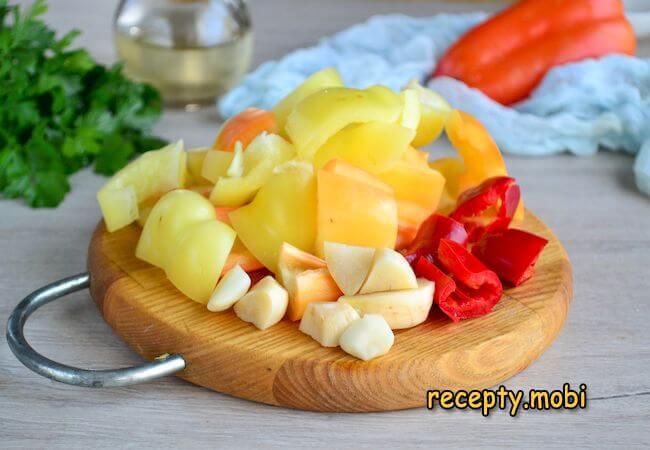
I pass the chopped peppers together with the garlic through a meat grinder or use a blender. The result is a uniform paste. I add 2 tbsp of vinegar, 30 g of salt and 50 g of sugar. I stir.
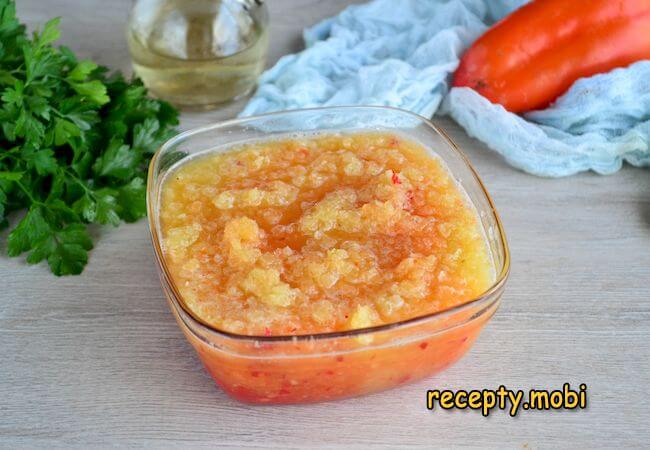
I begin assembling the jars. I place a few golden eggplant rounds at the bottom, then 1 tbsp of the spicy dressing on top, then the rounds again, and pepper dressing again.
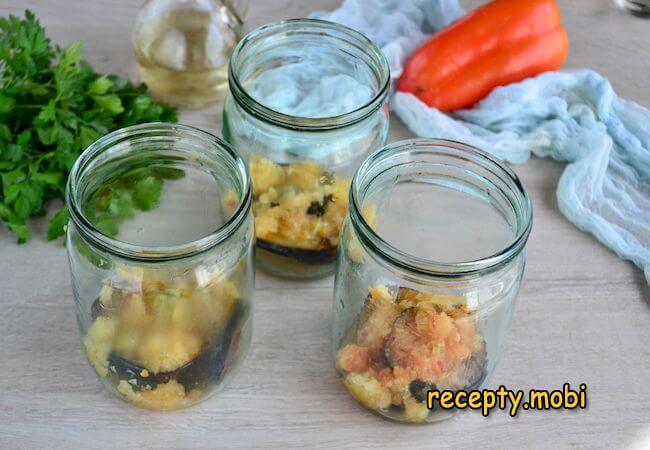
I fill all the jars following this principle. The quantities given yield 3 jars of 0.5 l.
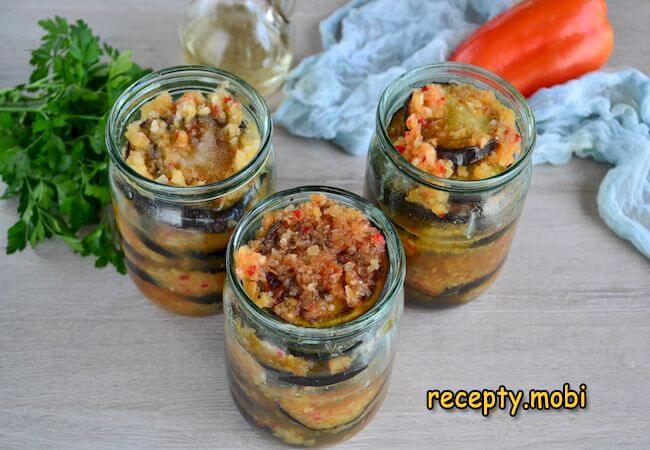
I cover the jars with metal lids and put them in a pot. I pour in water so that it covers the jars up to the "shoulders", and sterilise for 10 minutes.
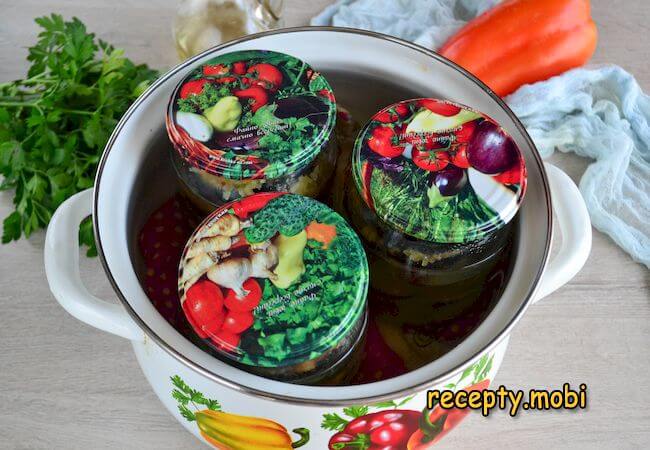
Then I carefully lift the jars out of the pot (special tongs are handy for this) and seal them.
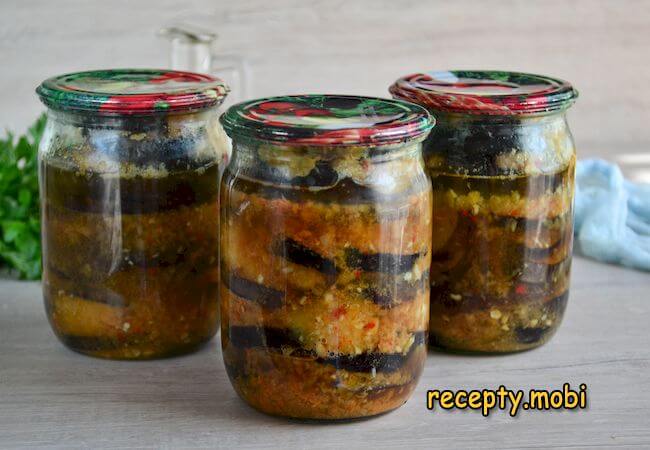
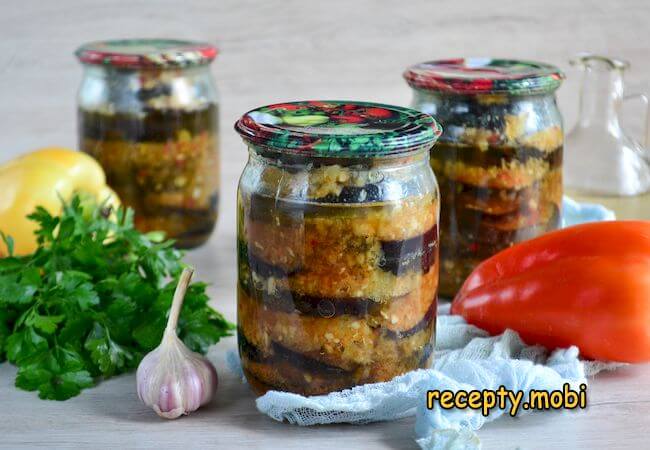
Eggplants "Firefly" for the winter are ready.


Tips
- 1
FRY THE EGGPLANTS IN A SINGLE LAYER and in batches – piled up "in a heap" they stew in their own juices and will not get a golden crust.
- 2
ADD OIL each time – eggplants "drink" it like a sponge. Do not skimp, or the rounds will burn.
- 3
STERILISATION IN A POT is essential. A fresh snack with vinegar and garlic will not keep until winter without sterilisation.
- 4
FOR HEAT, leave in the chilli pepper seeds – they give the "fire". For a milder version, remove them. A similar way of working with hot pepper is used in other fiery preserves.
Types of the Ogonyok eggplant appetiser: which method to choose
The Ogonyok appetiser comes in several reliable versions, and each one differs in technique and character of flavour. The classic fried version is loved for its richness, but in summer you often want something lighter, so below we have gathered the main methods to help you find your own.
| Version | What makes it special | Who it suits |
|---|---|---|
| Classic, with frying | The rounds are fried in oil, then covered with a spicy sauce. The flavour is the richest, but you can use up to 250 ml of oil per 1 kg | Those who love a dense, filling appetiser |
| No frying, braised | The eggplants are braised straight in the sauce for 30-40 minutes. Two to three times less oil, and a cleaner flavour | Those keeping an eye on the calories |
| With carrot and onion | A bed of vegetables softens the heat and adds sweetness, and you end up with more jars | Families with children who want it milder |
| On tomato paste | Instead of fresh tomatoes, the paste is diluted with water. The sauce is thicker and cooks faster | When you have no ripe, meaty tomatoes |
If you would like to compare it with milder appetisers made from the same vegetables, take a look at the recipe for fried eggplants in tomato sauce: there the heat is dialled back and the tomato pour comes to the fore.
How to choose eggplants for preserving
The quality of the appetiser starts with the vegetable. Overgrown fruit turns bitter and has hard seeds, so choose young eggplants with firm flesh.
- The skin should be smooth and glossy, with no brown patches or wrinkles, and a deep purple colour.
- When pressed the fruit is springy and the dent evens out quickly: soft, spongy eggplants are already overripe.
- The stalk is green and fresh rather than dried out, a sign of a recent harvest.
- A medium size, 200-300 g: these have few seeds and almost no bitterness.
- The fruit should feel heavier than it looks; a light one is often hollow inside.
To remove any possible bitterness, sprinkle the sliced rounds with salt (about 1 tablespoon per 1 kg), leave them for 20-30 minutes and rinse. Young eggplants with immature seeds usually do not need this step.
What makes the appetiser truly spicy and rich
Ogonyok rests on a balance of three elements: heat, a slightly sweet tomato sauce and a garlicky aroma. A few tricks help draw out the flavour.
- Add the garlic and hot pepper right at the end, 5 minutes before jarring: long cooking robs them of aroma and heat.
- Both the flesh and the seeds of the chilli carry the heat. For a hotter result leave the seeds in; for a milder one remove them along with the white membranes.
- For a thick sauce choose meaty tomato varieties such as plum tomatoes: they have less juice and more flesh.
- Oil is not only for frying: it binds the flavour and acts as a natural barrier on top in the jar.
- Sugar does not make the appetiser sweet: it rounds off the acidity of the tomatoes and highlights the heat.
Fans of fiery preserves will also enjoy gorloder made from tomatoes with garlic: the same principle of a garlicky, spicy sauce, only without cooking and without eggplants.
Sterilisation and safety of preserves
Eggplants and peppers are low-acid vegetables, and in such an environment, without acid, the organism that causes botulism can develop. That is why in Ogonyok the vinegar is not for flavour but an essential preservative, and its amount must not be reduced.
- Acid is essential: 2 tablespoons of 9% vinegar per 1 kg of eggplants, added at the end of cooking. If you swap it for citric acid, keep to the proportion given in the recipe, not by eye.
- Wash the jars and lids with baking soda and sterilise them (over steam for 10-15 minutes, in the oven at 120 degrees or in the microwave with water), and boil the lids for 5 minutes.
- Pack the appetiser while hot, right up to the top, so that less air is left under the lid.
- Although the classic Ogonyok is sealed without additional sterilisation of the filled jars, it is safer to store it somewhere cool: a cellar or a fridge at 2-8 degrees.
- A swollen lid, cloudy brine, bubbles or an unpleasant smell are a sign of a spoiled preserve. Such a jar must not be tasted: throw it out straight away.
The same principle works in other vegetable preserves made without sterilisation, for example in lecho with eggplants and peppers: clean containers, enough acid and cool storage.
Common mistakes and how to avoid them
- Too little vinegar. The preserve tastes too sour while hot, but the flavour softens once it cools. Do not cut the amount of acid for the sake of taste: it is a matter of safety.
- Undercooked eggplants. Under-fried or under-braised rounds stay tough and keep less well. The flesh should turn soft and translucent.
- Garlic at the start of cooking. Boiled garlic loses its heat and aroma, which leaves the appetiser bland. Add it at the end.
- Bitter flesh. Old eggplants with dark seeds turn bitter. Choose young fruit or soak the slices in salted water.
- Warm storage. Jars left by a radiator or in the sun swell faster. Keep the preserve in a dark, cool place.
FAQ
Which chilli pepper should I choose? +
For moderate heat – 1 medium-hot pod (red hot chilli, jalapeño). For a mild version, replace it with half a red sweet pepper + 1/4 tsp of ground red pepper. For a "fiery" one – 2 chilli pods or 1 habanero pod (careful, very hot!). Avoid bell pepper – it will not give the heat you need. Dried chilli (1 tbsp of flakes) also works. Shop-bought hot paste (sambal, harissa) – 1–2 tbsp instead of fresh pepper. The main thing is that the pepper is genuinely hot, otherwise you will end up with not a "Firefly" but just a vegetable salad.
Do I need to peel the eggplants? +
You do not. The skin gives a lovely purple tint, helps the rounds keep their shape during frying and stewing, and contains the beneficial pigment anthocyanin. Only if the skin is very tough (late, old eggplants) can you peel a thin layer off with a vegetable peeler. Young eggplants with thin, glossy skin are ideal for "Firefly". Before cooking, wash them thoroughly under running water – there may be transport wax on the skin.
How long does the preparation keep? +
In a cellar or cool pantry (10–15 °C) – up to 12 months. At room temperature – 6–8 months. Once opened – 5–7 days in the fridge. Thanks to the vinegar and garlic, the snack preserves well. Signs of spoilage: a bulging lid, cloudiness in the oil, an unusual smell – throw it out. "Firefly" is especially tasty 2–3 weeks after sealing – the spices "infuse" and the flavour becomes richer.
What should I serve "Firefly" with? +
It is versatile with meat dishes. With fried meat (beef, pork, grilled chicken). With boiled potatoes (a classic Russian combination). With baked fish – the heat balances it out. On bread as a piquant open sandwich (especially with dark rye bread). For a spread – in a separate bowl as a "spicy snack". With strong drinks (vodka, brandy) – the fieriness of the eggplants suits them. For a winter dinner – add it to mash + a cutlet, and an ordinary supper becomes "festive". You can also use it as a base for pasta sauces.
Can you make Ogonyok without frying the eggplants? +
Yes, instead of frying you can braise the eggplants straight in the tomato sauce for 30-40 minutes until soft. The appetiser will be less greasy and have a cleaner vegetable flavour, but be sure to keep the full amount of vinegar, otherwise the preserve will not be safe for long storage.
What can replace the vinegar in this recipe? +
You can replace 9% table vinegar with citric acid at a rate of roughly 1/3 teaspoon for every 2 tablespoons of vinegar, dissolving it in a little water. You must not leave out the acid completely: eggplants and peppers are low-acid, and without a preservative the jars are dangerous to store.
Why did my appetiser turn out not spicy enough? +
Most often the garlic and chilli are added too early and cooked too long, so they lose their heat. Add them 5 minutes before the end, and for extra heat leave the pepper seeds in and increase the chilli to 1.5-2 pieces per kilogram of eggplants.
Do I have to add sweet bell pepper? +
Sweet pepper gives the sauce body, a gentle sweetness and a lovely colour, so it is best not to skip it. If you have no pepper, increase the share of tomatoes, but the flavour will come out more sour and less rich.
How many jars do you get from 1 kg of eggplants? +
The proportions given yield roughly 1.5-1.7 litres of finished appetiser, that is three 0.5 litre jars or a couple of larger ones. The exact yield depends on how juicy the tomatoes are and how far the sauce is reduced.
Can I scale the batch up several times? +
Yes, all the ingredients scale proportionally, including the vinegar, salt and sugar. But do not cook too large a volume in one pot: eggplants in a deep layer heat unevenly, so it is better to cook in batches of 2-3 kg.
- Comment
or post as a guest
Be the first to comment.