avg —
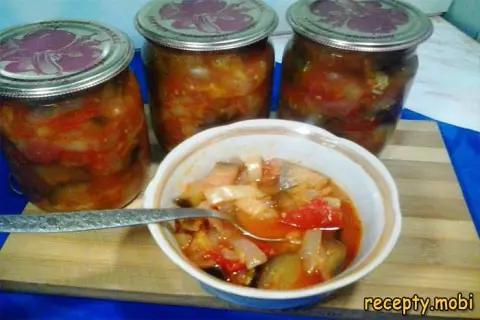
Eggplants in Adjika for Winter

Instructions
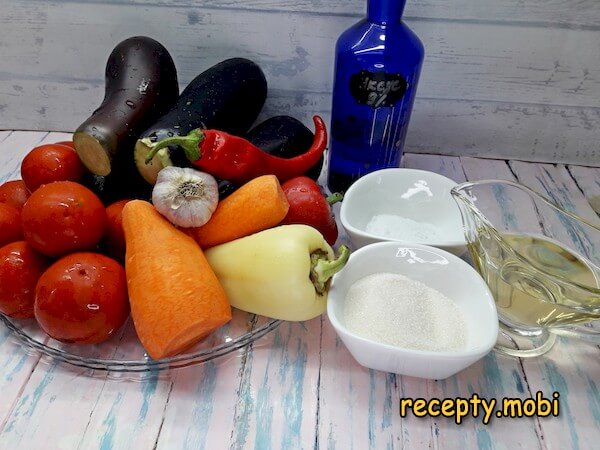
I gather the ingredients for the eggplants in adjika for winter.
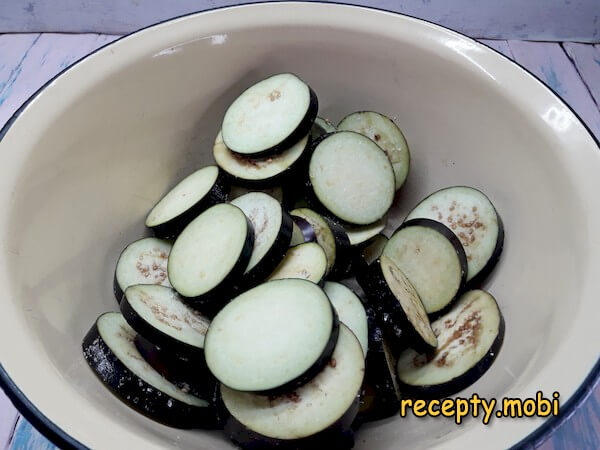
For this dish it is best to cut the eggplants into rounds, but not too thin – about 5–7 mm – so that they keep their shape during cooking rather than falling apart. I put the slices in a convenient bowl, sprinkle them generously with salt and stir, then let them stand for 20 minutes to release their bitterness.
I cut out the seed pod and ribs from the sweet pepper. I cut it into pieces that will be convenient to put through a meat grinder or chopper.

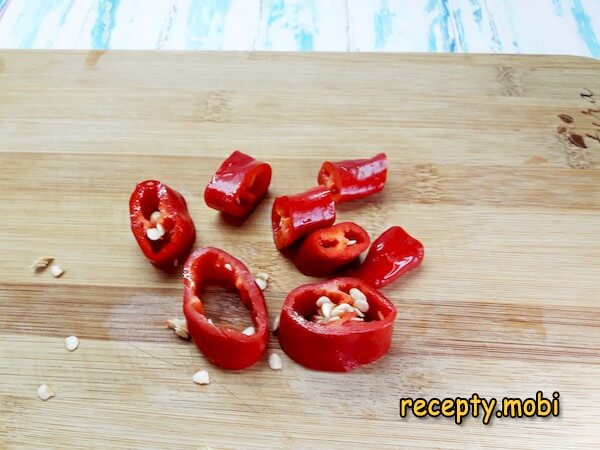
I cut the hot pepper into several pieces, leaving the seeds in if I want the adjika spicier.
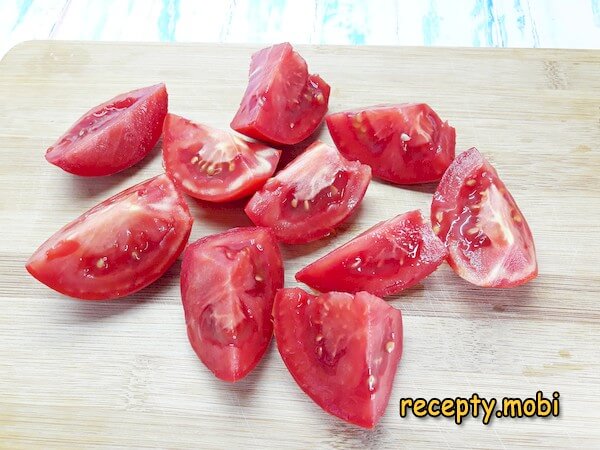
I cut the tomatoes and remove the stems.
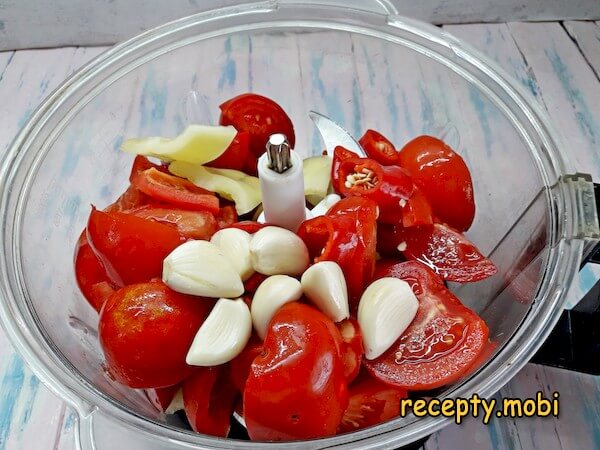
I put the tomatoes, both kinds of pepper and the garlic cloves into the chopper or meat grinder.
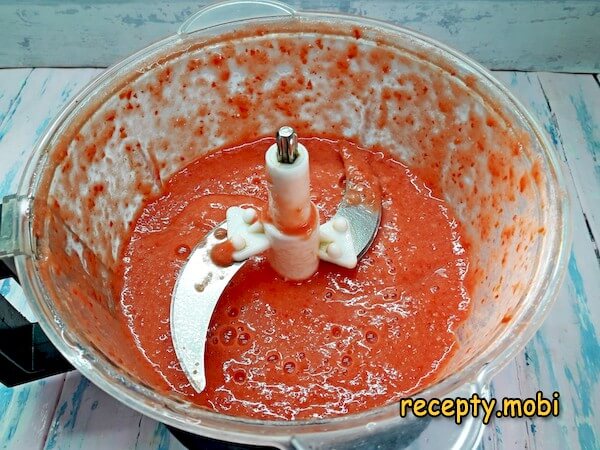
Once ground, the result is a smooth, spicy tomato adjika.
I grate the carrot coarsely.
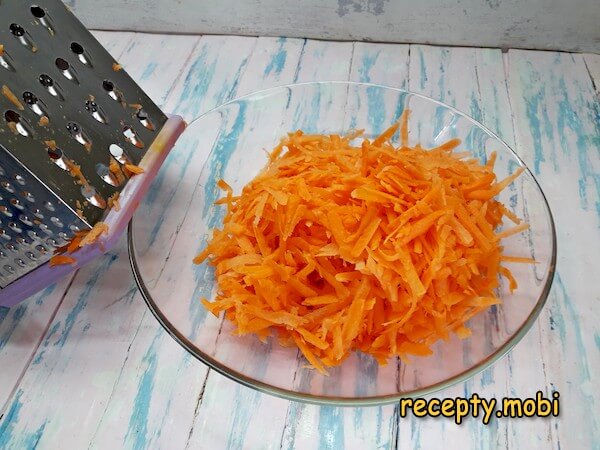
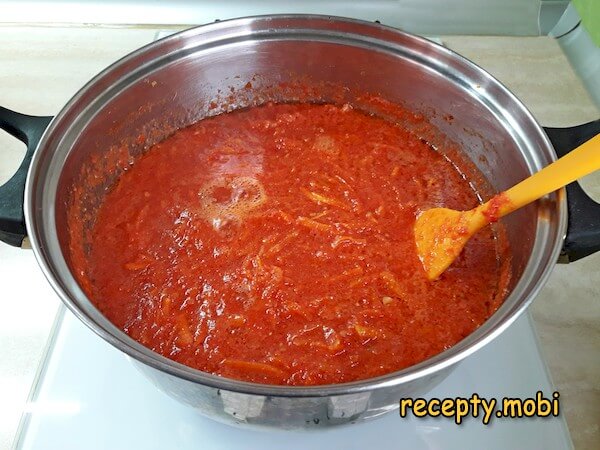
I pour the adjika into a pot and add the carrot.
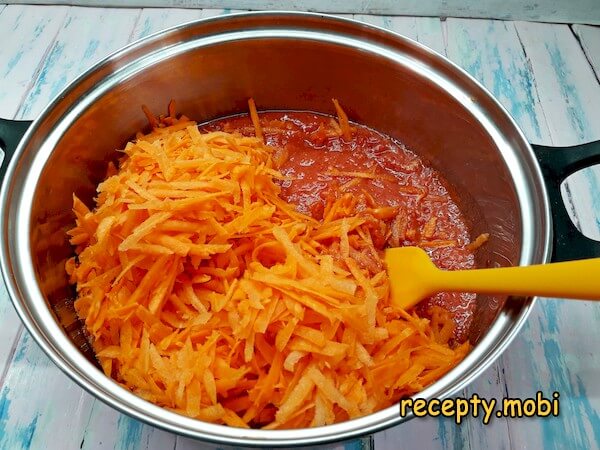
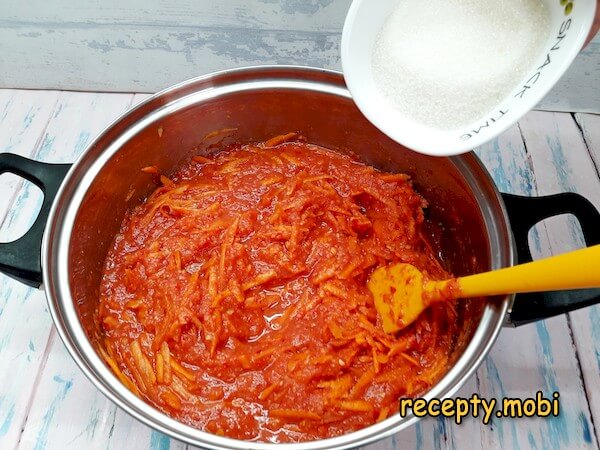
I season everything at once with salt and sugar.
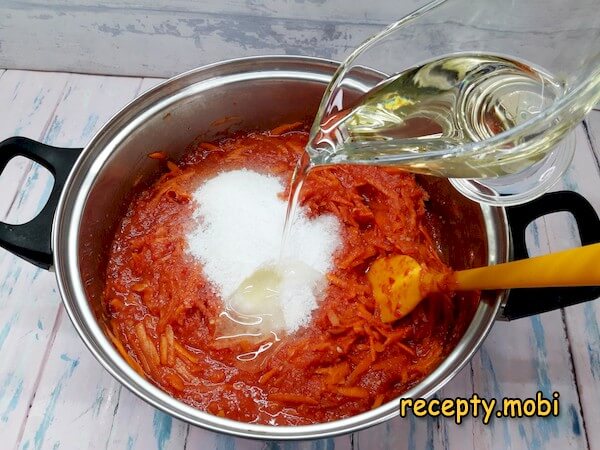
I pour in the oil.
Over low heat I cook the gently bubbling mixture, covered, for 15 minutes, counting the time from the moment it comes to the boil.
By now the eggplants have released their bitter liquid. I rinse them thoroughly and squeeze them out by hand.
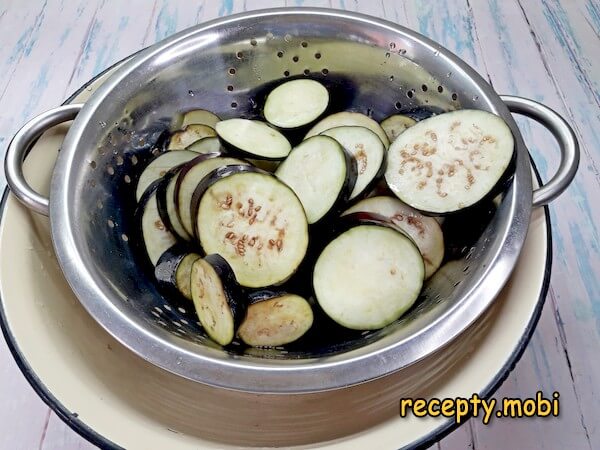
I add the eggplant rounds to the pot of boiling adjika.
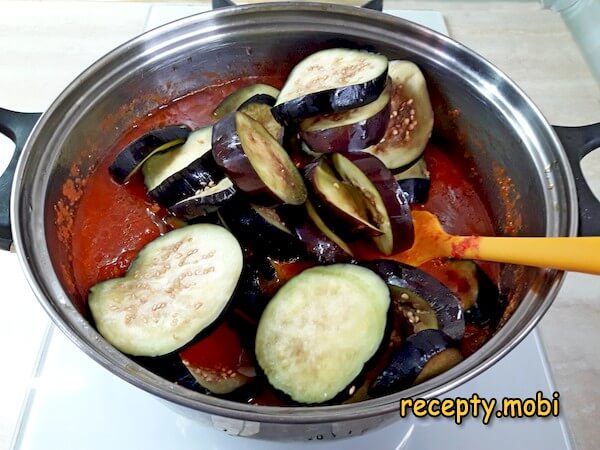
I cook them for 20 minutes. In that time the eggplants soften and soak up the sauce but do not fall apart. I sterilise the jars for sealing.
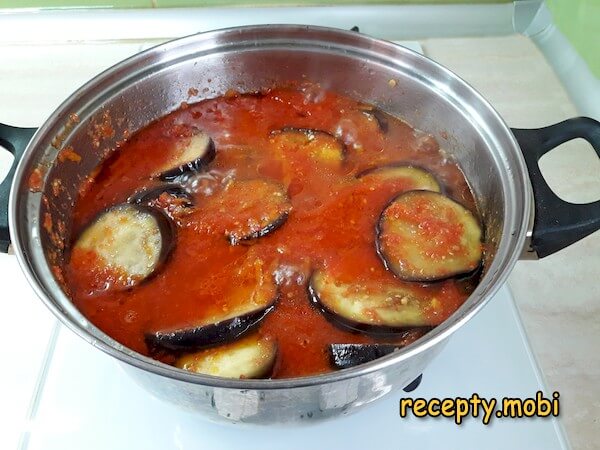
When the time is up I pour in the vinegar and boil the whole mixture for another 3 minutes.
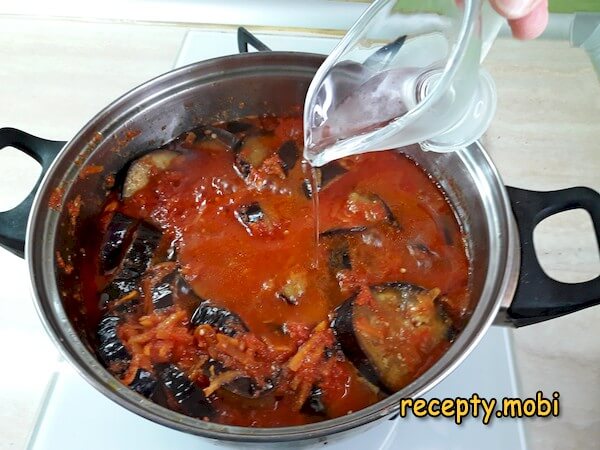
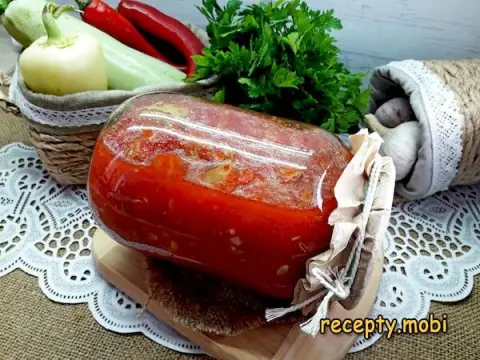
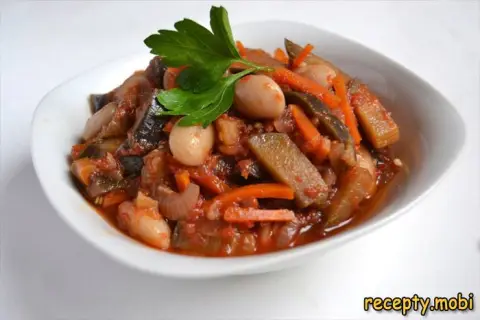
I spoon the eggplants into the prepared jars, pouring in plenty of adjika right to the top.
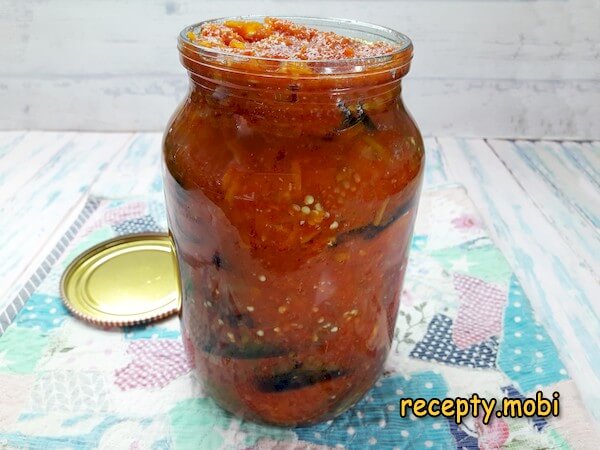
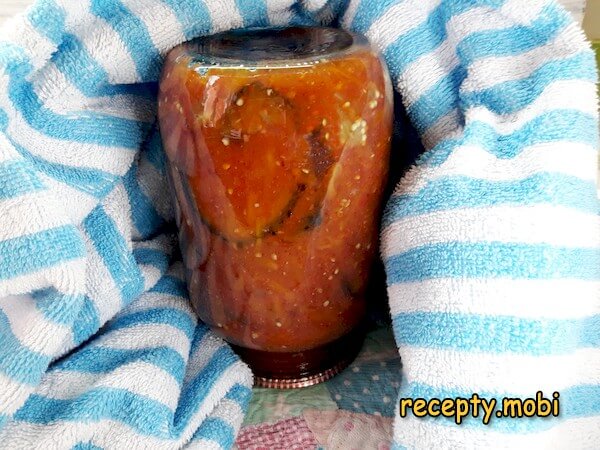
I seal the jars and turn them upside down. I make sure the lids are screwed on tightly, then cover each jar with a thick towel, where it should stay for at least 8 hours.
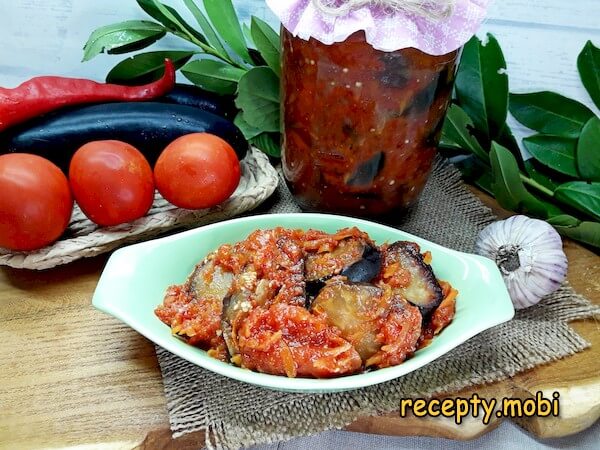
It is best to store the eggplants in adjika for winter somewhere cool, though they will keep perfectly well at room temperature until the next harvest. This appetiser goes wonderfully with pasta, potatoes, meat or fish. In every case it makes a lovely combination – do give it a try.


Tips
- 1
The 20 minutes with salt – the "secret" against bitterness. The liquid that is drawn out carries the bitterness away. Rinse and squeeze the eggplants before cooking.
- 2
Grinding all the vegetables – the "secret" of the adjika. Tomatoes, two kinds of pepper and garlic give a smooth, piquant base.
- 3
The 5–7 mm rounds – the "secret" of the shape. Thinner and they fall apart; thicker and they won't soak through in 20 minutes.
- 4
8 hours under a blanket – the "secret" of storage. The extra pasteurisation gives a shelf life of up to a year in a flat. The same principle works for other kinds of eggplant winter preserves.
FAQ
Which eggplants should I choose? +
The best are dark purple ones with glossy skin (Almaz, Black Beauty, Epic F1). Alternatives are white eggplants (milder, with no bitterness) and striped ones (Melovidny, Graffiti). Fresh eggplants are firm and heavy, with a green stem. A size of 18–22 cm is ideal, as they have few seeds. Avoid overgrown eggplants with large seeds (they taste bitter), as well as soft ones or those with spots. For a "premium" choice, look for farm-grown field eggplants. The seed brands Gavrish, Poisk and Aelita are reliable. If an eggplant tastes bitter, salt it for 20–30 minutes before cooking. Do not peel the skin – it helps the rounds hold their shape. Frozen eggplants are not suitable.
What can I use instead of vinegar? +
Alternatives include apple cider vinegar 6% (35 ml – milder), wine vinegar (25 ml – "European"), balsamic (15 ml + 10 ml water – "premium"), vinegar essence 70% (3 ml + 22 ml water – more compact) and citric acid (1/2 tsp + 25 ml water – without aroma). Natural 9% vinegar is the "classic" choice. The brands Mr. Ricco, Baltimor and Buratino are reliable. Do not use vinegars flavoured with herbs or honey, or ones past their date. For a "spicy" version, add a pinch of ground red pepper. For a "mild" one, reduce the vinegar to 15 ml.
How long do the eggplants keep? +
In sterile sealed jars at room temperature, up to 1 year. In a cool cellar, up to 1.5 years. Once opened, in the fridge, 5–7 days. Write the canning date on the jars. If a lid bulges, do not open it – throw it away. Do not store the jars in the sun, or the colour will fade. They are best used within the first 8–10 months. Pack them in 0.5–1 L jars, as they are more convenient to open. Take them out 15–20 minutes before serving, since the cold "dulls" the flavours. Without the 8 hours under a blanket, reduce the shelf life to 6 months. Do not leave an open jar at room temperature for longer than 2 hours.
What should I serve the eggplants with? +
They make an appetiser in their own right, served with a hot meat dish. They go with fried or boiled potatoes. With pasta or spaghetti they add an "Italian" note. With steak or shashlik they make a "hearty" serving. With pelmeni and vareniki they are a "winter" choice. With a glass of cold vodka they are a "Russian" one. They suit a side of rice or buckwheat, and pilaf or fried rice. They go with boiled chicken or turkey, and with fried fish. With a light beer they make a "bar" serving, and with cheese and olives a "Mediterranean" one. They work as a side with a bowl of borscht. An all-purpose spicy preserve for winter meals.
- Comment
or post as a guest
Be the first to comment.