avg —
Adjika with Apples and Tomatoes (Spicy)

Instructions
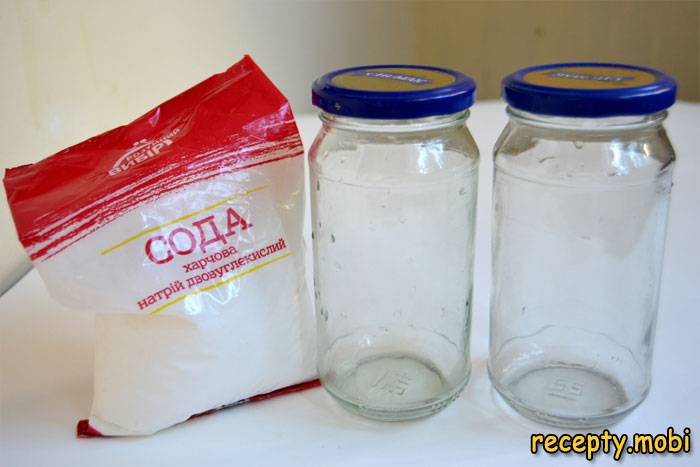
Wash the jars thoroughly with baking soda and sterilise them over steam or in the oven at 120 °C for 15 minutes. Boil the metal lids for 5 minutes – sterile jars are critical for long storage.
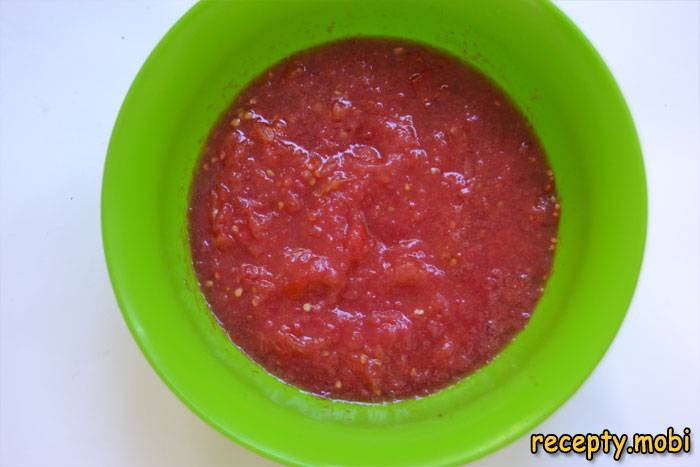
Be sure to remove the skins from the tomatoes: make crosswise cuts, pour boiling water over them for 1 minute, then transfer them to cold water – the temperature change makes the skin come away. Pass the peeled tomatoes through a meat grinder into a tomato purée.
Peel the carrot and pass it through a meat grinder or grate it on a coarse grater. Through a meat grinder the adjika will be more uniform; on a grater it will have a pleasant fibrous texture.
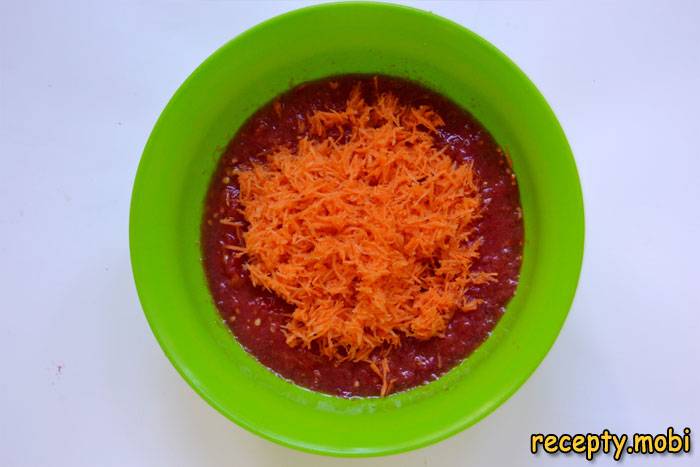
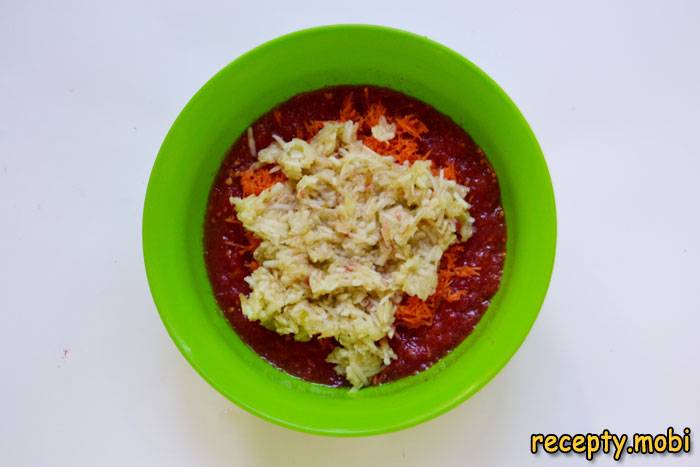
Peel and core the apples, removing the seeds (the pips make it bitter), and pass them through a meat grinder. I use sweet-and-sour varieties such as Antonovka or Simirenko. Sweet red apples would make the adjika cloying.
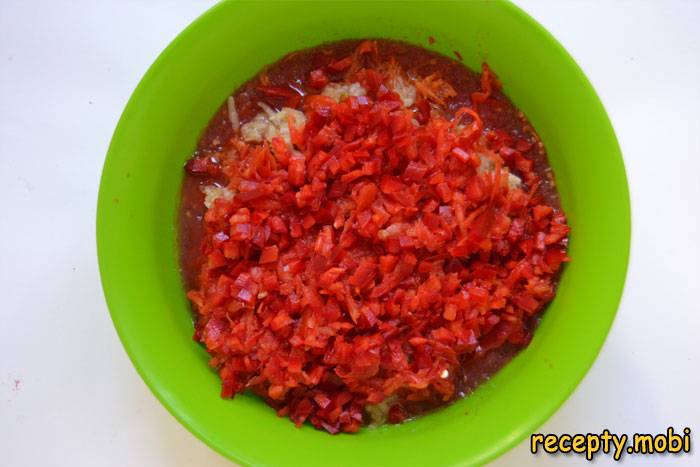
Remove the seeds and stalks from the sweet pepper and chop it through a meat grinder. I use peppers of different colours for a beautiful adjika colour.
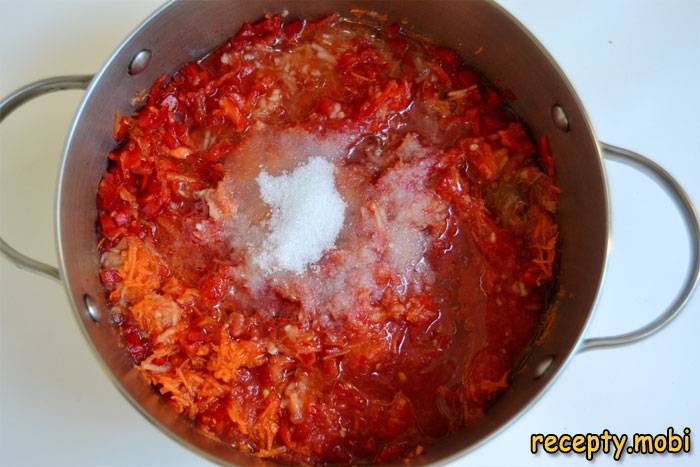
Combine all the chopped ingredients in a large pot (not enamelled – the acid will damage the enamel). Add the salt, sugar and vegetable oil. Cook over low heat for 1.5 hours, stirring occasionally with a wooden spatula. Twenty minutes before it is done, be sure to add the garlic crushed through a press and the finely chopped hot pepper (deseeded, wearing gloves).
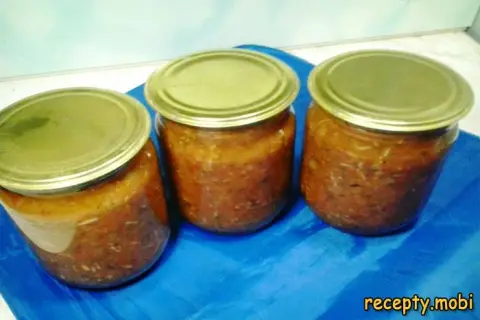
Spoon the hot adjika straight into the sterilised 0.5 l jars, leaving 0.5 cm below the rim. Seal with metal lids, turn upside down and wrap in a blanket overnight to cool slowly – this creates a vacuum.
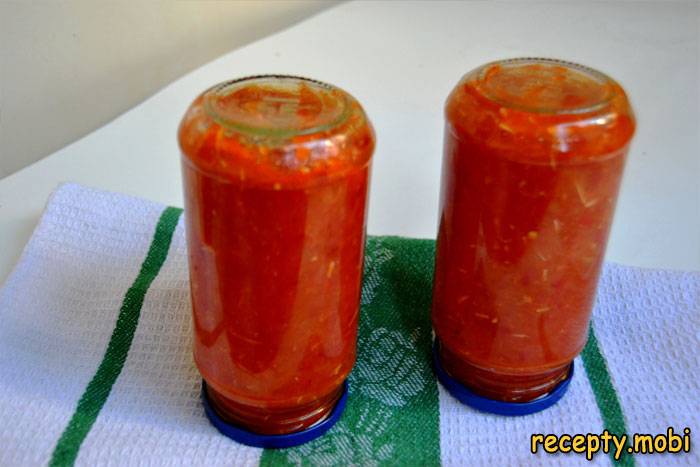
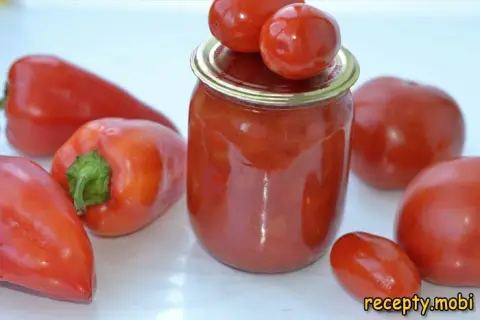
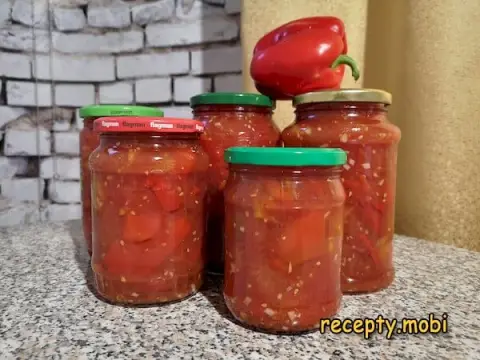
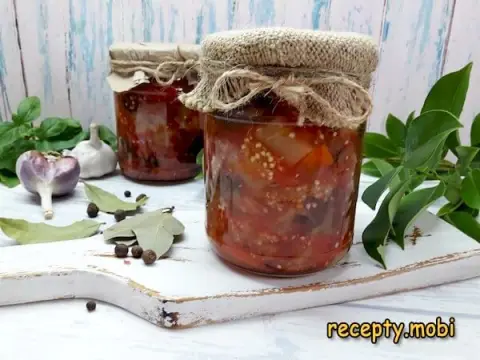
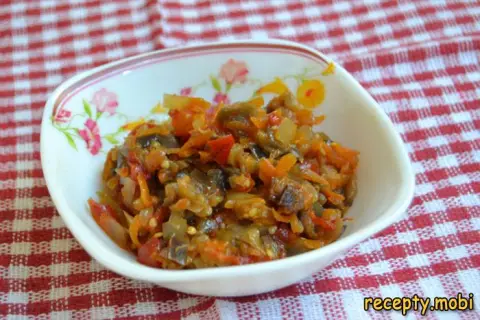
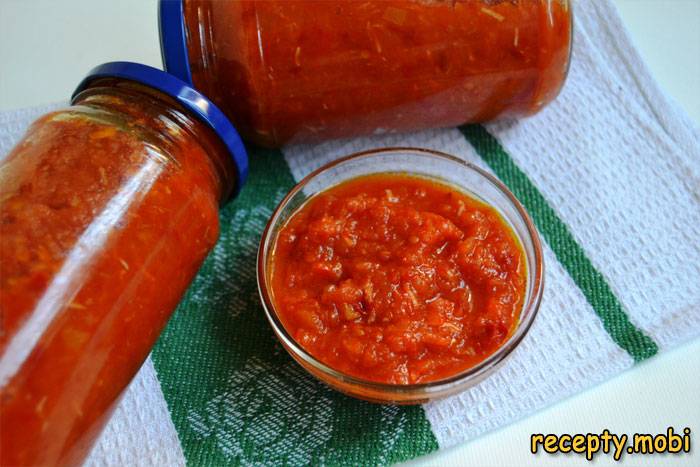
The spicy adjika with apples and tomatoes is ready! It keeps perfectly in a flat (in the pantry) for up to a year.


Tips
- 1
Use meaty tomatoes of the Slivka or Damskie Palchiki variety – the adjika will be thicker and richer.
- 2
Ratunda pepper with thick, fleshy walls is the ideal choice. The Bogatyr variety or any meaty red peppers also work well.
- 3
Choose sweet-and-sour apple varieties (Antonovka, Simirenko) – they give balance. I use a similar principle for khrenoder (horseradish relish) with tomatoes.
- 4
Toward the end of cooking, stir more often – the adjika thickens and can catch on the bottom of the pot.
FAQ
How do you adjust the heat of the adjika? +
Reduce the amount of hot pepper to half (for a milder version) or increase it to 2–3 (for a fiery one). You can also remove the seeds and white membranes – this is where most of the capsaicin (the substance that gives the heat) is concentrated. For a really mild, child-friendly version, replace the hot pepper with a pinch of ground paprika – it gives colour and aroma without the heat. Fresh garlic also affects the heat – halve it for a milder version. For a spicy one, use chilli varieties such as habanero or peperoncino.
How long does the finished adjika keep? +
In hermetically sealed, sterile jars at room temperature (in a dark place) – up to a year. In the second year the flavour holds, but the heat fades a little. Once opened, keep the jar in the fridge for up to 1 month. If a film of oil appears on the surface, this is normal – it is a natural preservative; simply stir it in before use. Signs of spoilage are mould, a sour fermented smell or a bulging lid – throw such jars away.
What do you serve adjika with? +
With fried and roasted meat (beef, pork, lamb), grilled fish, shashlik, pilaf, and side dishes of rice and grains. It works wonderfully spread on rye bread with hard cheese – a Ukrainian snack. A tablespoon of adjika in borscht or shchi gives an interesting spicy accent. With pasta and cheese it is unexpected but tasty. With fried eggs it makes a quick breakfast. You can also use it as a marinade for chicken wings or beef ribs.
\nSeasonal collection: 15 Lenten apple recipes for Apple Spas 2026.
\n- Comment
or post as a guest
Be the first to comment.
Related recipes