avg —
Eggplant Caviar for Winter Without Sterilization

Instructions
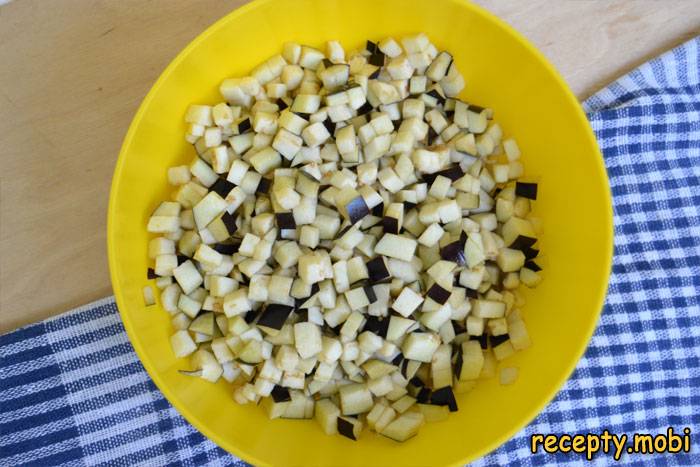
Cut the eggplants into 1.5–2 cm cubes. Soak them in salted water (3 tablespoons of salt per 1 litre) for 40 minutes – the salt draws the bitter solanine out of the flesh, so the eggplants will not taste bitter in the finished caviar.
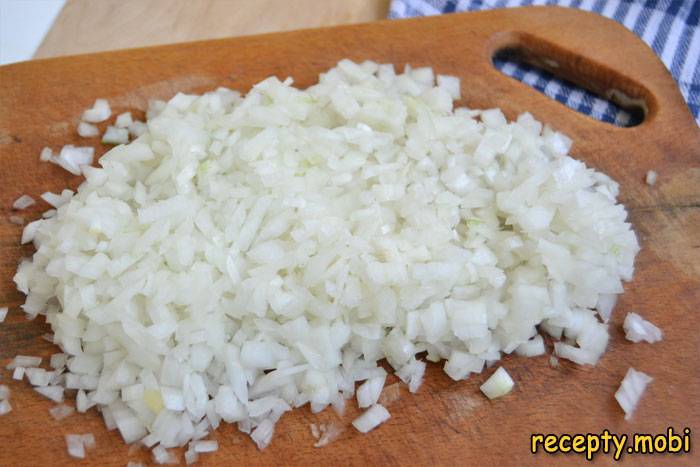
Meanwhile, finely chop the onion into 4–5 mm cubes. Chopping it small lets the onion spread nicely through the caviar.
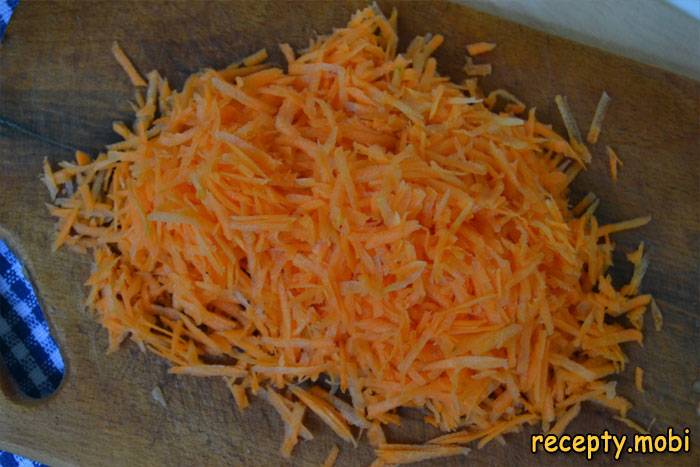
Grate the carrots on a coarse grater – they give the finished caviar a lovely orange colour and a pleasant sweetness.
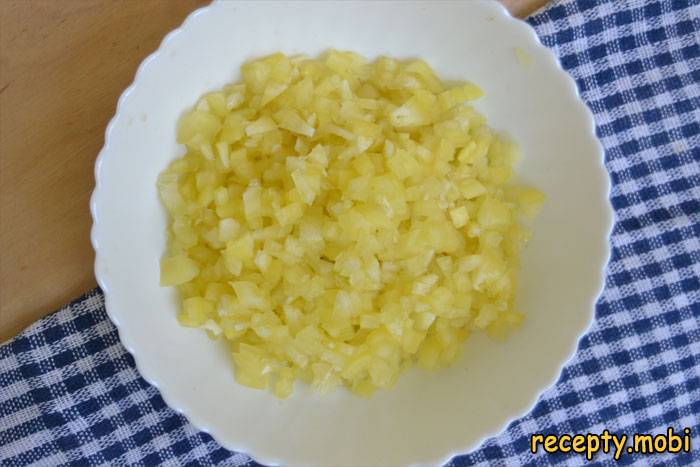
Cut the bell pepper into small 5 mm cubes. I use peppers of different colours – they give a bright colour.
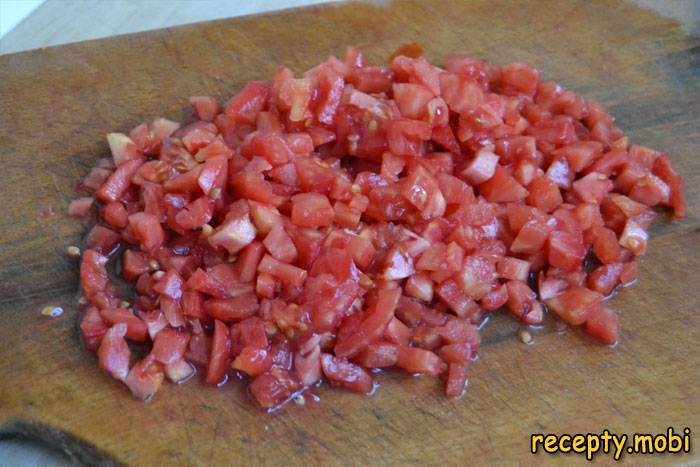
Peel the tomatoes (blanch them – scald with boiling water and the skin will come off) and cut into small cubes.
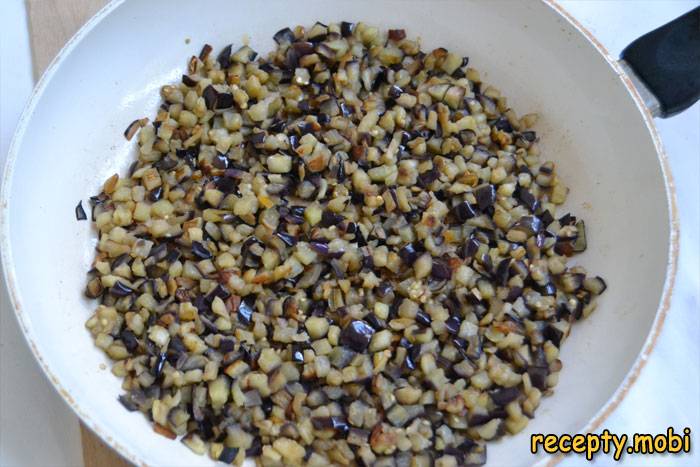
Squeeze the water out of the eggplants well (this matters – wet ones spit in the pan) and fry them in vegetable oil for 7–10 minutes until golden.
Fry the carrots, onion and pepper separately – each vegetable in its turn in the same pan. Stew the tomatoes for 5–7 minutes until the excess liquid has evaporated.
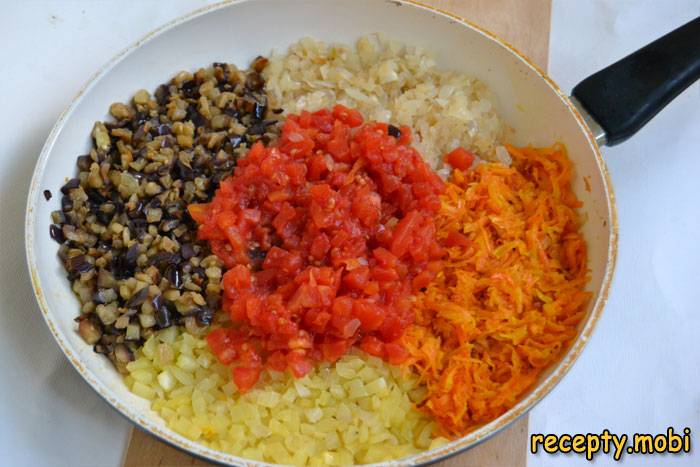
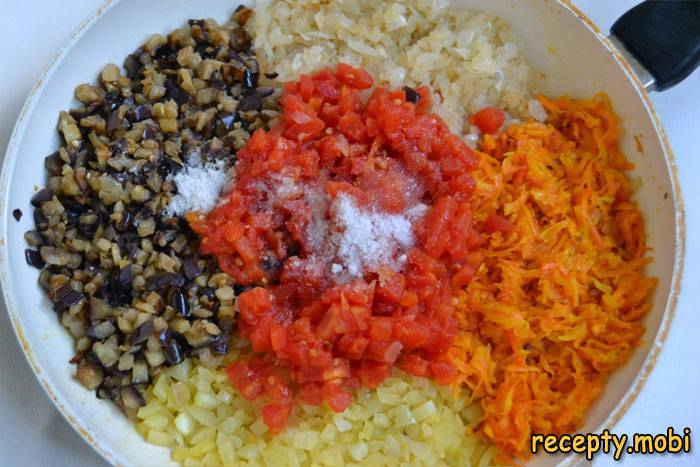
Combine all the fried vegetables in a large pot, add the salt, sugar and finely chopped hot pepper. Stew for 40 minutes over low heat, stirring from time to time. Ten minutes before it is done, add the 9% vinegar – it works as a natural preservative for long storage.
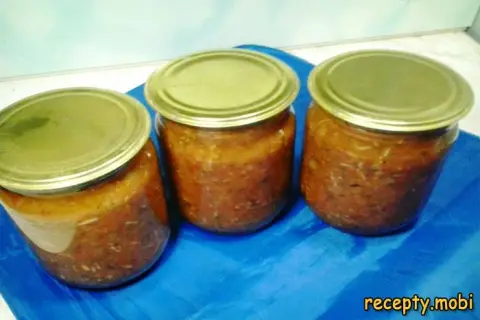
Pack the hot caviar into sterilised jars right up to the rim. Seal with metal lids and wrap in a blanket for 12 hours to cool slowly – this creates an extra vacuum.
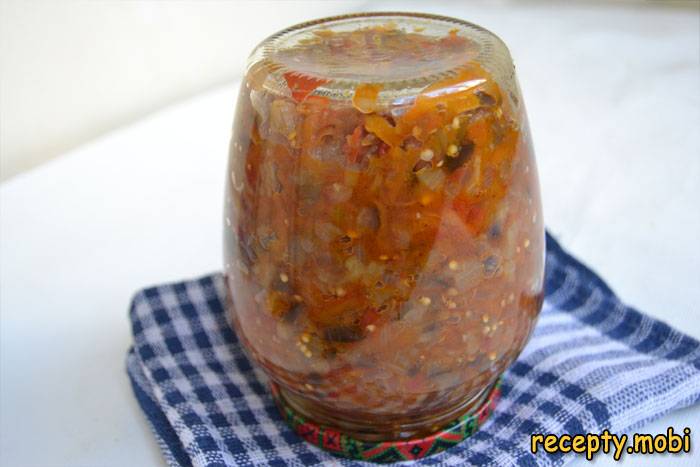
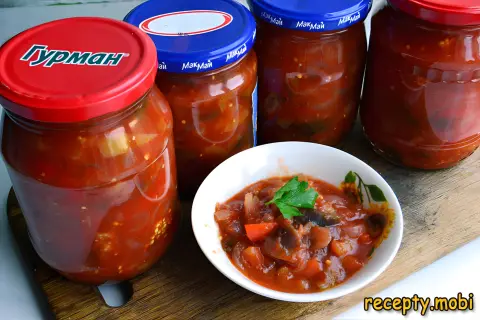
The eggplant caviar for winter is ready! I keep it in a cool, dark place for up to a year.



Tips
- 1
Choose young eggplants without large seeds and with thin skin – they make the most tender caviar.
- 2
If you are not making it for winter (to eat within a week), you can leave out the vinegar – the caviar will taste fresher.
- 3
Blend the finished caviar for a smooth, uniform, “shop-bought” texture. Zucchini caviar for winter is made on a similar principle.
- 4
Store it in a cool, dark place at 5–15 °C – kept this way, the preserve lasts up to a year.
FAQ
Do I have to soak the eggplants? +
Modern bred varieties rarely turn bitter, but soaking guarantees the result and insures you against failure. Young eggplants with pale seeds need not be soaked; ripe ones with dark seeds definitely should be. Soaking in salted water (3 tbsp of salt per litre) for 40 minutes completely removes the solanine (the bitter component). After soaking, be sure to squeeze out the water, otherwise the caviar will be watery. If you skip soaking and a few bitter eggplants get in, the whole batch of caviar can be ruined.
Can I avoid frying the vegetables separately? +
You can stew everything at once in one pot – but frying them separately gives a richer, “deeper” flavour. That is the difference between “homemade” and “restaurant” caviar. If you are really short on time, you can fry the onion and carrots together (that is acceptable), but fry the eggplants and pepper separately. Always add the tomatoes last – they give the liquid needed for stewing. “Everything in one pan at once” saves 20 minutes, but you lose out on flavour.
How long does the caviar keep after the jar is opened? +
In the fridge, in a tightly closed jar – up to a week. With each day the flavour deepens as it steeps. If a film of oil appears on the surface, that is normal – just stir it in before serving. Signs of spoilage are mould, a sour fermented smell, or a change in colour – throw such a jar away and do not try to use it. For longer storage, transfer the caviar into small single-portion jars – it is convenient to open only as much as you will eat at one time.
- Comment
or post as a guest
Be the first to comment.
Related recipes