avg —
Eggplant Lecho for Winter

Instructions
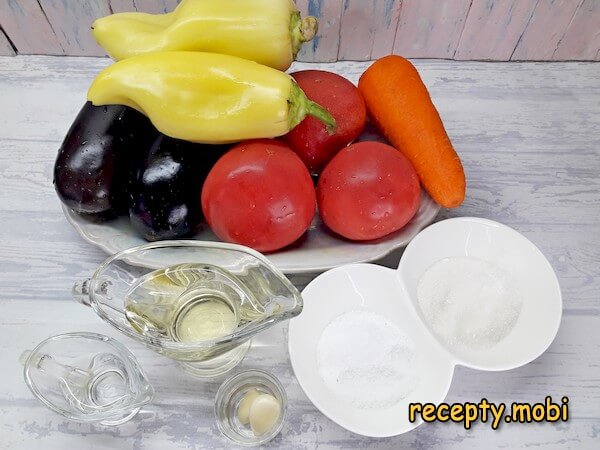
I prepare the necessary ingredients.
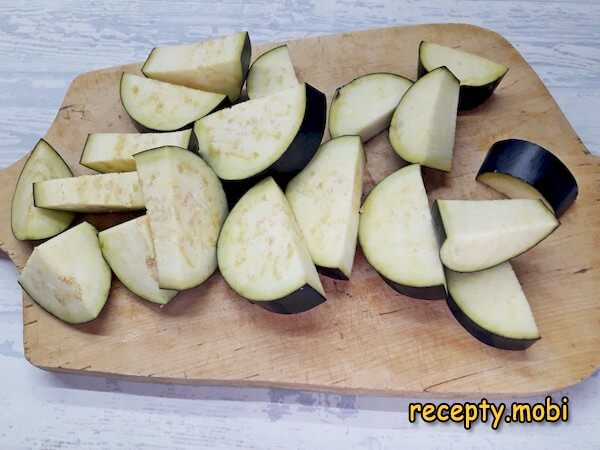
I cut the stems off the eggplants, then divide each one first into 2 lengthwise halves and then chop it into fairly large pieces (roughly 2 cm thick).
I soak the pieces in a saline solution (2 tablespoons of rock salt per 2 litres of tap water).
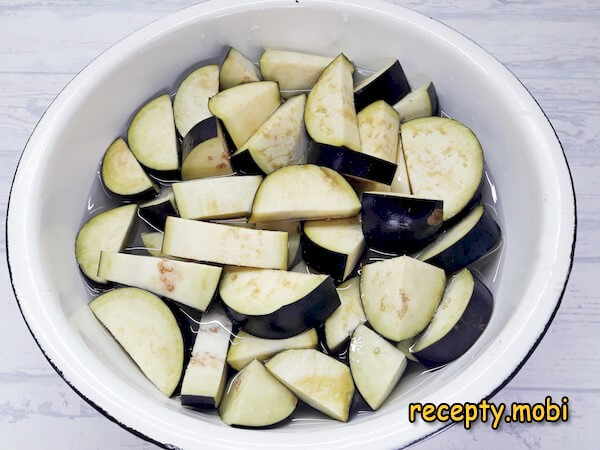
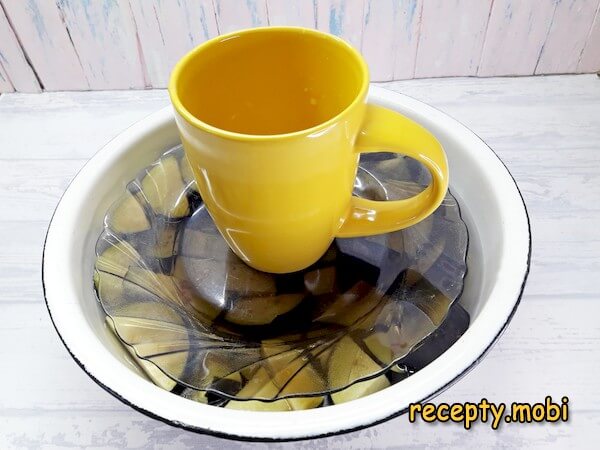
So that the eggplants are fully submerged in the liquid, I press them down with a light weight and leave them like that for half an hour. This way the pieces get rid of their excess bitterness and absorb the other vegetable juices better.
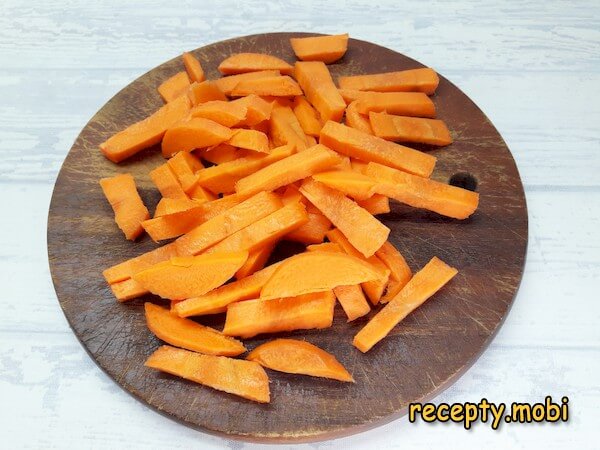
Meanwhile, I get on with preparing the rest of the ingredients. I cut the carrot into sticks 0.5 × 2–2.5 cm.
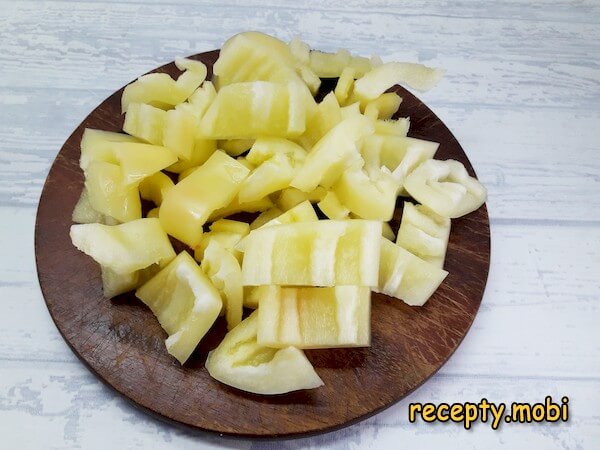
I remove the seeds from the meaty bell pepper and chop it coarsely.
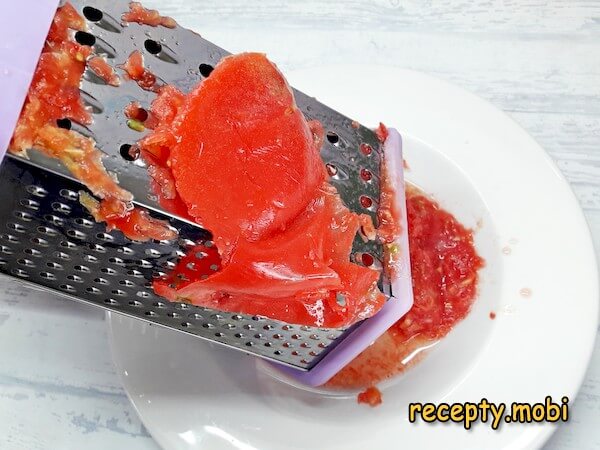
Tomatoes are an excellent preservative with a natural flavour. I cut the tomato in half without removing the skin and cut out the stem area. I grate the flesh on a grater, pressing each half down by the skin side until all the flesh is rubbed off.
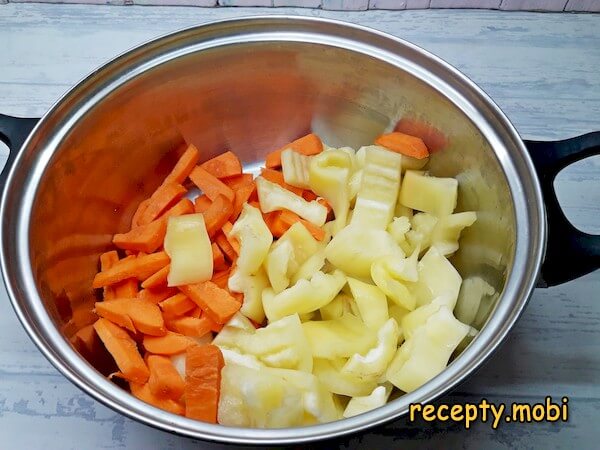
I put the pepper and carrot into a pot.
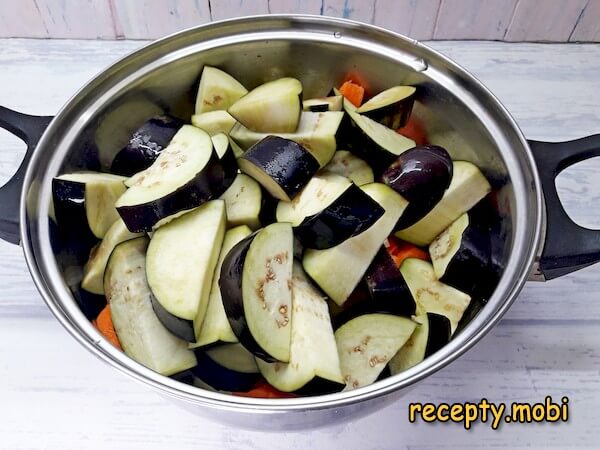
I add the lightly squeezed pieces of eggplant to the same pot.
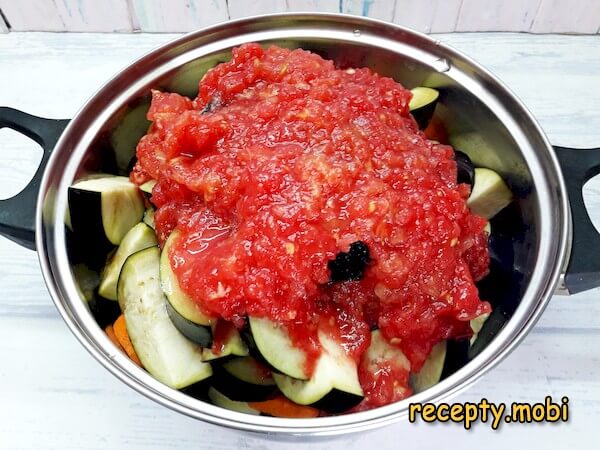
I pour the grated tomato over everything.
I season straight away with salt, sugar, and vegetable oil.
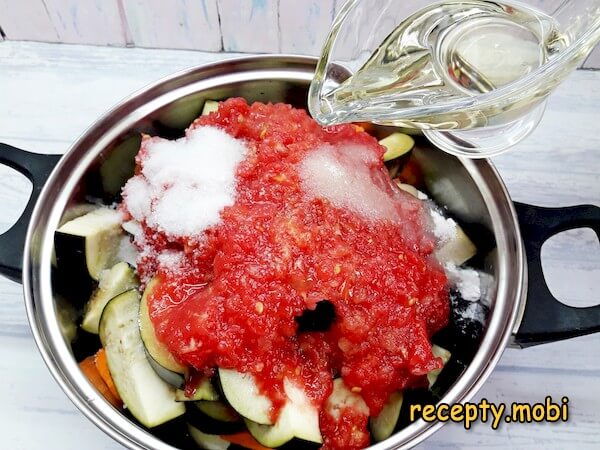
After stirring gently, I set the pot over low heat. From the start of a steady boil, I simmer the lecho for 20 minutes.
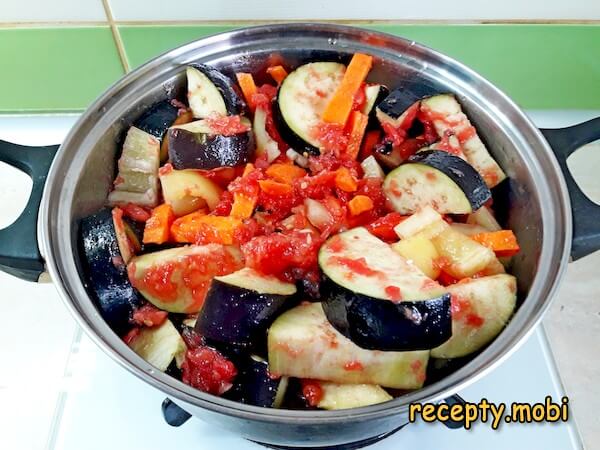
While there is some free time, you can sterilize the jars, for example in the microwave at maximum power for 4 minutes. The glassware should be wet or hold a little water. I boil the metal lids for 3 minutes.
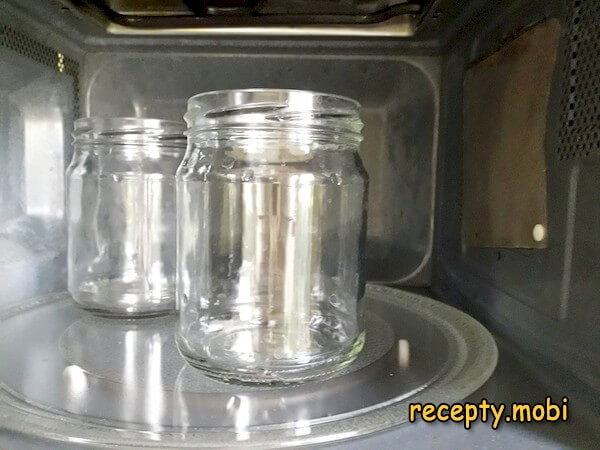
After 5 minutes of boiling, the ingredients in the lecho will settle and become completely submerged in the tomato.
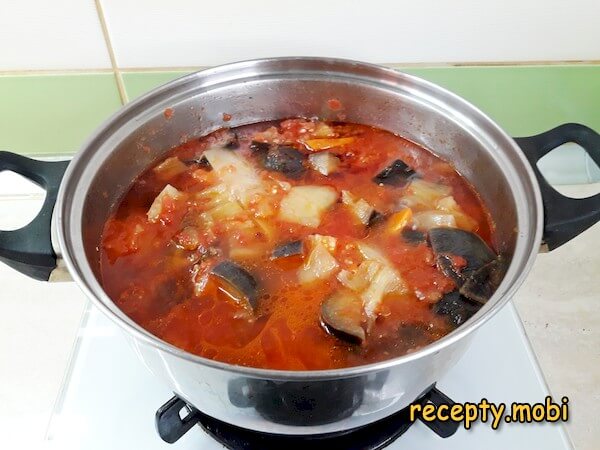
At the 10-minute mark, I press the garlic into the boiling mixture.
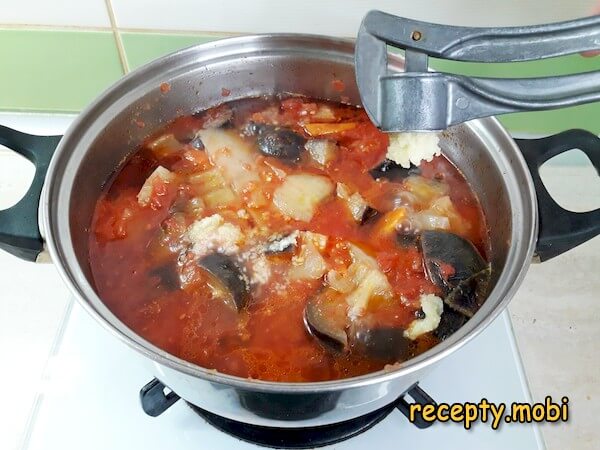
I pour in the vinegar.
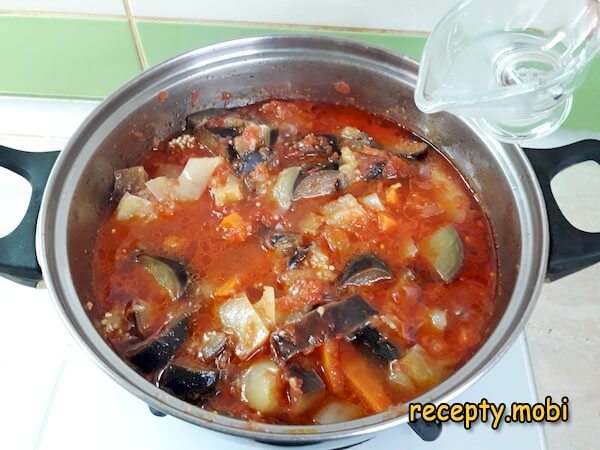
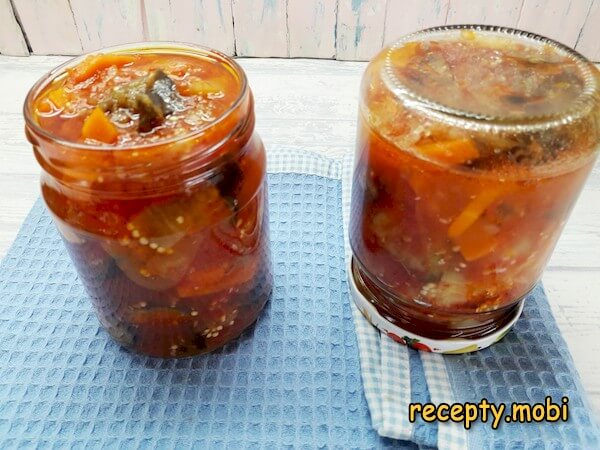
I finish cooking the lecho for the remaining 10 minutes and ladle it into the jars, filling them right to the top. I screw on the lids and turn the jars upside down onto them.
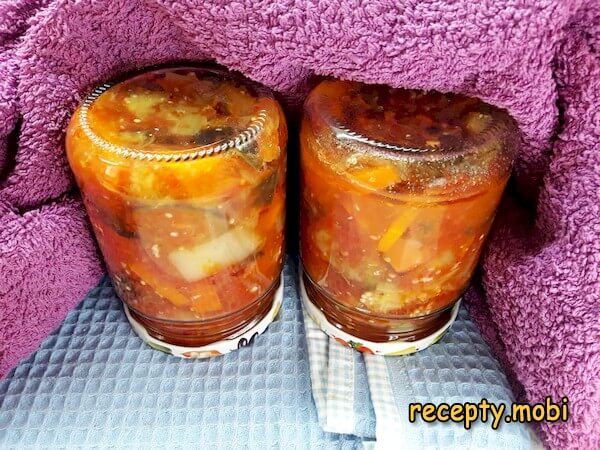
To prolong the sterilization, I wrap the jars in a large, thick towel and leave them like that for 10 hours.
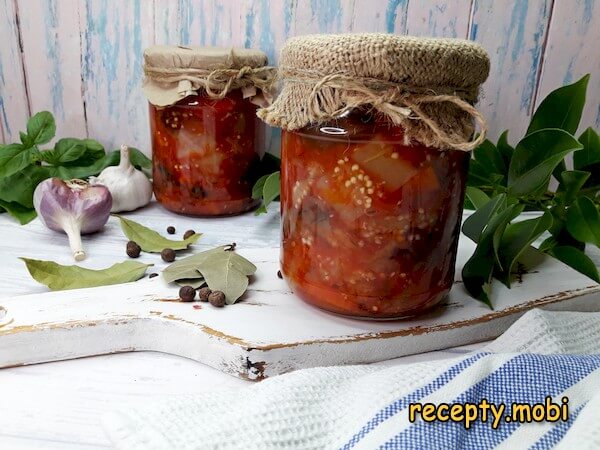
You can store the eggplant lecho for winter in the kitchen cabinet of an ordinary flat. A preserve like this will keep for a year, and if it is stored somewhere cool, even up to 2 years. The bright, aromatic pieces of eggplant and pepper will transform any dish, even the most ordinary one. Give it a try!


Tips
- 1
THE SALINE SOLUTION – the "secret" against bitterness. 30 minutes under a weight in salted water, and the eggplants come out without bitterness and ready to absorb the tomato.
- 2
GRATE THE TOMATOES – the "secret" against the skin. Grating on a grater leaves the skin in your hand while the flesh goes into the pot.
- 3
10 HOURS UNDER A BLANKET – the "secret" of sterilization. The extra pasteurization by heat means the preserve keeps for up to 2 years.
- 4
GARLIC AT THE END – the "secret" of aroma. Added at the 10-minute mark of cooking, it won't burn off and will lend its spice to the tomato. The same principle works in other kinds of lecho and vegetable preserves.
FAQ
Which eggplants should I choose? +
Ideally, young dark-purple ones with glossy skin (such as Almaz, Black Beauty, Epic F1). Alternatives: white eggplants (more delicate, without bitterness) and striped ones (Melovidny, Graffiti). Fresh eggplants are firm and heavy, with a green stem. A size of 15–20 cm is best (few seeds). Not suitable: overgrown ones with large seeds (they taste bitter) or ones with brown spots. For a "premium" result, use farm-grown, soil-raised eggplants. The seed brands Gavrish, Poisk, and Aelita are reliable. If the eggplants taste bitter, be sure to soak them in a saline solution. Don't peel them – the skin keeps the pieces in shape. Frozen ones are not suitable, as you need whole fruit for lecho.
What can I use instead of tomatoes? +
Alternatives: tomato paste (200 g + 500 ml water – the "budget" option), canned tomatoes in their own juice (700 g – a winter option), tomato juice (700 ml – less thick), or tomato purée (700 g – more convenient). The brands Pomidorka, Chumak, and Mutti are reliable. Fresh sweet varieties (Beef Heart, Pink Giant, San Marzano) are the "premium" option. Do not use green tomatoes (sour) or unripe ones (no aroma). You can leave the skin on (thin, and once grated it stays in your hand) or remove it after scalding with boiling water. For a "spicy" version, add 1 tsp of ground paprika. For the "classic" version, use only sweet red varieties.
How long does lecho keep? +
In sterile, sealed jars at room temperature, up to 1 year. In a cool cellar, up to 2 years. Once opened, 5–7 days in the fridge. Write the canning date on the jars. If a lid bulges, do not open it – throw it away. Don't store the jars in the sun, or the colour will fade. It is ideal to use the preserve within the first 6–8 months. Can it in small jars of 0.5–0.7 L – they are easier to open (a big one would spoil within a week). Before serving, take it out 15–20 minutes ahead (cold "mutes" the flavours). Without the 10 hours under a blanket, reduce the shelf life to 6 months. Don't leave an open jar at room temperature for longer than 2 hours.
What goes with lecho? +
It works as a starter on its own – on bread with or without butter. With boiled or fried potatoes. With pasta and spaghetti – instead of a sauce. With rice or buckwheat – a "meat-free lunch". With meat that is fried, braised, or roasted. With grilled or boiled fish. With fried eggs or an omelette – for "breakfast". On open sandwiches with herbs and cheese. With dumplings and vareniki. With pancakes and fritters – an unusual pairing. With boiled chicken. With a shot of cold vodka – the "Russian" way to serve it. For a "family lunch" – with mashed potatoes and cutlets. With a bowl of borscht as a starter. A versatile vegetable preserve for everyday meals and celebrations alike.
- Comment
or post as a guest
Be the first to comment.