avg —
Khrenovina (Ogonyok) for Winter: How to Keep It from Going Sour + a Table of Variants and Ratios

Instructions
I get the ingredients ready for the horseradish snack. It is best to use meaty tomatoes so the snack doesn't turn out too watery. For lovers of very spicy food, I recommend adding 0.5 tsp of ground hot pepper, or grinding part of a fresh chilli together with the tomatoes. The glass jars should be sterilised in advance, and the lids, whether metal or plastic, scalded with boiling water.
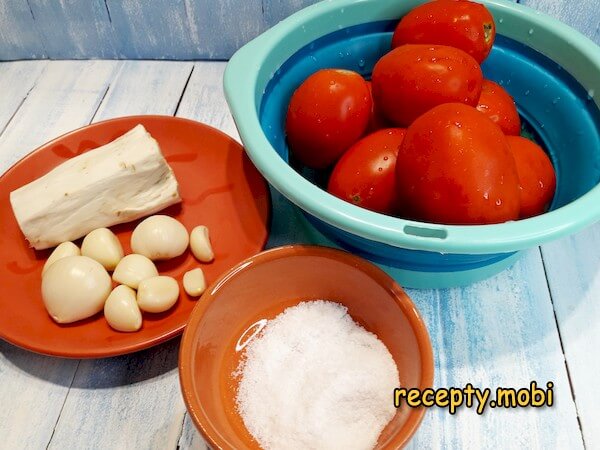
I cut the tomatoes into large chunks, removing the stem end, then grind them in a blender or an ordinary meat grinder into a smooth, pulpy mass. It is the meaty juice that should be the base of the snack, not a paste thinned with water.

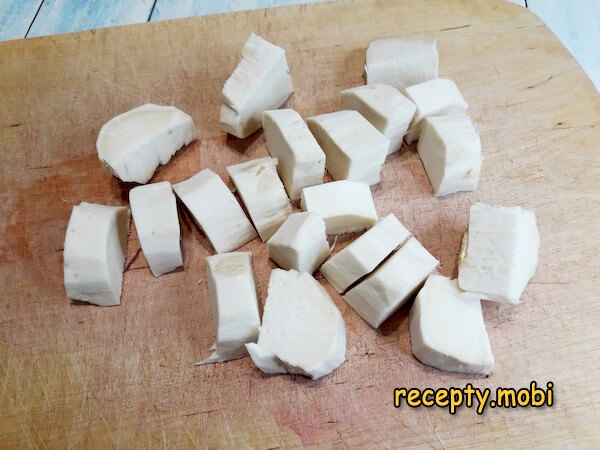
Horseradish contains volatile, fiery oils that strongly irritate the eyes while you work with it. So, to keep this to a minimum, I work step by step: first I peel the root, then cut it into medium-sized pieces. There is no need to cut it very fine: the meat grinder will finish the job.
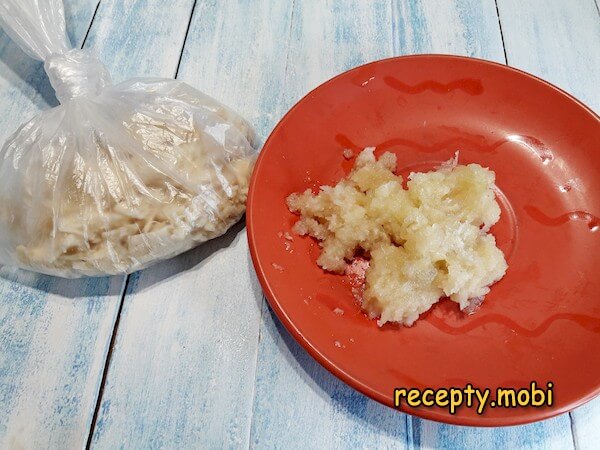
Next I fit a food bag over the meat grinder and tie it on around the plate with a rubber band. I grind the pieces of horseradish so they drop straight into the bag, and you barely notice the essential oils. Without the bag the kitchen would be impossible to breathe in from the sting of grated horseradish.
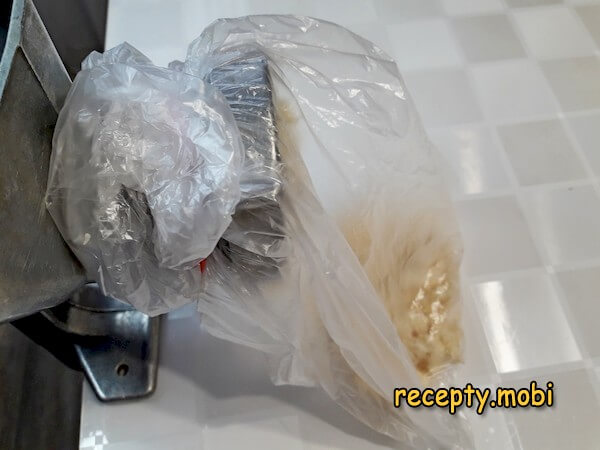
Then I carefully take the bag off the grinder and tie it in a knot. I put the garlic through a garlic press: this way its flavour spreads evenly through the whole mass.
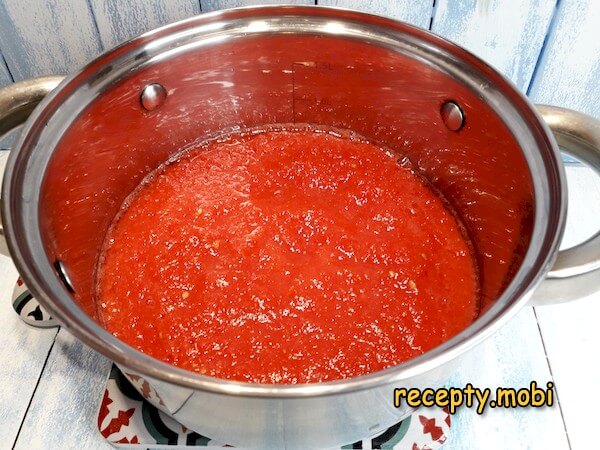
I pour the tomato into a container that is convenient for mixing, ideally stainless steel or glass. Aluminium or untinned dishes will oxidise from the salt and horseradish.
I add the salt while the tomato is still clean, without spicy additions, so I can calmly taste it for salt.
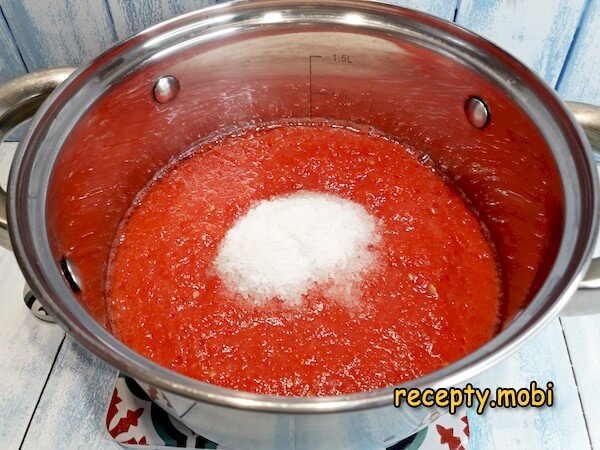
I stir it and let it stand for about 20 minutes so the salt dissolves and I can taste it (the flavour should be a little saltier than for ordinary cooking). Once the horseradish and garlic go in, tasting for salt becomes impossible: their heat overwhelms all the taste receptors.
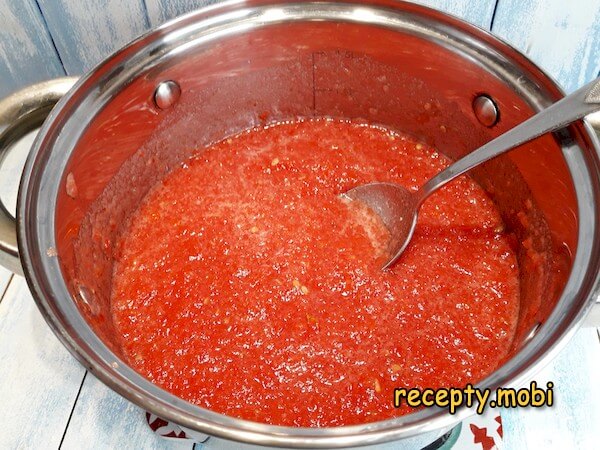
Now I add the garlic.
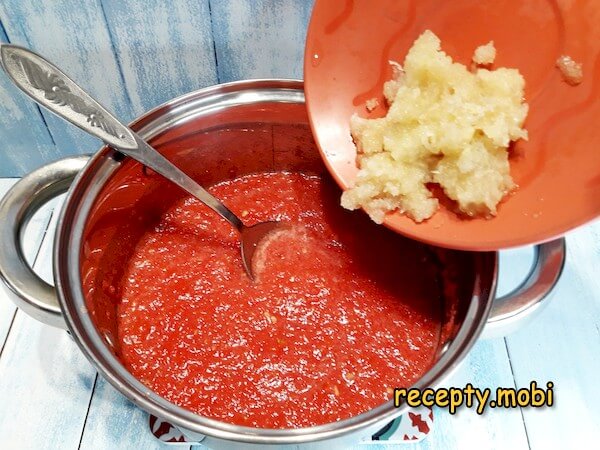
And the horseradish. I untie the bag of horseradish, prepared earlier, over the bowl: the fiery oils have already aired out a little inside the bag, so it is more comfortable to work with now.
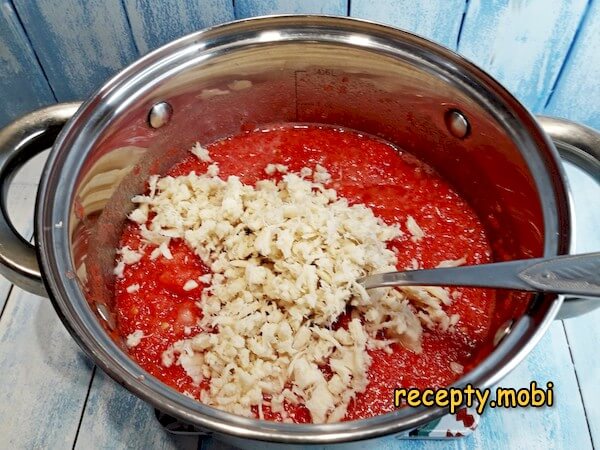
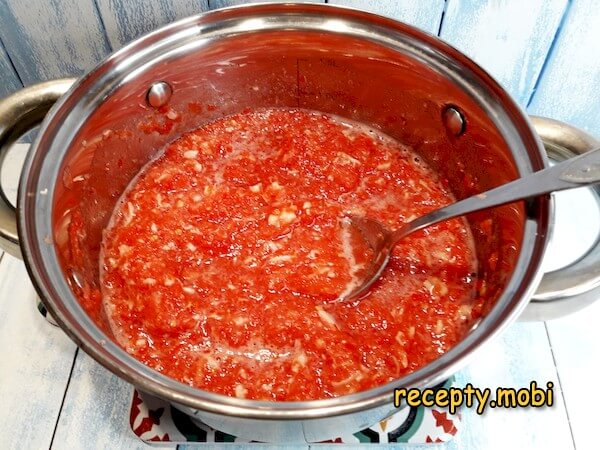
I mix everything thoroughly: it is important to spread the horseradish and garlic evenly throughout the tomato.
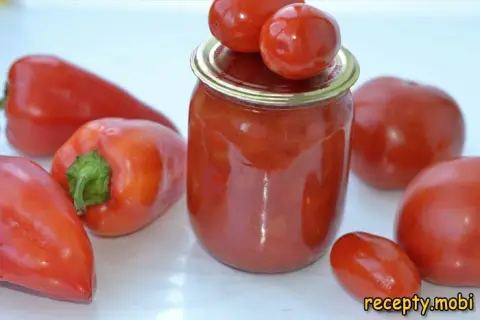
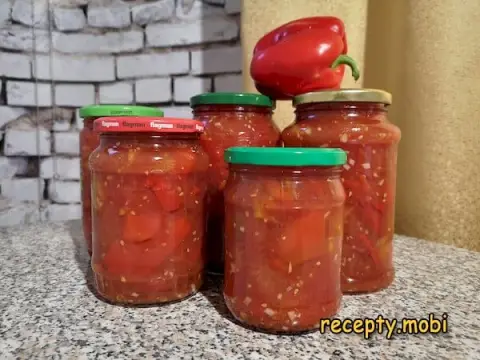
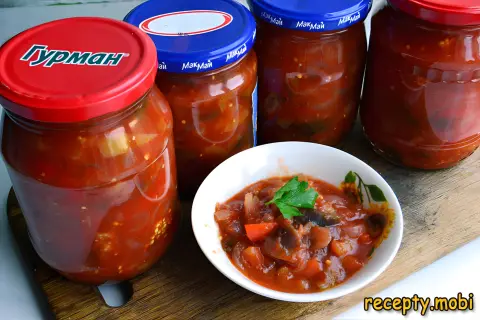
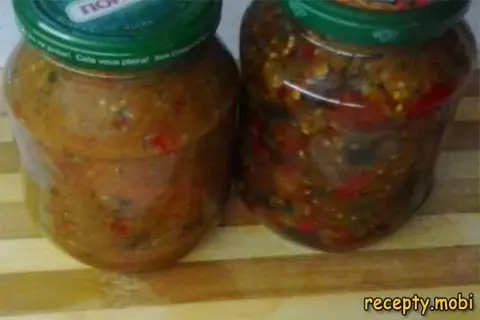
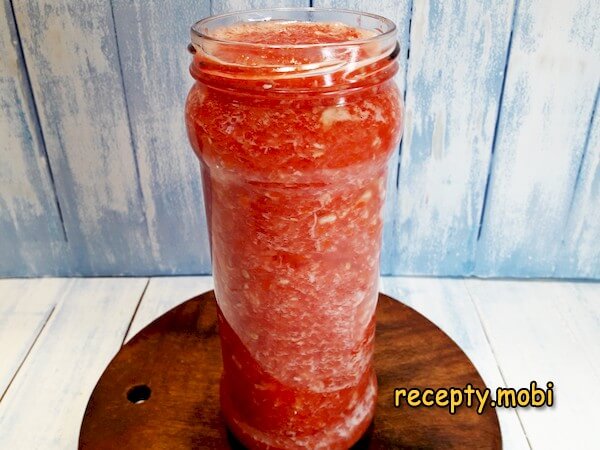
I spoon the finished seasoning into the sterilised jars, leaving a little room at the top. I pour a 1 cm layer of heated then cooled vegetable oil over the surface as a plug against air, and close the jars with plastic lids, without sealing them airtight.


Tips
- 1
Revive a limp horseradish root before mincing. Soak it in cold water for 3-4 hours or overnight: the root firms up, grates more easily and gets back some of its heat.
- 2
Freeze part of the batch in portions. Small containers or bags of ready khrenovina keep in the freezer for up to a year with almost no loss of heat. Defrost a portion in the fridge and stir it before serving; do not refreeze.
Comparing khrenovina variants: ratios, heat, storage and souring risk
| Variant | Horseradish : garlic per 1 kg of tomatoes | Heat (1-5) | Cooked | Where and how long it keeps | Souring risk |
|---|---|---|---|---|---|
| Classic raw | 150 g : 115 g | 4 | no | fridge or cellar, 6-8 months | medium |
| Cooked | 120 g : 100 g | 3 | yes, 15-20 min | larder or cellar, up to 12 months | low |
| Mild ogonyok (for children) | 70-80 g : 50-60 g | 2 | no | fridge, 3-4 months | high |
| Fermented eye-waterer | 200 g : 150 g | 5 | no, ferments for 2-3 days | fridge, 4-6 months | medium |
| With beetroot | 150 g : 100 g + beetroot | 3 | no | fridge, 4-6 months | medium |
Khrenovina variations
A mild version for children and the whole family
This is the gentlest khrenovina of all, where the heat is barely noticeable and the tomato and garlic flavour takes centre stage. Start from the classic raw recipe but cut the fiery ingredients right back: for 1 kg of tomatoes use just 70-80 g of horseradish and 50-60 g of garlic instead of the usual 150-200 g and 100-150 g. To make the flavour even softer and slightly sweeter, add 1-2 sweet peppers with the seeds removed or half a grated sweet apple. The pepper gives the mixture body and a light sweetness, while the apple brings a fresh tang and a delicate touch. Use the usual amount of salt, about 1 tbsp per kilogram, and you can skip the sugar: the pepper or apple will provide plenty of sweetness on their own. This mild version can be offered to children in small amounts from about 7-8 years old, whereas the classic hot relish is best kept back until 10-12. One important note on storage: horseradish and garlic also work as natural preservatives, and since there is so little of them here, the relish turns sour noticeably faster. So make it in small batches to last 3-4 months and keep it strictly in the fridge, not in the larder.
Fermented and eye-wateringly hot
This is the fiercest, most potent khrenovina of all, and on top of that it goes through a light fermentation, coming out alive, gently fizzy and with a pleasant natural sourness. The method differs from the classic one in that the mixture is left to ferment for a while in a warm place, so this is a technique in its own right rather than a simple change of proportions. It is a version for those who love properly hot food and are not afraid of bold flavours.
You will need: tomatoes: 1 kg, horseradish root: 200 g, garlic: 150 g, coarse non-iodised salt: 1.5-2 tbsp with a little extra to spare.
- Wash the tomatoes, cut out the stalk ends and cut them into pieces. Peel the horseradish root and, if it has dried out, soak it in cold water for 20-30 minutes so it becomes juicier. Separate the garlic into cloves and peel them.
- Pass the tomatoes through a mincer into a deep enamel or glass bowl. Do not use aluminium: the acidic mixture corrodes it.
- Mince the horseradish separately, fitting a plastic bag over the outlet of the mincer and securing it with a rubber band so the pungent fumes do not sting your eyes. Then mince the garlic.
- Combine the tomatoes, horseradish and garlic, add the salt with a little extra and stir thoroughly until it has completely dissolved. Here the salt is responsible not only for flavour but also for keeping unwanted microflora at bay while the mixture ferments.
- Transfer the mixture to a clean jar or enamel pan, filling it only about two thirds full rather than to the brim: it will rise as it ferments. Cover with 2-3 layers of muslin rather than a lid so the gas can escape freely.
- Leave it somewhere warm at 20-24 °C for 2-3 days. Stir once a day with a clean spoon and keep an eye on it: bubbles, gentle fizzing and a slightly sour smell mean the fermentation is going well.
- Once you can taste a pleasant sourness and see foam, skim off that first foam, give it another stir and check the salt and heat.
- Spoon the finished khrenovina into clean jars, leaving 2 cm at the top, close with lids and put it straight into the cold. The cold will stop the active fermentation.
Storage and safety: fermented khrenovina keeps in the fridge for 4-6 months. In the cold the fermentation carries on very slowly, so do not fill the jars right to the top and open the lids slightly from time to time to release the gas, otherwise a tight lid can start to bulge. If the mixture suddenly ferments violently, turns cloudy with a putrid smell or grows mould, it must not be eaten.
Khrenovina with beetroot
A beautiful deep burgundy relish of moderate heat that will brighten any table. To 1 kg of tomatoes add one small beetroot weighing 150-200 g, take about 150 g of horseradish, 100 g of garlic and salt to taste. The beetroot can go in raw, simply grated on a fine grater or passed through the mincer along with the tomatoes, or you can boil it in its skin first for 40-50 minutes. Boiled beetroot gives a softer, earthier flavour and an even, rich colour, while raw beetroot adds a touch more freshness and a slight sharpness. Beetroot brings natural sweetness, softens the burn and dyes the mixture a deep burgundy shade, so the heat ends up medium and comfortable. This version is especially good with jellied meats, boiled tongue and fatty meat. Bear in mind that because of the sugars in the beetroot this preserve also needs the cold and is designed to last around 4-5 months.
Khrenovina with plums
A sweet and sour fiery sauce that comes out noticeably thicker than the classic. Replace some of the tomatoes with stoned plums: for 700 g of tomatoes take 200-300 g of ripe plums, and keep the horseradish and garlic at the classic levels, around 150 g and 100 g. Choose firm plums of a sweet and sharp variety such as prune plums, and pass them through the mincer together with the tomatoes. Plums are rich in pectin and act as a natural thickener, so the khrenovina comes out dense and velvety, with a pleasant fruity note and a gentle tang. This is not so much a relish as a fully fledged sauce: try it with shashlik, roast pork, chicken and turkey. If you want to strike the right balance, add a tsp of sugar and let your taste guide you, the plums themselves will tell you how much is needed.
Khrenovina with apple
A softened version with a fresh apple tang, and a lifesaver for anyone who finds the classic relish too fierce. Grate 1-2 sour apples on a fine grater, ideally Antonovka or another sharp variety, for 1 kg of tomatoes, take 120-150 g of horseradish, 80-100 g of garlic and salt to taste. The apple tones down the burn of the horseradish, adds a light freshness and a barely perceptible sweetness, and the flavour becomes rounder and more delicate. Grate the apple just before mixing so it does not brown, or better still combine it with the tomato mixture straight away: the acidity of the tomatoes will keep its colour pale. There is one storage caveat: apple brings extra sugar, which makes the mixture more inviting for fermentation. Keep this khrenovina in the fridge only and never leave it sitting in the warm, otherwise it will soon start to ferment.
A fiery version with sweet peppers and chilli
An aromatic, multi-layered version with two kinds of heat at once. For 1 kg of tomatoes take 2-3 sweet peppers with the seeds removed and 1 hot chilli, 120 g of horseradish, 100 g of garlic and salt to taste. Pass the sweet peppers through the mincer together with the tomatoes: they give the mixture body, sweetness and a lovely colour. The chilli adds a second type of heat, the kind that comes from capsaicin, so the relish turns out richer and more interesting than the classic: the horseradish heat hits the nose while the chilli heat lingers in the mouth. Adjusting the fire is simple. For a milder result, remove the seeds and inner membranes from the chilli, as that is where most of the capsaicin lives, and for a proper blaze leave everything in or add a second chilli. Wear gloves when handling chillies and keep your hands well away from your eyes.
Khrenovina without tomatoes (beetroot or pepper based)
This version comes to the rescue when there are no good tomatoes to hand or you simply fancy something new. The base is not tomato but boiled beetroot or fleshy sweet peppers, so the process is a little different: the base needs preparing separately. The result is a bright, richly coloured hot condiment that goes beautifully with meat, poultry and side dishes.
You will need: boiled beetroot or fleshy sweet peppers: 1 kg, horseradish root: 150-200 g, garlic: 100-150 g, salt: 1 tsp, 9% vinegar: 1 tbsp, sugar: 1 tbsp (optional, especially for the pepper base).
- Prepare the base. Wash the beetroot and boil it in its skin for 40-60 minutes until soft, then cool and peel. If you are using peppers, wash them and remove the stalks and seeds, and for a softer flavour you can roast the peppers until tender first and slip off the skins.
- Peel the horseradish root and soak it in cold water for 20-30 minutes if needed. Peel the garlic.
- Pass the beetroot or peppers through a mincer into a deep bowl.
- Mince the horseradish separately, most conveniently with a bag over the outlet of the mincer, then the garlic, and add them to the base.
- Add the salt, the sugar if using, and pour in a tbsp of vinegar. The vinegar is particularly important here: there is none of the natural acidity that tomatoes provide, and it is precisely that acidity which keeps the preserve safe.
- Mix thoroughly, let it stand for 10-15 minutes and taste it, adding more salt, heat or acidity as needed.
- Spoon the condiment into sterilised jars and close them tightly.
Storage and safety: keep this preserve in the fridge for 3-4 months. The vinegar here is not a whim but a necessity: without the tomato acidity the mixture is less well protected. If you want the pepper version to keep longer, once jarred you can warm the jars in a water bath for 10-15 minutes and then seal them.
Cooked khrenovina (heat treated)
A version for anyone without a cellar and with little room in the fridge: cooked khrenovina happily sits in a cool larder for up to a year. Thanks to the heat treatment it comes out milder and less fiery, losing some of its vitamins and bite, but it hardly ever turns sour and does not need constant refrigeration. This is no longer a raw relish but a proper preserve, so it is made differently, with simmering and sterilised jars.
You will need: tomatoes: 1 kg, horseradish root: 120 g, garlic: 100 g, salt: 1 tbsp, sugar: 1 tbsp (optional), 9% vinegar: 1 tbsp (optional, for extra peace of mind).
- Wash the jars with bicarbonate of soda in advance and sterilise them over steam for 10-15 minutes or in the oven at 120 °C, and boil the lids for 5 minutes.
- Wash the tomatoes, cut out the stalk ends, chop them and blitz with a blender or pass through a mincer to a smooth purée.
- Pour the purée into a heavy-based pan, bring it to the boil and simmer over a medium heat for 15-20 minutes, stirring now and then, so the mixture reduces slightly and thickens.
- While the base is simmering, peel and mince the horseradish and garlic. Slightly less is used here than in the raw recipe, because some of the pungency is lost in cooking anyway.
- Salt the mixture, add the sugar for balance if you like and taste it.
- About 5-7 minutes before the end of cooking, add the horseradish and garlic, pour in the vinegar if using, stir and do not let it boil for long, otherwise what remains of the heat and aroma will evaporate.
- Pour the khrenovina, still boiling, into sterilised jars right to the top and seal or screw the lids on straight away.
- Turn the jars upside down, wrap them in a blanket and leave until completely cool, this gives them an extra round of self-sterilisation.
Storage and safety: cooked khrenovina keeps for up to 12 months in a cool larder or cupboard, and once a jar is opened, in the fridge. Before putting the jars away, check that the lids have not bulged and there are no leaks. Remember that compared with the raw version there is less heat and fewer vitamins here, but the reliability and shelf life are noticeably better.
Storage and safety
Why jars of khrenovina ferment and bulge. Ogonyok is a raw relish with no sterilisation of the contents, and fermentation is set off by yeasts and bacteria, which need sugar, moisture and warmth. The usual culprits are watery tomatoes and excess juice, too little horseradish, garlic and salt (these are natural preservatives), unsterilised or damp jars, warm storage, and stale horseradish that has lost its bite. The more horseradish and garlic in your khrenoder and the colder the storage, the calmer and longer the preserve keeps.
On botulism and safety. Classic raw ogonyok is relatively safe precisely because it is not sealed airtight and is kept in the cold, while the horseradish, garlic and salt hold microbes back. The botulism risk is higher in hermetically sealed, low-acid, warm preserves with no access to air, so the cooked version, which you do seal tightly, must be made in spotless conditions, acidified with the tomatoes and stored somewhere cool. Never taste the contents of a bulging jar with gas, slime and an unpleasant smell: that preserve goes straight in the bin.
A checklist so your khrenovina does not sour before spring:
- fleshy, firm tomatoes, with any excess juice drained off;
- no less than 150 g of horseradish and 115 g of garlic per 1 kg of tomatoes;
- coarse salt with a little extra, as salt is a preservative too;
- jars washed, sterilised and dried completely, with dry lids as well;
- a 1 cm layer of heated then cooled vegetable oil on top as a plug against air;
- cold storage only at 0-6 degrees, not in a kitchen cupboard and not next to the cooker.
Storage times and places. In the fridge or a cold cellar (0-6 degrees), raw khrenovina keeps for 6-8 months and comfortably lasts until spring. Cooked ogonyok copes with a cool larder in a flat and keeps for up to 12 months. Never keep raw khrenoder anywhere warm: it will ferment within 2-3 days. Freezing is the most reliable option for a flat with no cellar: portions in bags or containers keep for up to a year with almost no loss of heat. Keep an opened jar only in the fridge and finish it within 2-3 weeks.
Yield and jar sizes. From 1 kg of tomatoes you get roughly 1-1.2 litres of finished ogonyok, which is 2-3 jars of 0.5 litres each. From 2 kg you get about 2-2.5 litres, and from 3 kg around 3.5 litres. Our base ratios (650 g of tomatoes, 100 g of horseradish, 75 g of garlic) give roughly 0.8 litres, or two jars of 0.4 litres. Pack the khrenovina into small sterilised jars of 0.2-0.5 litres: a small jar is easier to store and finish before the heat fades, and it is not worth opening a big jar and keeping it half-eaten for months.
Troubleshooting
The khrenovina has started fermenting or the lid has bulged
In the first few days, a light foam and a slightly sour smell on raw ogonyok is not yet spoilage. Open the jar, skim off the foam, stir in a fresh portion of grated horseradish, garlic and salt, and move it to the cold. If the fermentation is stronger, boil the mixture for 5-7 minutes and transfer it to a clean jar as a cooked version. Throw the batch away if there is a rotten or yeasty-alcoholic smell, slime, mould, or heavy bulging with gas: those contents must not be eaten.
The khrenovina has turned out watery
Let the ogonyok settle and pour off the excess juice. Thicken it with freshly grated horseradish (it both firms it up and adds heat) or stir in a little reduced tomato pulp; you can also strain the mixture through a sieve. Next time, choose fleshy tomato varieties and drain off the excess juice straight away.
The ogonyok tastes bitter
Bitterness usually comes from stale or frost-damaged horseradish or sprouted garlic with green shoots, and also from standing too long in the open air. Soak fresh horseradish in cold water, and use garlic without shoots. A spoonful of sugar or some grated apple helps smooth out the bitterness, while a badly bitter batch is easiest to re-mince with fresh tomatoes.
The khrenovina has lost its heat and tastes flat
The horseradish burn naturally fades over the first 1-2 weeks, especially in the warmth. To bring back the fire, stir in a fresh portion of grated horseradish and garlic, add salt, then close the jar straight away and put it in the cold. Make it hotter than you need from the start, as some of the heat will fade in storage.
The khrenovina has separated or the pulp has floated to the top
Separation into a thick layer and juice, or pulp floating up, is normal for raw khrenoder: just stir it before serving. It only counts as spoilage if active gas bubbles, fizzing, foam or a bulging lid appear, in which case treat it as fermentation.
Video

FAQ
Which horseradish is best, and where do I get it? +
Take a freshly dug autumn root, about 2-3 cm in diameter and 15-20 cm long. Dig home-grown horseradish in late autumn (October-November) or early spring before the leaves appear, when the root is at its fiercest and juiciest. Shop-bought root works too: choose firm pieces with no limpness or mould, and take about 130 g of vacuum-packed root instead of 100 g, as it is weaker in aroma. Mince frozen root without defrosting. Dried ground horseradish (1 tbsp instead of 100 g of fresh) gives a much weaker fire, so keep it for sauces. Avoid sprouted roots with long green shoots and dry, fibrous ones: they are bitter and grind badly.
Can I replace the fresh garlic? +
Fresh garlic is preferable for aroma. Suitable replacements: dried garlic flakes (15-20 g instead of 75 g of fresh), dried ground garlic (10-15 g) or pickled garlic (100 g, though it adds a vinegary note). Avoid garlic powder with MSG and salt, which distorts the flavour, and black fermented garlic, which has a sweetish profile of its own. Young spring garlic with scapes gives an even brighter aroma; old garlic that has sat through winter works too, just add 10-15 g more to compensate.
How long does khrenovina keep, and where? +
Keep raw khrenovina in the fridge or a cold cellar at 0-6 degrees, in tightly closed glass jars, for 6-8 months. Never store raw ogonyok at room temperature: it will ferment within 2-3 days. The cooked version copes with a cool larder and keeps for up to 12 months. Keep an opened jar only in the fridge and finish it within 2-3 weeks. In the second week the flavour becomes richer, and from about the sixth month the heat gradually fades and the snack becomes milder and more tomatoey.
Can you freeze khrenovina, and does it spoil after defrosting? +
Yes, ogonyok freezes beautifully, and it is the most reliable way to keep the heat with no risk of fermentation, especially if you have no cellar. Divide it into small containers or bags in portions and freeze. After defrosting in the fridge the flavour barely changes; a little juice may separate, so just give it a stir. Do not refreeze it.
What do you serve khrenovina with? +
Treat it as a universal fiery condiment. Serve it with kholodets and jellied fish, pelmeni, vareniki, shashlik, baked pork, boiled tongue, roast beef and sausages, or spread it on rye bread with salo. Add a spoonful to borscht, goulash and gravies. Khrenoder also works as a base for other sauces: mix it with soured cream 1:2 for a milder horseradish sauce for meat, or with mayonnaise for a spread, and add it to dressings and marinades.
What is the difference between ogonyok, khrenovina, khrenoder and gorloder? +
They are practically one and the same dish: a raw relish of tomatoes, horseradish, garlic and salt. Ogonyok, khrenovina, khrenoder, gorloder, the eye-waterer and Siberian relish are regional names for the same preserve. The difference is only in emphasis: khrenoder and gorloder are usually fiercer, with the focus on horseradish; ogonyok tends to have more noticeable garlic; and the eye-waterer is the hottest of all. Sometimes the name ogonyok is used for the version with beetroot or peppers.
Cooked or raw khrenovina: which is hotter and keeps longer? +
Raw is hotter and more aromatic: raw horseradish and garlic keep their bite and their antibacterial compounds, but such khrenovina is temperamental and loves the cold. The cooked version is milder in flavour, loses some heat and vitamins, but keeps for up to a year and is not afraid of a cool larder. Make raw ogonyok for the fridge, and the cooked version for long storage in a flat.
Do the jars have to be sterilised, and do you need oil, vinegar or aspirin for storage? +
Dry sterilised jars are essential: they are your main insurance against souring. Vinegar, oil and aspirin are optional: classic ogonyok relies on horseradish, garlic, salt and the cold. If you like, pour a 1 cm layer of heated oil on top as a plug against air, and a little vinegar or citric acid adds acidity and extends the shelf life. Do not add aspirin to food: it is an outdated and unsafe trick.
How do I mince horseradish without weeping from the acrid fumes? +
Keep the acrid fumes away from your face. Tie a sturdy plastic bag over the mouth of the mincer and secure it with an elastic band, and the horseradish will fall straight into the bag. Mince by an open window or outdoors, goggles welcome. Even simpler: use a blender with a closed jug, or a pre-frozen root, which smells noticeably milder.
Can you eat khrenovina with gastritis, an ulcer or during pregnancy, and from what age can children have it? +
Khrenovina is a fiercely hot product, so avoid it during a flare-up of gastritis with high acidity, with an ulcer, pancreatitis, or kidney and liver disease. During pregnancy and breastfeeding abstain or limit yourself to a very small amount. Give children the mild version from 7-8 years old, and the hot classic only from 10-12, a little at a time. If you have a chronic condition, check with your doctor.
- Comment
or post as a guest
Be the first to comment.
Related recipes