
avg —
Lecho with Eggplants and Peppers for Winter without Sterilization

Instructions
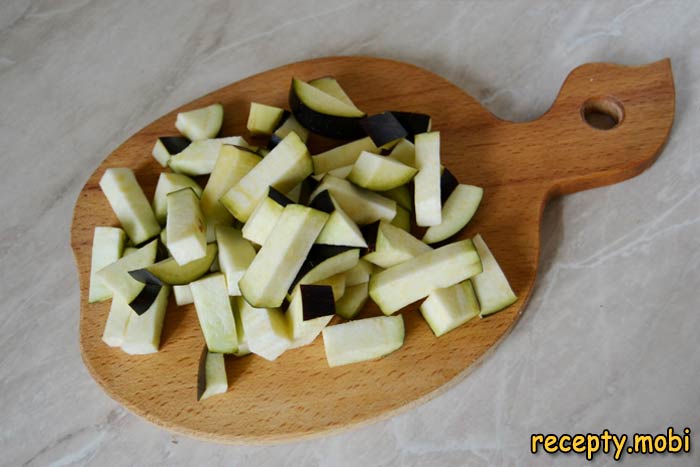
I cut the eggplants into sticks of 2–3 cm without peeling off the skin. The skin matters: it holds its shape during cooking and gives the finished lecho its characteristic purple accent. Without the skin the eggplants fall apart into mush. To reduce bitterness you can salt the cut sticks and leave them for 20 minutes, then rinse, but young eggplants are not bitter.
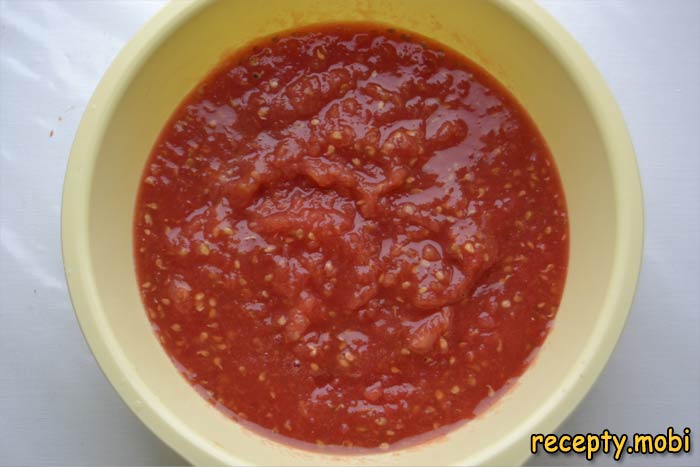
I pass the tomatoes through a meat grinder with a fine grid. From 1.2 kg of tomatoes you get about 1 litre of tomato mass. I use the meaty "Slivka" or "Bull's Heart" varieties – they give a thick, rich base without excess water. You can peel the tomatoes first by scalding them with boiling water – this makes the lecho more delicate.
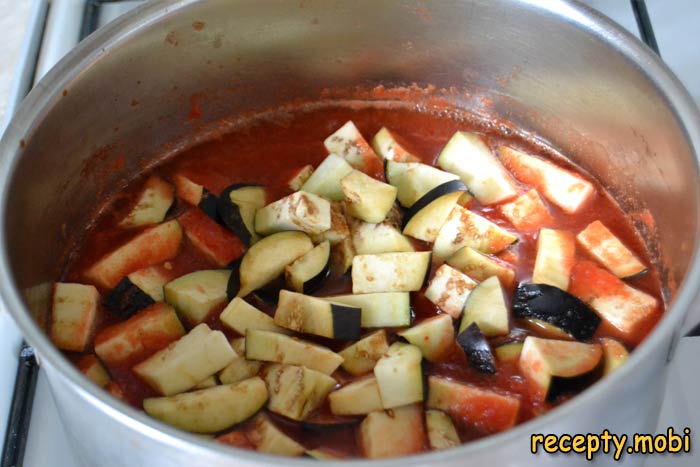
I mix the tomato mass with the sugar, salt, a tablespoon of vegetable oil and the vinegar. Sugar balances the acidity of the tomato; without it the lecho will be sharp. I add the eggplants and cook covered for 10 minutes over low heat. Stir occasionally so it does not burn to the bottom.
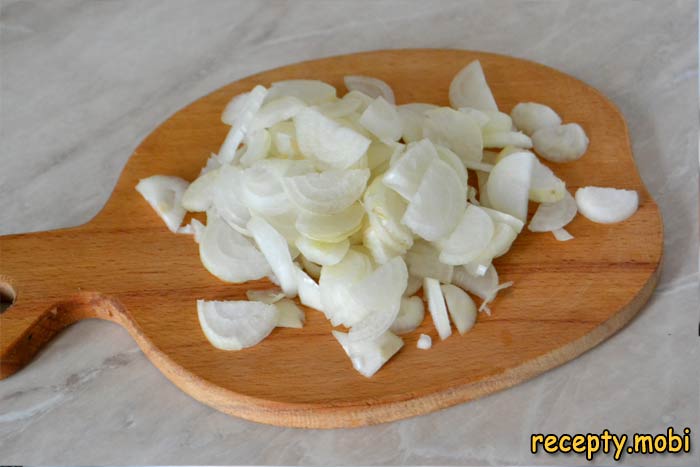
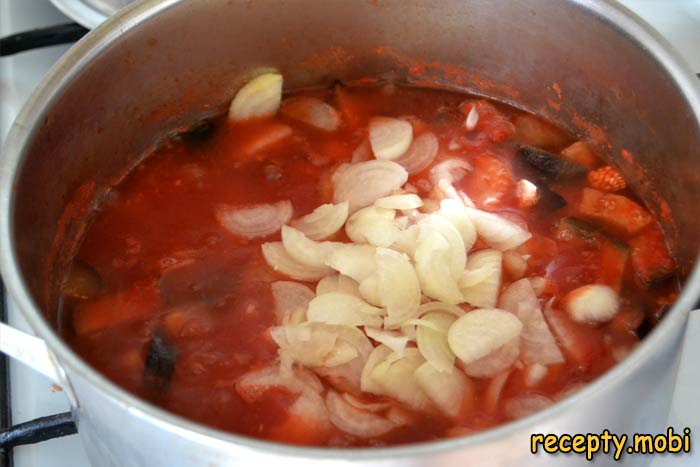
I cut the onion into thin half rings of 3–4 mm. Thin half rings spread out nicely in the finished lecho and cook through quickly. Onion that is too coarse leaves harsh pieces in the finished dish, while finely chopped onion dissolves without a trace.
I add the chopped onion to the eggplants in the tomato mass and cook for another 10 minutes over low heat. The onion should soften slightly but keep its structure. Cooking the vegetables in small "batches" in the right order is the secret to all the components keeping their shape and flavour.
I cut the bell pepper into strips of 1 cm and add it to the pot. I take pepper of different colours – red, yellow, orange – so the lecho is bright and festive. I add the pepper after all the other vegetables so it keeps its crispness and bright colour and does not overcook.
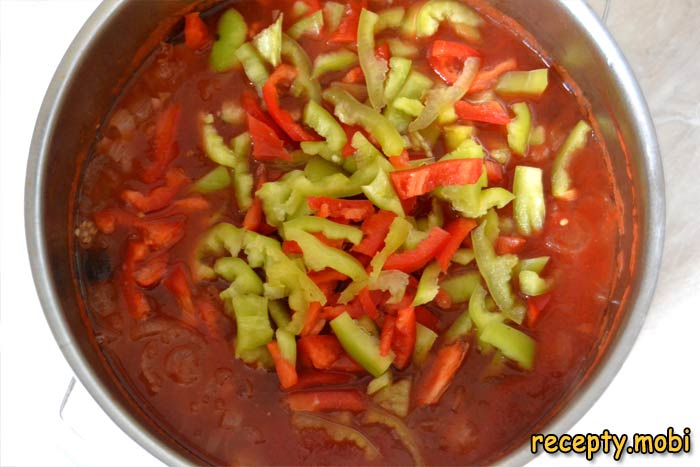
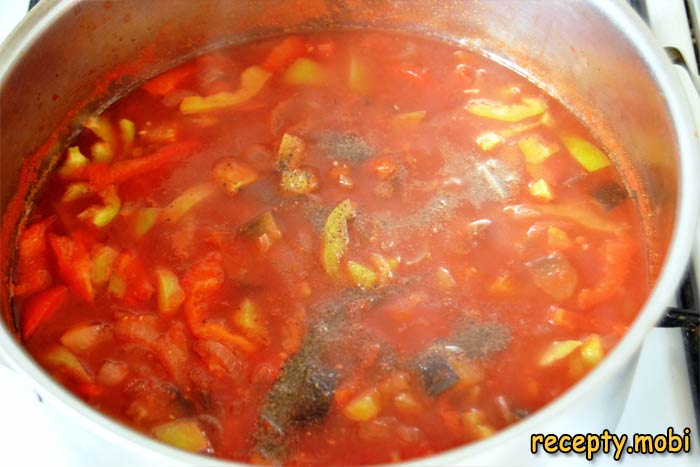
I add the bay leaf, ground black pepper, the chopped bitter pepper and the garlic put through a press. I cook for another 10 minutes over low heat until the pepper is done. Remove the bay leaf right at the end – a long time in the dish makes it bitter.
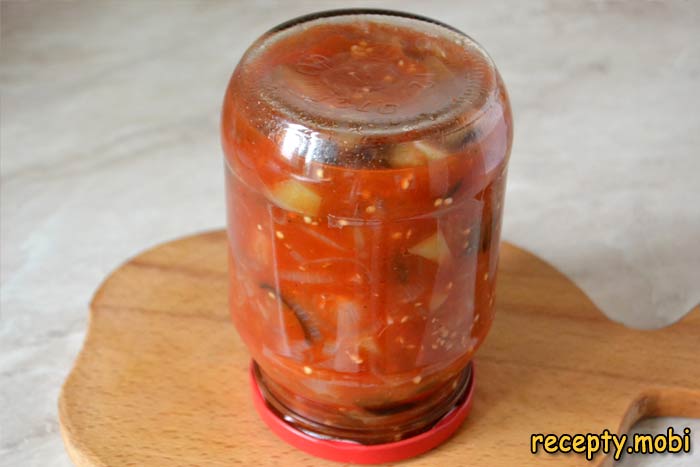
I spoon the hot lecho into sterilised 0.5 l jars (I sterilise them for 15 minutes in the oven at 120 °C) right up to the rim. I seal them with sterile metal lids, turn them upside down to check the seal and wrap them in a blanket overnight. Slow cooling creates an extra vacuum.


Tips
- 1
Pepper of any colour suits lecho – red, yellow, orange or green. Different colours make the most festive lecho for the winter table.
- 2
Meaty tomatoes such as "Slivka", "Bull's Heart" or "Lady Fingers" give the thickest and richest tomato base for lecho.
- 3
Store in a dark, cool place for up to a year – a temperature of 5–15 °C is ideal for long storage. I make classic lecho from peppers on a similar principle.
- 4
Lecho is equally tasty cold as an appetiser and warmed as a sauce or side – a versatile preserve for any occasion.
Types of lecho: which recipe to choose
Lecho is made in dozens of ways, and your choice shapes the flavour, the thickness and the shelf life alike. The classic version uses only peppers and tomatoes, but adding aubergines turns the sauce into a hearty, filling relish, almost a salad. If you have only a few ripe tomatoes to hand, a good fallback is lecho with sweet peppers and no tomatoes made on tomato paste: it cooks faster and comes out more concentrated. Below is a short comparison to help you pick your version.
| Version | What sets it apart | When to choose it |
|---|---|---|
| Classic (peppers and tomatoes) | Sweet pepper alone in a thick tomato base, no thickeners | When you want the pure taste of the pepper |
| With aubergines (this recipe) | Cubed aubergines add body and heartiness, the flavour is milder | When you want a relish closer to a salad |
| On tomato paste | Cooks faster, the flavour is brighter and richer | When ripe tomatoes are in short supply |
| Spicy, with chilli and garlic | Plenty of hot pepper and garlic, keeps longer | For lovers of a piquant kick |
| With carrot and onion | The vegetables add sweetness and thickness without extra sugar | For a soft, homely flavour |
How to choose aubergines and peppers
The quality of the relish is decided back at the greengrocer's. Choose young aubergines that feel heavy for their size, with firm, glossy skin and a green, un-shrivelled stem. Such fruit barely turns bitter, holds few large seeds, and after stewing the flesh keeps its cube shape rather than collapsing into mush. Overripe aubergines with brown seeds are better used for fried aubergines in tomato sauce for the winter, where softness is no drawback.
- Choose fleshy peppers with a thick wall (varieties such as Ratunda or California Wonder); red and yellow ones give a vivid colour.
- The tomatoes should be ripe, soft and juicy, ideally plum varieties: they hold less water and more flesh, so the sauce comes out thicker.
- Avoid limp, bruised or spoiled fruit: even a single such vegetable spoils the taste and lowers the keeping quality of the jar.
What makes lecho thick and rich
The main pitfall of homemade lecho is a thin, watery sauce instead of a thick, glossy coating. The thickness comes not from thickeners but from a few simple techniques.
- Reduce the tomato base with the lid off. Over 35-40 minutes of stewing the excess moisture evaporates and the sauce thickens naturally. Rushing this step leaves you with runny lecho.
- Salt the aubergines in advance. Sprinkle the cubes with salt for 15-20 minutes, let the bitter juice drain off and squeeze them lightly, so they do not release extra water into the mixture.
- Add the aubergines after the peppers. The peppers need longer, while the aubergines need only 15-20 minutes of stewing, otherwise they overcook and the sauce turns cloudy.
- Do not skimp on the oil. Vegetable oil binds the flavours together and creates that velvety, thick texture lecho is loved for.
Sterilisation and safety for no-sterilise preserves
The phrase "without sterilisation" does not mean "without safety rules". Aubergines and peppers are low-acid vegetables, and tomatoes lend only moderate acidity, so acid (vinegar or citric acid) in the recipe is essential: it is what creates an environment in which the organisms that cause botulism cannot develop. You must not cut it back or leave it out for the sake of taste. The same principle applies to other cold-pack preserves, for example assorted vegetables for the winter without sterilisation.
- Wash the jars with baking soda and heat them in the oven at 120 degrees for 15 minutes; boil the lids for 5 minutes.
- Ladle the lecho in boiling hot, right up to the neck, and seal at once: the hot filling drives out the air.
- Turn the jars upside down, wrap them in a blanket and leave them until fully cooled, for 10-12 hours; this is an extra, gentle pasteurisation.
- Store in a dark, cool place at a temperature up to 15 degrees: a cellar, a basement or the bottom shelf of the fridge.
- Read a bulging lid, cloudy brine or an off smell as clear signals: throw such a jar away without tasting it, the contents are dangerous.
Common mistakes and how to avoid them
Even a simple recipe can be spoiled by small things. Here are the ones that come up most often.
- You did not squeeze the water out of the aubergines: the sauce turns out thin and watery, and the jars keep less well.
- You added all the vegetables at once: the peppers stay raw while the aubergines fall apart, and the texture is lost.
- You packed the lecho into warm or damp jars: the temperature swing and leftover water lead to souring.
- You cut back the vinegar for a milder taste: this is a direct risk to keeping quality, the acid must never be adjusted by guesswork.
- You stored the jars somewhere warm by the radiator: in a warm spot the preserve ferments and the lid pops off within a couple of weeks.
FAQ
Do eggplants need to be soaked before canning? +
If the variety is not bitter and the eggplants are young with thin skin, it is not essential. During cooking in the tomato mass the bitterness of the eggplants is greatly reduced, and the finished lecho turns out mild in taste. If you happen to get very ripe eggplants with dark seeds and the flesh tastes bitter, soak the sticks in salted water (1 tbsp of salt per litre) for 20–30 minutes, then rinse and pat dry. Young eggplants up to 25 cm long usually do not need soaking.
What can replace vinegar in lecho? +
Lemon juice in the same proportion (2 tablespoons) works – it gives a milder acidity and a pleasant citrus accent. You can also use apple cider vinegar 6% (more aromatic), wine vinegar (for an Italian character) or balsamic vinegar (for a deep flavour). Do not skip the acid altogether – it works as a natural preservative and ensures long storage without sterilisation. Without vinegar the lecho may ferment within 1–2 months.
How long does lecho keep after the jar is opened? +
In the fridge in a tightly closed container, up to a week. I do not advise keeping it longer – the acidity drops and spoilage can begin. If mould appears on the surface, throw out the whole jar; do not try to remove just the top layer. The signs of a good opened jar are bright colour, fresh aroma and a firm texture of the vegetables. Seal lecho in small 0.5 l jars, enough for one serving, so you do not have to store it long after opening.
What to serve lecho with as an appetiser? +
It is ideal on its own as an appetiser with black bread, as a sauce for fried meat (pork, beef, chicken), or as a side with mashed potatoes, boiled rice or buckwheat. You can use it as a sauce for pasta – warm it up, pour over the cooked pasta and sprinkle with cheese. For breakfast it is good with fried eggs or an omelette. Lecho goes well with feta or brynza cheese, giving a "Mediterranean" flavour.
Before sealing, don't forget to sterilize your jars and lids – whether the preserve lasts through winter depends on it.
Do aubergines need peeling for lecho? +
Young aubergines with thin skin do not need peeling: the skin holds the cube shape and keeps the flesh from spreading. Peel only large, overripe fruit, where the skin is coarse and tough. In all other cases it is enough to wash the aubergines and cut off the stem.
Do the aubergines have to be fried before stewing? +
For this recipe frying is not essential: the aubergines stew together with the vegetables in the tomato base and cook through until soft. If you want a richer, slightly "fried" flavour, you can brown the cubes in oil for 5-7 minutes before adding them. Just remember that frying adds calories and oil to the mixture.
Why did my lecho turn out watery, and how do I thicken it? +
The usual causes are very juicy tomatoes and stewing the mixture with the lid on. Carry on reducing the sauce with the lid off for another 10-15 minutes so the excess moisture evaporates. It also helps to squeeze out salted aubergines beforehand, since otherwise they release water straight into the filling.
Can I add carrot, courgette or beans to lecho? +
Yes, lecho takes extra vegetables well. Add carrot and onion at the start of stewing, as they give sweetness and thickness; cut young courgettes into cubes and add them along with the aubergines. Stir in cooked beans 10 minutes before the end, but always keep to the stated amount of vinegar, since these vegetables are low-acid too.
How much lecho does this quantity of vegetables make? +
The listed ingredients yield roughly 1.5-1.8 litres of finished relish, that is three 0.5-litre jars or two 0.7-0.75-litre ones. The exact volume depends on how juicy the tomatoes are and how far you reduce the sauce. Smaller jars are handier, so an opened jar gets eaten within a couple of days.
How do I tell when the lecho is ready to pack into jars? +
Finished lecho turns thick: if you draw a spoon across the bottom of the pan, the trail does not fill back in with sauce straight away. The peppers become soft but hold their strip shape, while the aubergines pierce easily without turning to purée. At this stage the mixture should be boiling briskly, and it is then ladled straight into hot jars and sealed.
- Comment
or post as a guest
Be the first to comment.