avg —
Relish Sauce

Instructions
I prepare the ingredients (wash the vegetables and wipe them dry). Any cucumbers will do for this recipe – misshapen, crooked ones, but not too old. To make the relish bright and colourful, take sweet peppers of different colours (red and orange). The heat can be adjusted to your taste by adding or removing some of the hot pepper.
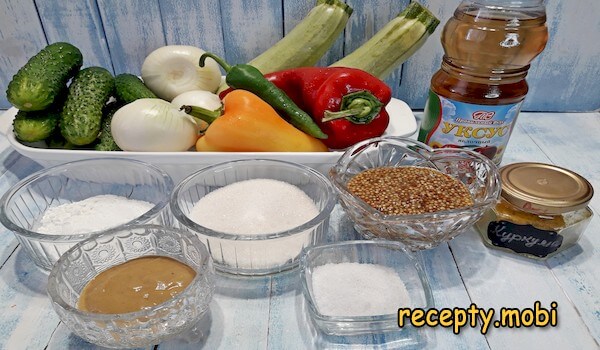
I dice the cucumbers into small cubes (do not peel them) – about 5×5 mm for the characteristic "relish" texture.
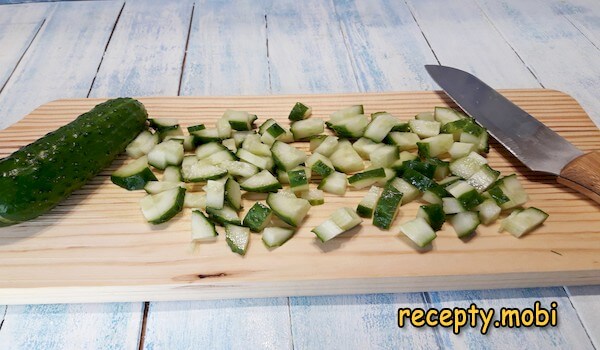
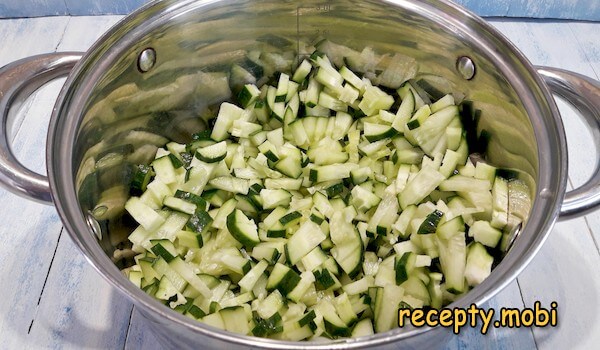
I take a roomy pot with a thick bottom and transfer the chopped cucumbers into it – the thick bottom is needed for even heating.
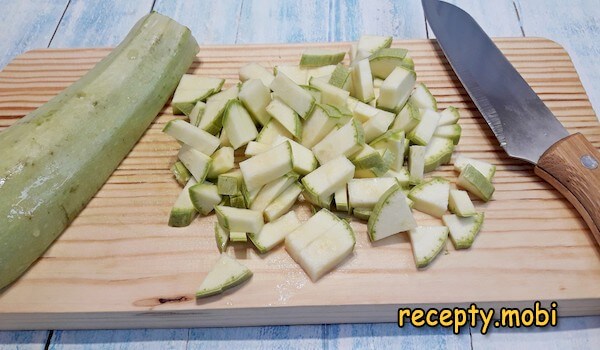
In the same way, I chop the zucchini. If the marrows are old, I remove the seeds and peel off the skin. Young zucchini have thin skin and need not be peeled.
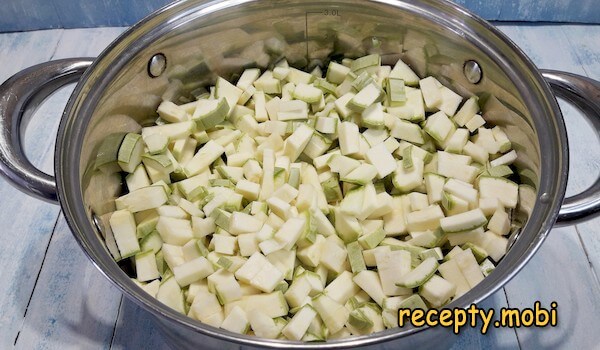
I send the cubes in with the cucumbers – they form a "double" vegetable base.
I shred the onion – also into small cubes, the same size as the cucumbers and zucchini.
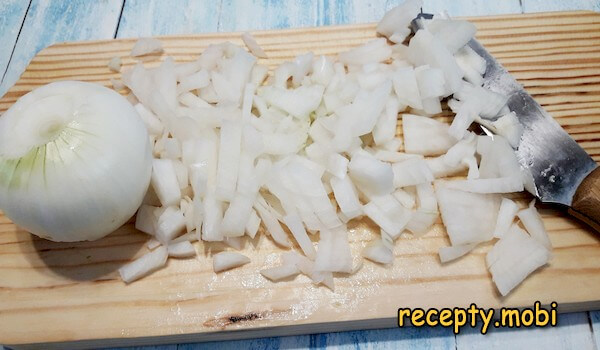
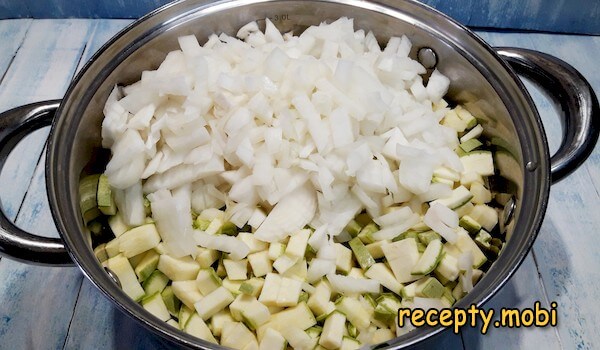
I transfer it into the common pot – in with the chopped vegetables.
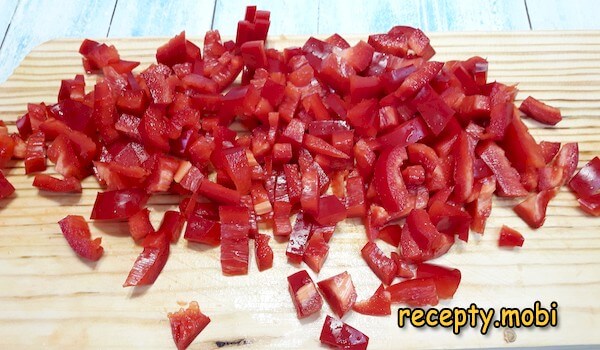
I chop the sweet pepper – into small cubes, in the style of "all the other vegetables".
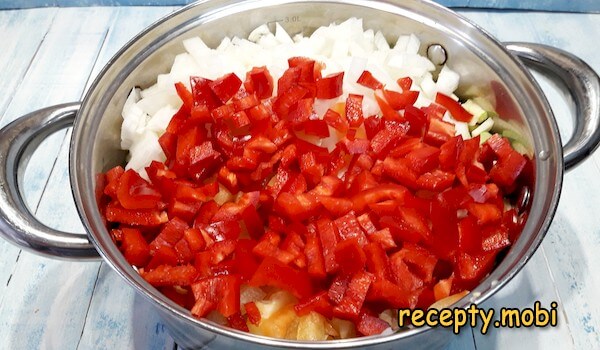
I add it to the vegetables – the pepper will give "colourful" notes to the finished sauce.
I chop the hot pepper very finely. You can leave the seed pod in so the flavour is hotter – the "secret" of authentic American heat.
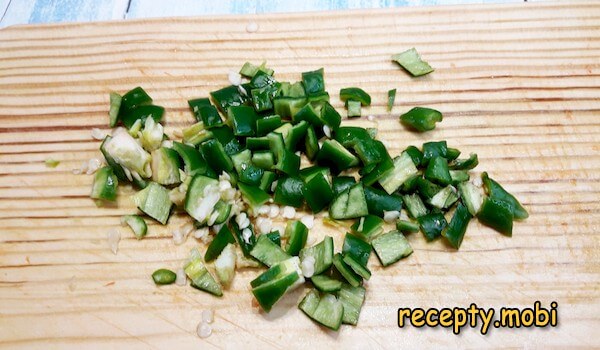
I add this chopped pepper to the pot as well – the heat should be distributed evenly.
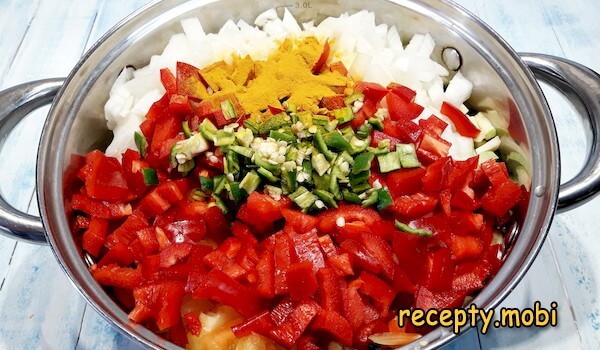
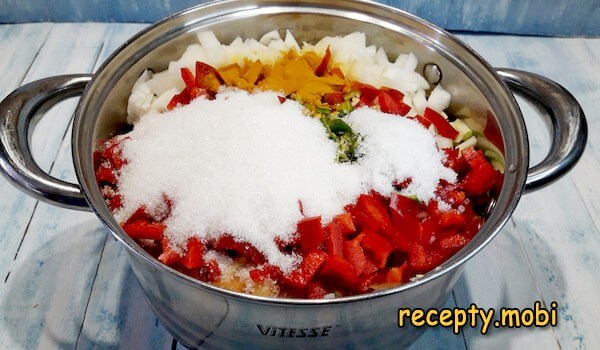
Into the same pot I pour the salt, sugar, and turmeric – the "seasoning set" of American relish, with a "golden" tint from the turmeric.
Next I add two kinds of mustard – the regular one gives the pungency, the grainy Dijon gives aroma and texture.
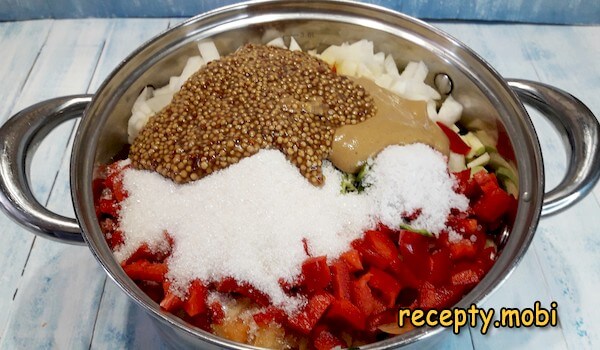
I stir everything together. I cover with a lid and leave it on the counter for about half an hour. Then I stir again and move the pot to the fridge for 2–3 hours – the "secret" of marinating the vegetables in the cold.
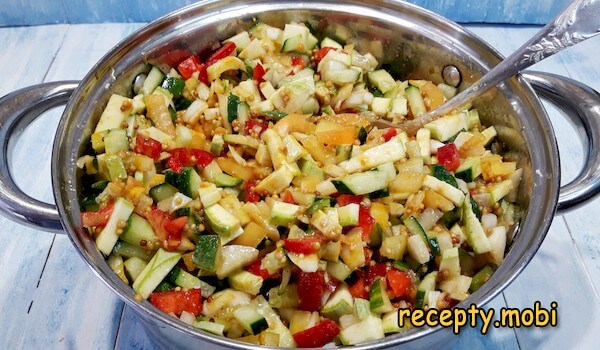
After the stated time, the vegetables will have released enough juice and soaked up the seasonings – this is the "base" of the future sauce.
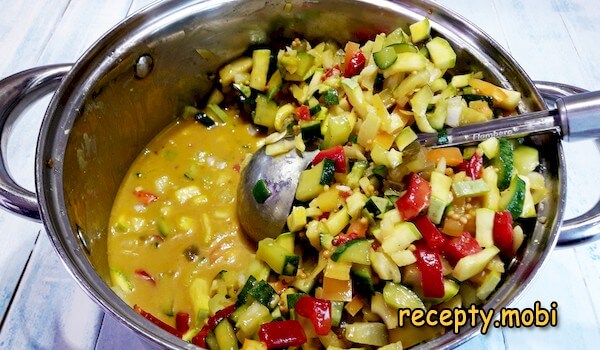
I set the pot over moderate heat and, stirring constantly, bring the mixture to a boil – the constant stirring is against scorching on the bottom.
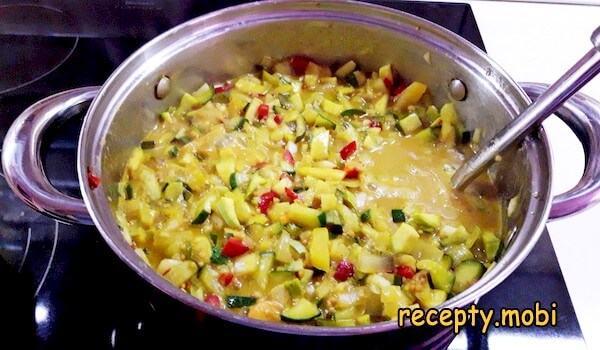
Now the vegetables need to be cooked until the cucumbers change colour – they should turn dark green. This will take about 10–12 minutes – it is the "marker" of proper doneness.
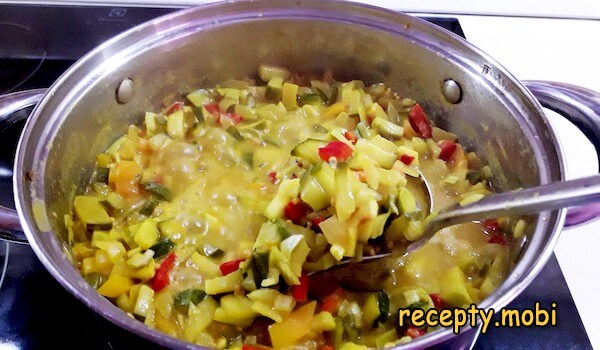
Next I turn off the heat and blitz the mixture with an immersion blender, but only until the structure changes slightly – the sauce should stay in pieces, just smaller ones. This is the "secret" of the characteristic "relish" texture.
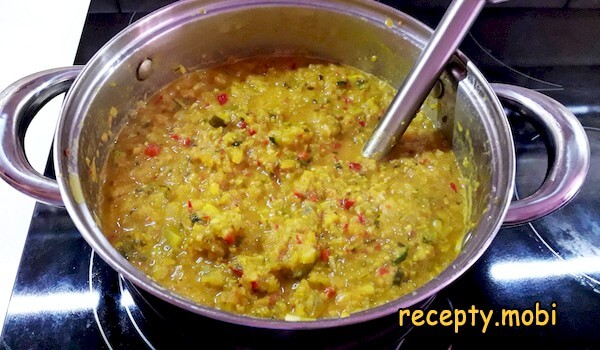
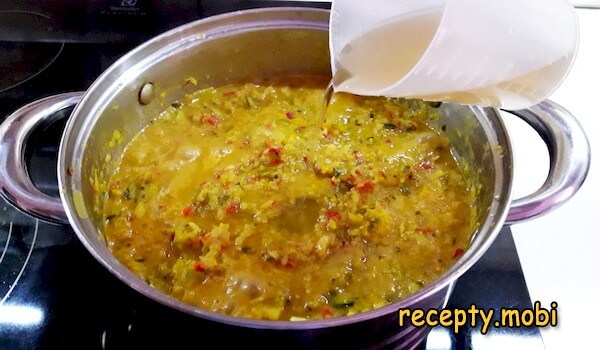
I turn the stove back on to a medium level. I boil the mixture for about 10 minutes, then pour in the vinegar and cook for another 5 minutes – the vinegar is added at the finish to preserve the "freshness" of its acidity.
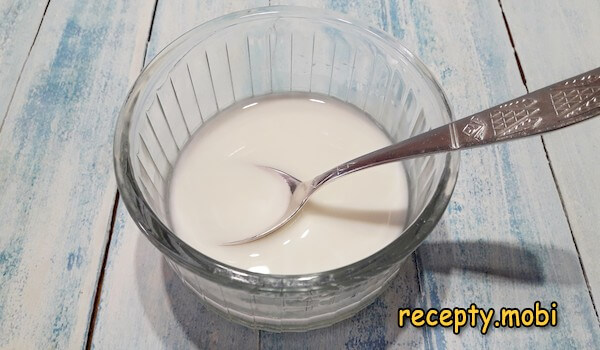
I dissolve the starch in a small amount of water (about 20 millilitres) – this is the "thickener" for the final consistency.
I pour it into the pot, stir, and again bring the mass to a boil – the starch will start "working" right away, making the sauce thick.
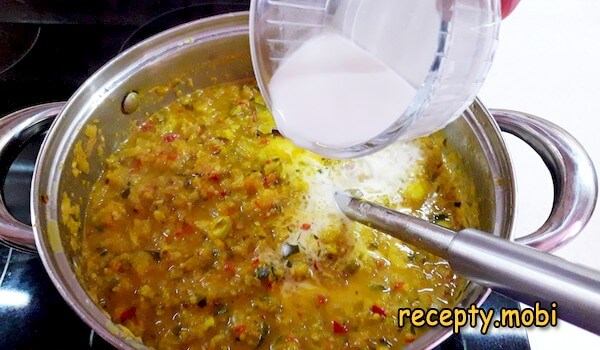
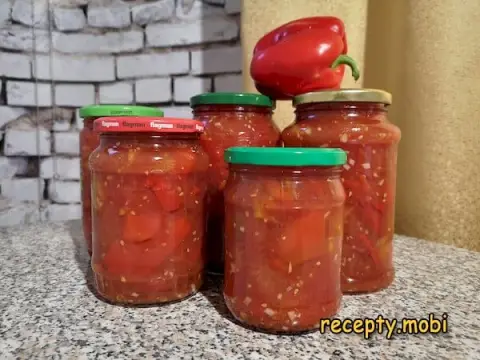
The sauce has cooked well and thickened a little. Now it can be ladled into sterile jars (I do not turn off the heat, I just bring it down to the minimum) – a hot fill for long storage.
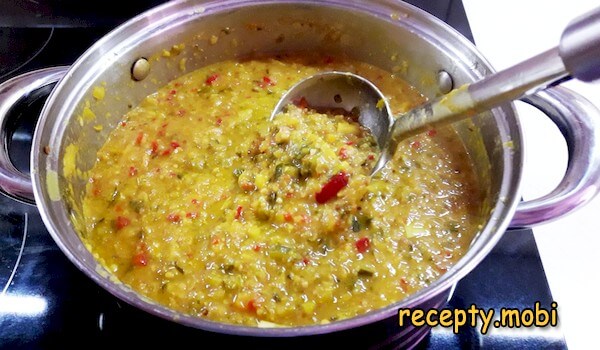
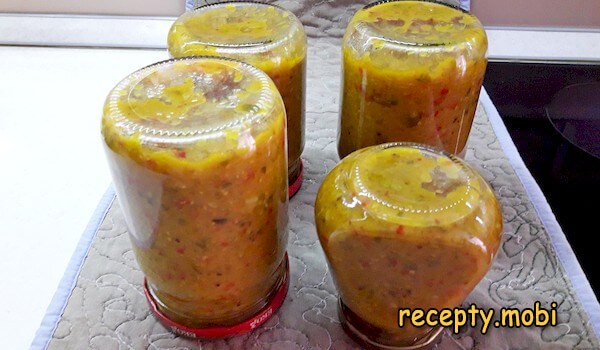
I screw the jars, filled right to the top, shut with screw-on lids or lids under a key. Then I turn them upside down and leave them like that to cool. The preserve can be stored all winter at room temperature – an American classic of the "family pantry".


Tips
- 1
A multi-vegetable base is the "secret" of harmonious flavours. If you use only cucumbers, you will get a "cucumber sauce" – dull and one-note. Authentic relish combines 4–5 kinds of vegetables: cucumbers (the base, sour and fresh), zucchini (neutral softness), onion (pungency and sweetness), sweet pepper in two colours (colour and vitamins), and hot pepper (heat). Without any one of them the flavour is "poorer". You can add carrot (a sweet note), cauliflower (texture), or celery stalks (a fresh aroma). The main thing is that everything is in small cubes of 5×5 mm for a uniform chop.
- 2
Two kinds of mustard are the "secret" of a complex aroma. Just one mustard gives a "flat" mustardy taste. The combination of regular hot mustard (Russian table mustard, the classic) and grainy Dijon gives a "multi-layered" flavour: the pungency from the Russian one plus aromatic notes and texture from the Dijon. Alternatives to the Dijon: English wholegrain, German "Old Düsseldorf". Without the second kind of mustard the relish will be "standard", without the "double mustard" character. A similar "double mustard" principle works in cucumber pickles for the winter.
- 3
"Intermediate" blending is the "secret" of the right texture. Relish is neither a "smooth sauce" (like ketchup) nor a "coarse chop" (like pickles). It is an "in-between" option – small pieces in a thick base. That is why, after cooking, the immersion blender is used ONLY FOR A SHORT TIME – 5–10 seconds of brief pulses. The pieces should be slightly broken down but NOT turned into a purée. The goal: 50% of the vegetables as a 2–3 mm "crumb", 50% a little larger. Without a blender it also works, the pieces will just be larger. With full blending you will get ketchup.
- 4
Vinegar at the end is the "secret" of fresh acidity. If you pour the vinegar in at the start of cooking, its acidity will "boil away" over 30 minutes and the sauce will be "bland". At the finish (5 minutes before the end) the vinegar keeps its "freshness", giving a bright acidic note in every piece of the relish. The best kinds of vinegar: apple cider 6% (the classic for American sauces), white wine 6%, balsamic (for a "premium" version, but the sauce will darken). Table vinegar 9% is not suitable – too harsh. A similar "vinegar technique" is used in cucumbers in mustard marinade for the winter, only there the vinegar is added from the very start of marinating.
FAQ
What is the difference between relish and pickles? +
Both are American pickled preserves, but they differ in texture and serving. Pickles are cucumbers in 5 mm rounds plus marinade, eaten as a "filling" for burgers and sandwiches. Relish is a fine vegetable chop of 5×5 mm plus a thickened base, eaten as a "seasoning sauce" for hot dogs, kebabs, and BBQ. Pickles are "cucumbers", relish is a "sauce made of vegetables". Further differences: relish has zucchini, sweet and hot pepper, and onion in large amounts, while pickles have only cucumbers and a little onion. Relish is more "yellow" from the turmeric, pickles are "green" with golden flecks.
How long does homemade relish sauce keep? +
In hermetically sealed sterile jars at room temperature in a dark place – 1 year. In a cool cellar or basement (8–12°C) – up to 18 months. An opened jar in the fridge – 1 month without loss of quality. Signs of spoilage: a bulging lid, a cloudy "fermenting" smell, mould on top. If you have any doubts – do not eat it! Freezing is possible (in portions of 50–100 g), but after thawing the texture is a little less "springy". The ideal "season" for the sauce is the summer-autumn period, when fresh vegetables are cheap.
What do you serve relish sauce with? +
Its main purpose is American fast food. Hot dogs (the classic, no way without relish), hamburgers and cheeseburgers (instead of or with pickles), sandwiches with tuna or turkey. It also suits: BBQ pork ribs, chicken wings, grilled steaks, baked fish, and "pulled pork". As an appetiser: on a board with cheeses and cold cuts, with beer and whisky. In salads: a new take on "Olivier" (a little relish instead of pickled cucumbers), American-style potato salad. For a buffet: with crackers and sour cream as a "dip" for vegetable sticks.
Can you change the set of vegetables in relish? +
Yes, relish is a versatile "format", there are many variations. Classic alternatives: "green" relish (only cucumbers + onion + sweet green pepper), "red" (tomatoes + red pepper + onion), "golden" (corn + carrot + turmeric), "autumn" (pumpkin + onion + chilli). Among the "premium" versions: with mango (for a "Caribbean" touch), with pears (more "European"), with apples (Russian-American). The main thing is to keep the ratio of vegetables to liquid and always include mustard + turmeric for authenticity. Without them it is no longer relish.
- Comment
or post as a guest
Be the first to comment.