avg —
Bean Salad with Korean Carrots

Instructions
I get the ingredients ready for the bean and Korean carrot salad. Drain all the liquid from the canned beans. Rinse the herbs and pat them dry with a towel.
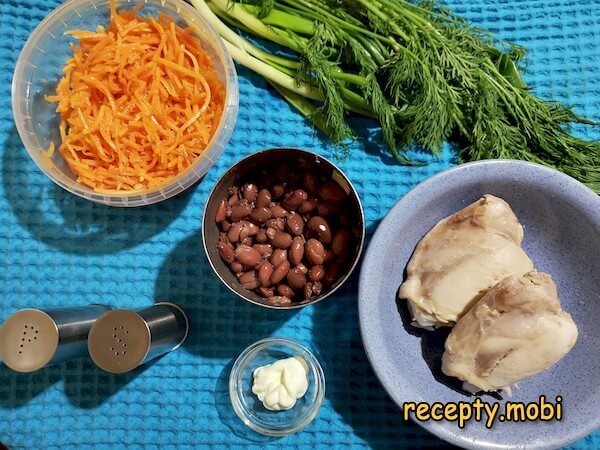
Separate the chicken meat from the bones and cut it into small cubes. Transfer the prepared meat to a deep bowl.
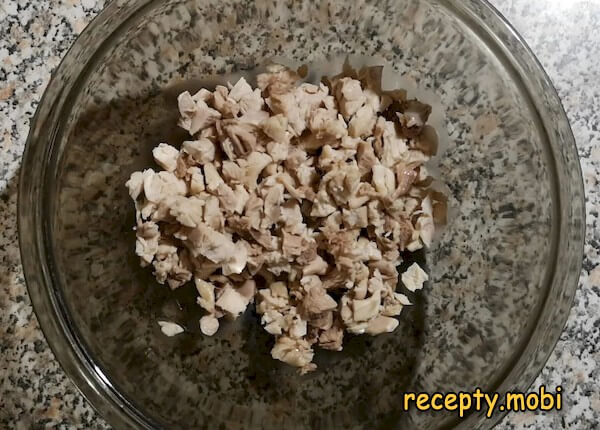
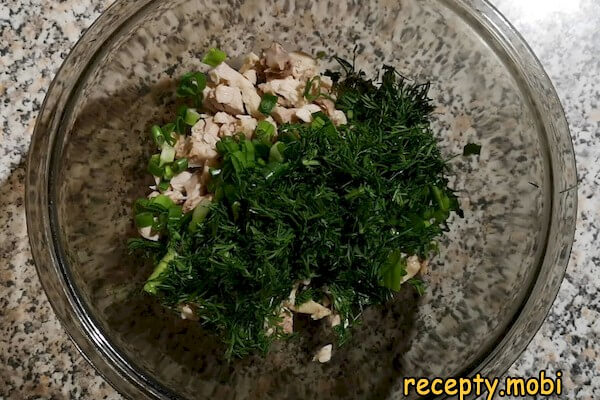
Finely chop the green onions and dill. Add the herbs to the prepared meat.
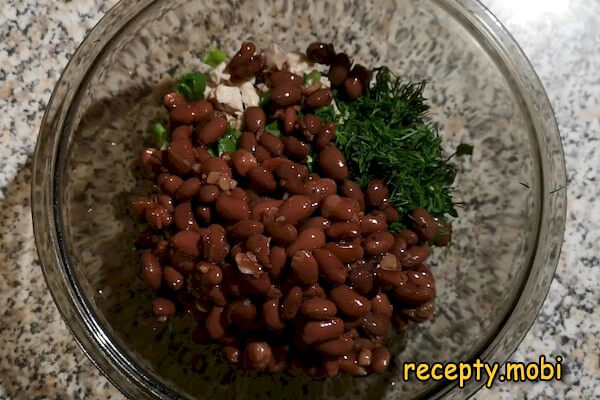
Then add the canned beans.
Add the Korean-style carrot to these ingredients.

Next add 100 grams of mayonnaise and mix everything together.

Season with salt and pepper to taste.

The bean and Korean carrot salad is ready. I put it in the refrigerator for a few hours so it soaks up the flavours better, then serve it. If you like, you can garnish it with herbs on top.



Tips
- 1
Drain all the liquid from the beans – this is the secret to avoiding a watery salad. The slightly sweet brine spoils the taste and makes the salad runny.
- 2
Use boiled thighs instead of breast for juiciness. Breast turns dry after boiling, while thigh meat stays juicy even in a cold salad.
- 3
Let it soak for 2–3 hours in the refrigerator – this is the secret to the flavour. The carrot releases its spices, the beans absorb the mayonnaise, and everything comes together.
- 4
Go easy on the salt – Korean carrot is already salty. Taste the salad before adding any salt. The same principle applies to other salads with Korean carrot.
Video

FAQ
Which beans should I choose? +
Red kidney beans in their own juices are ideal (the classic choice, and more filling). Alternatives: white beans (milder), speckled beans (for a rustic look), or beans in tomato sauce (though they change the character of the dish). A 400 g can is the optimal size for 6 servings. Freshly cooked home-made beans (soak 200 g of dried beans overnight, then boil for 40 minutes) are the premium option. Do not use pickled beans (with vinegar) or green beans (a different texture). Before adding them, drain off all the liquid and rinse them with water to remove the excess slime. For a premium salad, use a 50/50 mix of white and red beans.
Can I replace the mayonnaise? +
Alternatives: home-made mayonnaise (the premium option), 20% sour cream (lighter and tangier), plain Greek yoghurt (for a fitness version), a 50/50 mix of mayonnaise and sour cream (milder), or a mustard sauce. Do not use soy sauce (it changes the taste) or sweet-and-sour sauce (an Asian flavour that does not suit the dish). For a children's version, use sour cream plus 1 teaspoon of lemon juice. For a diet version, use yoghurt with no additives. For 6 servings, 100 g is optimal; more will drown the salad and less will leave it dry.
How long does the salad keep? +
It keeps for 24 hours in the refrigerator in a container with a lid. Any longer and the carrot will go runny and the mayonnaise will separate. Before serving, give it a stir and, if needed, add a spoonful of fresh mayonnaise. Take it out 10–15 minutes before serving (when it is too cold it dulls the flavours). Do not leave it at room temperature for more than 2 hours, as the mayonnaise and chicken spoil. It is handy in a small container for a packed lunch. For a buffet, garnish it 10 minutes before serving. It is at its best freshly made after 2–3 hours of resting. Ideally, make it 2–4 hours before serving so it soaks up the flavours without going runny.
What should I serve the salad with? +
It works as a starter in its own right, for a festive or everyday table. Serve it with a hot meat dish (steak, chops) for a meaty pairing, or with baked or fried fish as a contrasting salad. It goes with dark or wholegrain bread. With a shot of vodka it makes a Russian-style serving, and it also pairs with a glass of semi-sweet red wine or a light beer. For a family lunch, serve it with a side dish. With a cup of tomato juice it makes an office lunch. For a children's version, leave out the hot pepper. For a buffet, serve it in small individual bowls. With borscht or shchi it makes a fine accompaniment. It is a versatile salad for any occasion.
- Comment
or post as a guest
Be the first to comment.