avg —
Classic Caesar Salad with Chicken

Instructions
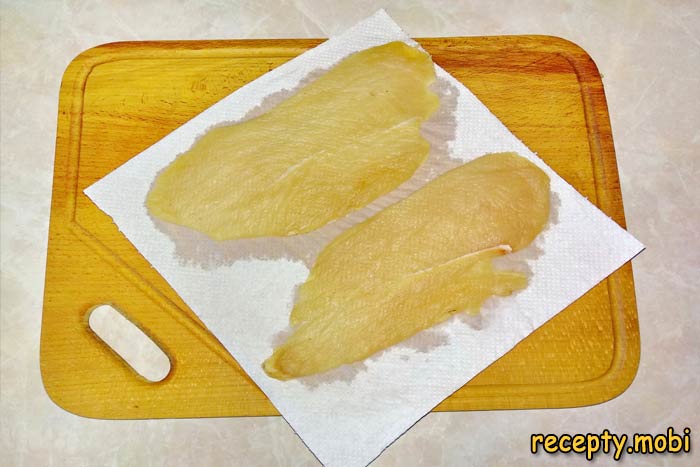
I cut the chicken fillet (1 pc) lengthwise into 2 equal pieces 1.5 cm thick – at this thickness it fries quickly to a golden crust while staying juicy inside. I wash it thoroughly under cold water and pat it dry with a paper towel – wet meat "steams" instead of frying and loses its golden crust.
I prepare the ingredients for the chicken marinade: 1 tbsp soy sauce, 1 tbsp vegetable oil and 1 tsp honey. The soy sauce replaces salt and gives a distinctive "umami" flavour. During frying the honey produces a lovely caramel crust. Marinating is the secret to juicy, aromatic chicken for the salad.
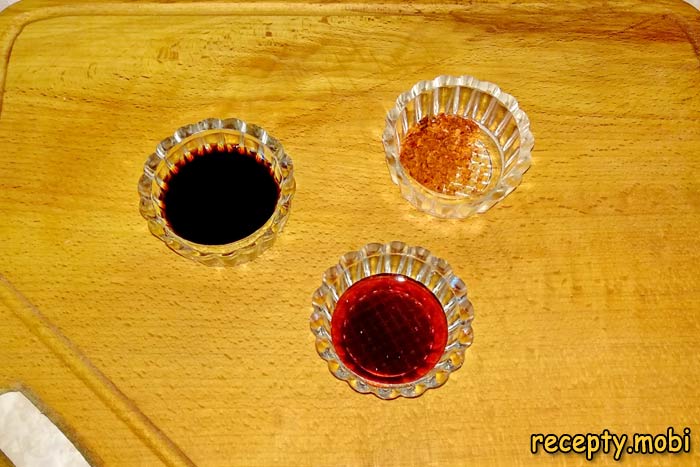
I mix all the marinade ingredients thoroughly in a small bowl and rub the mixture all over the chicken fillet. I leave it to marinate at room temperature for 10–15 minutes – that is enough for the thin pieces of chicken. A long marinade with soy sauce would make the meat "salty".
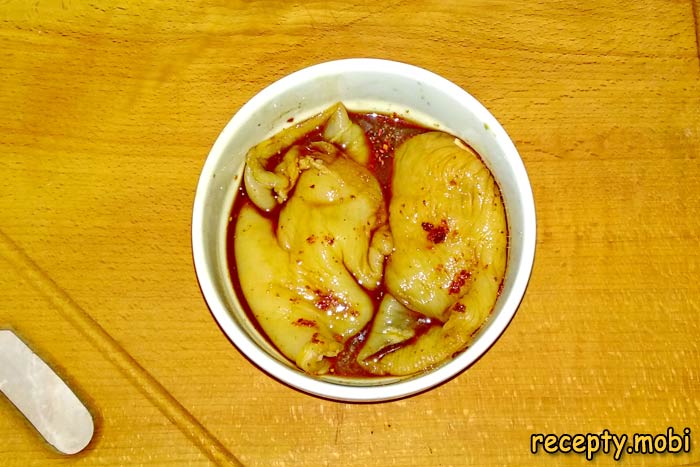
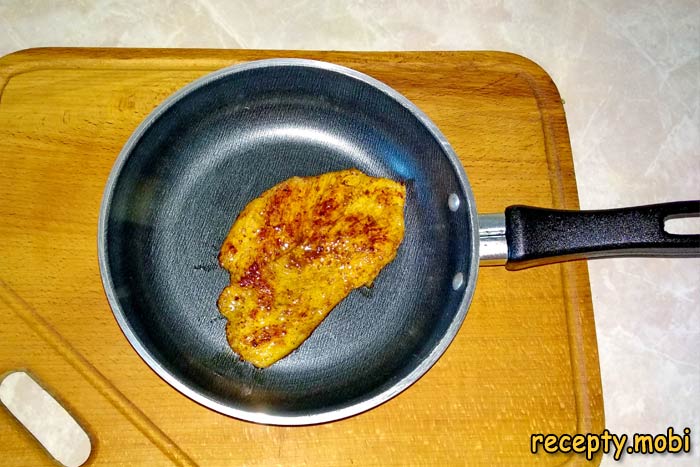
I fry the marinated chicken in a heated pan with a little vegetable oil (1 tbsp) for 4–5 minutes on each side until cooked through and golden. I check it is done by piercing it – the juices should run clear. Do not overcook it, or it will dry out.
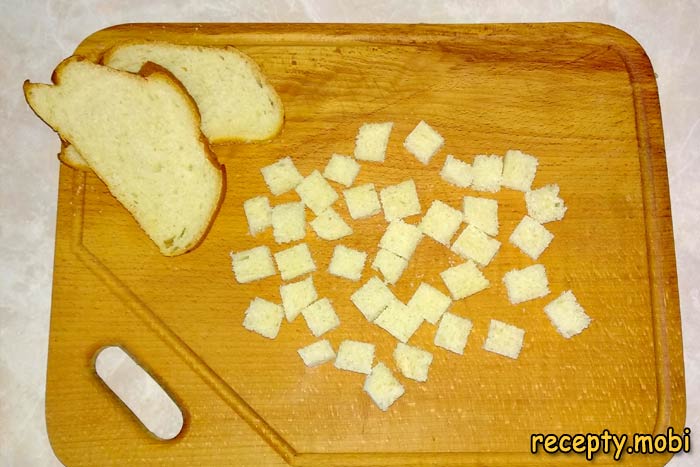
With a sharp knife I cut the crusts off 3 slices of white loaf – the crumb makes the croutons more tender. I cut the crumb into even 1.5×1.5 cm cubes – the size is critical for an attractive presentation and for easy eating. Too small and they "crumble"; too large and they are awkward to eat.
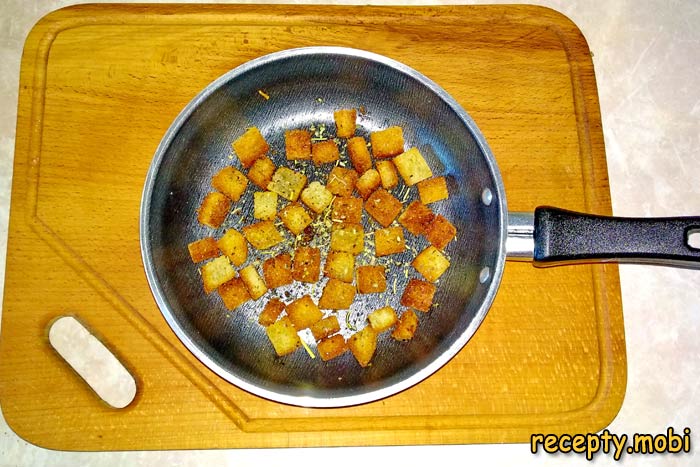
I fry the bread cubes in a pan with oil for 5–7 minutes until golden on all sides, stirring from time to time. At the end I salt them and sprinkle them with dried Provence herbs for aroma. The croutons should be crunchy on the outside and slightly soft inside – the perfect texture for a Caesar.
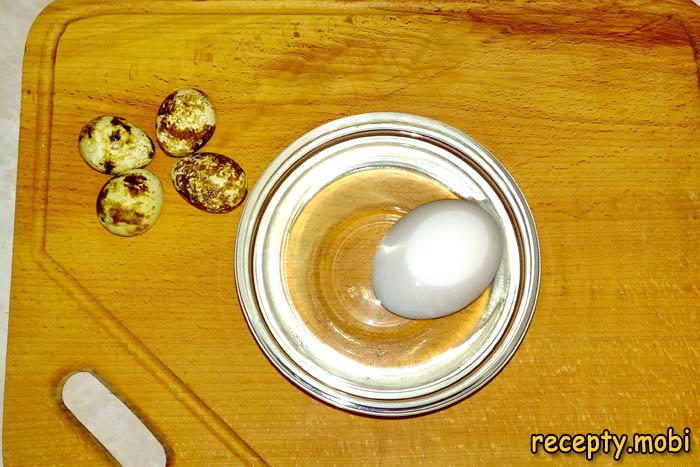
I hard-boil the quail eggs (4 pcs) for 3–4 minutes after the water comes to the boil and cool them in iced water. I lower the chicken egg for the dressing into boiling water for exactly 1 minute and transfer it straight into iced water – this gives a "1-minute" egg for the dressing, with a half-cooked yolk and a pasteurised white.
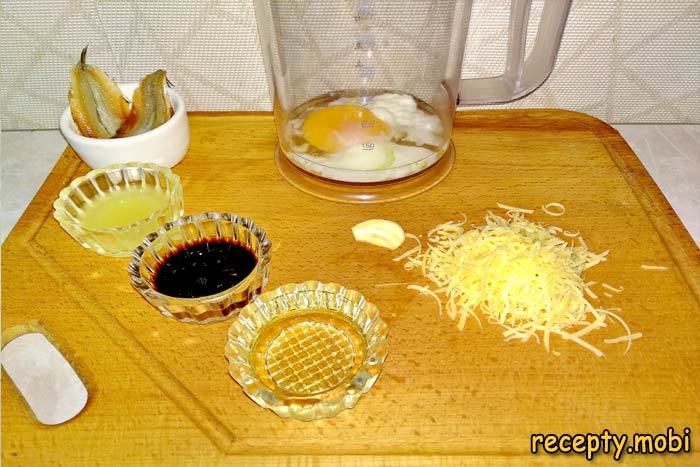
I make the classic Caesar dressing: I crack the "1-minute" egg into a blender cup and add olive oil (60 ml), 1 tbsp soy sauce, 2 tbsp lemon juice, anchovies (2 pcs), a peeled clove of garlic (1 clove) and 50 g Parmesan. I blend on maximum speed to the consistency of thick mayonnaise for 30–40 seconds.
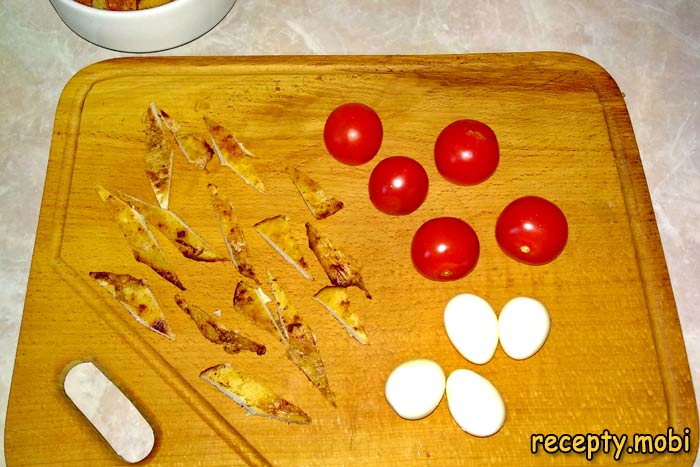
I cut the cooked chicken fillet across the grain into strips 1 cm wide – this cut "works" well in the salad. I cut the quail eggs in half and the cherry tomatoes in half or into quarters. All the components should be the same size for a harmonious presentation.
Into a large deep bowl I tear the Iceberg lettuce leaves by hand into large 5×5 cm pieces – this way the Iceberg "breathes" in the salad and gives its characteristic crunch. Do not cut it with a knife – the leaves will "darken" along the cuts. On top I arrange the sliced chicken, tomatoes and quail eggs. I drizzle over some of the dressing and sprinkle with grated Parmesan.
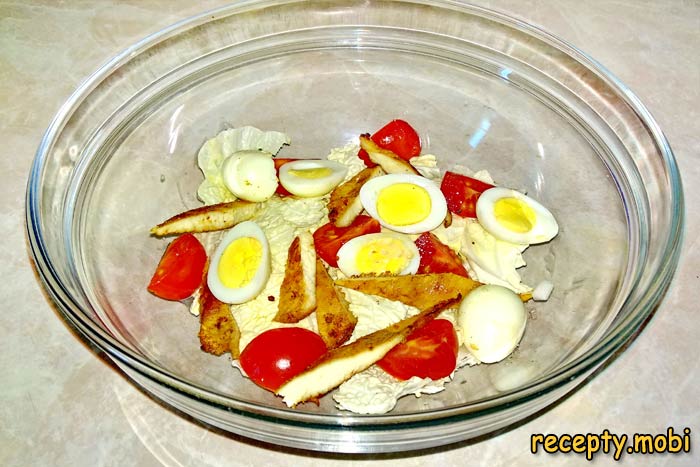
I repeat the layers – more torn leaves, chicken, tomatoes and eggs. I add some of the croutons (keeping a few back for the final garnish). I gently fold from the bottom up 2–3 times so the dressing is evenly distributed without "bruising" the Iceberg.
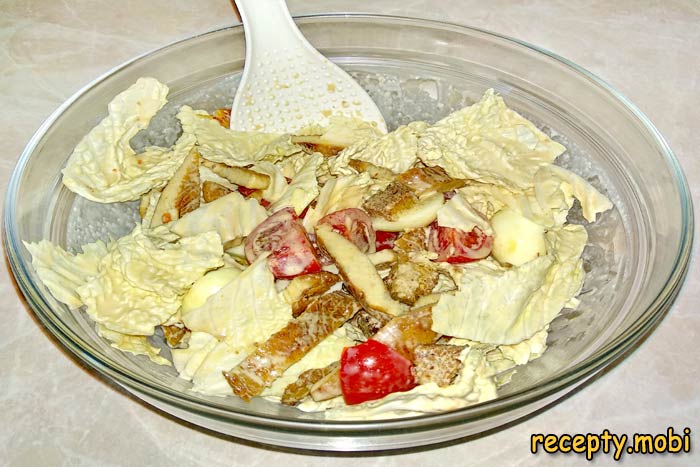
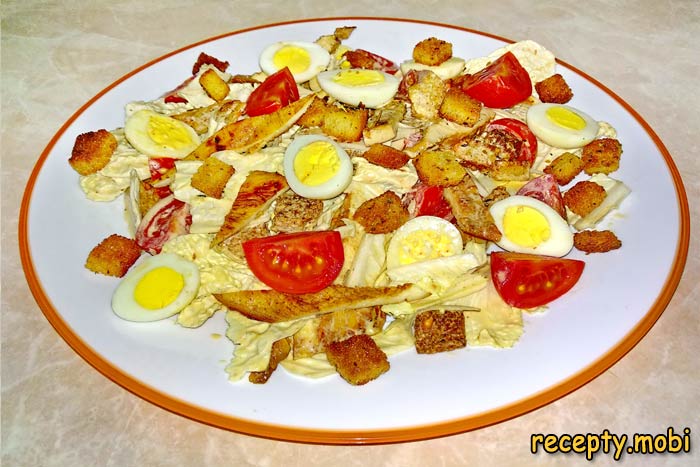
I carefully transfer the finished salad onto serving plates in portions. On top I generously sprinkle grated Parmesan (50 g) and garnish with the remaining crunchy croutons. I serve it immediately, while everything is fresh and crisp. The classic Caesar salad with chicken is ready!


Tips
- 1
Keep the egg for the dressing in boiling water for exactly 1 minute – it should stay semi-liquid. Longer, and the dressing will be "grainy"; shorter, and there is a risk of salmonella.
- 2
The dressing can also be made with a base of homemade mayonnaise, Greek yoghurt or soured cream with anchovies – "lighter" alternatives to the original.
- 3
Sprinkle the salad with sesame or pumpkin seeds when serving for extra texture. On a similar principle I make Caesar with prawns.
- 4
Serve it straight after assembling – after 30 minutes the croutons and the Iceberg go soggy from the dressing and lose the salad's main "trick".
FAQ
What can replace the anchovies in Caesar dressing? +
Anchovies are the secret ingredient of an authentic Caesar dressing, but they can be hard to find. Substitutes: salted Baltic sprat (2 pcs instead of the anchovies), boneless salted herring finely diced, anchovy paste from a tube (1/2 tsp) or Worcestershire sauce (1 tsp, an English alternative). You can also use capers (1 tsp) – they add saltiness and piquancy without a fishy taste. For an authentic Caesar I recommend tracking down the anchovies themselves – they give that characteristic "umami" flavour that the other ingredients cannot fully reproduce.
Can the dressing be made without a raw egg? +
Yes – for safety or a lighter version, use: ready-made homemade mayonnaise (1/2 cup) with lemon and garlic (the classic "simplified" substitute), Greek yoghurt (100 g) with grated Parmesan and lemon (a diet version), or low-fat soured cream with mustard (10% fat). You can also use boiled quail yolks (4 pcs) instead of the chicken egg – safer and also giving a creamy texture. Each substitute changes the flavour of the dressing, but the basic concept of a Caesar is preserved. For complete authenticity, use the "1-minute" egg.
Which cheese is ideal for the salad? +
The classic choice is Parmesan (Parmigiano-Reggiano) – a hard Italian cheese with a characteristic sharp, nutty flavour. Alternatives: Grana Padano (milder than Parmesan and cheaper), Pecorino Romano (a sheep's-milk cheese with a bright, salty flavour), Gruyère (a Swiss cheese for a milder version) or Džiugas (a Lithuanian counterpart to Parmesan). I do not recommend ordinary "Russian" or "Dutch" cheese – they are too "neutral" for a Caesar. For a budget option, choose "Parmesan-style" hard cheeses. Always chill the cheese before grating – soft cheese just "smears".
How should Caesar be served at the table? +
Serve it straight after assembling, in glass salad bowls or on wide flat plates. For drinks – a dry or off-dry white wine (Chardonnay, Sauvignon Blanc, Pinot Grigio), an off-dry rosé, a light pilsner beer or a flavoured sparkling lemonade with lemon. For additional starters – Parma ham, olives, Italian ciabatta or focaccia. For a children's table – without the anchovies and with the raw egg replaced by mayonnaise. It is ideal for a romantic dinner, a festive spread or a restaurant-style presentation at home.
- Comment
or post as a guest
Be the first to comment.