avg —
Tiramisu at Home (Classic Recipe)

Instructions
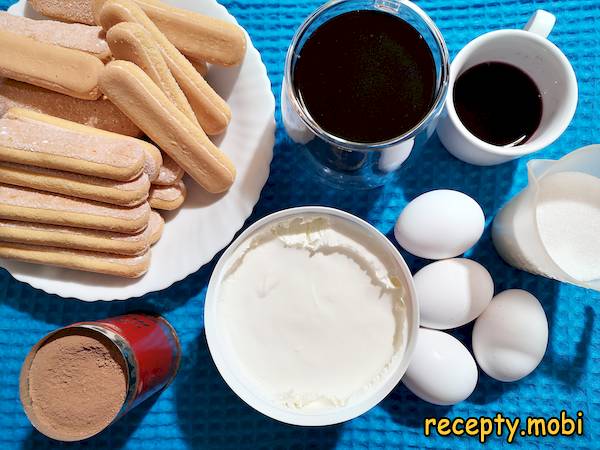
I prepare the ingredients needed for making tiramisu by the classic recipe. All the components are right at hand.
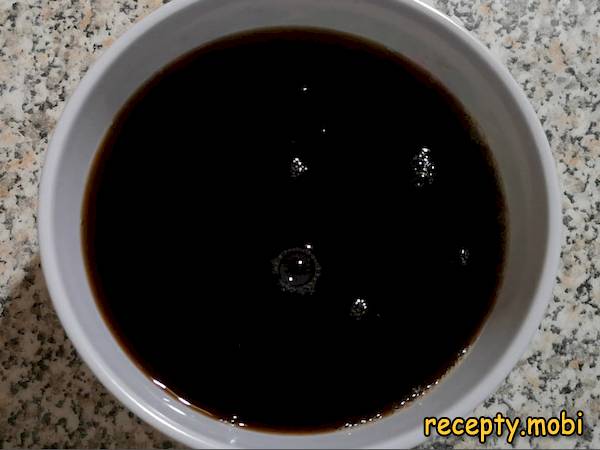
I mix 350 ml of cooled espresso with 50 ml of Marsala wine. The coffee must be cooled – hot coffee would "cook" the egg whites in the filling on contact.
I prepare the cream for the Tiramisu. I wash 4 chicken eggs thoroughly, crack them and carefully separate the yolks from the whites. I put the whites in the refrigerator.
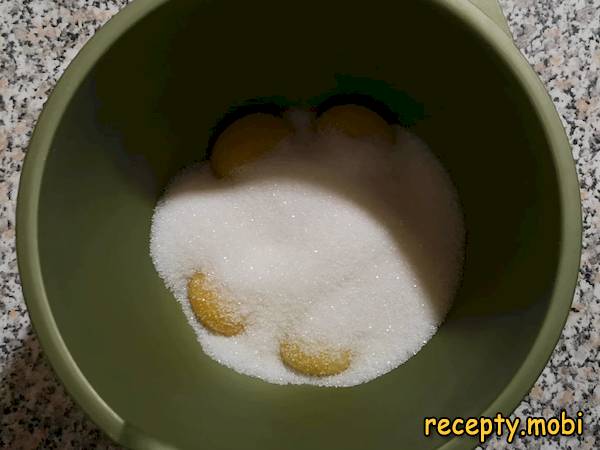
I add 150 g of sugar to the yolks. Sugar and yolks are the base for the future filling.
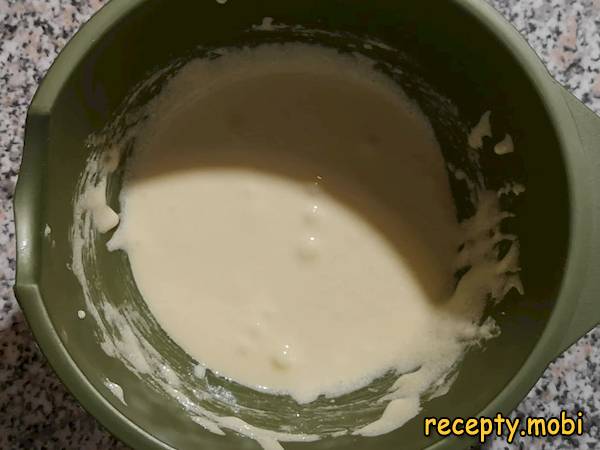
Using any convenient method, I whip the yolks with the sugar to a light, pale consistency. I try to dissolve the sugar completely – this is the "secret" to a smooth filling.
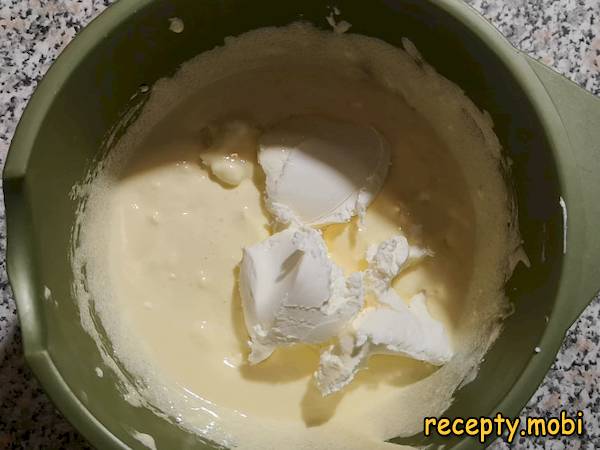
I add the Mascarpone cheese to the whipped yolks with sugar. The Mascarpone gives that characteristic creamy tenderness.
I mix the whipped yolks with the cheese until smooth and uniform. Quality Mascarpone cheese mixes in beautifully. If lumps form, increase the mixing time.
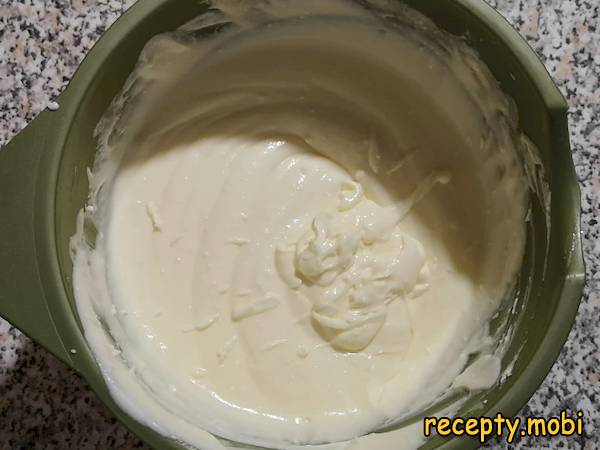
I take the whites out of the refrigerator. I add a pinch of salt to them. The salt helps stabilise the foam during whipping.
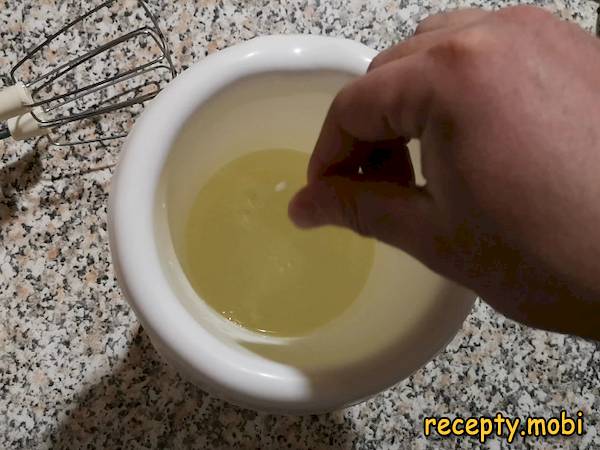
Using a mixer, I whip the whites to stiff peaks. To check whether the whites are whipped enough, I carefully turn the bowl upside down. Well-whipped whites always stay in the bowl.
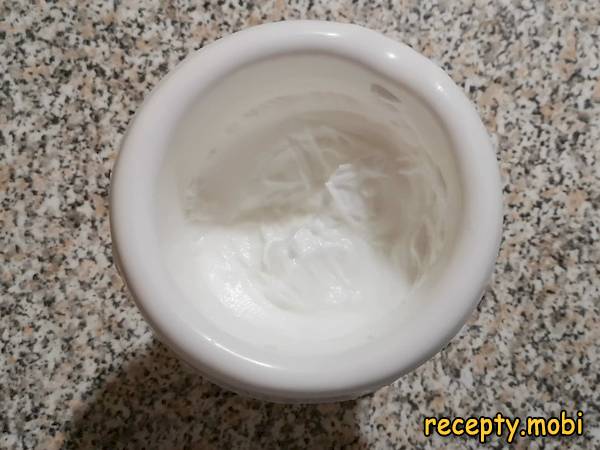
I gently add the mass of whipped whites to the yolks and Mascarpone.
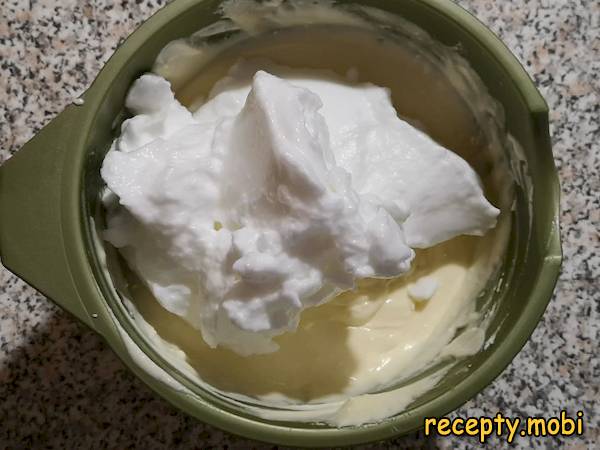
With circular motions I carefully lift the cream from the bottom of the bowl upward. I try to do this as gently as possible to preserve the airiness of the whites. The result is a very tender and airy cream for Tiramisu with Mascarpone.
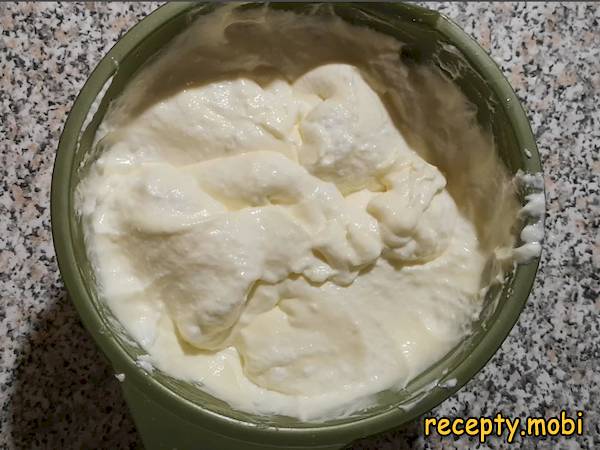
I begin assembling the Tiramisu by the classic recipe. I take a Savoiardi biscuit and dip it completely in the coffee-and-wine mixture for 1, at most 2 seconds. Any longer – and the biscuit will go soggy.
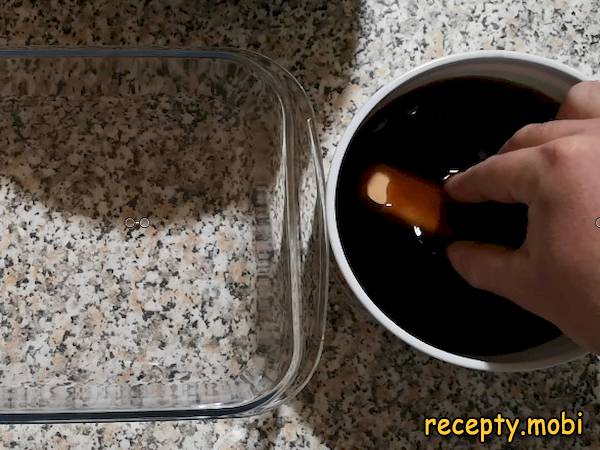
As quickly as possible I lay the biscuit out in a convenient dish – it softens fast in your hands.
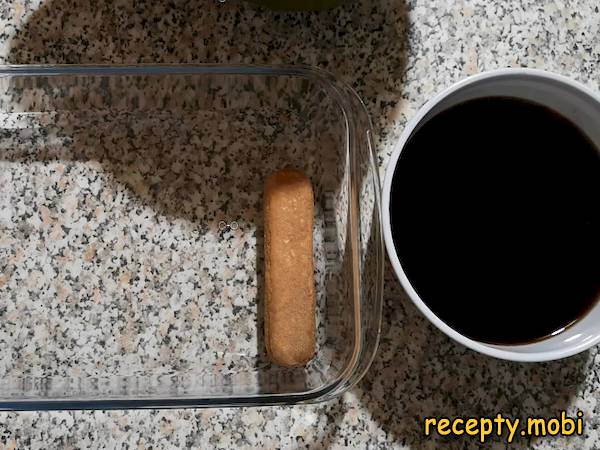
In this way I lay out the bottom layer across the whole base of the dish.
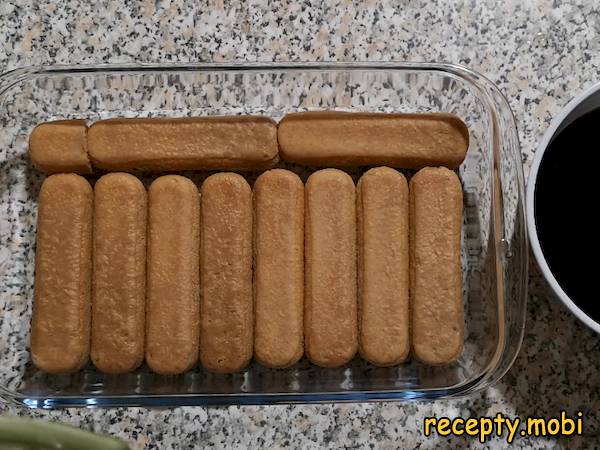
On the Savoiardi I spread a generous layer of cream and distribute it evenly.
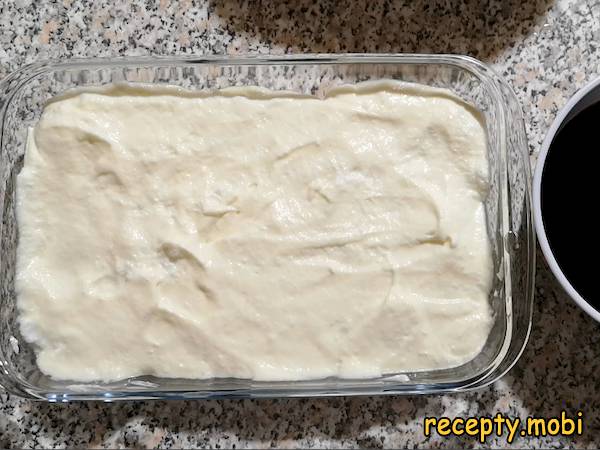
On the layer of airy cream I place a second layer of Savoiardi soaked in coffee.
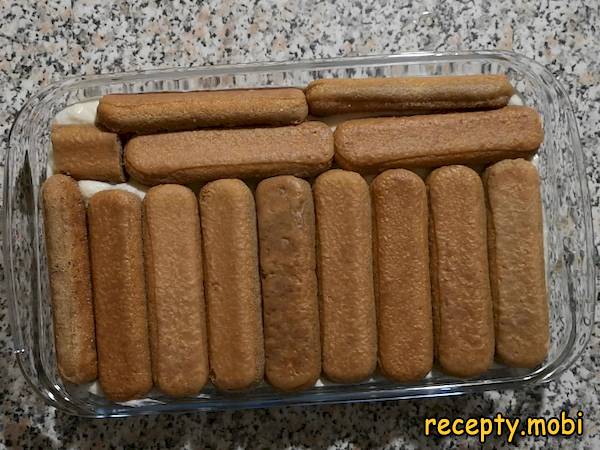
I cover the second layer of biscuits with a layer of airy cream and distribute it evenly.
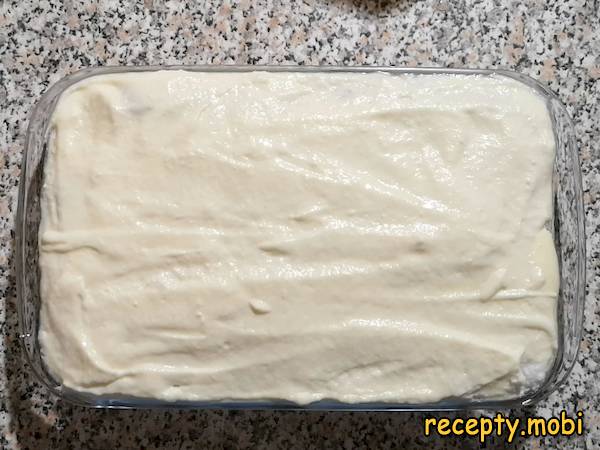
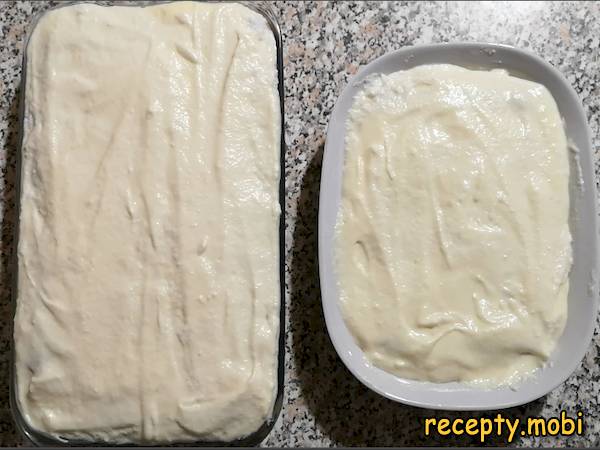
From the stated quantity of ingredients I ended up with 2 full forms of dessert. The Tiramisu in the larger form is two-layered, in the smaller one single-layered. I put it in the refrigerator for at least 5 hours, ideally overnight.
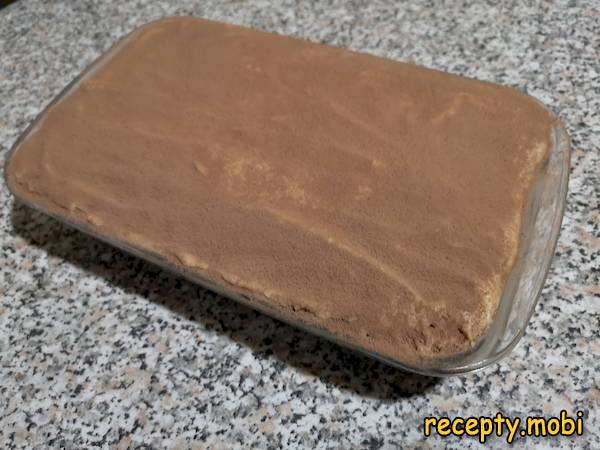
When the dessert has set enough, I take it out of the refrigerator and dust it with cocoa. The cocoa is the "secret" to that characteristic slightly bitter note at the peak of the flavour.
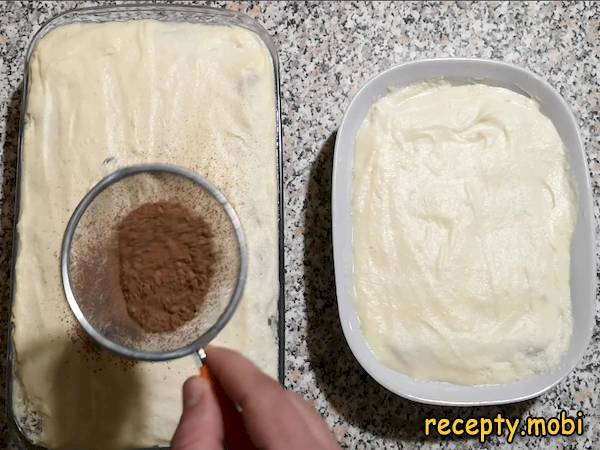
The classic Tiramisu at home is ready. I cut the dessert and serve it at the table. I cut it carefully – the dish is very delicate.


Tips
- 1
Do not replace the Mascarpone with other cheeses (curd, sour cream, cream cheese) – you will get a completely different dessert, not tiramisu. This is not the cheese to economise on.
- 2
Dip the Savoiardi biscuits in the coffee for no more than 2 seconds – any longer and they will go soggy and the dessert will "run".
- 3
Setting MUST take 5+ hours in the refrigerator – ideally overnight. During this time the cream "firms up" and the flavours come together. I use a similar principle in other Italian desserts.
- 4
Dust with cocoa only just before serving – if dusted in advance, the dessert will "absorb" the cocoa into the cream and the top will lose its characteristic brown colour.
Video
FAQ
What can I use instead of Marsala wine? +
Alternatives, in decreasing order of authenticity: cognac (the classic option, often mentioned in recipes), brandy, amaretto (an almond liqueur, which gives a nutty note), dry sherry, port. For an alcohol-free version – simply leave out the wine (coffee only) or add 1 tablespoon of vanilla essence for flavour. Alcohol gives that characteristic "depth" of flavour, but tiramisu is still tasty without it – just more "child-friendly".
Where can I buy real Mascarpone? +
Mascarpone is sold in large supermarkets in the cheese section (next to mozzarella and burrata). Quality brands: Galbani (Italian, the classic), Bonta Veneta (Italian), and local producers (a Russian one can also be good – read the ingredient list). The price starts from around 400 roubles for 250 g. Ingredients: only cream and citric acid. Fat content 78–82%. Do not buy "Mascarpone" with vegetable fats in the ingredient list – that is no longer the real thing.
How long does ready tiramisu keep? +
In the refrigerator – 2–3 days in a closed container. On the second day the flavour is brighter – the components have "made friends". It is not worth keeping it longer – the eggs are raw and may spoil. I do not recommend freezing – the texture of the cream will be ruined. Make it in 2 portions – eat it fresh. Unfortunately, such delicate desserts do not keep for long.
Is it safe to eat tiramisu with raw eggs? +
The classic recipe uses raw eggs – this is part of the Italian tradition. For safety: use only fresh eggs from a trusted producer, wash them thoroughly before cracking, and avoid the dish during pregnancy and for small children (risk of salmonella). An alternative is pasteurised eggs (in individual packs) or the water-bath method (heating the yolks with sugar to 70 °C over a water bath – this is safer, but more difficult in terms of technique).
- Comment
or post as a guest
Be the first to comment.