avg —
Health Salad

Instructions
Get all the ingredients ready. Wash the apples and peel them. Wash the carrots too, peel them and rinse them again to get rid of any dirt. Peel the clove of garlic. Use shop-bought mayonnaise or homemade.

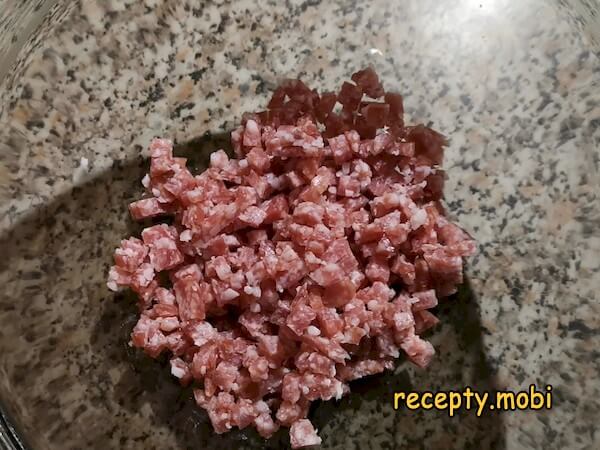
Cut 100 g of cured sausage into small cubes and transfer them to a deep bowl.
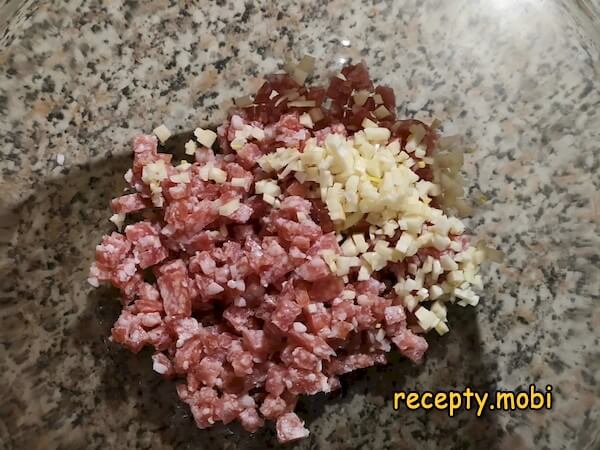
You can finely chop the garlic clove or grate it on the fine holes of a grater. Add the chopped garlic to the diced sausage.
Grate the two apples on a vegetable grater and add them to the bowl with the other ingredients.
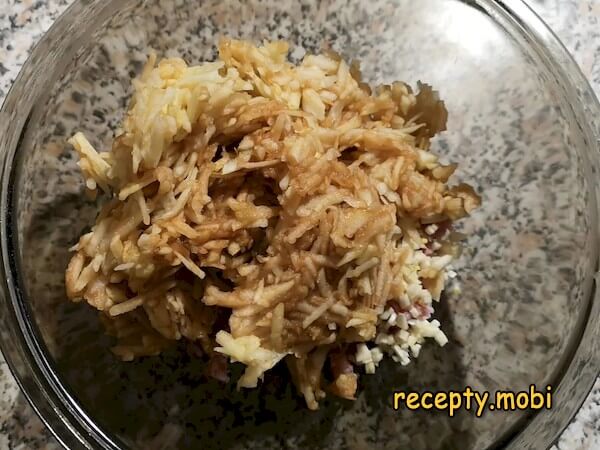
Grate the carrots on the vegetable grater as well and add them to the apples and sausage.

Add two tablespoons of mayonnaise and mix everything together.

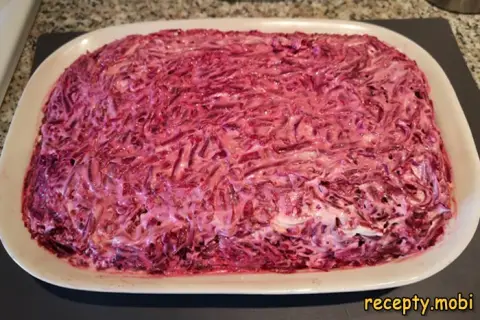
The quick Health Salad is ready. Put it in the fridge for a few hours so it soaks up the flavours better. Transfer it to a serving bowl and bring it to the table.



Tips
- 1
Sour apples are the secret to balance. Sweet apples plus sweet carrot make the salad cloying. Sour varieties (Antonovka, Semerenko, Granny Smith) bring freshness and contrast.
- 2
Cured, not cooked, sausage is the secret to flavour. Cooked sausage is bland. Cured sausage (salami, chorizo) gives a bright, spicy accent against the sweet base.
- 3
Resting in the fridge is the secret to letting it soak. Straight after mixing, the flavours are still separate. After 1–2 hours in the cold the aromas come together and the salad matures.
- 4
Grating, not dicing, is the secret to texture. Cubes of apple and carrot get lost. Grated, they coat the sausage and make the salad juicy and uniform. The same principle works for other kinds of quick salads with carrot and apple.
Video

FAQ
Which cured sausage should I choose? +
The classic choice is a dry-cured smoked sausage such as Brunswick or cervelat (100 g gives a brighter, spicier flavour). Alternatives include salami (100 g, Italian-style), Spanish chorizo (100 g, spicier), dried cured meat such as basturma (100 g), sliced carbonade (100 g, milder), smoked brisket (100 g, fattier), thin slices of jamón (100 g) or hunter's sausages (100 g, the budget option). Do not use cooked sausage such as bologna (too neutral) or salted balyk (it will be too salty). For a classic Health Salad, a cured or dry-smoked sausage is a must.
What can I use instead of mayonnaise? +
Alternatives include natural yogurt with mustard (2 tbsp plus ½ tsp, for a lighter version), 25% sour cream with mustard (2 tbsp plus ½ tsp, home-style), a 50/50 blend of mayonnaise and sour cream (1 tbsp each, milder), thick Greek yogurt (2 tbsp, a lean option), 33% cream with lemon juice (2 tbsp plus 1 tsp) or olive oil with lemon (2 tbsp plus 1 tsp, a light Mediterranean style). Do not use thin, light mayonnaise (the salad will run) or ketchup (it will spoil the flavour). For a classic result, use thick mayonnaise or sour cream.
How long does the salad keep? +
In the fridge, in a tightly sealed container, it keeps for 1–2 days. Any longer and the apples darken (even under the mayonnaise) and the carrots release juice. Before serving, let it stand for 10 minutes at room temperature. I do not recommend freezing it, as the texture breaks down completely. The salad is at its best 1–2 hours after it is made, once it has rested in the cold and the aromas have come together. On the second day the flavour is deeper but the texture is poorer. Do not leave it at room temperature for longer than 2 hours, as the apples oxidise and darken.
What goes well with Health Salad? +
The Belarusian classic is a slice of dark rye bread with butter. It also goes with boiled potatoes, a bowl of thick vegetable soup, fresh herbs on the side, a glass of kvass for supper, a cup of green tea in the afternoon, a shot of cold vodka for a celebration, a light lager, a glass of freshly squeezed apple juice, boiled chicken breast or a slice of roast pork or prosciutto. It is an all-rounder for a family lunch – a quick, wholesome salad for everyday meals.
- Comment
or post as a guest
Be the first to comment.