avg —
Classic Caprese Salad Recipe

Instructions
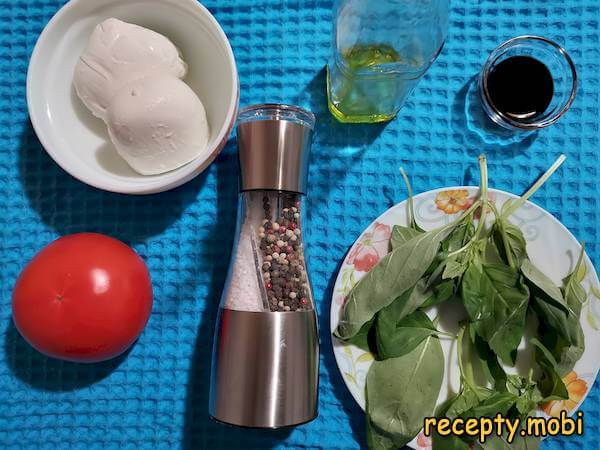
I prepare all the ingredients. I take a large, meaty and ripe tomato – one that is not too juicy. The mozzarella needs to be in balls (not grated) – only then will you get the classic look.
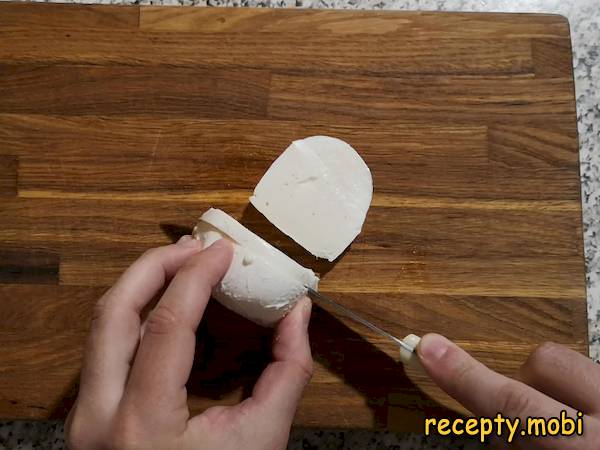
I cut the mozzarella balls into slices about 5 mm thick – all of the same thickness.
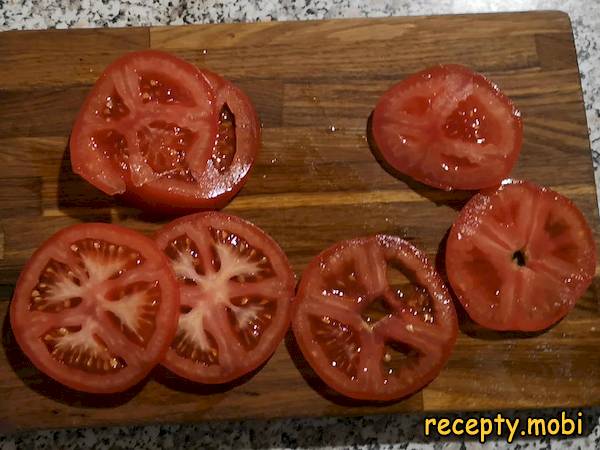
I cut the tomato into slices of the same thickness – 5 mm. I carefully remove the stem. A blunt knife crushes the tomato, so I use a well-sharpened one.
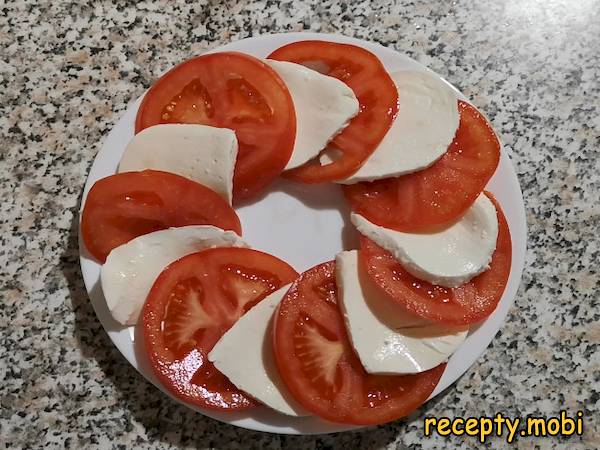
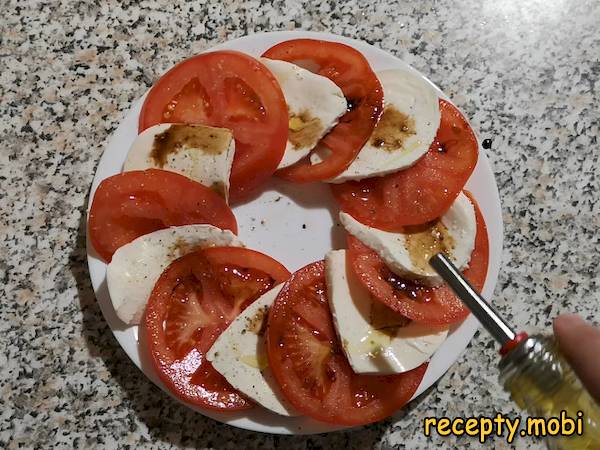
On a plate I lay out the sliced tomatoes and mozzarella alternately, overlapping them like roof tiles.
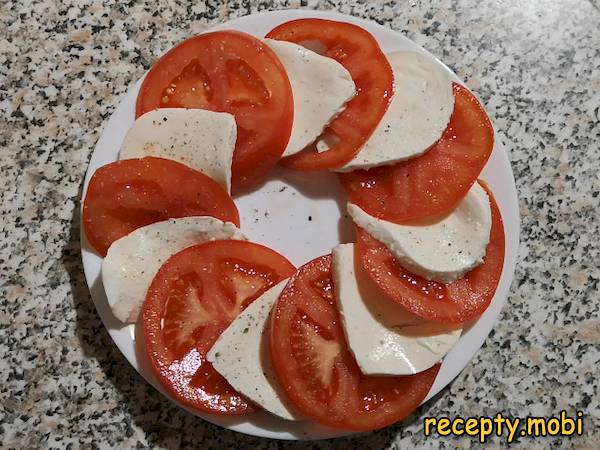
I season the salad with salt and pepper to taste. In Italy it is sometimes not salted at all – guests are given the chance to season it themselves.
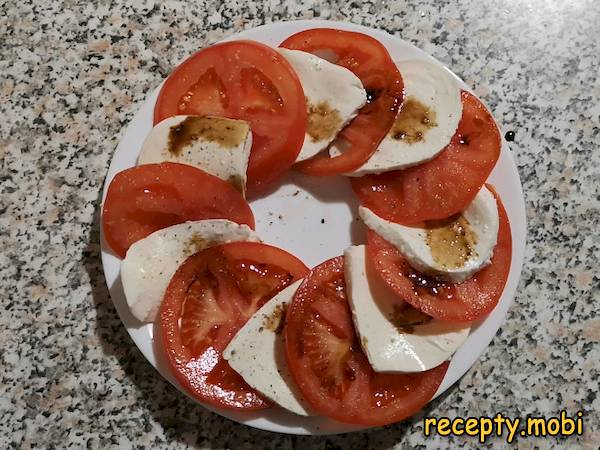
I drizzle over balsamic vinegar – to taste. A genuine balsamic from Modena adds a honeyed, fruity touch, turning a simple salad into something festive.
I add 1.5 tsp of olive oil. The oil should be Extra Virgin, cold-pressed, as the Italian classic demands.
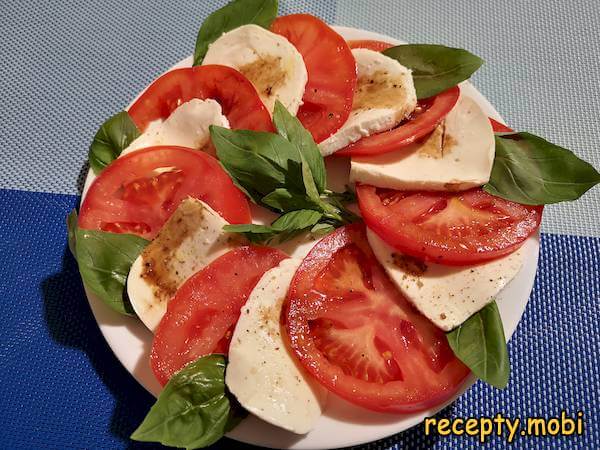
I tuck the green basil leaves between the mozzarella and the tomato – giving that "green-white-red" combination, like the Italian flag. The classic Caprese salad is ready.


Tips
- 1
Use a ripe, meaty tomato (varieties such as "Beef Heart" or "Pink") – watery tomatoes release a lot of juice and the salad will go soggy.
- 2
Use mozzarella in balls only (Buffalo or Fior di latte); grated and "pizza mozzarella" will not do – they are too dry and lack the right tenderness.
- 3
Add the balsamic vinegar right at the very end, just before serving – otherwise it will stain the mozzarella brown and the salad will lose its "flag" look.
- 4
Tear the basil by hand rather than cutting it with a knife – a knife makes the leaves darken and lose their aroma. I use the same trick in all salads with basil.
Video

FAQ
What can I use instead of mozzarella? +
Some alternatives: burrata (more "creamy" – like mozzarella on the outside, with a soft, runny curd centre inside), young suluguni (a brined cheese, similar in structure), Adyghe cheese (the most budget-friendly substitute, though the taste is different – more like soured milk) and feta (saltier, for a "Greek" accent). Burrata is the premium choice, giving a wonderful effect of the cheese "opening up". For the classic version, look specifically for Fior di latte or Mozzarella di Bufala – this is the "canon". Smoked mozzarella (scamorza) gives an unusual smoky flavour – an interesting option too.
Which balsamic should I choose? +
For an everyday Caprese – a young balsamic of 3–5 years (budget-friendly, runny). For a festive one – aged 12–25 years (thick, syrupy, added drop by drop). The mark of a good balsamic is the label "Aceto Balsamico di Modena IGP" (traditional). A "balsamic sauce" in a bottle with a dispenser cap is already a ready-made emulsion with a thickener, suitable for quick serving. "Balsamic cream" (the thick version) is handy for drawing patterns on the plate. Never confuse it with ordinary table vinegar – that is a completely different product.
When should I assemble the salad – in advance or just before serving? +
Only just before serving. Caprese does not keep – the tomatoes release juice, the mozzarella goes "sad" and the basil darkens. How far ahead you can prepare: the tomatoes and mozzarella – up to 30 minutes (kept in the fridge under cling film, separately), the basil picked and washed – 10 minutes ahead, and the salad assembled right before serving. If your guests are running late, it is better to have everything prepared but not assembled. On the table, Caprese should stand for 1–2 hours at most.
What bread should I serve with Caprese? +
The classic choice is ciabatta (Italian bread with an open, airy crumb) or a baguette with a crisp crust. Dark Borodinsky bread is not suitable – its rich flavour overpowers the delicate mozzarella. For a festive table – bruschetta (toasted bread with olive oil and garlic). For a picnic – focaccia with rosemary. The trick is this: the bread is there to "mop up" the last of the olive oil and balsamic from the plate – this is called "scarpetta" and in Italy it is considered a compliment to the host. In Italy, Caprese is often served as an antipasto before pasta.
- Comment
or post as a guest
Be the first to comment.