avg —
Funchose with vegetables in soy sauce

Instructions
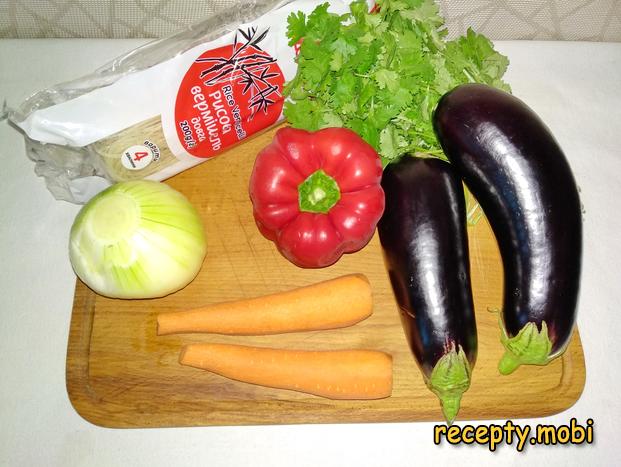
Lay out the ingredients on your work surface. Choose good-quality, "genuine" funchose – glass noodles made from mung bean starch (slightly grainy, transparent) or rice noodles (rice flour, slightly whitish). Cheap "wheat noodles" labelled "funchose" are not what you want, as they give a "heavy" texture.
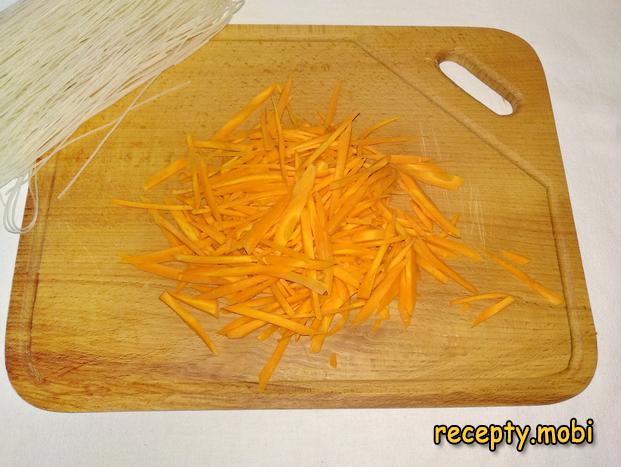
Wash all the vegetables thoroughly and peel them where needed. Peel the large carrot (1 pc) and cut it into thin slices on a mandoline, then shred it into thin, long strips about 5 mm wide. Alternatively, grate it on a Korean grater for narrow "matchsticks".
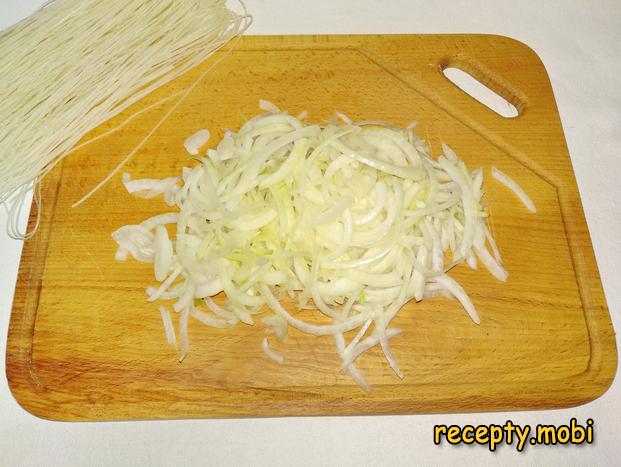
Peel the onion (1 large) and slice it into thin half-rings, 2–3 mm thick – thin half-rings fry quickly and "melt" into the vegetables. Do not cut them thick, or they will stay "crunchy" inside instead of tender.
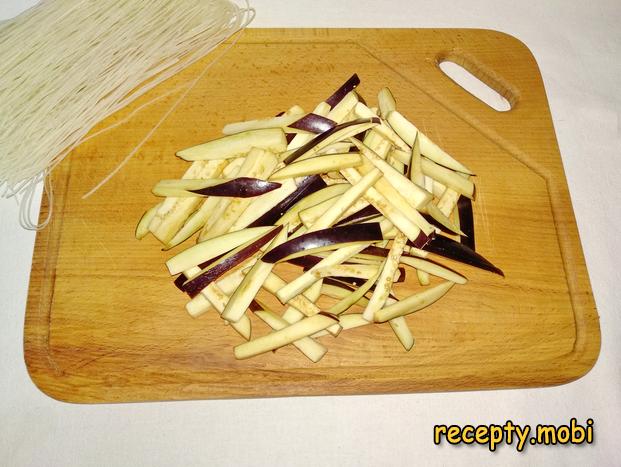
Do NOT peel the eggplant (1 pc) – the skin gives the dish a characteristic "texture". Cut it into thin slices 5 mm thick and then shred it into thin, long strips the same size as the carrot – matching cuts are critical for even cooking.
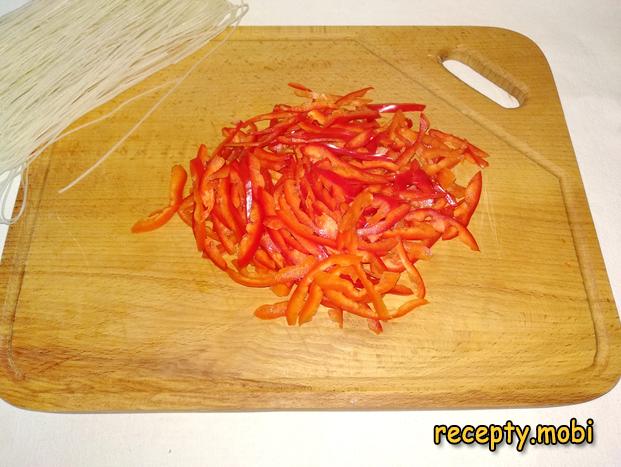
Remove the seeds and stem from the bell pepper (1 pc). Cut it in half and slice it into thin strips 5 mm wide – the same size as the other vegetables. Matching "matchsticks" give funchose its characteristic "Asian" presentation. Peel the garlic (3 cloves) and finely chop it with a knife or put it through a press.
Meanwhile, boil the funchose. IMPORTANT: READ THE INSTRUCTIONS ON THE PACKAGE – the cooking time varies greatly from one producer to another. Rice noodles are usually boiled for 4 minutes in lightly salted water, while glass funchose is sometimes simply covered with boiling water for 5 minutes without boiling. For the standard kind, boil for 3–4 minutes after the water comes back to the boil.
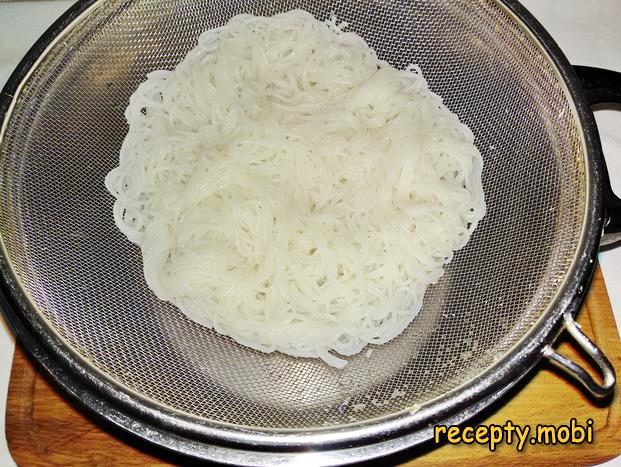
THE CRUCIAL STEP: straight after boiling, drain the noodles in a colander and rinse them UNDER COLD RUNNING WATER for 30 seconds. This is the secret to proper funchose – hot noodles keep "cooking" and clump into a solid mass. Cold water stops the process. Leave them in the colander for 5 minutes to drain.
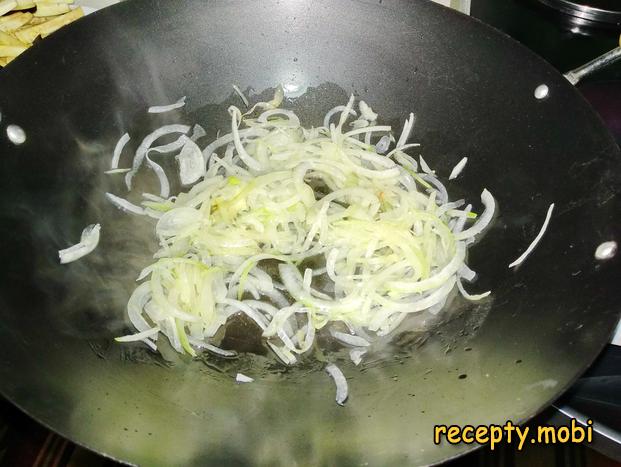
Meanwhile, heat a wok or a regular thick-bottomed pan (28–30 cm in diameter) over high heat. A wok is the "right" pan for Asian cooking; its shape allows quick frying at a "fierce" temperature. Pour in the vegetable oil (2 tbsp) and heat it until it just starts to smoke lightly.
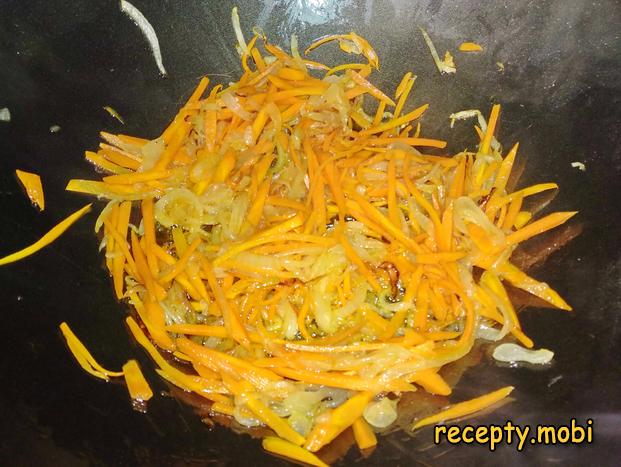
Start frying the vegetables in a particular order – the secret of Asian stir-fry cooking. First add the onion and fry for 2–3 minutes over high heat, stirring constantly with a wooden spatula. Do not let the onion "sit still" – keep stirring for even frying.
Add the carrot to the onion and fry together for 3–4 minutes. The carrot should soften slightly but keep its "crunch", which is characteristic of Asian dishes. Overcooking the carrot to mush is the "Russian" style, not the Asian one.
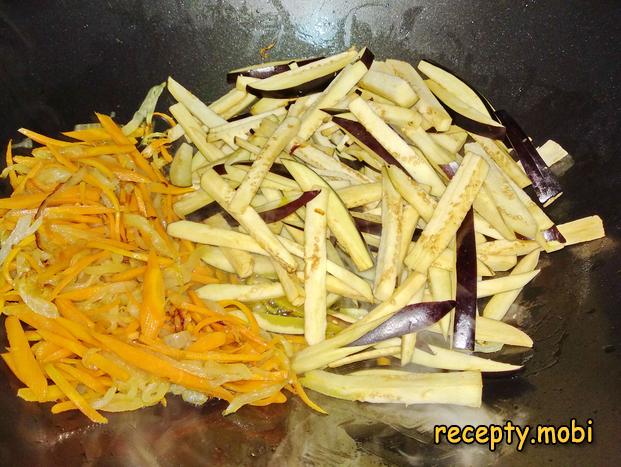
Push the onion and carrot to one side of the pan, add 1 tbsp of oil to the free space and put in the eggplant. Eggplants "love oil" – fry them separately for 3 minutes until lightly golden, then stir them together with all the vegetables.
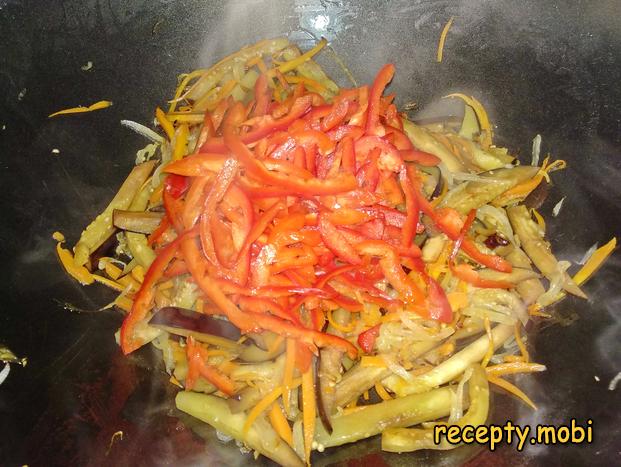
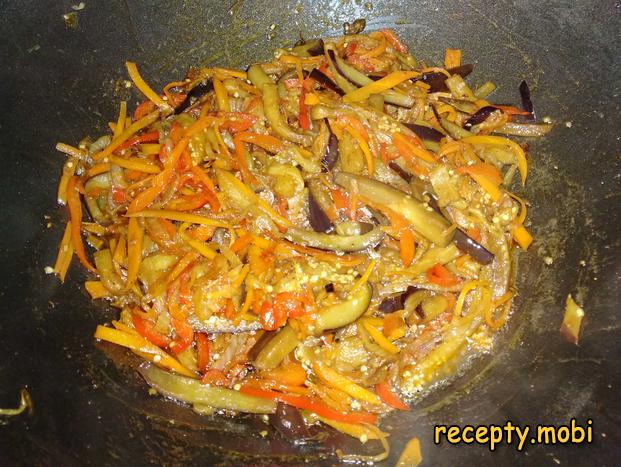
Add the bell pepper and fry everything together for 2–3 minutes until the vegetables are done. The bell pepper cooks the fastest of all, so it goes in last. All the vegetables should keep their characteristic "crunchy" Asian style and not turn into a "Russian stew".
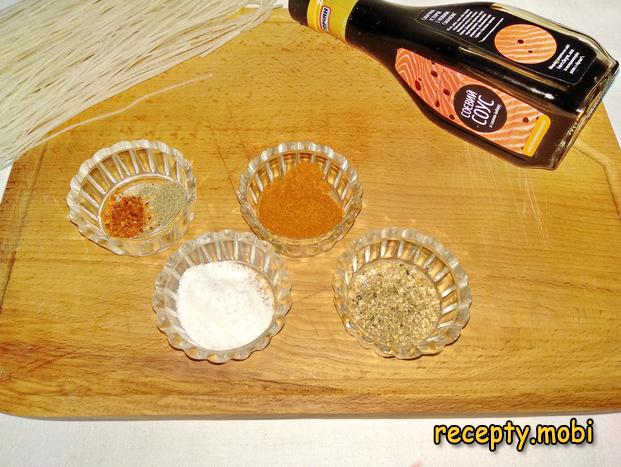
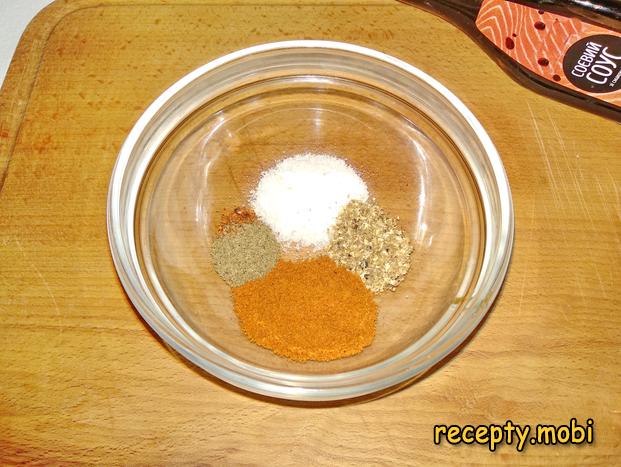
In a separate small bowl, prepare the dry spice mix: paprika (2 tsp), ground cilantro (1 tsp), ground coriander (1 tsp), ground black pepper (½ tsp) and ground red pepper (½ tsp). Tip the spice mix into the pan with the vegetables and stir thoroughly – the fierce heat will release the aromas.
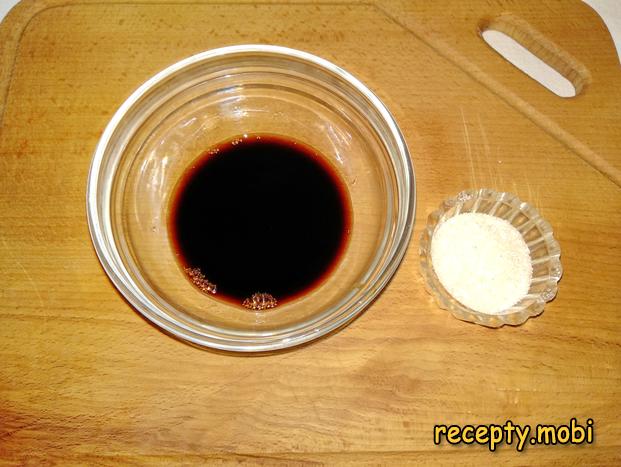
In a separate small bowl, mix the soy sauce (3 tbsp) with the sugar (½ tsp) until dissolved – the sugar gives the right "umami" effect together with the soy sauce. Pour the soy sauce into the pan with the vegetables, add the salt (½ tsp) and the chopped garlic (3 cloves). Stir.
If the mixture is dry, add 50–100 ml of water. Cover the pan with a lid and simmer over low heat for 2–3 minutes until the vegetables are fully done. At the end of the simmering, add ⅔ of the chopped fresh cilantro, keeping ⅓ for the topping.
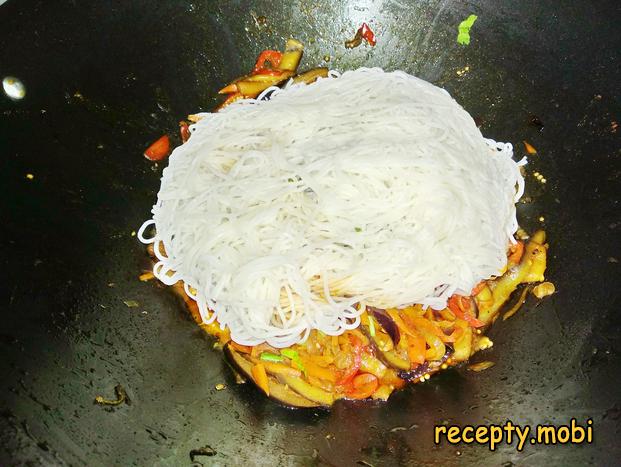
Turn off the heat and IMMEDIATELY add the rinsed boiled funchose to the pan. Stir thoroughly with a wooden spatula so that the noodles combine evenly with the vegetables and soak up the sauce. Do NOT turn the heat back on – the noodles should not "stew" any further.
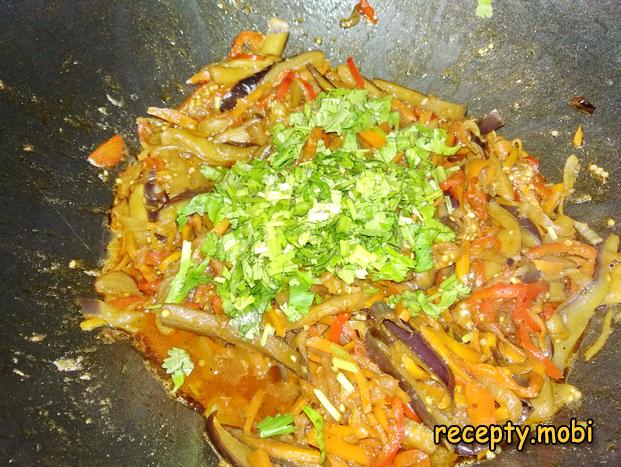
The funchose with vegetables in soy sauce is ready! Transfer a portion to a deep plate, sprinkle the remaining fresh cilantro and the sesame seeds (1 tsp) on top. Place a wedge of lime or lemon alongside – those who like it "tangy" can squeeze it over when serving. Serve hot.


Tips
- 1
ALWAYS rinse the boiled funchose under COLD WATER – this is the secret to stopping the noodles from clumping into a solid mass.
- 2
Use real funchose made from starch, or rice noodles – a cheap "wheat" imitation will give a heavy texture.
- 3
Fry the vegetables quickly over high heat in a wok – the secret of Asian stir-fry cooking with its crunchy texture. I use the same principle to make Uzbek-style fried lagman.
- 4
Add the funchose to the pan with the heat TURNED OFF – the noodles should not "stew" any further, or they will turn "rubbery".
FAQ
What is the difference between funchose and rice noodles? +
In Russia, "funchose" is often used as a general name for "Asian glass noodles", but technically these are different products. Real funchose (starch-based) is made from mung bean starch or potato starch, becomes completely transparent and "glassy" after boiling, does not clump and is gluten-free. Rice noodles are made from rice flour, are slightly whitish, also gluten-free, and a little "heavier" in taste. Wheat noodles (Doshirak, Rollton) are NOT funchose; they contain gluten and have a heavy texture. For "proper" funchose, look for packs labelled "glass noodles" or "mung bean noodles".
What can I use instead of soy sauce in this recipe? +
Suitable options include: tamari (a Japanese "deep" soy sauce without wheat, for a gluten-free version), coconut aminos (a vegan substitute made from coconut nectar), fish sauce (for Thai cooking, "saltier"), oyster sauce (a "sweeter" Chinese option), or miso paste dissolved in water (1 tbsp per 3 tbsp of soy sauce). For a home substitute, use 1 tbsp salt + 2 tbsp water + ½ tsp sugar (but the taste will be different). Soy sauce is the "classic" of Asian cooking for the umami effect. Choose a naturally brewed soy sauce, which is better quality than a chemically produced one.
How long does cooked funchose keep? +
Cooked funchose keeps in the refrigerator for up to 2 days in a tightly sealed container. The next day the noodles will soften slightly – this is normal. Before serving, reheat in a pan with 2 tbsp of water or vegetable stock, covered, for 3 minutes – this restores the juiciness. Do not reheat in the microwave, as the noodles may "burst". Do not freeze them, as the noodles will "fall apart" when thawed. It is best to cook just enough for 1–2 meals. Boiled noodles (without the vegetables) can be kept in the refrigerator in an airtight container for up to 3 days – stir them through the vegetables before serving.
What do you serve funchose with? +
It is ideal on its own as a hot dish with an Asian flavour. Essential additions: fresh cilantro (sprinkled generously on top), sesame seeds (white or black), a wedge of lime or lemon, hot chilli sauce (for those who like it spicy), and soy sauce in a dish for adjusting the saltiness. For salads – an Asian cucumber salad (cucumber + soy sauce + sesame oil), Korean-style carrots, or a cabbage salad with ginger. For drinks – green tea with jasmine (a classic Asian pairing), warm sake (the Japanese option), a light lager, or a dry white wine (Riesling). Serve it for lunch or dinner in the Asian style.
- Comment
or post as a guest
Be the first to comment.