avg —
Marinated Beijing Cabbage

Instructions
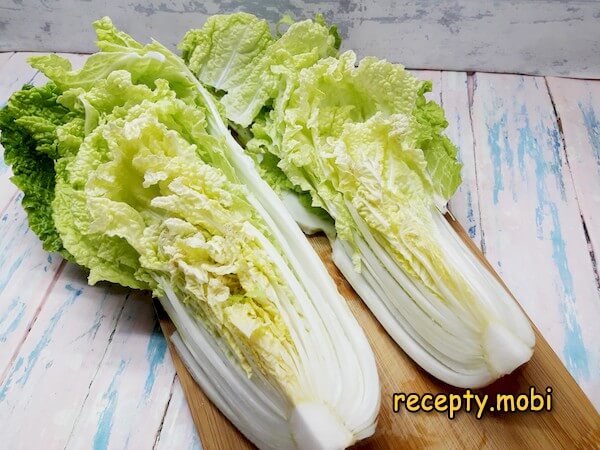
I get the ingredients ready for the marinated Beijing cabbage. I choose a firm head with no suspicious spots or wilted leaves, and trim away any damaged areas with a knife. The appetizer is made without hot pepper, but it still comes out spicy and aromatic.
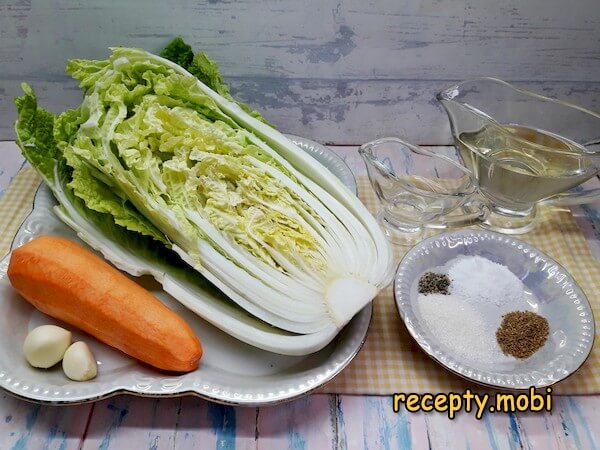
I cut the Beijing cabbage in half with a sharp knife, slicing only through the white part.
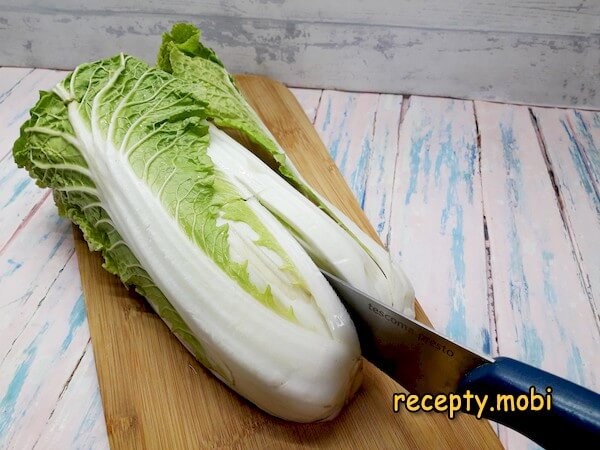
Next I pull the top leaves apart with my hands – they separate easily without getting deformed.
Now I cut off the stalk.
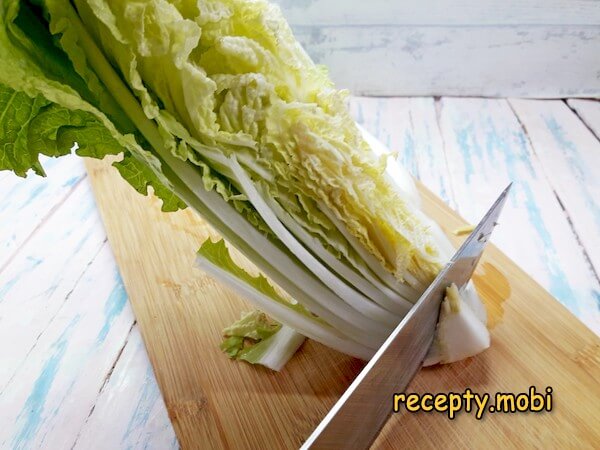
Then I cut the resulting halves through the white part once more, and separate the tops by hand.
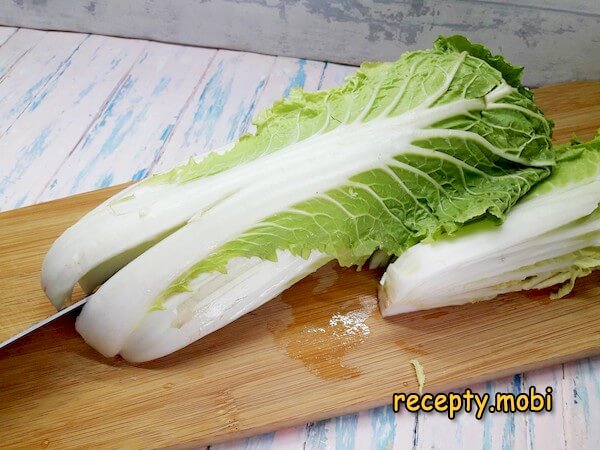
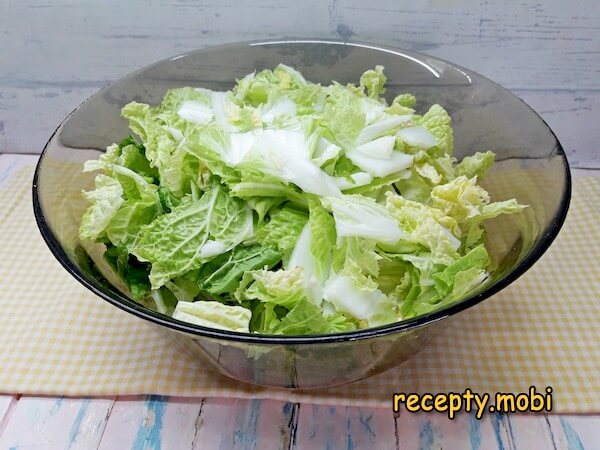
I slice the leaves crosswise into pieces 1.5–2 cm wide.
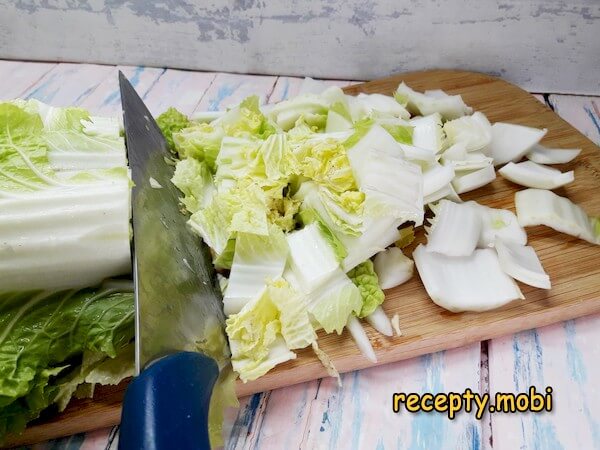
I transfer them to a deep salad bowl, which makes it convenient to mix the ingredients together.
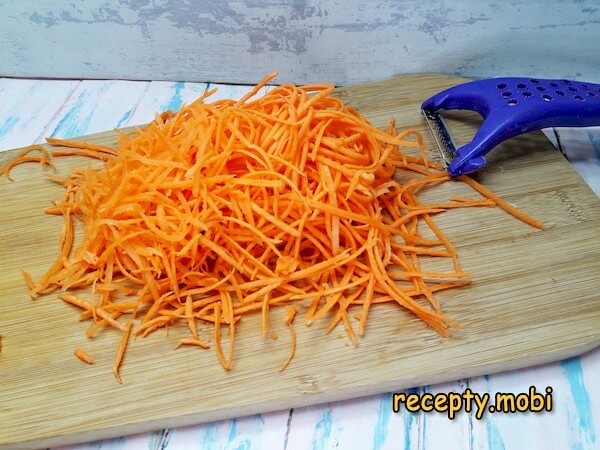
I run the carrot through a Korean-carrot peeler or use a Korean-style carrot grater.
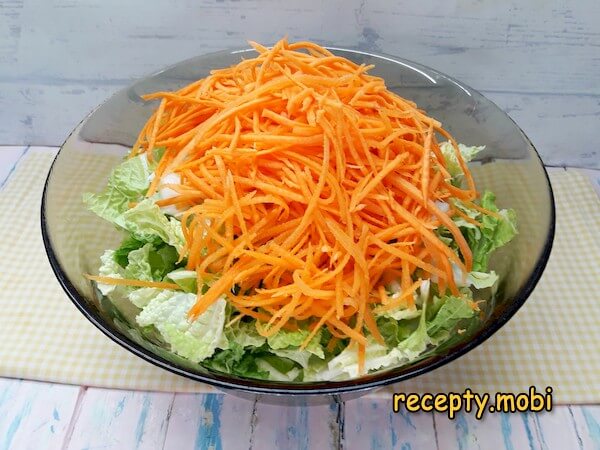
I add the carrot sticks to the cabbage.
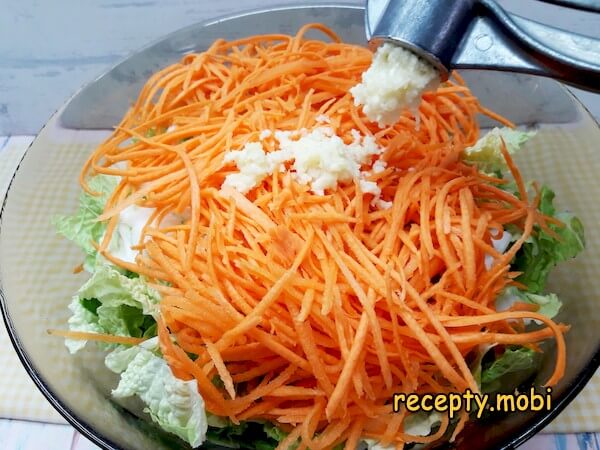
I press the garlic in here too.
I add all the seasonings at once.
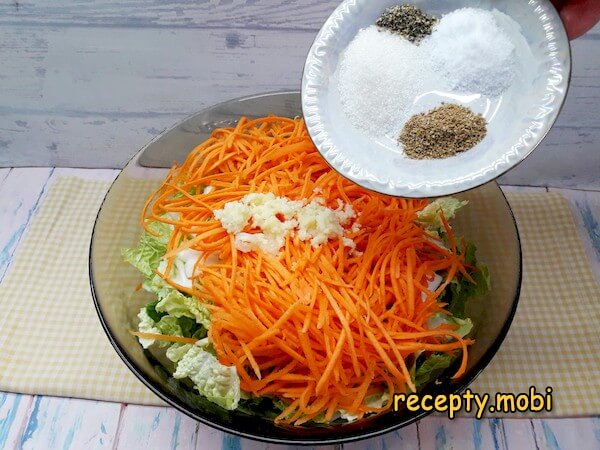
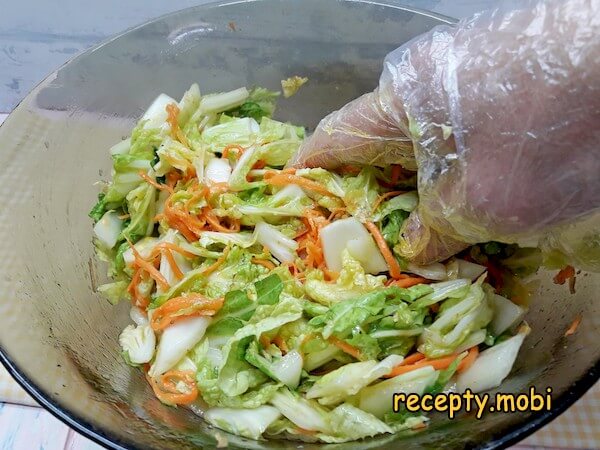
I mix the ingredients by hand so the carrot, garlic and spices are distributed evenly among the pieces of Beijing cabbage.
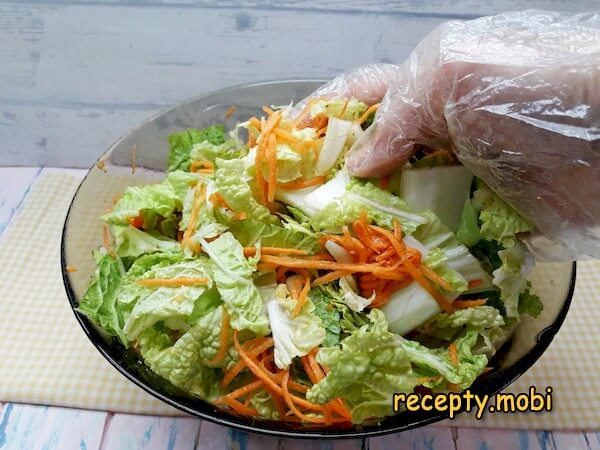
I pour in all the vegetable oil.
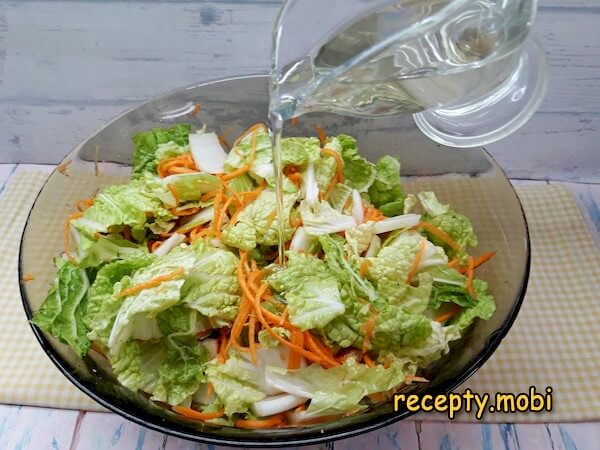
I add the vinegar.
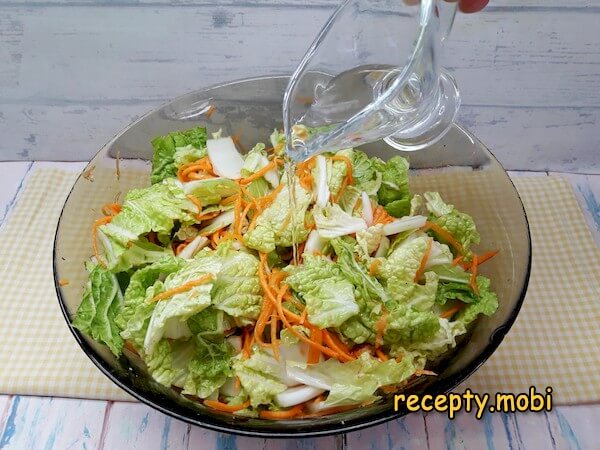
Now I knead and rub the ingredients with my hands, but not too hard – the cabbage pieces should stay intact.
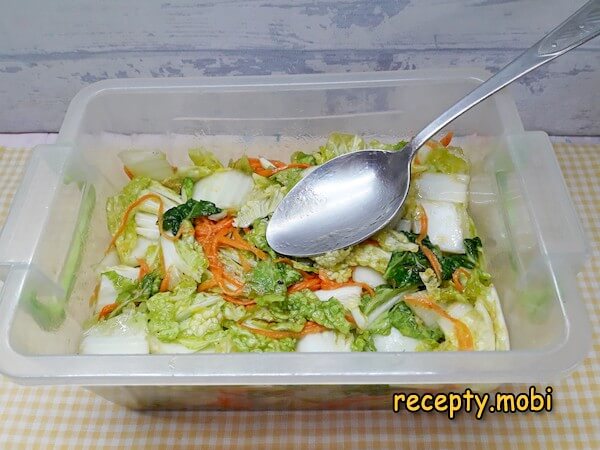
I transfer the appetizer to a container with a tight lid. I press the contents down firmly and put it in the fridge for 6 hours.
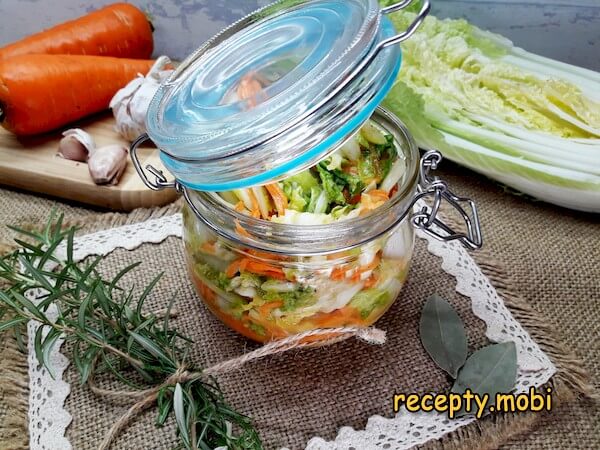
The marinated Beijing cabbage is ready – tasty, fragrant and wholesome. It goes wonderfully with any meat dish, makes a bright accent on sandwiches or shawarma, and adds a special touch to ordinary pasta or grains. The appetizer keeps in a glass container with a tightly fitted lid for up to two weeks.


Tips
- 1
Kneading by hand is the secret of marinating. When you work the cabbage with your hands it releases its juice and the spices cling to it better. Without this kneading the marinade just sits on top and the flavour does not soak in.
- 2
Six hours in the fridge is the secret of the flavour. In less time the cabbage will not marinate through. Left for longer, it turns softer and loses its crunch. Six hours is the balance.
- 3
Packing it firmly into the container is the secret of even marinating. If you leave it loose, the top is not covered by the marinade and does not soak through. Pressing it down solves that.
- 4
A carrot peeler is the secret of the texture. An ordinary grater gives coarse shavings, while a Korean-style grater or a peeler gives thin, long sticks. The same principle works in other kinds of cabbage appetizers.
FAQ
Which Beijing cabbage should I choose? +
Ideally a fresh, firm head weighing 800–1000 g (you use 500 g, or half of it). Alternatives include bok choy (500 g, with thinner leaves), romaine lettuce (500 g, though it marinates more sharply), young white cabbage (500 g, which needs longer kneading and marinating), savoy cabbage (500 g, tender, with lacy leaves) and Asian pak choi (500 g). Fresh Beijing cabbage from a farm is the best choice. Avoid cabbage that has been frostbitten, has dark spots or has wilted leaves. For the classic version you need a firm, springy head of Beijing cabbage.
What can I use instead of 9% vinegar? +
Possible alternatives are apple cider vinegar (15 ml, for a milder taste), rice vinegar (15 ml), white wine vinegar (12 ml), lemon juice (20 ml, for a fresher result), lime juice (20 ml, brighter), white balsamic vinegar (15 ml) or 70% essence diluted with water (1 ml plus 9 ml of water). Fresh vinegar from a glass bottle is the best choice. Do not use dark balsamic vinegar (it will tint the cabbage) or ready-made barbecue marinades (they upset the balance). For the classic Korean style you need table vinegar or apple cider vinegar.
How long does the marinated cabbage keep? +
In a glass container with a tightly fitted lid in the fridge, it keeps for up to 2 weeks. Any longer and the cabbage turns too sour and soft. Before serving, let it stand for 10 minutes at room temperature so the oil softens. I do not recommend freezing it, as the texture is completely destroyed. The appetizer is at its best from 6 hours after marinating (the minimum), and on the second or third day the flavour becomes brighter. Do not leave it at room temperature for longer than 4 hours, as it ferments quickly, especially in the warmth.
What should I serve the cabbage with? +
The Korean-style classic is with pork or chicken shashlik. It also goes with pilaf or boiled rice, with home-style fried potatoes, as a side for dumplings, with a glass of cold vodka, with light beer for a weekend supper, with shawarma or doner kebab, with boiled beef on the side, with boiled sausages, with black bread and salo, with macaroni and cheese (an unusual combination) and with boiled fish. For a Korean-style spread, serve it alongside other Korean salads. It is a versatile appetizer for both everyday meals and celebrations.
- Comment
or post as a guest
Be the first to comment.