avg —
Panzanella Salad

Instructions
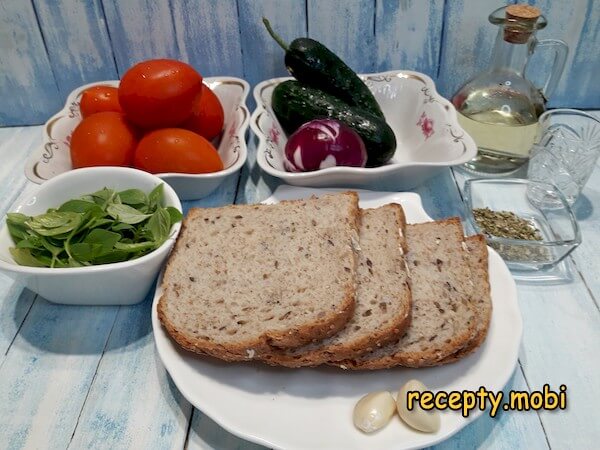
I prepare the ingredients. It is better to use bread that is not very fresh – bread that has sat at room temperature for a couple of days. If you still want to make the salad straight away and only have fresh rolls, you can dry them in the oven or in a skillet until they form a light crust – this is the secret against them soaking into mush.
I cut the bread into 2 cm cubes – this exact size keeps its shape after soaking and gives the characteristic large "wet" pieces.
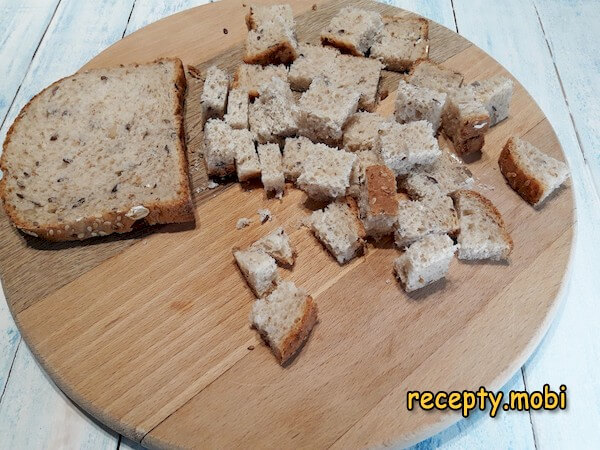
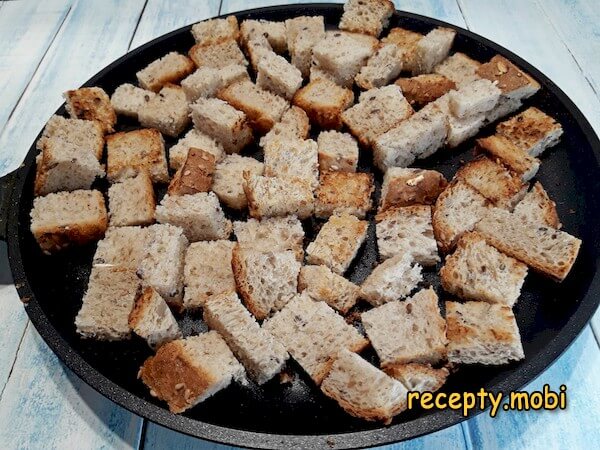
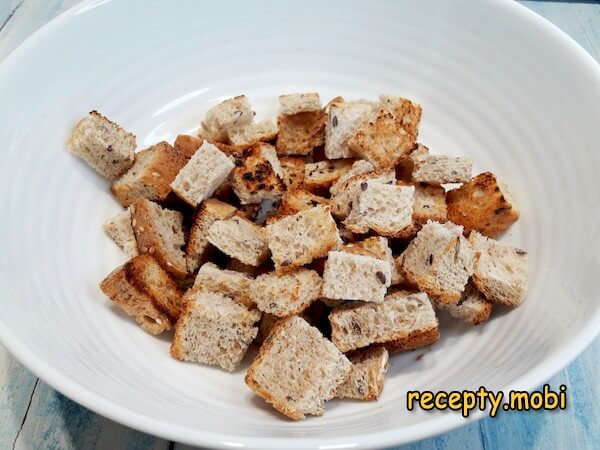
I toast them in a skillet so that the middle stays soft while the edges firm up (over high heat this takes about 3 minutes) – this is the trick of panzanella: crisp edges plus a soft centre after soaking.
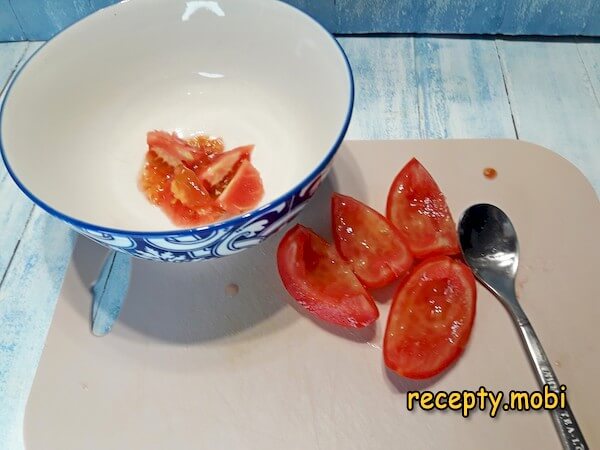
I cut the tomatoes into quarters and use a small spoon to scoop the pulp and seeds into a separate bowl – the pulp goes into the dressing, while the firm walls go into the salad itself.
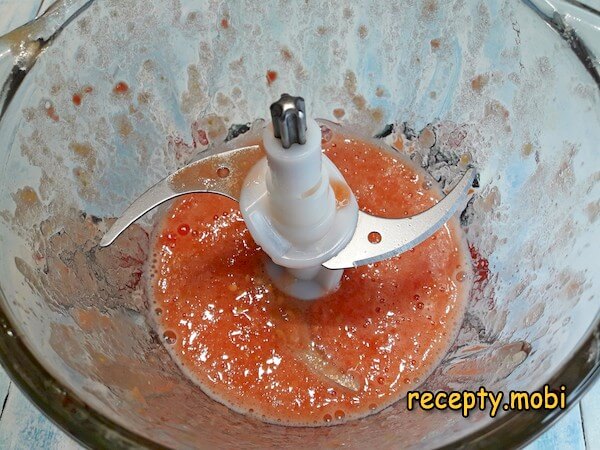
I blend the scooped pulp until smooth – this gives a thick tomato juice, the base for the Italian dressing.
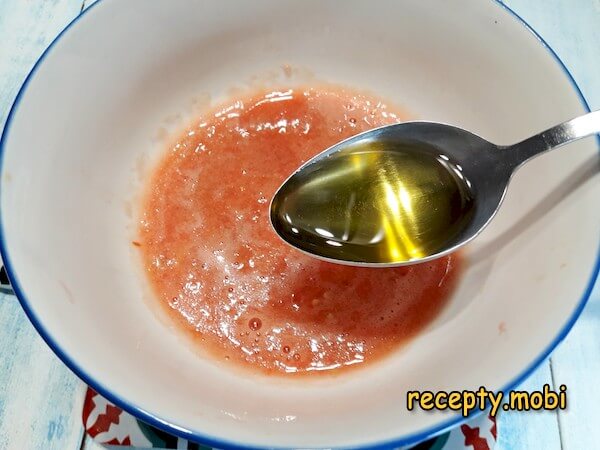
I pour this thick tomato juice into a bowl and add the olive oil – the "Italian" proportion: 1 part tomato juice to 1 part olive oil.
I press the garlic in here as well – fresh, through a press, for maximum aroma.
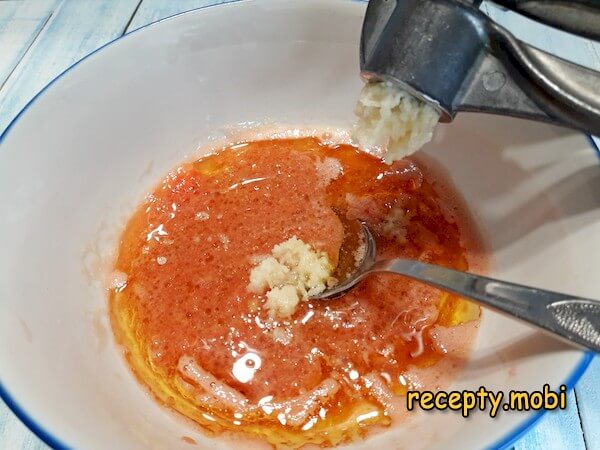
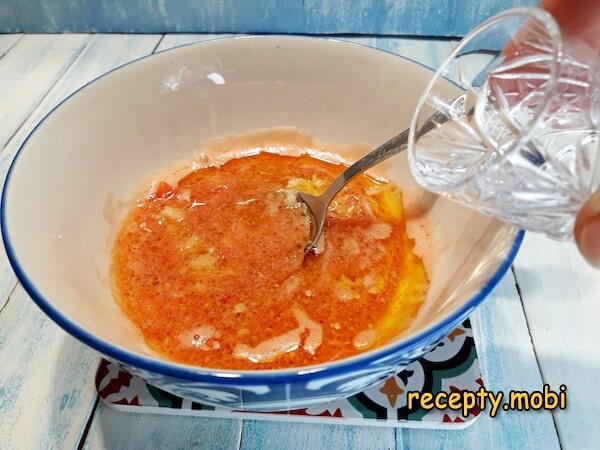
I pour in the fruit vinegar – specifically fruit vinegar (wine, balsamic, or apple), not plain table vinegar, otherwise the taste will be harsh.
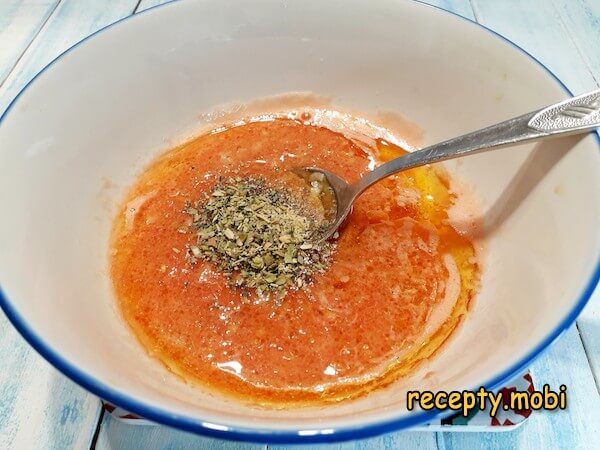
I season everything with the Provençal herbs – this is the "Italian soul" of the dressing: a blend of thyme, oregano, rosemary, and basil.
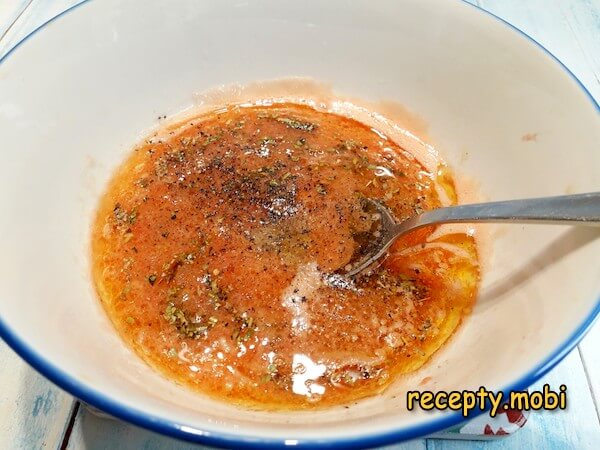
The dressing is now almost ready. All that is left is to season it with pepper and salt to taste. I mix everything thoroughly – the result should have a thick "tomato-and-oil" consistency.
Now I can start assembling the salad. I place the croutons into a roomy salad bowl – the croutons go in first, so the dressing soaks into them well.
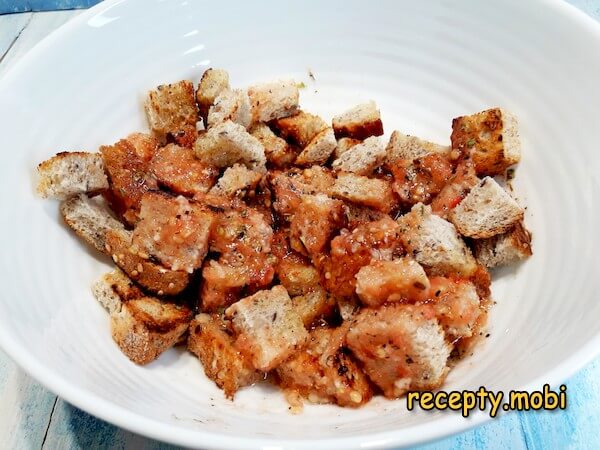
I add the dressing to them – it will soak into and soften the bread pieces beautifully, making them irresistibly tasty. This is the "magic" of panzanella – soaked bread with a tomato flavour.
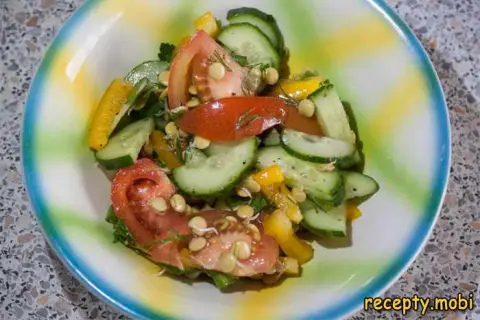
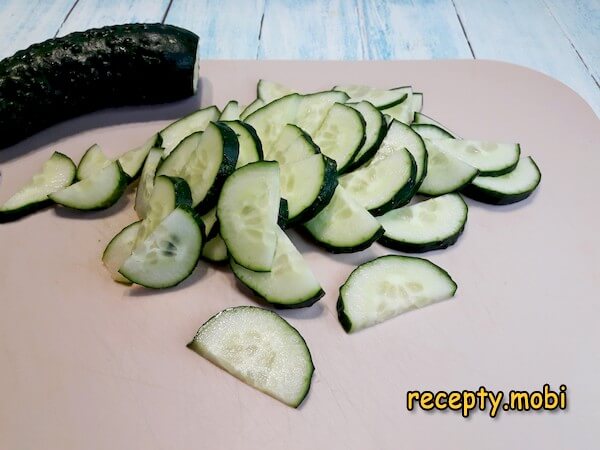
I cut the cucumber into fairly thick half-rings – about 5–7 mm, so the cucumber is noticeable and does not get "lost" in the salad.
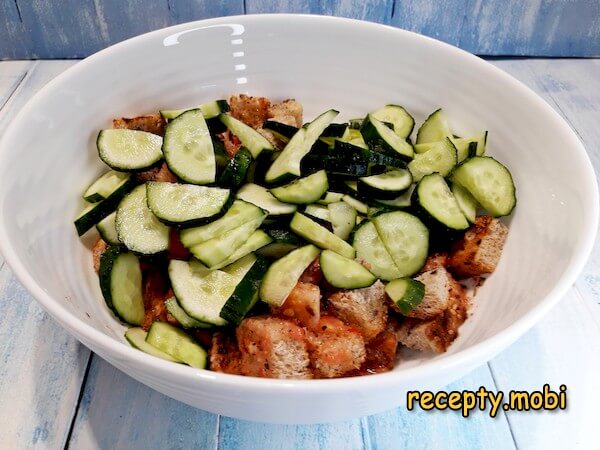
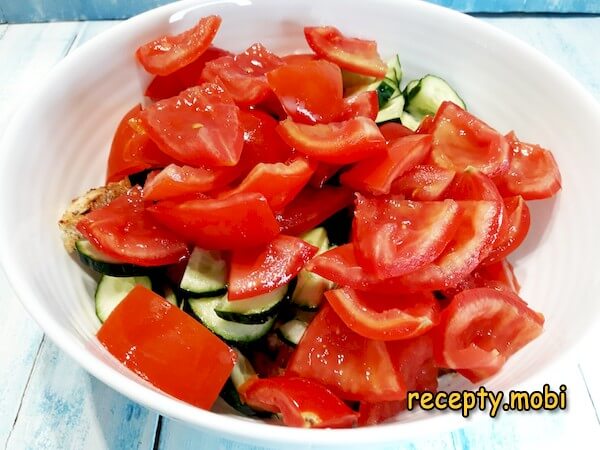
I add them to the salad bowl – on top of the soaked bread.
What is left of the tomatoes – the firm, meaty wedges – I cut into 2–3 pieces each. This is the "meaty" tomato component of the salad.
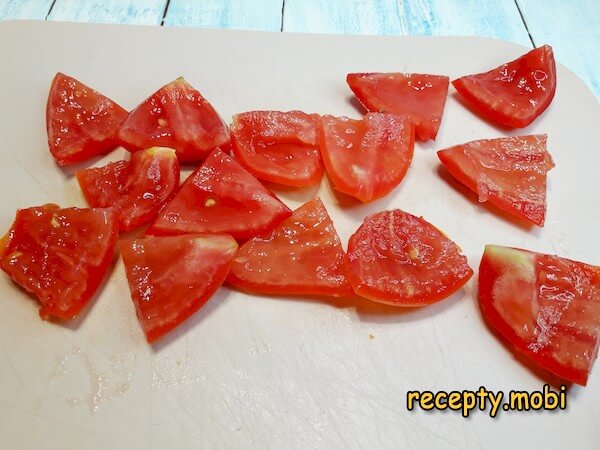
I lay them on top of the cucumbers – forming a "layer" of tomato wedges.
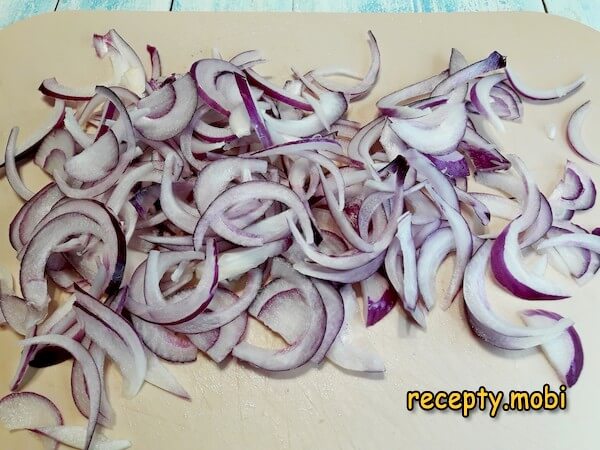
I cut the red onion in half first and then slice it thinly – the thin cut is needed so the onion does not "overpower" the flavour.
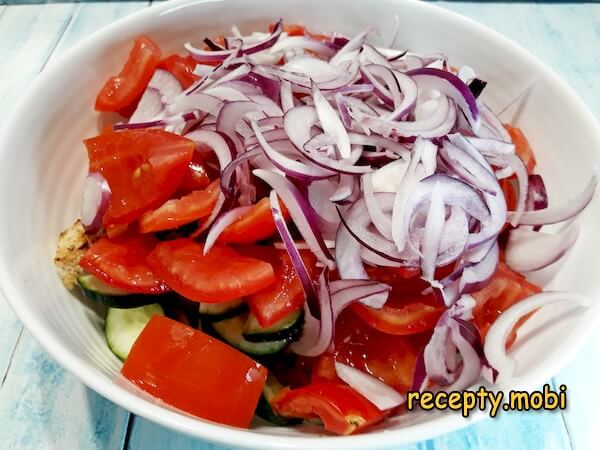
I transfer the onion strips into the rest of the salad – the red onion is the "Italian" colour note of the dish.
If the basil leaves are large, I tear them by hand straight into the salad bowl – by hand, not with a knife, otherwise the basil gets "wounded" and darkens.
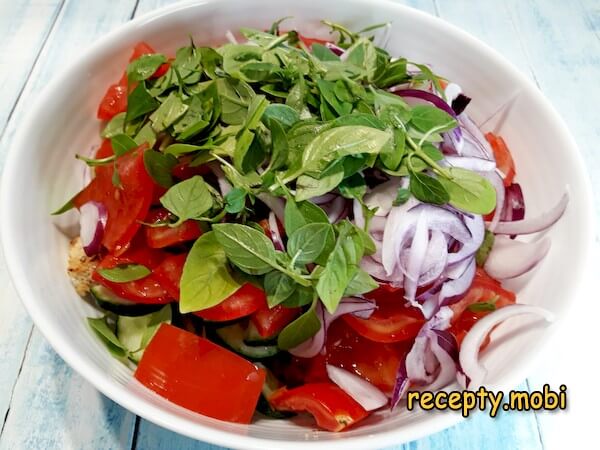
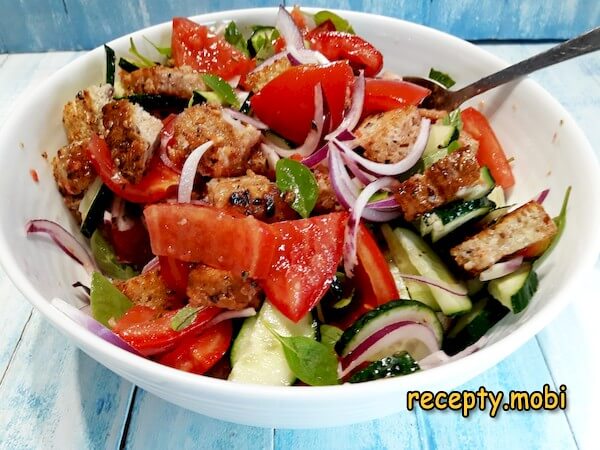
I mix everything, lifting the croutons up from the bottom together with any dressing they have not yet absorbed. All the components should be distributed evenly through the salad. I check the seasoning for salt once more. I put the finished dish in the fridge for about 15 minutes – it should soak up all the juices and aromas better, and cool down at the same time.


Tips
- 1
STALE BREAD is the secret of a proper panzanella. Fresh, soft bread will dissolve completely in the tomato juice, turning the salad into "porridge". Two-to-three-day-old stale bread is exactly the texture at which the cubes swell but keep their shape. In its homeland, Tuscany, peasants made this salad specifically from leftover "yesterday's" bread, rather than throwing it away. The best types are ciabatta, Italian white "pagnotta", French baguette, and homemade wheat bread. Completely unsuitable are: rye (it gives a "Russian" taste), sweet brioche, and sliced bread with preservatives. An alternative is to dry fresh bread in the oven at 180 °C for 5–7 minutes or in a skillet. Homemade Italian bread aged for 2–3 days is ideal.
- 2
SEPARATING THE PULP AND THE FLESH is the secret of the "double" tomato composition. It is a brilliant technique. I separate the seedy, juicy pulp into the dressing (it soaks the bread), while the firm tomato "walls" are cut into the salad (they give a "meaty" taste). Without this separation, the tomato juice runs across the plate and the pieces themselves fall apart. The ideal tomatoes are "pink oxheart", "assorted cherry", and Black Sea varieties with meaty walls. At the market, choose ones that are heavy for their size, with no green top.
- 3
BASIL BY HAND is the secret of a fresh aroma. A knife, when cutting basil, damages the "essential-oil cells" of the leaves, and they quickly darken and lose their aroma. If you tear the basil by hand, the cells stay intact, the aroma is released more slowly and lasts longer. This is the rule of all Italian cooks: "basil – only with your fingers". Use only the leaves, not the stems (the stems are bitter). Alternatives to basil are: rocket (a more "peppery" option), mint (for a "summery" accent), and fresh parsley (for a neutral version). Without basil, panzanella is not panzanella.
- 4
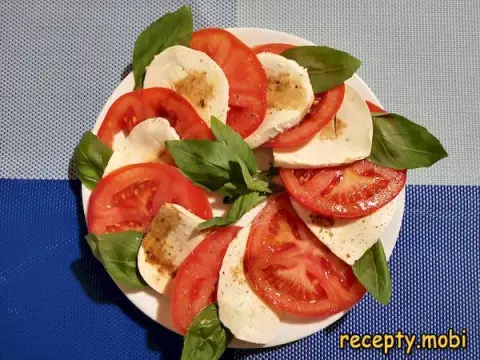
15 MINUTES IN THE FRIDGE is the secret of the salad "maturing". Straight after mixing, the flavours have not yet "made friends" – the tomato juice has not soaked the bread all the way through, and the onion and garlic are only beginning to "give off" their sharpness. Fifteen minutes of chilling is the optimal "marinating" time: the bread swells with juice, the vegetables release their juices, the garlic opens up its aroma, and the onion loses its sharpness. Do not keep it longer than 30 minutes – the bread will become too soft, turning the salad into porridge. A similar principle of "cold salads maturing" works in the classic Caprese salad, only Caprese needs even less time to mature – 5 minutes.
FAQ
What additions can I make to panzanella? +
The classic with no additions (just tomatoes + bread + basil) is the authentic "peasant" version. "City" additions are: capers (a salty note), black or green olives (a Mediterranean accent), anchovies (a fishy depth), diced mozzarella (an Italian "cheese" version), canned tuna (for a filling lunch), and boiled eggs (a Russian accent). Not recommended: sun-dried tomatoes (too tomato-heavy), a Russian-style cucumber-and-carrot mix, potatoes (too heavy), and smoked sausage (it ruins the delicacy). The main thing is not to "drown out" the flavour of the bread and tomatoes.
Which vinegar is best for the dressing? +
A 6% fruit vinegar is ideal. The best options are: white wine vinegar (a classic for Italian cuisine), balsamic (for a premium version, but reduce the amount, as it is very sour), apple cider (mild and affordable), and sherry vinegar (for gourmets). Ordinary 9% table vinegar is completely unsuitable – it is too harsh and breaks the harmony of the flavour. If you only have table vinegar, dilute it 1:1 with water and add a pinch of sugar. An alternative to vinegar is freshly squeezed lemon juice (3 tbsp instead of 1 tbsp of vinegar). Balsamic glaze is for "decorating" the serving on top, not for the dressing.
Can panzanella be served as a full lunch? +
Yes, in Italy it is often eaten as a "light summer lunch". A 200–250 g portion is enough for one person: the bread gives a feeling of fullness, the tomatoes and cucumbers provide hydration (important in the heat), and the olive oil provides healthy fats. The calorie content is 216 kcal per 100 g, which is quite a lot for a salad, but almost all of it comes from the "healthy" fats in the olive oil. For a "more filling" version, add diced mozzarella (+50 g), canned tuna (+30 g), or boiled eggs. With a slice of Italian focaccia on the side, it makes a dinner for two.
What to serve panzanella with? +
The Tuscan classic is with a slice of focaccia or bread for "mopping up" the sauce. As for drinks: a dry white (Pinot Grigio or Verdicchio – Italian summer options), a rosé (Provence style), a cold Peroni or Birra Moretti beer, or ice-cold sparkling water with lemon. On a large table it works as an "antipasto" (a starter) before pasta, risotto, or pizza. Additions: olives and capers on a small plate, thinly sliced Italian cured meats (salami, prosciutto), and pieces of Parmesan. For a picnic, pack it in an airtight container with the dressing kept separately, so the bread does not soak too soon.
- Comment
or post as a guest
Be the first to comment.