avg —
Ramson Salad with Egg and Cucumber

Instructions
I prepare the ingredients. To avoid overpowering the delicate flavour of the ramson, there is no need to add any spices. The sour cream can be replaced with mayonnaise.
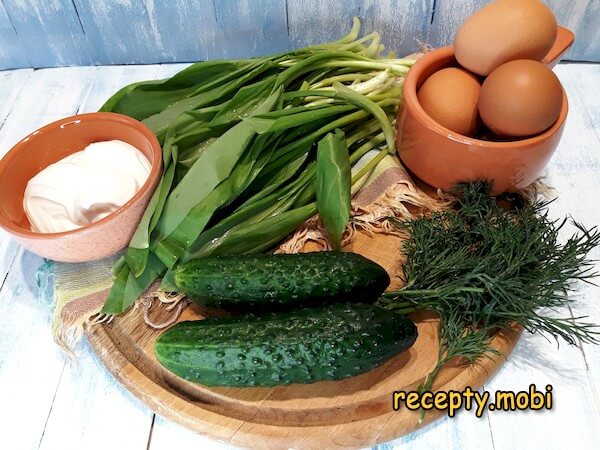
I cover the eggs with water, add a pinch of salt and put them on to hard-boil (about 8 minutes).

While that happens, I deal with the rest of the ingredients. The ramson needs to be washed thoroughly – each sprig separately – to remove every grain of sand and speck of dust from the folds of the leaves. If the stem itself is tough, I cut it off, while the young and tender stalks are good for the salad. All you need to do is peel off the thin outer film.

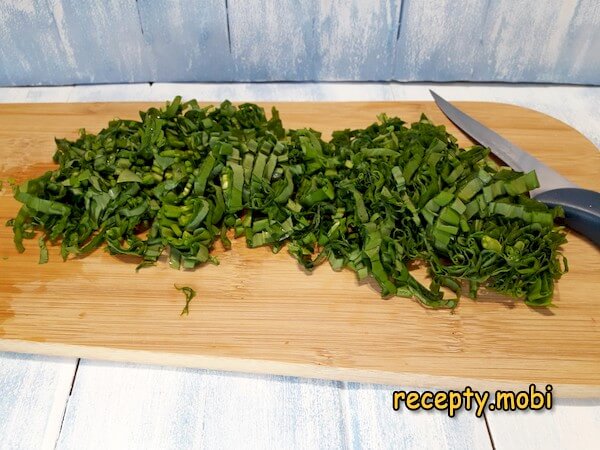
I chop the ramson as finely as possible.
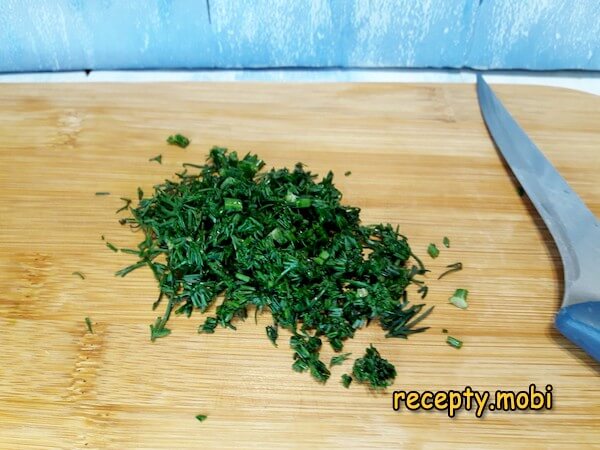
I finely chop the dill.
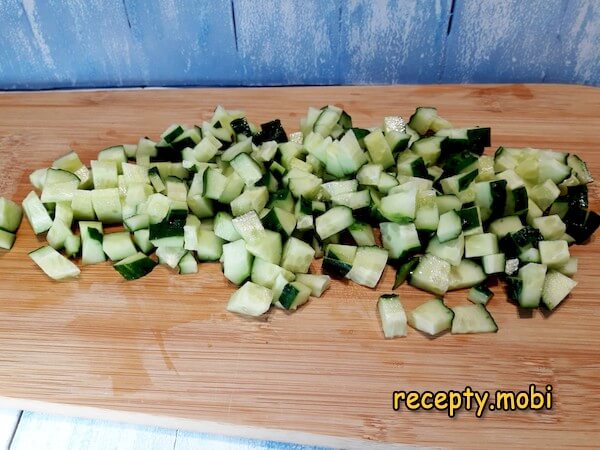
If the cucumbers have a tough, thick skin, it is better to remove it with a vegetable peeler. Tender young cucumbers don't need peeling. I cut them into small cubes.
Once the eggs are cooked, I plunge them into cold water. Then I peel them and chop them finely.

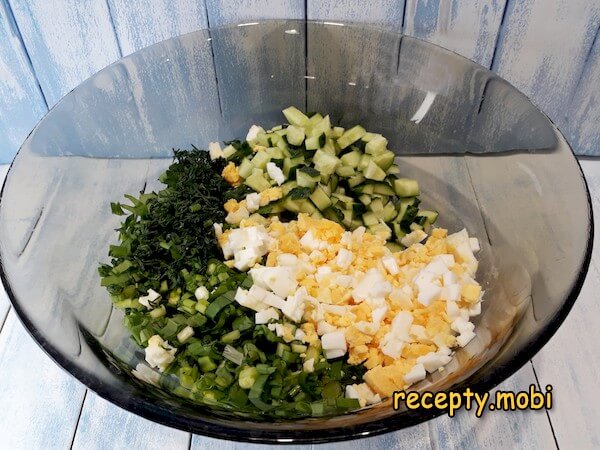
I put all the chopped ingredients into a wide bowl, which makes the salad easy to toss.
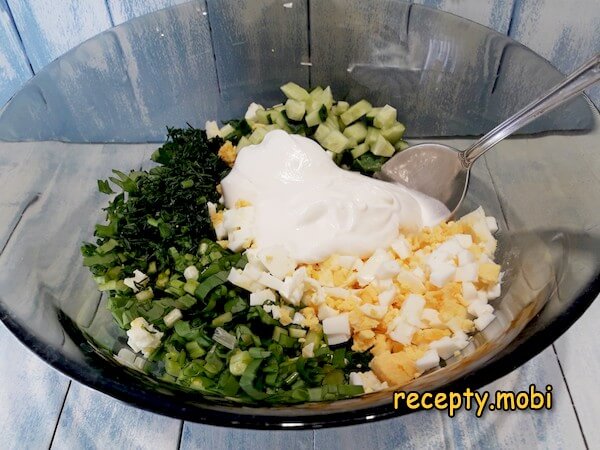
I add the sour cream and salt.
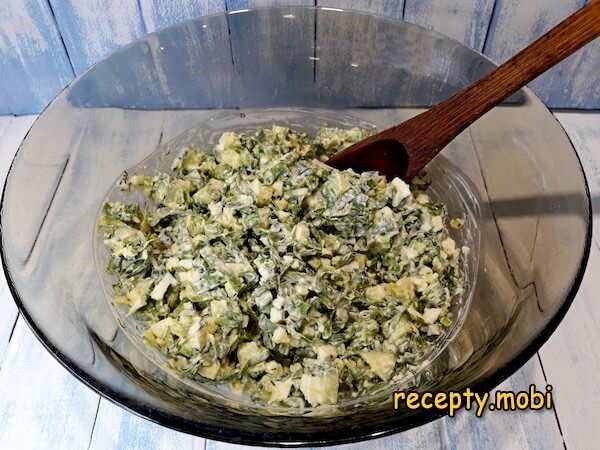
I mix everything together. The ramson salad with egg and cucumber is ready.


Tips
- 1
Serve it immediately – the secret to freshness. The cucumber releases its juice, so the salad will turn watery within an hour. Making it and eating it in one go gives the best flavour.
- 2
Peel the film off the stalk – the secret to tenderness. Tough ramson stalks with the film left on are unpleasant to eat. Peel off the thin outer film and the stalk becomes as tender as spring onion.
- 3
No spices – the secret to the ramson's aroma. Any seasoning will overpower its delicate garlic flavour. Use only salt, so as not to drown out the main thing.
- 4
A fine chop – the secret to evenness. Coarsely cut ramson stands out in the salad, whereas a fine chop spreads it evenly through every spoonful. The same principle works in other kinds of spring vitamin salads.
Video

FAQ
What is ramson? +
Ramson (also called bear's garlic or wild garlic) is a wild plant of the onion family that appears in early spring (April to May). Its taste and aroma are like a mix of garlic and onion. It is used raw in salads, as a filling for pies, and for pickling. It is rich in vitamin C, phytoncides and essential oils, which makes it welcome after a long winter. Out of season you can substitute green onion and garlic in equal parts, chives, the shoots of young garlic, or the leaves of young Welsh onion. For the classic version, use only the young leaves and tender stems.
What can I use instead of sour cream? +
You can use mayonnaise (50 g, as suggested in the recipe), plain Greek yoghurt (50 g, for a lighter result), 25% sour cream (50 g, richer and fuller), or a 50/50 mix of sour cream and yoghurt (25 g of each). A Mediterranean-style option is olive oil with lemon juice (2 tbsp plus 1 tsp), and thick kefir (50 g) works as a budget choice. Avoid thin 10% sour cream, which makes the salad run, and any sour-cream-style product made with vegetable fats. For a proper spring salad, use sour cream of at least 15% fat.
How long does ramson salad keep? +
The salad is at its best right after it is dressed, when the ramson and cucumbers are at their crispest. At room temperature it keeps for no more than 1 hour, after which the cucumber releases its juice. In the fridge, in a tightly closed container, it keeps for no more than 4–6 hours before turning watery. I don't recommend freezing it, as the texture breaks down completely. You can prepare the parts ahead separately: chopped ramson keeps in the fridge for 1–2 days, boiled eggs for 3 days, and whole cucumbers for a week. Combine and dress them only just before serving, and don't leave the salad at room temperature for longer than 2 hours.
What do you serve ramson salad with? +
It is a classic on the spring table. Serve it with boiled potatoes in their skins, young country-style potatoes, fried chicken or meat, boiled beef, or fried cutlets. It is good with a slice of dark rye bread and butter, a glass of kvass, a cup of green tea, or, for a celebration, a shot of cold vodka or a light beer. It also suits fried eggs or an omelette at breakfast, boiled fish such as pink salmon or salmon, and salted lard with black bread. It is a versatile vitamin salad to wake you up after winter.
- Comment
or post as a guest
Be the first to comment.