avg —
Sprouted Mung Bean Salad

Instructions
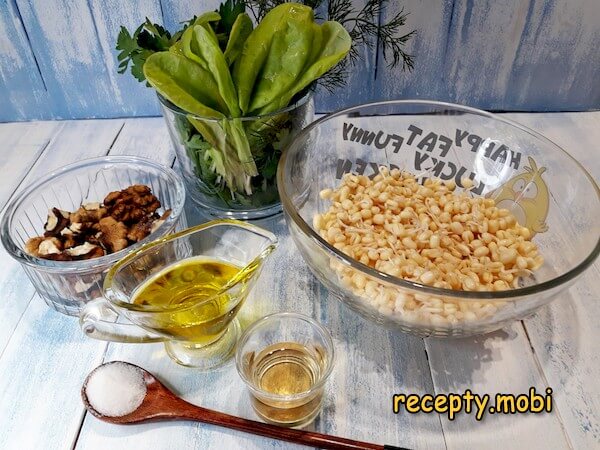
I get the ingredients ready for the sprouted mung bean salad.
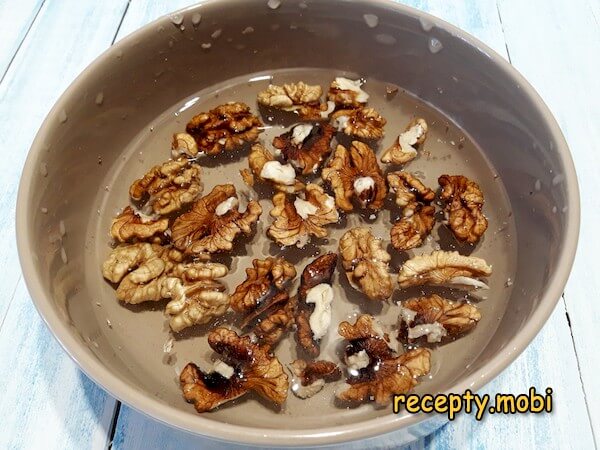
I soak the walnuts in water for 4 hours.
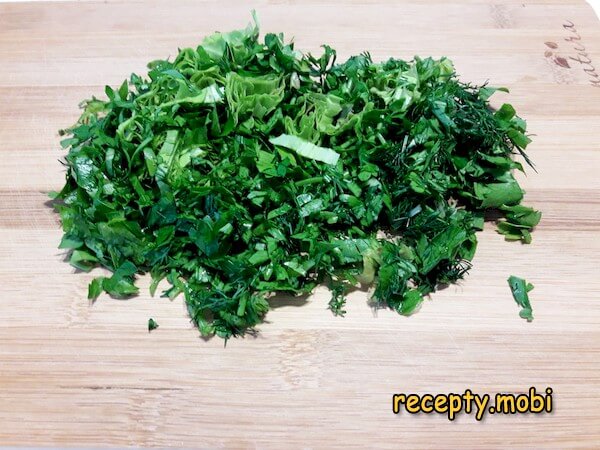
I finely chop the fresh herbs.
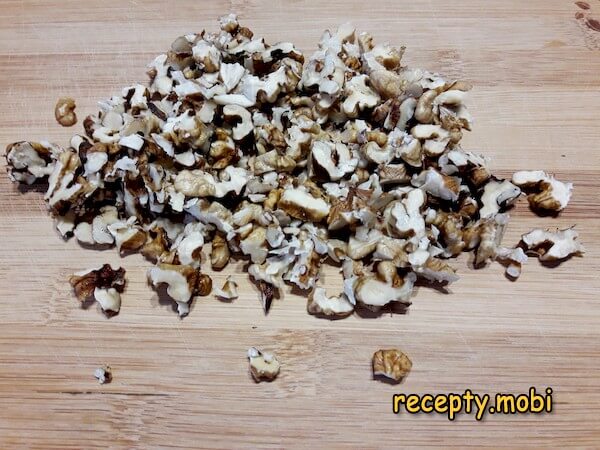
I chop the walnuts with a knife.
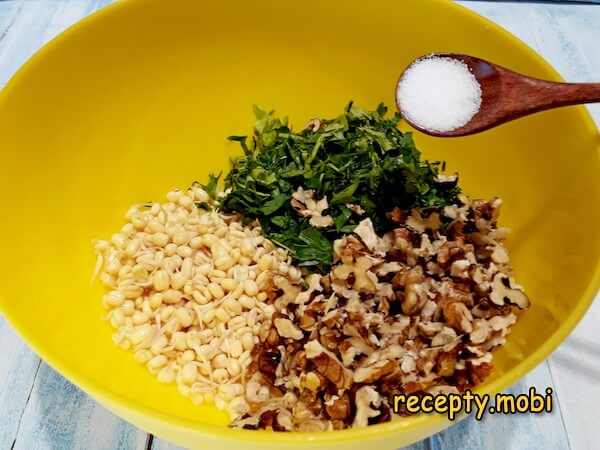
I add them to the bowl with the mung beans and herbs. I season with salt.
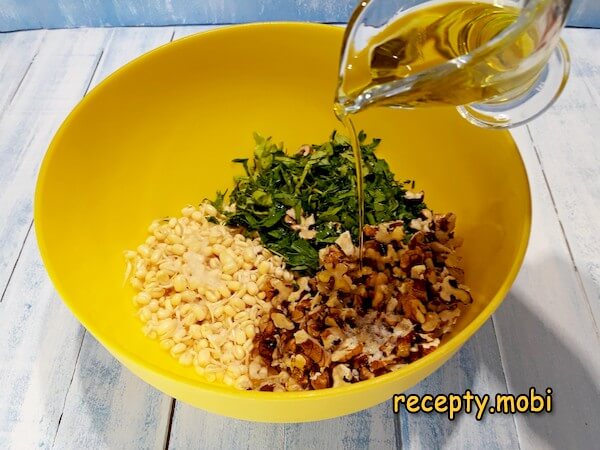
I pour in the oil and the apple cider vinegar.
I mix everything together evenly.
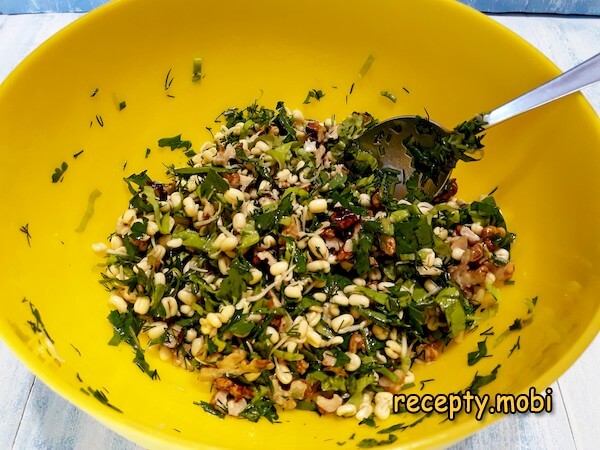
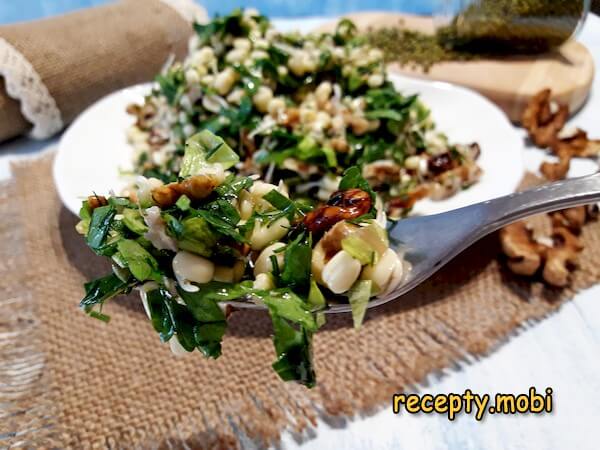
The sprouted mung bean salad is ready. The bean sprouts turn out crisp but not hard, and they taste much like fresh young garden peas. A slight tartness creates a special flavour effect. This salad is best eaten in the morning or at lunch, as a side dish or as a meal on its own.


Tips
- 1
Shoots of 5 to 15 mm are the secret to nutrition. Under 5 mm, the enzymes have not yet activated. Over 15 mm, the beans start to turn slightly bitter. The ideal length is 5 to 15 mm.
- 2
Soaking the walnuts is the secret to tenderness. Dry walnuts are bitter because of phytic acid. After 4 hours in water they become soft, tender, and free of bitterness.
- 3
Olive oil is the secret to flavour. Sunflower oil mutes the taste of the mung beans, while extra virgin olive oil brings out their nutty notes.
- 4
Little vinegar is the secret to balance. Mung beans are slightly sweet. A teaspoon of apple cider vinegar gives just the right tartness without overpowering them. The same principle works in other kinds of salads with sprouted beans.
FAQ
Where can I get mung beans for sprouting? +
The best choice is fresh mung beans (mung beans, also known as moong) – 50 g of dry beans gives about 140 g once sprouted. You can also use other sprouting beans and seeds, such as sprouted chickpeas, sprouted green lentils (a different flavour), sprouted alfalfa, sprouted green buckwheat, sprouted wheat, or radish sprouts. Do not use beans from polished spice mixes or beans treated with pesticides, as they will not sprout. For the classic salad, use plain whole, unhulled mung beans.
What can I use instead of walnuts? +
You can substitute almonds, cashews (milder), hazelnuts (more aromatic), pine nuts, pecans, a mix of nuts, pumpkin or sunflower seeds, or toasted sesame for an Asian accent. Do not use salted nuts, which throw off the balance, or nuts coated in caramel or honey. For the classic version, use unsalted walnuts or almonds.
How long does mung bean salad keep? +
In the fridge, in a tightly closed container, it keeps for 1 to 2 days. Any longer and the mung beans lose their fresh crunch and the nuts go soggy. Before serving, let it stand for 5 minutes at room temperature. I do not recommend freezing it, as the texture breaks down completely. The salad is at its best straight after dressing, when the crunch is at its peak; on the second day the flavour holds up but the texture is poorer. Do not leave it at room temperature for longer than 4 hours. It is ideal to make it for a single serving. The sprouted mung beans themselves can be kept in the fridge for up to 3 to 4 days.
What can I serve mung bean salad with? +
It is a classic for healthy eating: with boiled chicken breast, with a fried steak, with steamed fish, with boiled rice or quinoa, with a hot vegetable soup, or with a slice of wholegrain bread. It also goes with a glass of freshly squeezed vegetable juice (carrot and cucumber), a cup of green or herbal tea, a glass of dry white wine, plain yoghurt, slices of avocado, or goat's cheese. It works well as part of a healthy breakfast, and it is a vitamin-rich salad for a clean-eating or vegan diet.
- Comment
or post as a guest
Be the first to comment.