avg —
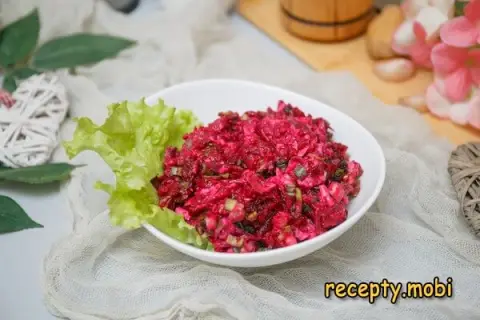
Vinaigrette with Sauerkraut and Pickles – Classic Recipe

Instructions
Scrub the beetroot, carrots, and potatoes thoroughly with a brush under running water – I cook them in their skins to keep the vitamins and the shape. Boil the vegetables in separate pans (beetroot – 60 minutes, carrots – 30 minutes, potatoes – 20 minutes), or bake them in the oven at 180 °C wrapped in foil for 60 minutes. Baked vegetables have a richer flavour and keep more of their vitamins – boiling washes them out into the water.
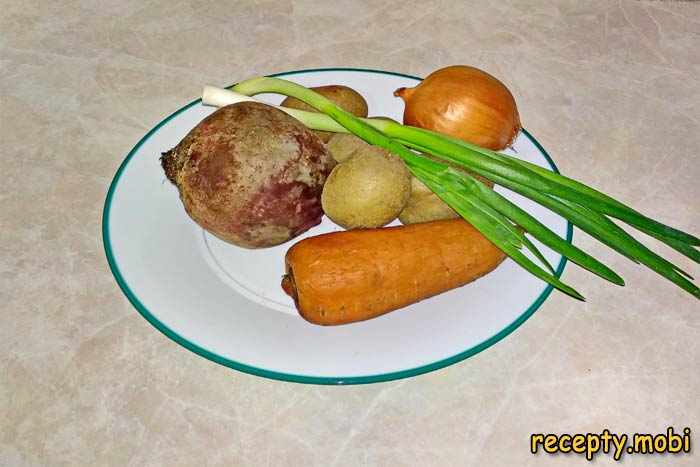
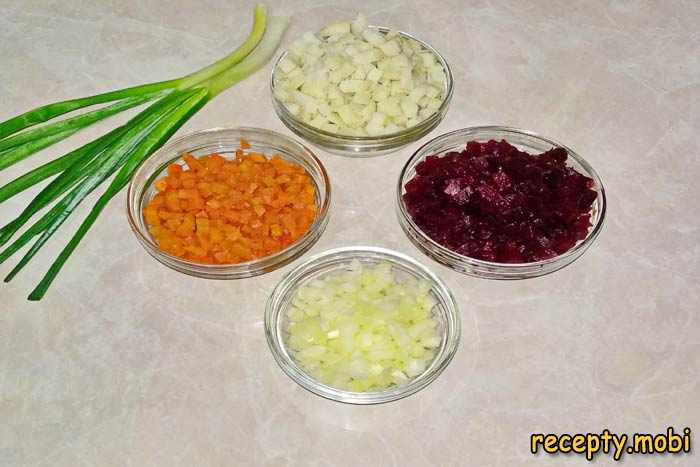
Cool the boiled vegetables completely (at least 1 hour), then peel them and cut into even cubes of 5-7 mm. Cut the onion into a small dice of 3-4 mm too – it should not “stand out” in the salad. An even cut is the key to a beautiful vinaigrette: mismatched cubes look untidy, and cubes that are too large will not soak up the oil.
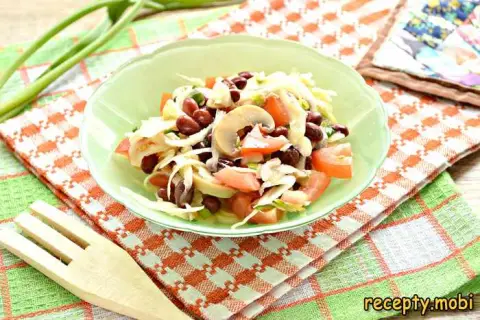
Soak the beans in cold water for 3-4 hours (or overnight), then boil them in fresh water for 60-90 minutes until soft. Soaking halves the cooking time and removes the substances that cause bloating. The cooked beans should mash easily with a fork but still hold their shape – overcooked beans turn to mush and spoil the texture of the salad.
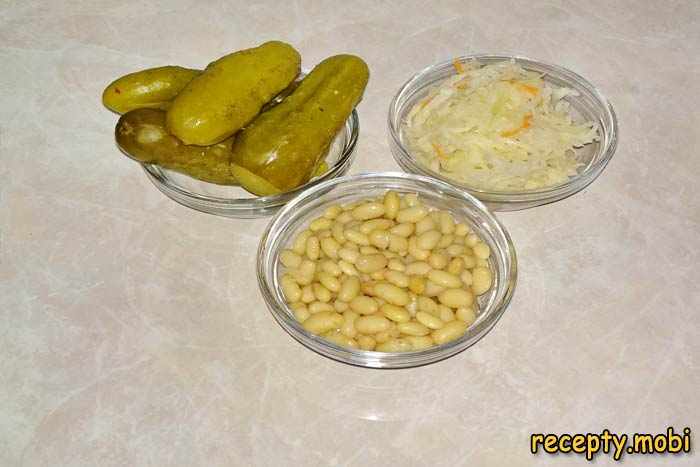
Cut the pickled cucumbers into 5-7 mm cubes – the same size as the other vegetables. If the cucumbers are too sour, lightly squeeze out the brine before cutting. Leave the sauerkraut as it is (in long shreds), or chop it a little with a knife if the strands are very long – so that it is easy to eat with a spoon.
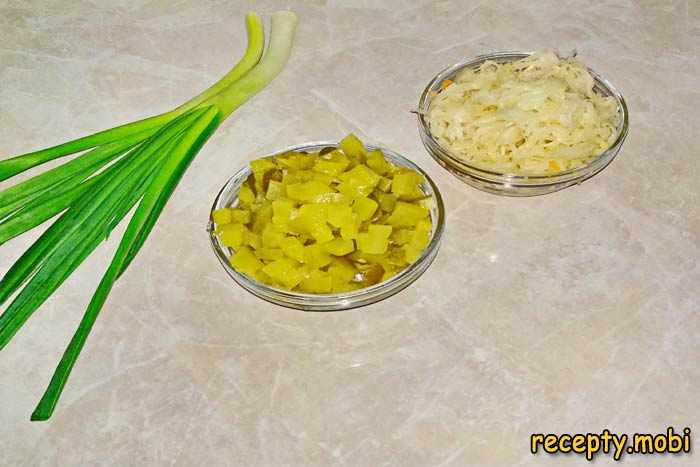
In a large bowl, first mix the diced beetroot with 2 tablespoons of vegetable oil – coat each cube in a film of oil. This is the secret step for a beautiful vinaigrette – the beetroot will no longer stain the other vegetables pink. Without this step, the potato and cucumbers will turn reddish-pink within an hour and the salad will lose its colourful look.
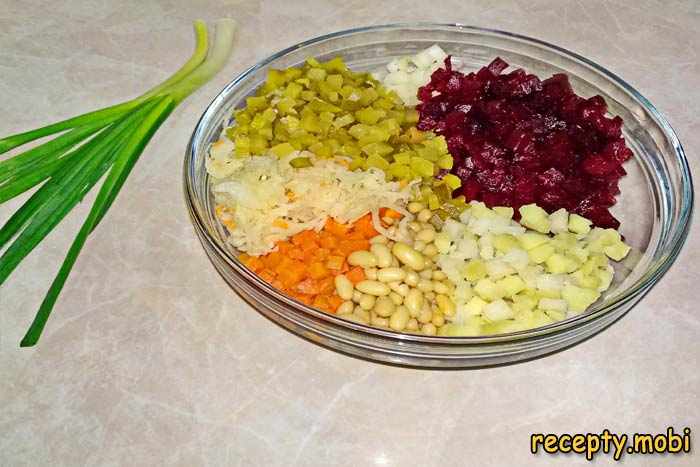
Add the rest of the vegetables (potato, carrots, onion, cucumbers, beans, cabbage), then salt and pepper to taste. Dress with the remaining sunflower oil (use unrefined oil – the aroma of the seeds is what makes the vinaigrette “Russian”). If the vinaigrette tastes “bland”, add a teaspoon of brine from the sauerkraut or the cucumbers.
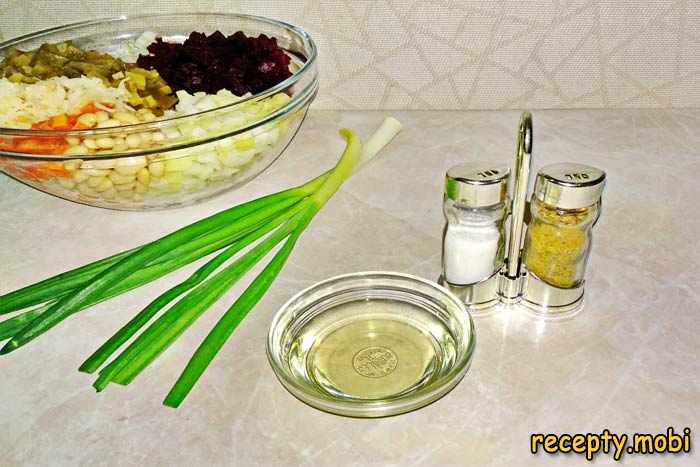
Mix the salad thoroughly from the bottom up with a spatula, without crushing the vegetables. Cover the bowl with cling film and put it in the fridge for 2-3 hours to soak. Without resting, the vinaigrette tastes “raw” – the ingredients are felt separately. After resting, the flavours come together into a harmonious “winter” bouquet – that is exactly how it should be.
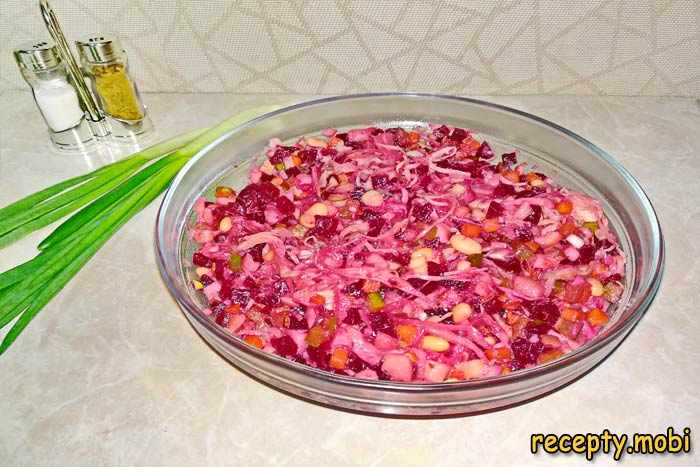
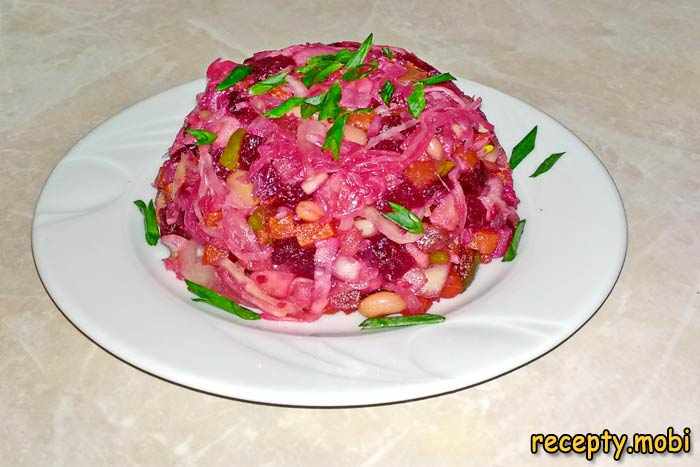
The vinaigrette with sauerkraut and pickled cucumbers is ready! Before serving, I garnish it with finely chopped spring onions or sprigs of parsley for freshness and colour. I serve it in a glass salad bowl with a slice of dark rye bread – the classic Russian way.


Tips
- 1
Baked vegetables make a tastier vinaigrette than boiled ones – they keep a richer flavour and more vitamins, and are not “washed out” into the water.
- 2
Always “marinate” the beetroot in oil separately before mixing – that way it will not stain the other vegetables pink.
- 3
You can add canned green peas or salted mushrooms for variety. I make vinaigrette with peas on a similar principle.
- 4
Let the salad rest for 2-3 hours in the fridge – the flavour will become richer and the vegetables will soak up the oil and brine.
FAQ
Can it be made without beans? +
Yes, a classic vinaigrette can be made without beans too. Replace them with canned green peas (200 g) – quicker and more convenient, with no need to cook. Canned red beans (rinse off the liquid), canned white beans, or chickpeas also work. The salad is good without pulses as well – you get a lighter version. You can increase the amount of cabbage and cucumbers instead of the beans. Each substitution gives its own character: peas add sweetness, chickpeas a nutty note.
What can replace sauerkraut? +
If you have no sauerkraut, use fresh white cabbage, finely shredded and lightly crushed with salt (300 g). The flavour will be less “Russian” and more neutral. Marinated cabbage also works (rinse off the marinade so there is no sweet taste). Korean kimchi will add heat and an Asian character. The ideal replacement is home-made cabbage fermented with carrot and caraway, which gives the characteristic sour-tangy taste of a classic vinaigrette.
How long does the vinaigrette keep in the fridge? +
The finished vinaigrette keeps in the fridge for up to 3 days in a tightly closed container. After 3 days the cucumbers become too soft, the potato “woody”, and the salad loses its freshness. It is best eaten within 1-2 days. Do not leave it at room temperature for more than 2 hours – sauerkraut and cucumbers spoil quickly in the warmth. If you plan to make it ahead, cut the vegetables in advance but mix and dress with oil just before serving.
What to serve vinaigrette with? +
Classically with herring, sprats, or smoked sprats – a “Russian” pairing for the winter table. With dark Borodinsky bread and butter, or with lightly salted salmon or trout. As a side dish to fried potatoes, cutlets, or home-made dumplings. For a Lenten table – on its own as a stand-alone dish. Kvass, fruit drink, or vodka go well with the salad – traditional Russian drinks. It is ideal for the Nativity Fast and Great Lent as a hearty, vitamin-rich starter.
- Comment
or post as a guest
Be the first to comment.